
TL;DR:
- Proper planning, timely booking, and operational clarity are essential to ensure comfort during long Umrah journeys. Managing physical and cognitive stressors, like packing thoughtfully and reducing arrival uncertainties, significantly improves the pilgrim experience. Working with reliable, technologically equipped transport providers further enhances safety, ease, and overall well-being throughout the trip.
Jet lag, cramped seats, blazing heat, and chaotic airport transfers. These are the realities that catch many first-time Umrah pilgrims off guard, turning what should be a spiritually focused trip into an exhausting physical ordeal before the journey even truly begins. Transport comfort is rarely the first thing on a pilgrim's planning checklist, yet it shapes everything that follows. This guide covers practical, step-by-step strategies for maximizing comfort from the moment you pack your bag to the moment you arrive rested and ready at your hotel in Makkah or Madinah.
Table of Contents
- Plan ahead: Essentials for comfortable Umrah transport
- In-flight comfort strategies for long-haul travel
- Timing your arrival: Beat the heat, ease your transfer
- Beyond the vehicle: Operational factors that impact comfort
- Why most Umrah comfort advice overlooks the little things that matter most
- Ready for a more comfortable Umrah? Discover trusted transport options
- Frequently asked questions
Key Takeaways
| Point | Details |
|---|---|
| Dress for temperature control | Breathable layers and compression socks can prevent discomfort during long journeys. |
| Choose seats wisely | Selecting window or wing-adjacent seats and using anti-motion strategies reduces in-flight discomfort. |
| Arrival timing matters | Landing early morning or late evening in Saudi Arabia minimizes heat exposure and fatigue. |
| Mind operational logistics | Group schedules, prompt pickups, and smooth luggage handling are as crucial as the transport vehicle itself. |
| Specialized services simplify travel | Dedicated Umrah transport solutions handle both comfort and operational details for hassle-free transfers. |
Plan ahead: Essentials for comfortable Umrah transport
Preparation is where most comfort problems are either prevented or created. Pilgrims who pack thoughtfully and organize their logistics in advance experience noticeably fewer delays, less physical strain, and more mental clarity on arrival.
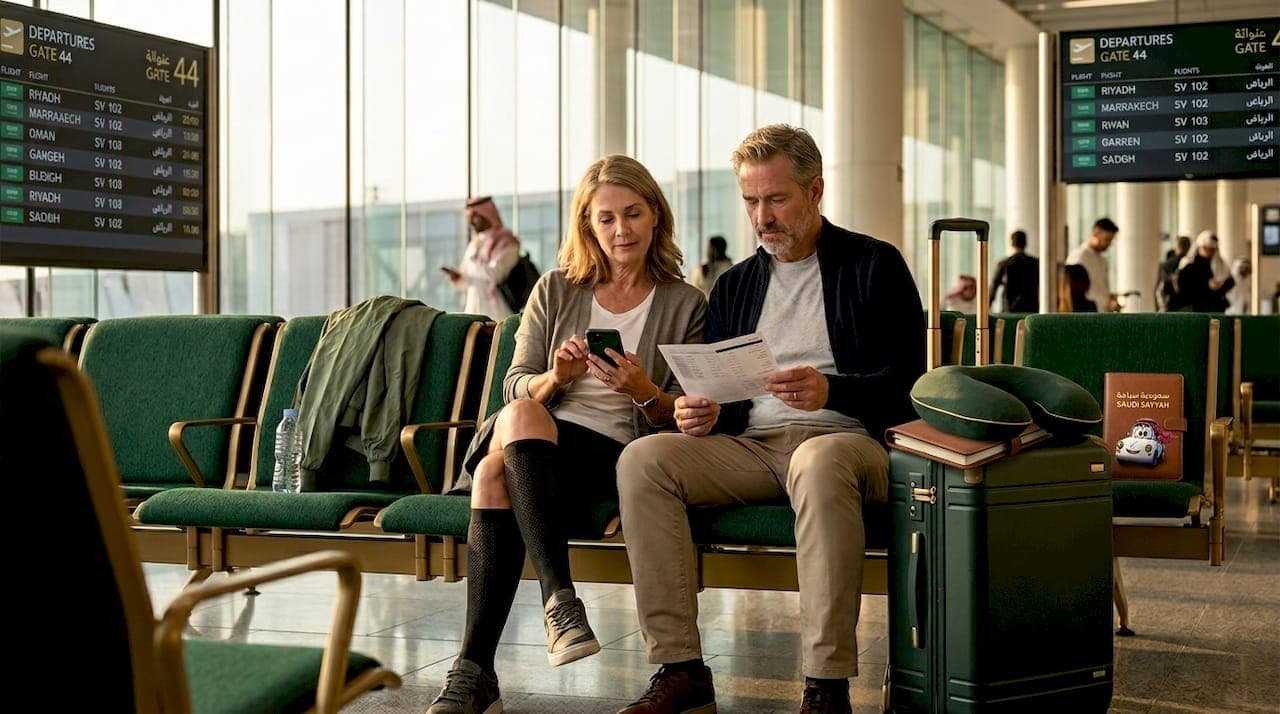
Start by assembling a comfort-focused packing list. The goal is not to overpack, but to bring items that directly reduce physical stress during long flights and ground transfers. Key items include:
- Loose, breathable clothing (ideally cotton or linen) for the flight
- Compression socks to support circulation during extended sitting
- A travel pillow and eye mask for rest during the flight
- Noise-canceling earphones or earplugs to block cabin noise
- An empty refillable water bottle to stay hydrated through the flight
- Prescription medications and personal comfort aids in your carry-on
- Ihram garments packed accessibly, not buried in checked luggage
- Printed copies of your transport booking confirmations as backup
Temperature and fatigue management are comfort multipliers during travel. Breathable clothing and compression socks reduce discomfort from long periods of seated travel, which is especially important on flights from North America or Europe that can exceed 12 hours.
Beyond packing, arrange your airport transfer before you depart. Showing up at King Abdulaziz International Airport in Jeddah or Prince Mohammad bin Abdulaziz Airport in Madinah without a confirmed pickup is a recipe for long waits in unfamiliar surroundings. Pilgrims who need mobility support should look into accessible transport for Umrah well in advance, as specialized vehicle availability can be limited during peak Umrah seasons.
| Item/task | When to handle it | Why it matters |
|---|---|---|
| Book airport transfer | At least 2 weeks before departure | Ensures vehicle availability |
| Pack compression socks | Day before departure | Reduces in-flight swelling |
| Confirm transport documents | Day before departure | Avoids arrival confusion |
| Arrange ihram garments | 48 hours before flight | Accessible without digging through bags |
| Set flight and prayer alarms | Evening before departure | Keeps you on schedule |
Pro Tip: Schedule arrivals to land during early morning or late evening local time in Saudi Arabia. This minimizes heat exposure during your ground transfer and lets your body transition more gently across time zones.
In-flight comfort strategies for long-haul travel
Once you are packed and ready, the flight itself is the first real physical challenge. Long-haul routes from the United States, Canada, or Western Europe to Jeddah or Madinah typically run between 10 and 14 hours. How you manage that time inside the cabin has a significant impact on how you feel when you step off the plane.
Follow these steps for managing in-flight comfort:
- Choose your seat strategically. The over-the-wing section of most aircraft experiences less turbulence than the front or tail. Seat selection near the wing reduces motion impact and gives you access to a visual reference point, which is particularly helpful for passengers prone to motion sickness.
- Request or bring an aisle seat if you need to move frequently. Pilgrims who plan to stand for prayers, stretch, or visit the restroom regularly benefit from aisle access.
- Time any motion-sickness medication correctly. If you use medication, take it at least 30 minutes before boarding, not after turbulence starts.
- Use the overhead air vent. Directing cool air toward your face reduces nausea and helps you stay alert.
- Hydrate consistently. Cabin air is extremely dry, often below 20% humidity. Drink water every 60 to 90 minutes and avoid excess caffeine or alcohol.
- Move every two hours. Walk the aisle or do seated leg exercises. This prevents blood pooling in the legs and keeps your energy levels more stable on arrival.
- Plan your sleep intentionally. If your flight arrives in the morning, sleep during the latter half of the flight. If you arrive at night, stay awake for the first half and rest later.
"For in-flight comfort on long-haul travel, practical comfort levers include seat selection over the wing for motion reduction, timing of motion-sickness medication, and using a stabilizing visual reference during turbulence." Motion-relief.com
Breathable clothing and compression socks are not just suggestions. Compression socks keep blood flowing and meaningfully reduce swelling, which can otherwise leave you feeling stiff and heavy-legged during the transfer from the airport to your hotel.
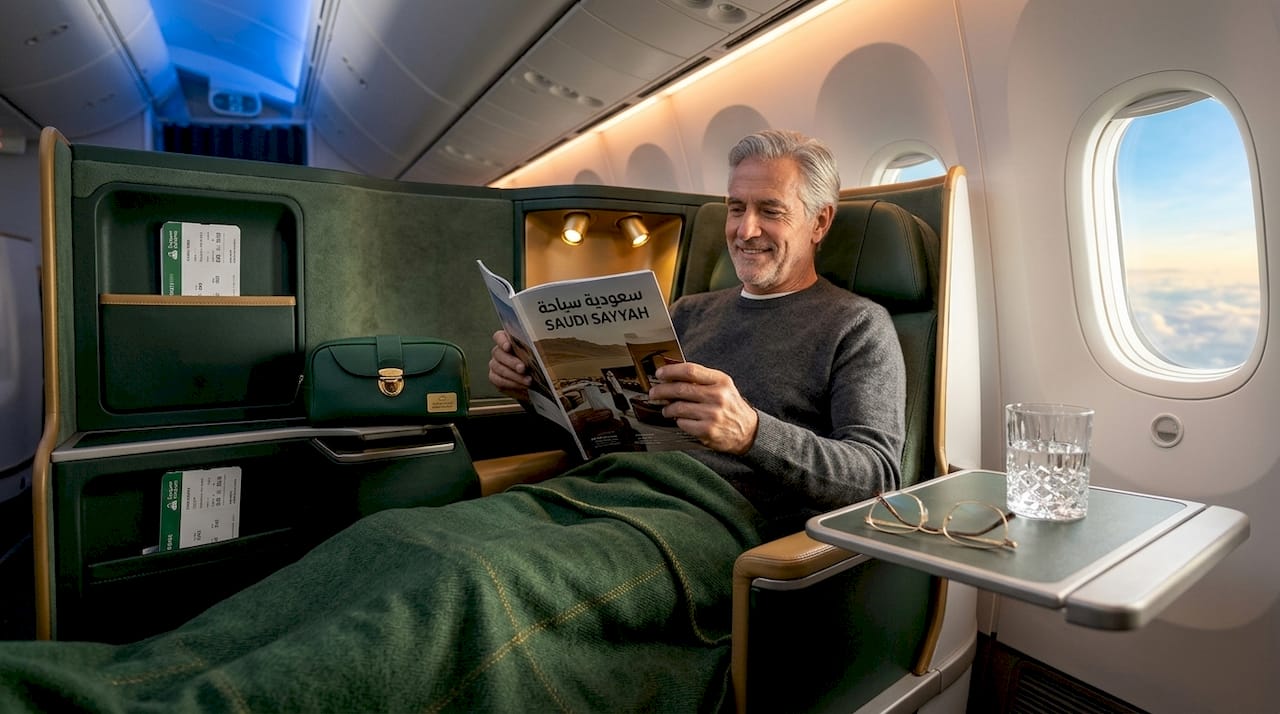
For pilgrims who want to arrive in significantly better physical shape, luxury in-flight options such as business class or premium economy offer lie-flat or extended-recline seats that dramatically reduce physical strain. If the budget allows, this upgrade pays dividends in how quickly you recover upon arrival.
Older pilgrims or those with physical limitations should also review comfort for elderly pilgrims to understand which additional accommodations and vehicle types are available on the ground. For general safety guidelines during travel to Saudi Arabia, safe travel insights provide a useful overview of local health and logistics considerations.
Pro Tip: Open your overhead air vent and angle it toward your face before takeoff. This simple action helps prevent nausea, controls stuffiness, and keeps you more alert during the first hours of flight.
Timing your arrival: Beat the heat, ease your transfer
Landing matters as much as the flight. Saudi Arabia's climate is one of the most physically demanding environments a Western pilgrim will encounter. Summer temperatures in Makkah and Madinah regularly exceed 40°C (104°F), and the heat radiating from airport tarmac and transfer areas can be overwhelming for someone already fatigued from a long flight.
Arrival timing affects comfort significantly, particularly when it comes to reducing heat exposure during the transfer from the airport to your accommodation.
| Arrival time | Temperature exposure | Transfer conditions | Recommendation |
|---|---|---|---|
| Early morning (Fajr to 9am) | Low to moderate | Cooler air, quieter terminals | Best option |
| Late evening (after Isha) | Low | Comfortable, less crowded | Second best |
| Midday to mid-afternoon | Peak heat | Crowded, highest fatigue risk | Avoid if possible |
| Early afternoon | Moderate to high | Busy, warm | Manageable with planning |
Practical steps for managing your airport transfer:
- Confirm your transfer booking 24 hours before landing. Flight delays happen, and your transport provider needs to know about schedule changes in advance.
- Keep your transfer confirmation on your phone and in print. Connectivity is not guaranteed immediately after landing.
- Travel with carry-on items that can go directly into your transfer vehicle. Waiting for checked luggage in a hot arrivals hall adds unnecessary strain.
- Dress in lightweight, loose layers. The airport is air-conditioned, but the transfer area and vehicle pickup zones are exposed.
- Identify your driver pickup point before landing, using terminal maps available on most airline apps.
The full Umrah airport transfer guide walks through each step of the arrival process in detail. For a broader view of arrival logistics and what to expect in the holy cities, planning arrival logistics is a useful reference before you depart.
Beyond the vehicle: Operational factors that impact comfort
Here is something most transport guides skip entirely. A clean, modern, air-conditioned vehicle is necessary, but it is not sufficient. The operational design of how transport is organized and executed has as much impact on your experience as the car itself.
Consider the following steps pilgrims often overlook:
- Understand your pickup structure. Is your transport private or shared? Shared shuttles with rigid departure schedules can mean waiting 45 to 90 minutes for other passengers to clear immigration and collect luggage before the vehicle departs.
- Ask about schedule flexibility. Operators that allow some flexibility around actual arrival times are far more accommodating than those running fixed-window departures regardless of delays.
- Clarify luggage handling in advance. Who loads the bags? Is there a porter? If you have heavy luggage and no assistance is provided, the physical strain begins before you even board the vehicle.
- Confirm your drop-off sequence. In group transport, your hotel may be the third or fourth stop. This adds 30 to 60 additional minutes to your ground transfer time.
- Know your driver contact details before you land. If something changes after landing, you need to be able to reach your driver directly, not through a call center with a queue.
"Comfort for pilgrims is not only vehicle quality, but also operational design: shared schedules, pickup timing, and luggage handling can create discomfort even when the car is air-conditioned."
These details are not small. A pilgrim who boards a luxury vehicle but then waits 70 minutes in a hot arrivals hall for a shared group to assemble has not had a comfortable transfer. Operational clarity matters.
For pilgrims traveling in groups, group travel tips cover the specific coordination challenges that arise when managing multiple travelers, luggage volumes, and varied schedules within a single trip.
Why most Umrah comfort advice overlooks the little things that matter most
Most comfort guides focus on the visible and the obvious: book business class, bring a neck pillow, drink water. These are not wrong, but they treat comfort as a product you can buy rather than an outcome you have to design.
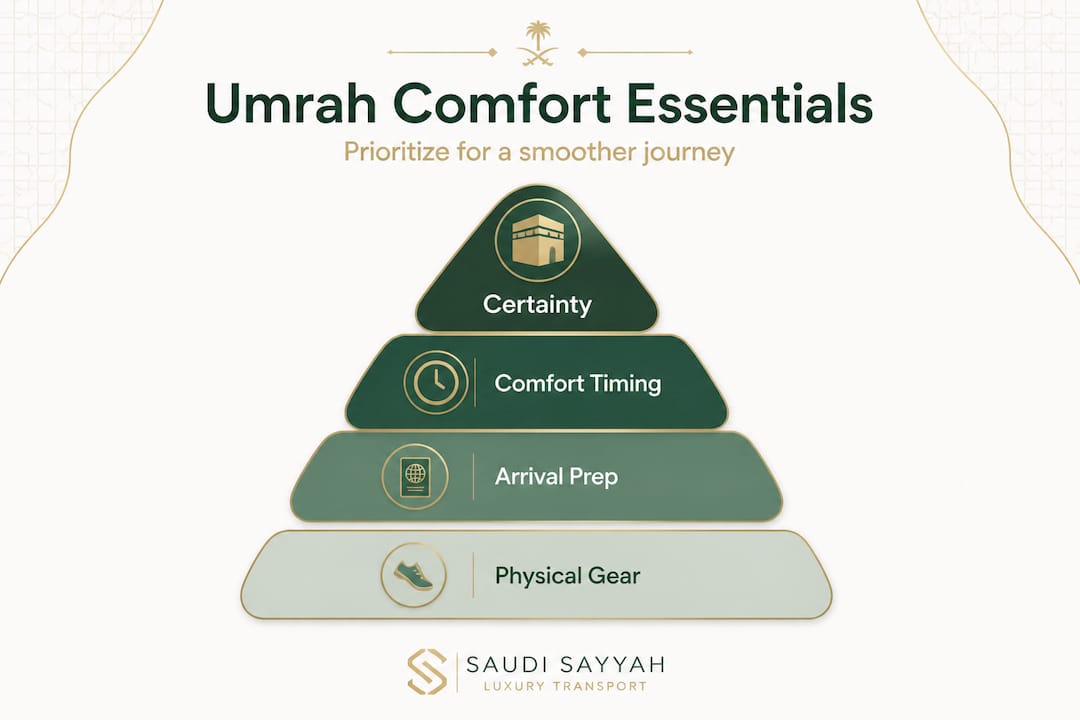
The actual discomfort that first-time pilgrims report most often is not sore muscles from economy seating. It is the anxiety of not knowing what comes next. Standing in an unfamiliar airport, exhausted, unable to find your driver, unsure which exit to use, watching your phone battery drop. That is the real discomfort of Umrah transport, and no amount of seat upgrade addresses it.
Consider a real scenario. A pilgrim flying from Chicago to Jeddah arrives after a 14-hour journey. The flight was fine, the seat was comfortable, the carry-on packed carefully. But the transfer confirmation was only saved on the tour operator's app, which requires a local SIM to load. The driver's phone number was not written down. The airport has three separate arrivals areas and no visible meetup zone. The pilgrim waits 50 minutes before the situation is sorted. By the time they reach the hotel, they are too exhausted to pray Asr with presence of mind.
This is not a gear or vehicle problem. It is an information and coordination problem. The solution is not fancier transport. It is a provider that sends driver photos, vehicle details, and real-time tracking before the trip begins, eliminating that window of uncertainty entirely.
The shift in thinking needed here is to stop planning for physical comfort alone and start planning for cognitive comfort. Reduce the number of unknowns. Reduce the decisions that need to be made while exhausted. That is what transforms a stressful transfer into a calm one. For a clear picture of what genuinely reliable Umrah comfort looks like in practice, the standards are worth reviewing before booking any service.
Ready for a more comfortable Umrah? Discover trusted transport options
Practical preparation and smart timing go a long way. But the final layer of comfort comes from working with a transport provider that handles the operational details for you.
Saudi Sayyah's transport services are built specifically for pilgrims who want certainty at every step. Before each trip, the platform sends driver photos, vehicle details, and live tracking so there are no unknowns on arrival. The booking system is fully automated and internationally compliant, meaning confirmations, scheduling, and changes are handled without friction. The Umrah transport fleet includes late-model vehicles equipped for comfort, accessibility, and reliability across all transfer routes between Jeddah, Makkah, and Madinah. For first-time pilgrims especially, that combination of technology and attentive service removes exactly the stressors that matter most.
Frequently asked questions
What is the best seat for a comfortable long-haul flight to Umrah?
Window seats near the wing minimize turbulence impact and allow you to use the horizon as a visual stabilizer, which is the most effective non-medication strategy for managing motion sickness.
How do I avoid fatigue upon arrival in Saudi Arabia?
Schedule your flight to land during early morning or late evening. Arriving during Fajr or at night helps avoid peak desert heat during your transfer to the hotel, which significantly reduces arrival fatigue.
Do group schedule delays affect comfort during Umrah transport?
Yes. Shared schedules and delayed pickups create real discomfort even when the vehicle itself is high-quality and air-conditioned. Private transfers eliminate this risk entirely.
Are compression socks necessary for the journey?
Compression socks reduce swelling and support circulation during extended periods of seated travel, making them a practical essential for any flight over six hours.