
TL;DR:
- Pre-booked private transfers offer the most reliable, automated, and tracking-enabled airport transportation.
- Public buses and trains are cheaper but face congestion, limited automation, and price surges during peak seasons.
- Avoid unauthorized operators by using official meeting points, verifying driver details, and booking through licensed platforms.
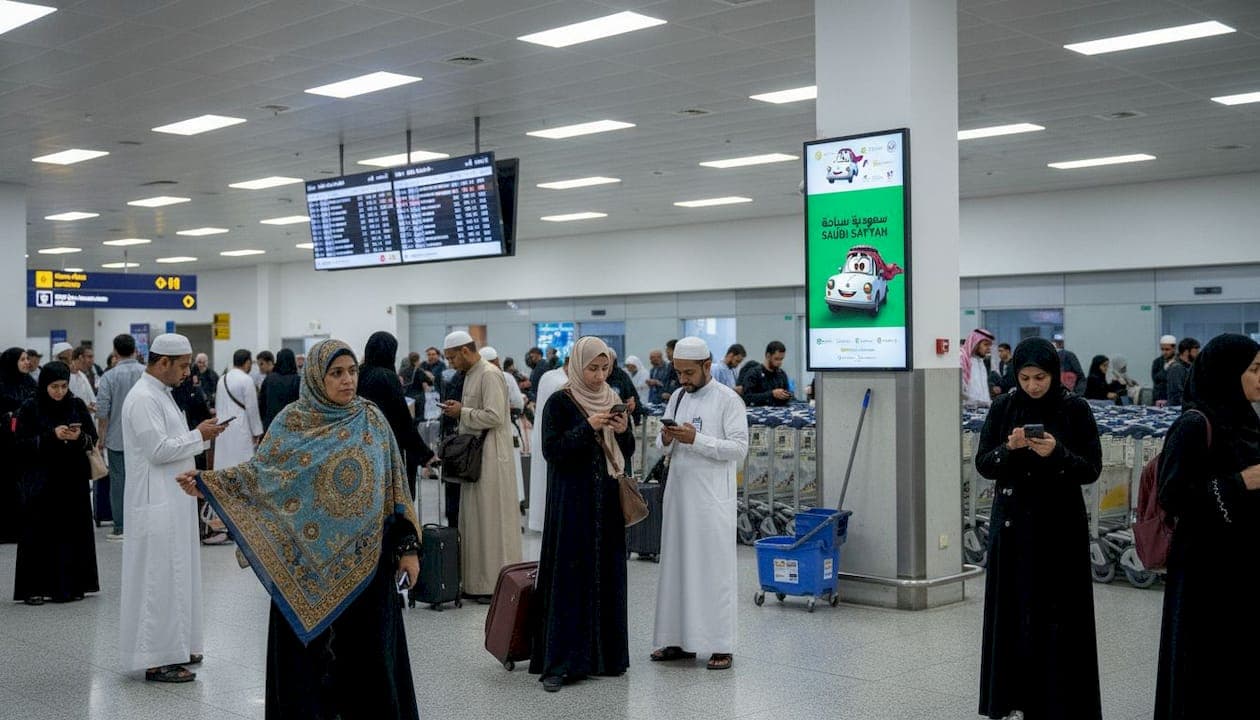
Arriving at King Abdulaziz International Airport (KAIA) in Jeddah after a long-haul flight, surrounded by crowds and unfamiliar signs, is disorienting for many Western pilgrims. The taxi stand looks chaotic, bus schedules are unclear, and the clock is ticking. Getting your airport transfer right is not a minor detail. It sets the tone for your entire pilgrimage. This guide walks through every available option, how to book reliably, what traps to avoid, and exactly what to expect when you land, so your journey to Makkah or Madinah starts with clarity, not confusion.
Table of Contents
- Overview of airport transfer options in Saudi Arabia
- Step-by-step: How to book reliable airport transfer for Umrah and Hajj
- Avoiding pitfalls: Common challenges and local transport traps
- Verification and arrival: What to expect when you land
- Expert perspective: Why automation and pre-booking matter in Saudi airport transfers
- Reliable airport transfers for your Saudi pilgrimage
- Frequently asked questions
Key Takeaways
| Point | Details |
|---|---|
| Compare all options | Review costs, reliability, and automation before choosing your airport transfer. |
| Always pre-book | Booking in advance is essential for peak periods to avoid price surges and disappointment. |
| Watch for local pitfalls | Avoid unauthorized operators, and verify every detail when you arrive in Saudi Arabia. |
| Meet-and-greet is key | Ask for meet-and-greet services and digital confirmation to ensure a smooth arrival. |
| Automate your booking | Automated online booking guarantees reliability and peace of mind for your pilgrimage. |
Overview of airport transfer options in Saudi Arabia
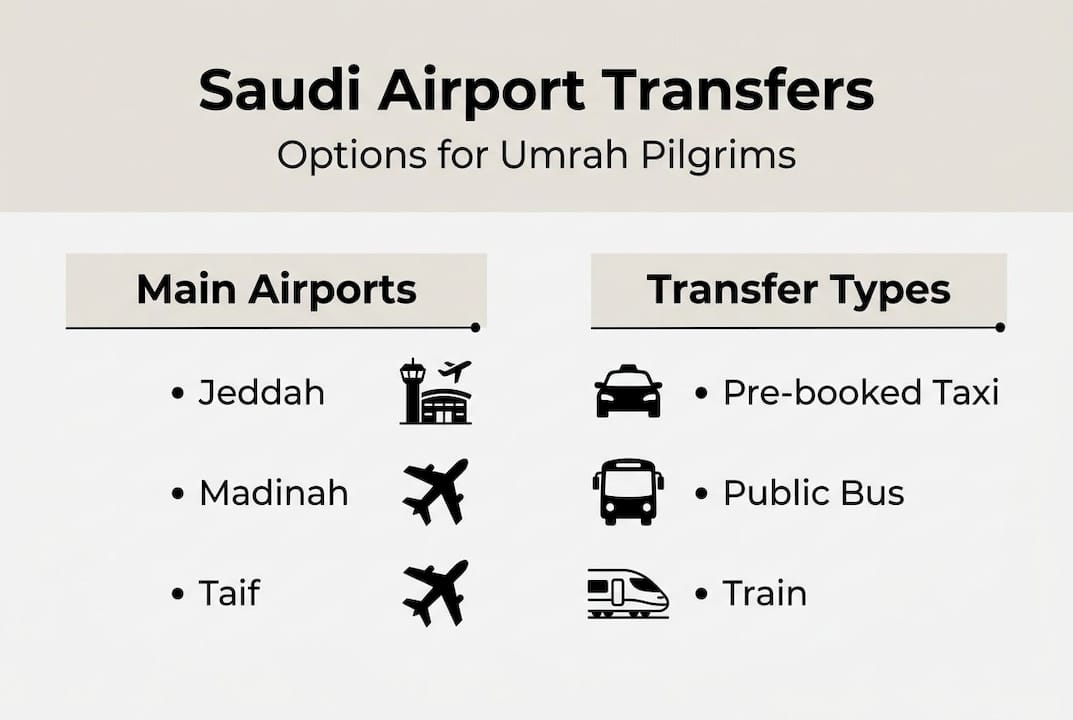
Saudi Arabia's three main pilgrimage airports are Jeddah (KAIA), Madinah (Prince Mohammad Bin Abdulaziz Airport), and Taif (Ta'if Regional Airport). Each serves a different pilgrim flow, and the transfer options at each vary significantly. Before planning your holy city visit, it helps to know exactly what is available.
Here is a side-by-side comparison of the main transfer types:
| Transfer type | Approx. cost | Travel time | Reliability | Automation |
|---|---|---|---|---|
| SAPTCO public bus | SAR 25-40 | 1.5-2 hrs | Moderate | None |
| Haramain High-Speed Train | SAR 150-300 | 35 min (rail) | High | Ticket app |
| Ride-hailing (Uber/Careem) | SAR 80-150 | 1-1.5 hrs | Variable | App-based |
| Private pre-booked transfer | SAR 150-350 | 1-1.5 hrs | High | Fully automated |
| Local street taxi | SAR 80-200 | 1-1.5 hrs | Low | None |
The SAPTCO buses from JED to Makkah cost SAR 25-40 and take 1.5 to 2 hours, while the Haramain High-Speed Train from JED Terminal 1 to Makkah costs SAR 150-300 and covers the rail leg in just 35 minutes, though you still need a local transfer at each end.
Key factors to weigh when choosing:
- Cost vs. convenience. Buses are cheapest but require navigating terminals, queues, and luggage handling alone.
- Door-to-door service. Only private transfers and taxis drop you at your hotel entrance.
- Language barrier. Public systems rely on Arabic signage and staff, which creates friction for non-Arabic speakers.
- Group size. Families or groups traveling together often find private vehicles more practical. See group travel transport for specific guidance.
- Automation. Pre-booked private transfers send confirmation, driver details, and real-time tracking before departure.
For Western pilgrims, automation means no guesswork. You receive a booking reference, driver photo, vehicle plate number, and a live map link before you even collect your luggage. That is a fundamentally different experience from standing at a taxi rank hoping someone speaks English. Explore the full breakdown of Jeddah to Makkah transport options to compare costs and routes in detail.
Step-by-step: How to book reliable airport transfer for Umrah and Hajj
Private pre-booked taxis offer the most reliable and automated experience for Western pilgrims, including real-time tracking and meet-and-greet services. Here is exactly how to secure one.
Step 1: Choose a verified platform. Use a licensed operator with an online booking system, payment confirmation, and customer support in English. Avoid booking through WhatsApp groups or informal agents.
Step 2: Enter your flight details accurately. Flight number, arrival terminal, and date matter. A good system monitors your flight in real time and adjusts driver dispatch if your flight is delayed.
Step 3: Select your vehicle type. Standard sedans work for solo travelers or couples. Families or groups need an SUV or minivan. Check Umrah transport options for a breakdown of vehicle categories.
Step 4: Pay securely online. Reputable platforms accept international credit cards and issue instant receipts. Avoid any operator that requests cash-only payment upfront with no receipt.
Step 5: Receive your confirmation package. This should include a booking reference, driver name and photo, vehicle make and plate, and a contact number.
Step 6: Save offline copies. Download your confirmation to your phone before landing. Airport Wi-Fi can be slow or unreliable during peak periods.
Step 7: Follow meet-and-greet instructions. Your driver will be waiting at the arrivals hall with a name board. Confirm the driver's name and vehicle plate before boarding.
Pro Tip: If traveling with elderly family members or anyone with mobility needs, note this at booking. Operators can arrange accessible vehicles and extra assistance. See group travel tips for more on coordinating larger parties.
| Booking step | What to verify |
|---|---|
| Platform selection | Licensed, English-language support |
| Flight details | Number, terminal, date |
| Vehicle type | Capacity matches group size |
| Payment | Online, receipt issued |
| Confirmation | Driver photo, plate, contact |
Avoiding pitfalls: Common challenges and local transport traps
Knowing the options and the booking steps is a strong start. But local conditions at Saudi airports create specific risks that catch many Western pilgrims off guard.
Surge pricing during peak periods. During peak Hajj and Umrah seasons, prices surge and pre-booking becomes essential. Street taxis and even some ride-hailing drivers raise fares dramatically when demand spikes. A transfer that costs SAR 120 in a quiet week can jump to SAR 300 or more during peak Umrah months.
Ride-hailing gaps. Uber and Careem are available at Jeddah and Madinah airports, but Taif airport has no coverage from either platform. If you are arriving at Taif, you must arrange a private transfer in advance or rely on limited local taxis.
Unauthorized operators at Jeddah. Known locally as "trolley-grabbers," unauthorized operators at JED approach arriving passengers, offer to carry luggage, and steer them toward unlicensed taxis. Prices are negotiated on the spot, vehicles are unverified, and there is no recourse if something goes wrong. Avoid these interactions entirely.
Common traps to watch for:
- Drivers quoting prices in USD to confuse the exchange rate
- Vehicles with no visible license or registration displayed
- Offers of "special pilgrim rates" from strangers in the terminal
- Pressure to pay cash before the journey starts
For travelers with specific needs, accessible transport options require even more careful pre-planning. And if you want a deeper look at how to spot and avoid unauthorized operators, that resource covers the red flags in detail.
"Book before you fly. The airport is not the place to negotiate transport in a foreign language under time pressure."
Pro Tip: Set a price alert or check current rates for your route before you travel. Knowing the fair range makes it much harder for anyone to overcharge you at the terminal.
For travel between holy cities, Medina taxi services follow different pricing norms, so research each leg separately.
Verification and arrival: What to expect when you land
You have landed. Your luggage is collected. Now what? This is the moment where preparation pays off.
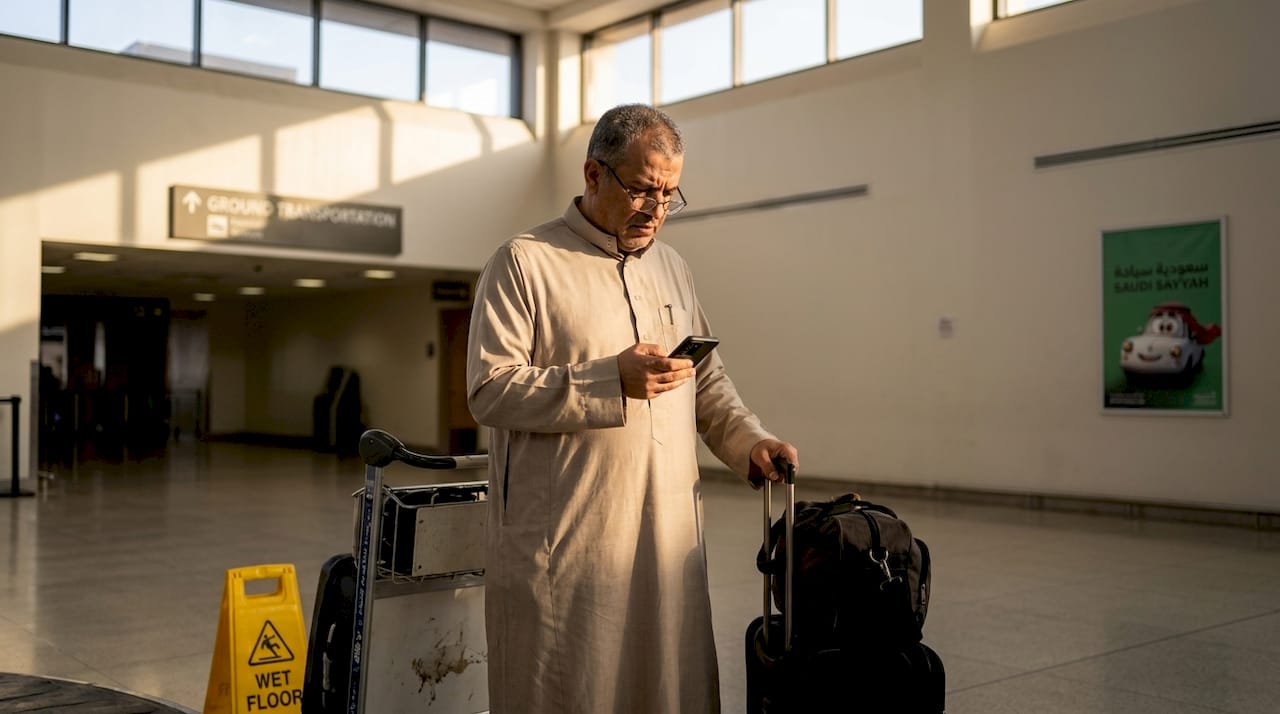
Step 1: Do not exit the arrivals hall immediately. Take a moment to check your confirmation message. Confirm the driver's name, the vehicle plate, and the meeting point specified in your booking.
Step 2: Look for your name board. Pre-booked drivers wait in the official meet-and-greet area, typically just past customs. They hold a printed or digital sign with your name.
Step 3: Verify before you board. Ask the driver to confirm your name and destination. Cross-check the vehicle plate against your confirmation. This takes 30 seconds and eliminates any risk of boarding the wrong vehicle.
Step 4: Do not accept unsolicited help. If someone approaches you before you find your driver, decline politely and keep moving toward the official meeting area.
Step 5: Use the tracking link. If your operator provided a live tracking link, share it with a family member or travel companion. They can monitor your journey in real time.
While public SAPTCO buses and trains are cheaper, they are not door-to-door and require navigating connections after arrival. For elderly pilgrims or those with heavy luggage, this matters significantly. The elderly transport guide covers specific considerations for older travelers.
Pro Tip: Save your operator's WhatsApp or phone number in your contacts before landing. If your driver is delayed or you cannot locate them, direct contact resolves the issue in minutes.
If your pre-booked transfer does not show up, do not panic. Contact the operator immediately using your saved number. Reputable services have backup protocols. For a broader view of what to do in this scenario, airport transfer alternatives lists verified fallback options.
Expert perspective: Why automation and pre-booking matter in Saudi airport transfers
Most travel advice tells Western pilgrims to "be careful" at Saudi airports. That is not wrong, but it misses the deeper point. The real issue is information asymmetry. Local operators know the system. First-time pilgrims do not. That gap is where problems happen.
Automated pre-booking does not just add convenience. It shifts the power balance. When you have a confirmed booking reference, a driver's photo, and a live tracking link, you are no longer dependent on whoever approaches you first. You have verified information before you even land.
For non-Arabic speakers, this matters even more. Negotiating a taxi fare in a crowded arrivals hall, in a language you do not speak, after a 10-hour flight, is a recipe for overpaying or worse. Automation removes that negotiation entirely.
The conventional wisdom says to "use Uber" as the safe default. But as noted, Uber does not cover all airports, and surge pricing during peak Umrah periods can make it as expensive as a private transfer, with less accountability. Pre-booked private transfers lock in your price, your driver, and your vehicle before you arrive. That is not a luxury. It is basic risk management. Pilgrimage planning insights reinforce this approach consistently.
Reliable airport transfers for your Saudi pilgrimage
Saudi Sayyah's airport transfer services are built specifically for Western pilgrims who need certainty, not guesswork. The fully automated booking system confirms your transfer instantly, monitors your flight in real time, and dispatches your driver accordingly.
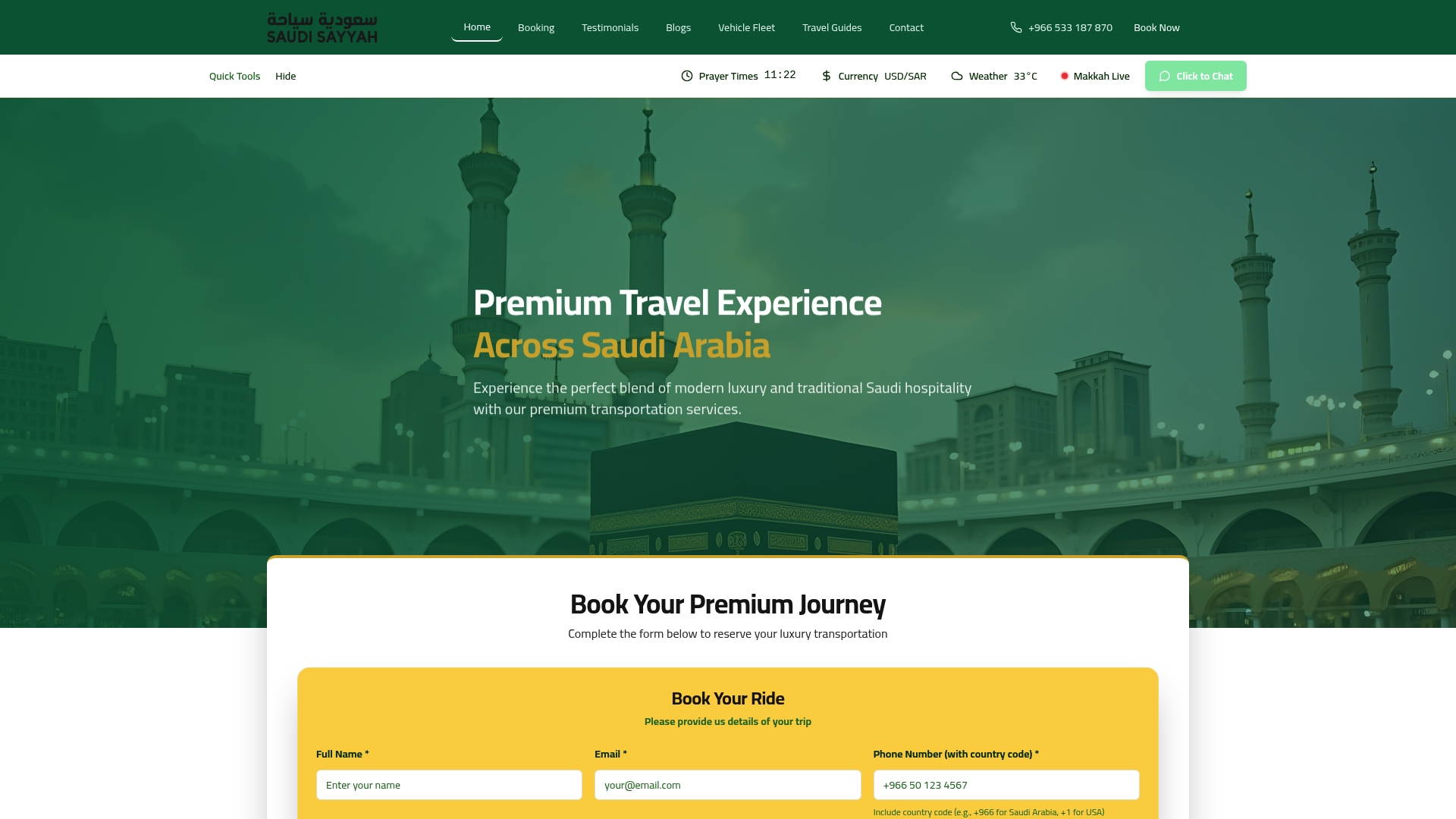
Before every trip, you receive your driver's photo, name, vehicle details, and a live tracking link. The premium vehicle fleet covers solo travelers, families, and groups, all with latest-model vehicles and experienced drivers. Check live Makkah availability to see current transfer slots and book your transfer before your flight. No cash negotiations. No uncertainty at the arrivals hall. Just a confirmed, tracked transfer from the moment you land.
Frequently asked questions
What is the safest option for airport transfer as a Western Umrah pilgrim?
Pre-booked private taxis are the safest and most reliable choice, offering automated tracking and meet-and-greet services that eliminate uncertainty at arrival.
Are public buses or trains a good choice during busy pilgrimage periods?
While cheaper, public buses and trains face heavy crowding and price surges during peak Hajj and Umrah seasons, making pre-booked private transfers a more dependable option.
How can I avoid unauthorized taxi operators when arriving at Jeddah airport?
Stay in the official arrivals area, look for your pre-booked driver's name board, and verify credentials before boarding. Trolley-grabbers at JED target passengers who look uncertain, so move with purpose.
Is Uber or Careem available at all Saudi airports?
Taif airport has no Uber or Careem coverage, so travelers arriving there must arrange a private transfer or local taxi in advance.
Are there free airport transfers for Umrah visa holders?
Certain bus transfers for Umrah visa holders may be free, but availability is inconsistent and varies by operator and season, so always confirm before relying on this option.