
TL;DR:
- Planning and booking accessible, reliable transport in advance ensures family comfort and safety during Umrah. Private vehicles with backup options and systematic confirmations address common delays caused by peak seasons and prayer times. Proper preparation, including detailed documentation and contingency plans, minimizes stress and enhances the pilgrimage experience.
Arriving at King Abdulaziz International Airport or Prince Mohammad Bin Abdulaziz Airport after a long-haul flight with children, elderly parents, and multiple bags is disorienting. The signs are unfamiliar, the crowds are large, and getting everyone to the hotel safely and quickly becomes the first real test of the trip. Many first-time Umrah families spend hours figuring out rides on the spot, often paying more than expected or waiting in conditions that exhaust everyone before the pilgrimage even begins. This guide walks through every transport decision, from pre-travel preparation to troubleshooting last-minute changes, so your family moves through Saudi Arabia with confidence.
Table of Contents
- What to consider before you travel
- Step-by-step guide to organizing family transport
- Choosing the right vehicle and driver
- Troubleshooting common mistakes and last-minute changes
- A smarter approach to family Umrah transport (what most guides miss))
- Your next step: Secure your family's Umrah transport
- Frequently asked questions
Key Takeaways
| Point | Details |
|---|---|
| Pre-book accessible transport | Arranging specialized vehicles in advance is essential for elderly or disabled family members. |
| Private vehicles offer flexibility | Opting for private cars or vans helps families manage airport, city, and intercity travel with greater ease. |
| Always have a backup plan | Confirm alternate transport options for busy periods or emergencies to keep your family on track. |
| Detailed step-by-step planning | Organize transfer bookings and drivers in sequence for a smooth and stress-free Umrah trip. |
What to consider before you travel
Now that you know what's ahead, let's start with the key tasks to complete before you even pack your bags.
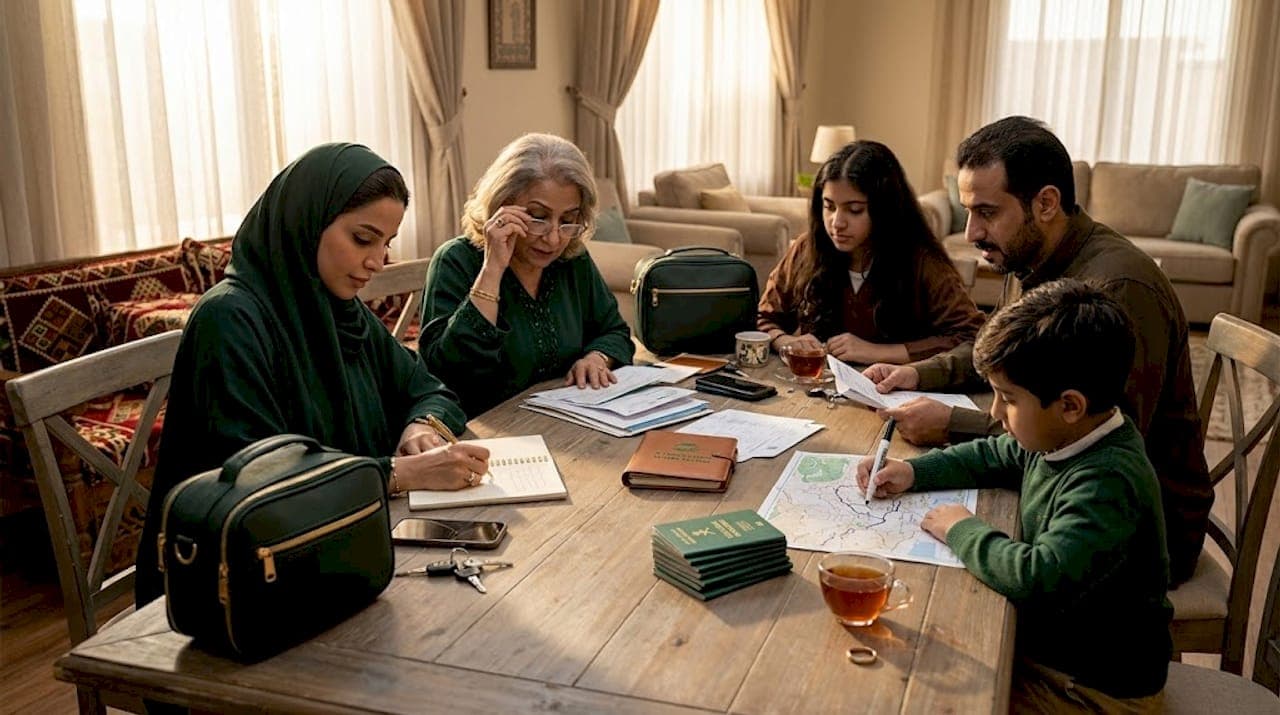
Family size and mobility needs come first. Before any booking, list every traveler and note their age, any mobility limitations, and what equipment they carry. A grandmother using a walker needs a different vehicle than a family of four with one toddler and a stroller. Getting this list right shapes every decision that follows, from vehicle type to pickup timing.
Entry and exit airports matter more than most families realize. Families entering through Jeddah for Makkah first, versus Madinah for an alternate itinerary, follow different transfer routes. Confirm your Umrah visa documentation is complete, including the Mahram requirements for women traveling without an immediate male guardian. Keep digital and printed copies of all documents, as checkpoints at some locations still ask for paper.
Here are the key items to confirm before departure:
- Total number of travelers, including ages and any mobility requirements
- Entry airport (Jeddah or Madinah) and estimated arrival time
- Whether any family member uses a wheelchair, walker, or stroller
- Luggage count and approximate total volume
- Hotel addresses in both Makkah and Madinah (if visiting both)
- Local emergency contacts and consulate information
For accessible transport features, pre-book early. Vehicles with ramp access or wide doors are limited in supply, and during peak months like Ramadan and Dhul Hijjah, they book out weeks ahead.
Pro Tip: If any family member has limited mobility, add at least one backup transport option to your plan. A second confirmed provider means no scrambling if your primary booking falls through at a busy time.
The table below gives a fast overview of what to book and when:
| Task | Recommended timing |
|---|---|
| Book accessible/wheelchair vehicles | 4 to 6 weeks before travel |
| Reserve airport transfer | 2 to 4 weeks before travel |
| Arrange intercity travel (Makkah to Madinah) | 2 to 3 weeks before travel |
| Confirm all bookings and references | 48 hours before departure |
| Save driver contacts in phone | Night before each transfer |
The Umrah logistics guide at Saudi Sayyah's blog covers additional documentation and visa transport rules worth reviewing before you finalize bookings.
Step-by-step guide to organizing family transport
With your essentials outlined, here's a clear step-by-step approach to get the whole family moving together smoothly.
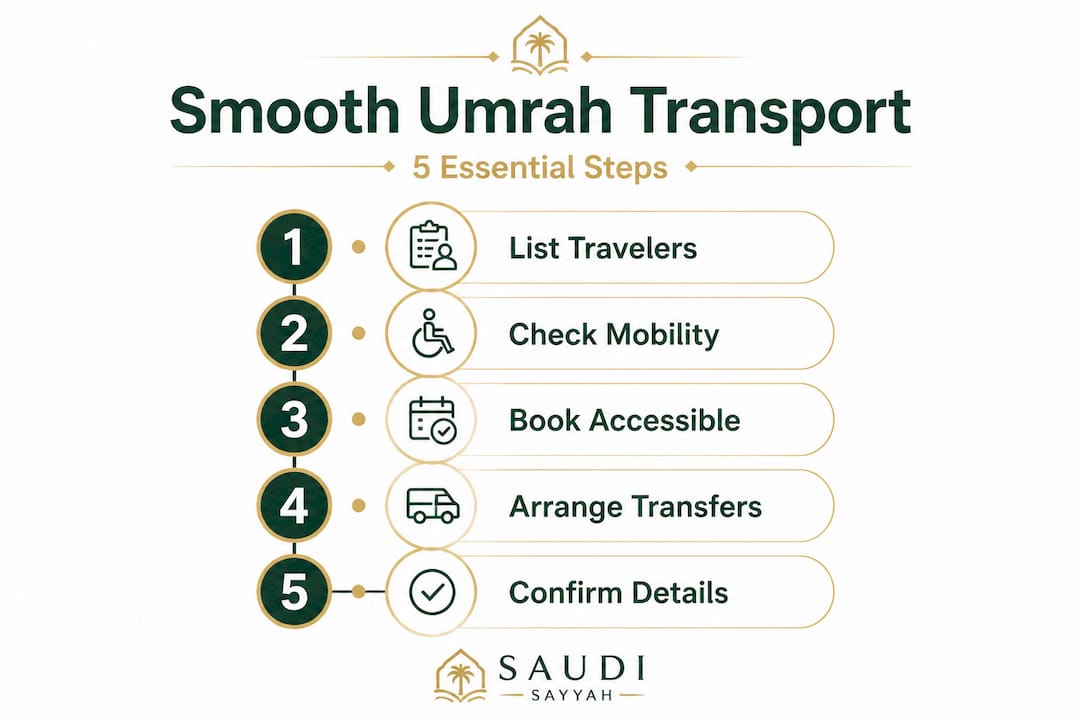
Step 1: Decide your base city order. Most families choose between starting in Makkah and ending in Madinah, or the reverse. Your airline arrival airport usually dictates this. Locking in this sequence early shapes your entire transport timeline, as pre-arranged Umrah transport for the Makkah to Madinah leg (roughly 450 kilometers) requires advance booking for family-sized vehicles.
Step 2: Lock in airport transfers. This is the single most stressful transport moment for most families. Booking a confirmed, tracked transfer in advance removes the pressure of negotiating at the arrivals hall. Check provider reviews, confirm the vehicle size fits your group and luggage, and make sure a contact number is available for real-time updates.
Step 3: Arrange intercity travel. The airport transfer guide outlines the main route options. Private vans are the most practical for family groups, offering enough space for luggage, prayer stops, and rest breaks along the way. Shared bus services are cheaper but run on fixed schedules, which rarely suit groups with children or elderly members.
Step 4: Build time buffers into every transfer. Saudi Arabia's transport network can be affected by prayer times, which pause most services for 20 to 30 minutes at a stretch, five times daily. Add at least 30 minutes to every scheduled pickup and 60 minutes for any transfer that involves airport terminals.
Step 5: Confirm everything 48 hours out. Call or message each provider. Re-confirm vehicle type, driver name, and pickup point. This step catches overbooking issues and miscommunications before they become problems. Efficient Umrah transport relies on this kind of systematic double-checking.
The table below compares private and shared transport options for families:
| Factor | Private vehicle | Shared service |
|---|---|---|
| Flexibility | High, departs on your schedule | Low, fixed times |
| Cost | Higher upfront | Lower per person |
| Luggage space | Dedicated | Limited, shared |
| Accessibility | Bookable in advance | Varies by provider |
| Suitability for children/elderly | Best option | Not recommended |
| Prayer stop flexibility | Yes | No |
Pro Tip: A private vehicle costs more per trip but often costs less per person than seven or eight individual shared fares for a large family, especially when luggage and accessibility are factored in.
Choosing the right vehicle and driver
With your bookings set, picking the right car and driver will keep everyone comfortable and safe on the road.
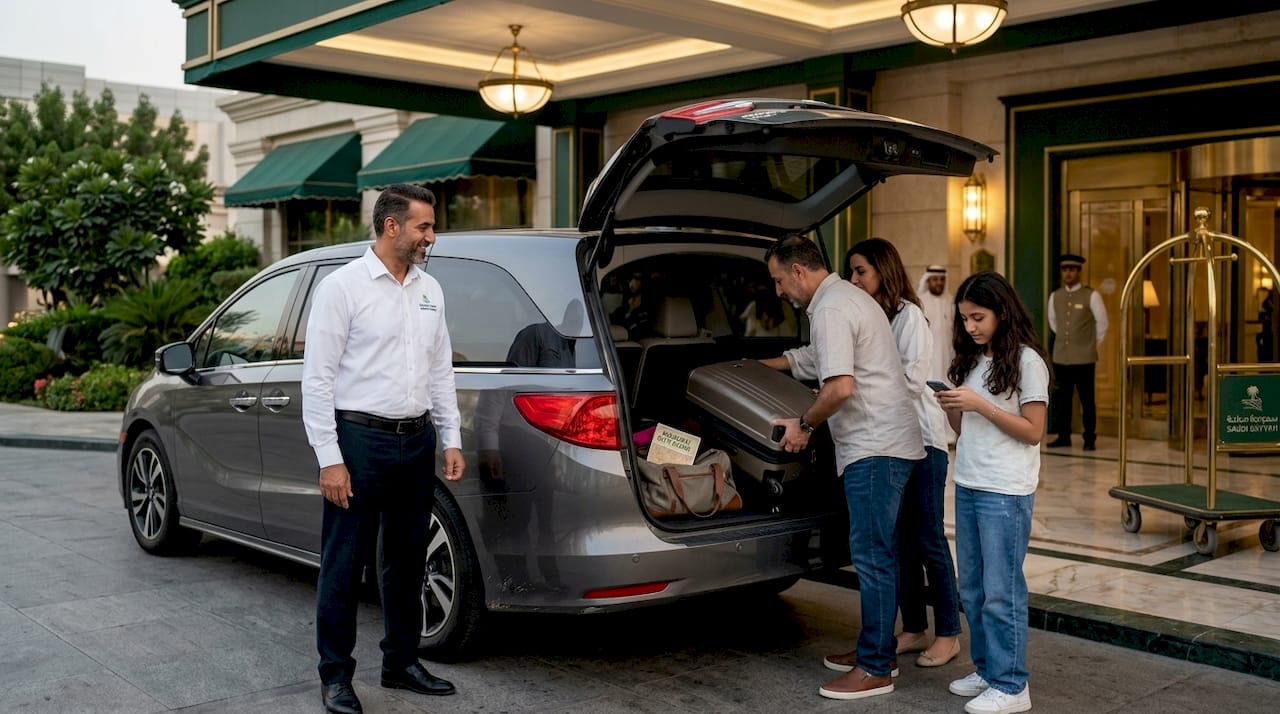
Vehicle type depends on group size and equipment. For groups up to four adults with moderate luggage, a sedan works. For groups of five or more, or any group with a wheelchair or multiple strollers, a van or large SUV is essential. Check trunk dimensions before booking. A standard sedan trunk rarely fits a folded wheelchair plus regular luggage for a family.
"For elderly or mobility-limited family members, planning should include pre-booking accessible transport, choosing vehicles that can handle wheelchair loading, and having a primary transport plan plus a backup for urgent returns to the hotel."
This matters more than most booking confirmations make clear. Ask the provider directly: does the vehicle have ramp access or a wide rear door? What is the trunk capacity? These are basic questions that prevent serious problems at pickup.
Here is a checklist for evaluating any vehicle and driver:
- Licensed and insured in Saudi Arabia
- Verified Umrah or Hajj transport experience
- English-speaking or agreed-upon communication method
- Vehicle model year and condition confirmed in writing
- Trunk space sufficient for all luggage plus mobility equipment
- Child seat available if traveling with young children
- Driver photo and vehicle plate shared before pickup
For private transport benefits, the main advantage is consistency. You deal with one driver, one vehicle, and one contact for the duration of your stay or leg. That predictability matters a lot when managing a family group across multiple days.
Families traveling with seniors should look specifically at elderly pilgrim transport options, which detail ramp specifications and driver assistance protocols. If budget is a factor, shared transport options cover lower-cost alternatives that still maintain reliability for smaller groups or shorter routes.
Language matters more than many families expect. If your family communicates primarily in English, confirm that the driver speaks enough English to handle address changes, unexpected stops, and basic questions. Having the hotel address saved in Arabic on your phone is a useful backup regardless of language ability.
Troubleshooting common mistakes and last-minute changes
Even the best laid plans can go off track. Here's how to avoid or fix the most common hiccups when traveling with family.
Overbooking is a real risk during peak Umrah months. During Ramadan and the weeks surrounding Hajj season, demand for private vehicles spikes sharply. Providers occasionally overbook. Without a confirmed backup option, families can wait over an hour for a replacement vehicle, which is exhausting and stressful. Primary and backup transport plans are essential during busy periods, not optional extras.
Here are the most common mistakes families make and how to fix them:
- No reference number kept on hand. Always screenshot or print your booking confirmation. If a driver cannot locate your booking, a reference number resolves the issue in minutes.
- Single transfer option only. Identify a backup provider before you travel. Save their contact in your phone as "Backup Transport."
- Underestimating prayer time delays. All transport in Saudi Arabia pauses during Salah. Build 30-minute buffers around prayer times for any pickup or drop-off.
- Assuming ride-hailing apps are always available. Apps like Uber and Careem operate in Saudi Arabia, but during peak crowd periods near the Haram, coverage can be unpredictable and wait times can be 45 minutes or longer.
- No designated family point-person. Assign one adult in the group to handle all transport communication. When everyone is messaging different people, instructions get mixed and pickups are missed.
Jumu'ah (Friday prayer) deserves specific attention. The period around Friday midday prayer sees one of the highest pedestrian and vehicle volumes of the week near the Haram. Scheduling any transfer during or immediately after Jumu'ah adds unpredictable wait time. Shift pickups by at least 90 minutes after the prayer ends whenever possible.
Check the Umrah transport peace of mind guide for a deeper breakdown of how to handle disruptions without derailing your family's schedule. For those managing costs across multiple transfers, the Umrah transport cost tips resource covers practical ways to budget across a full family itinerary.
Make sure every adult in your family knows the full hotel address and can show it on their phone. If a family member gets separated during a crowd surge near the Masjid al-Haram, having the hotel details accessible independently is a straightforward safety measure that most families overlook until it is too late.
A smarter approach to family Umrah transport (what most guides miss)
Most planning articles for Umrah focus heavily on flights, hotel proximity to the Haram, and packing lists. Transport between those points gets one paragraph, if that. Yet it is the transport layer that generates the most real-time stress for families, especially those traveling with elderly parents or young children for the first time.
The gap between booking a flight and standing at the airport arrivals hall is where most family logistics actually break down. Flights can be found on any travel site. Hotels near the Haram are well-documented. But who is picking you up, in what vehicle, at what exact terminal, with room for a wheelchair and four suitcases? That part rarely gets the same attention.
Smart pre-arranged transport is not about luxury. It is about removing friction from a trip that already carries significant emotional weight. When families do not have to think about how to get from A to B, they can focus on the actual reason they traveled. That is a practical shift, not a philosophical one.
Most guides also ignore the reality of traveling with mixed ability groups. A family with a 75-year-old grandmother and a four-year-old child has completely different transport needs than a group of healthy adults in their thirties. Ramp-equipped vehicles, child seats, air-conditioned waiting areas, and driver assistance are not add-ons. For many families, they are the baseline requirement.
Pro Tip: Planning for contingencies is not pessimism. It is what separates families who remember Umrah for the right reasons from those who spend half the trip problem-solving.
Your next step: Secure your family's Umrah transport
With a smarter plan in hand, you need transport that matches the same level of organization. Saudi Sayyah offers private, family-sized, and accessible vehicles with experienced drivers who know the Umrah routes well.
Browse the full range of Saudi Sayyah car hire services to find the right option for your group size and accessibility needs. The premium vehicle fleet includes latest-model vehicles with luggage capacity confirmed for each option. For real-time local information during your stay, Makkah live services provides updated destination and prayer time data so every transfer is timed accurately. Pre-book airport transfers, intercity rides, or city shuttles in minutes, with driver details and live tracking sent directly to your phone before each trip.
Frequently asked questions
How do I book transport for elderly or disabled family members during Umrah?
Pre-book accessible vehicles before arrival, confirm ramp and trunk access in writing, and keep a backup provider contact for urgent needs.
Is it better to use private cars or shared buses for a family Umrah trip?
Private vehicles offer more flexibility for families with young or elderly members, fixed schedules, and varying luggage needs compared to shared bus services.
What should I do if my booked transport is overbooked during busy Umrah periods?
Always have a second provider arranged in advance. A backup transport plan is essential during peak periods to avoid extended waits or disruptions.
What's the best way to arrange airport transfers for my family group?
Book online well before travel, confirm vehicle size and luggage capacity, and save the driver's contact number the night before pickup.
Which documents are needed for booking and using transport in Saudi Arabia?
Carry passports, Umrah visas, and all booking confirmations for every transfer, as these may be requested at checkpoints or by drivers on arrival.