

TL;DR:
- Private transport options offer families comfort, privacy, and door-to-door service for Umrah.
- The Haramain Railway provides quick city-to-city travel but has limited flexibility for side trips.
- Reliability and English-speaking drivers are prioritized by Western pilgrims over low-cost options.
Arriving in Saudi Arabia for the first time, with the weight of a sacred journey ahead, is not the moment to figure out how transport works. Many Western pilgrims land at King Abdulaziz International Airport in Jeddah and immediately face unfamiliar options, Arabic signage, and no clear sense of what is reliable. The stakes feel high. Getting this wrong means missed prayers, wasted time, and unnecessary stress. This guide walks through every major transport type available for Umrah in 2026, compares them honestly, and helps you match the right option to your group, budget, and comfort needs.
Table of Contents
- Setting your priorities: What matters most for Western pilgrims
- Private taxis, vans, and car hires: Best for families and comfort
- Haramain High-Speed Railway: Fastest city-to-city choice
- Public buses and eJourney: Low-cost, connected, and digital
- Comparing your pilgrimage transport options at a glance
- The overlooked truth: Why peace of mind trumps price for Western pilgrims
- Travel with confidence: Reliable Umrah transport solutions
- Frequently asked questions
Key Takeaways
| Point | Details |
|---|---|
| Private transport tops for comfort | Private taxis and vans offer door-to-door service, privacy, and peace of mind, making them ideal for families and first-time pilgrims. |
| Haramain train for speed | The high-speed train is the fastest option between major cities and suits solo or light travelers who value time savings. |
| Buses are budget-friendly but basic | Public buses provide the lowest fares but trade off privacy, flexibility, and comfort, so they best suit solo, budget, or repeat pilgrims. |
| Book early for Ramadan peak | Advance reservations are essential, especially during Ramadan, when transport demand surges and choices fill up quickly. |
Setting your priorities: What matters most for Western pilgrims
Before comparing options, it helps to know what you actually need. Western pilgrims often have different expectations than regional travelers. Planning your Umrah transport starts with identifying your non-negotiables, not just your budget.
Here are the criteria worth evaluating before booking anything:
- Ease of booking: Can you book via app, WhatsApp, or a website with a full English interface?
- Comfort and privacy: Especially important for families, women traveling in groups, or older pilgrims.
- Reliability and punctuality: Will the driver show up on time, every time?
- Group size and luggage flexibility: A family of five with full suitcases needs more than a standard sedan.
- Fixed pricing: No haggling, no surprise fees at the destination.
- Accessibility: Doorstep pickup and vehicle features matter for those with mobility needs. See considerations for elderly pilgrims for specific guidance.
- 24/7 support: Clear communication in English, especially during delays or changes.
According to Trustpilot reviews, fixed pricing, peace of mind, and English-speaking drivers are top priorities for Western pilgrims. That pattern shows up consistently across feedback from North American, European, and Australian travelers.
Pro Tip: Write down your group's top three priorities before you compare providers. Comfort and cost often pull in opposite directions, and knowing which matters more saves time.
Private taxis, vans, and car hires: Best for families and comfort
For most Western pilgrims, private transport is the default choice, and for good reason. Private vs public transport comparisons consistently show that families, elderly travelers, and first-timers rate private vehicles highest for overall satisfaction.
Here is how the main private vehicle types break down:
- Sedan taxis: Fit up to 3 passengers with standard luggage. Best for solo travelers or couples.
- SUVs: Fit 6 to 8 passengers with moderate luggage. Good for small family groups.
- Minivans: Fit 6 to 11 passengers. Best for larger groups or those with significant baggage.
All three types offer door-to-door pickup, meaning no station transfers, no navigating unfamiliar terminals, and no waiting in public queues. Fares are typically set in advance. A Jeddah to Makkah sedan, for example, runs approximately SAR 200 to 250 with no negotiation required.
"Private taxis offer door-to-door service, flexibility, and privacy with English-speaking drivers; ideal for families and those seeking peace of mind."
Top-reviewed providers for Western pilgrims include Muhabiya, Harmain, and Hujjaj Taxi. Most support booking via WhatsApp, web, or dedicated apps with English interfaces. For group transport options, minivans booked in advance offer the best combination of cost per seat and comfort.
| Vehicle type | Passengers | Approx. fare (Jeddah to Makkah) | Best for |
|---|---|---|---|
| Sedan | Up to 3 | SAR 200 to 250 | Solo, couples |
| SUV | Up to 8 | SAR 300 to 400 | Small families |
| Minivan | Up to 11 | SAR 400 to 550 | Large groups |
Pro Tip: Book private transport at least two weeks before Ramadan. Availability drops fast and prices rise during peak season.
Haramain High-Speed Railway: Fastest city-to-city choice
The Haramain High-Speed Railway connects King Abdulaziz International Airport in Jeddah, Makkah, and Madinah on a modern, climate-controlled rail line. For pilgrims who want speed above everything else, it is hard to beat.
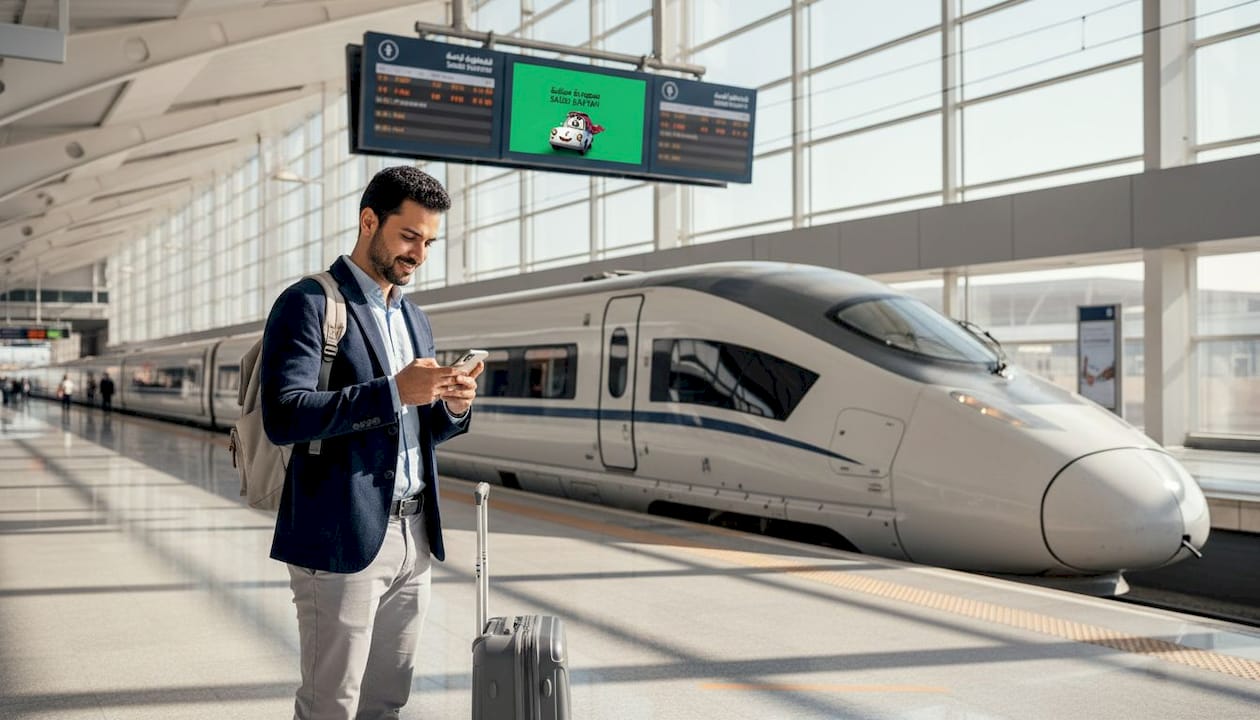
The Haramain Railway runs 75 or more daily trips, carries over 24,000 passengers per day, and covers the Makkah to Madinah route in approximately 2 hours and 20 minutes. Fares start around SAR 150 depending on class and season.
Here is where it works well:
- Solo travelers or small groups with light luggage
- Clearly defined travel legs with no side visits needed
- Travelers who want the fastest possible city-to-city connection
- Those comfortable navigating stations independently
The trade-offs are real, though. The train requires getting to and from stations, which adds time and at least one additional transfer. It is less flexible for Ziyarat visits (side trips to historical and religious sites). Large groups with heavy luggage will find the logistics awkward. Tickets can sell out during Ramadan and Hajj season, so booking train tickets early is essential.
Booking is available through the Nusuk app or the official HHR website. Both support English-language interfaces.
Pro Tip: If you plan to visit both Makkah and Madinah during one Umrah trip, consider using the train for the long intercity leg and private transport for local transfers at each end.
Public buses and eJourney: Low-cost, connected, and digital
Public buses are the most affordable transport option in Saudi Arabia, and they cover a wide network of routes relevant to pilgrims. For budget-conscious travelers with flexible schedules, they are worth considering.
SAPTCO, the national bus operator, runs scheduled services between major pilgrimage cities. Fares are significantly lower than private transport. The eJourney platform integrates transport and hotel bookings, making multi-stop Umrah planning more manageable from a single digital interface.
Here is when public buses make sense:
- Solo travelers or repeat pilgrims comfortable with local systems
- Budget-focused travelers with flexible arrival and departure times
- Those with minimal luggage and no specific accessibility needs
The limitations are significant for some groups. Buses operate on fixed schedules, which reduces flexibility. They can be crowded during peak periods. Privacy is limited. For families traveling with children, or for why reliability matters in high-stakes travel moments, buses often fall short.
Elderly pilgrims or those with mobility needs will find buses particularly challenging. Boarding, luggage handling, and station navigation all require physical effort that private transport eliminates.
Pro Tip: Use eJourney to pre-plan your full itinerary if you are a solo budget traveler. The platform's hotel integration can save meaningful time during trip prep.
Comparing your pilgrimage transport options at a glance
Here is a side-by-side view of the main options. Private vehicles are the most popular choice for peace of mind, followed by the high-speed train for speed-focused travelers, and public buses for those prioritizing cost.
| Transport mode | Best for | Cost level | Flexibility | Privacy | Luggage capacity |
|---|---|---|---|---|---|
| Private sedan | Solo, couples | Medium | High | High | Standard |
| SUV or minivan | Families, groups | Medium to high | High | High | Large |
| Haramain Railway | Speed, solo | Medium | Low | Medium | Limited |
| Public bus | Budget, solo | Low | Low | Low | Limited |
How to match transport to your situation:
- Families with children: Private SUV or minivan. Door-to-door, no transfers, full luggage space.
- Solo first-timer: Private sedan or Haramain Railway depending on schedule flexibility.
- Elderly or mobility-challenged pilgrims: Private vehicle only. See choosing airport transfer for specifics.
- Budget solo traveler: Public bus or Haramain Railway with advance booking.
- Large group: Minivan hire split across the group often costs less per person than individual taxis.
Combining modes is also practical. Some pilgrims use the Haramain Railway for the Makkah to Madinah leg and private transport for all local transfers. This balances speed and flexibility without sacrificing comfort at either end.
The overlooked truth: Why peace of mind trumps price for Western pilgrims
Most transport guides lead with cost comparisons. That framing makes sense on paper but misses what actually matters to Western pilgrims, especially first-timers, families, and older travelers.
The real cost of cheap transport is not measured in riyals. It shows up as a driver who does not speak English and cannot confirm your hotel address. It shows up as a shared bus that departs 40 minutes late when you have a prayer window to meet. It shows up as a vehicle with no air conditioning in 40-degree heat, carrying an elderly parent who cannot stand for long.
Choosing professional drivers with verified reviews and clear booking systems is not a luxury decision. For many Western pilgrims, it is the difference between a journey that feels supported and one that feels like a logistical obstacle course.
A few extra riyals for a reviewed, English-speaking driver with a fixed fare and a confirmed pickup time removes an entire category of stress. That stress compounds during Ramadan, when crowds are larger, schedules are tighter, and the emotional weight of the journey is already significant. Reliability is not a premium feature. It is the baseline that makes everything else possible.
Travel with confidence: Reliable Umrah transport solutions
Saudi Sayyah offers Western pilgrims exactly what this guide describes: fixed pricing, English-language support, real-time tracking, and a modern fleet suited to every group size.
Whether you need a private sedan for two or a minivan for a larger group, the reliable Umrah car hire options are available with full transparency before you book. Browse the premium transport fleet to match your group size and comfort needs. For live updates and current availability, check real-time transport updates before your travel date. Every booking includes driver details, vehicle information, and geolocation tracking so there are no surprises on arrival.
Frequently asked questions
What is the safest transport for Umrah pilgrims from Western countries?
Private taxis with English-speaking drivers, high safety ratings, and clear booking options are preferred by Western pilgrims. They offer door-to-door service and eliminate the need to navigate unfamiliar public systems.
Can I book the Haramain High-Speed Railway for Umrah travel online?
Yes. Pilgrims can book Haramain High-Speed Railway tickets via Nusuk or the official HHR site, with advance booking strongly advised during Ramadan and peak pilgrimage periods.
Are public buses a good option for families during Umrah?
Public buses are affordable but lack the privacy, comfort, and flexible scheduling that families typically need. Private vehicles or vans are the better fit for groups traveling with children or significant luggage.
What is the best transport mode for elderly or mobility-challenged pilgrims?
Private taxis and vans with doorstep pickup provide the best comfort and accessibility for elderly or mobility-challenged pilgrims, removing the need for station transfers or physical navigation of public terminals.