
TL;DR:
- True accessibility encompasses physical features, clear information, trained staff, and reliable booking systems.
- Booking official transport via Nusuk ensures verified accessibility features like ramps, secure wheelchair spaces, and GPS tracking.
- Despite infrastructure upgrades, travelers must verify specific services and document accommodations to ensure safe, dignified travel.
Finding reliable, accessible transport is one of the biggest practical challenges for Western pilgrims preparing for Umrah. Saudi Arabia's infrastructure has changed rapidly, but navigating what's available, what's genuinely accessible, and how to book it correctly remains confusing for first-time visitors. This guide breaks down the key features to look for, the transport options that deliver real accessibility, and the concrete steps to secure them before you travel. Whether you use a wheelchair, travel with elderly family members, or simply want predictability on your sacred journey, knowing what to demand from your transport provider makes all the difference.
Table of Contents
- What makes transport accessible for Umrah pilgrims?
- Key features of door-to-Haram shuttles and electric carts
- Rail, airport, and taxi accessibility for Umrah journeys
- Critical tips for booking and using accessible transport
- Why accessible transport matters more than ever for Umrah pilgrims
- Experience reliable accessible transport with Saudi Sayyah
- Frequently asked questions
Key Takeaways
| Point | Details |
|---|---|
| Verify transport accessibility | Check all services for ramps, lifts, and accessible booking before you travel. |
| Use official booking systems | Reserve shuttles and carts through Nusuk or official platforms to ensure compliance and convenience. |
| Plan end-to-end journeys | Map accessible options for every stage: airport, shuttle, rail, and local taxis. |
| Look beyond just ramps | True accessibility includes information, staff support, and smooth, crowd-free routes. |
What makes transport accessible for Umrah pilgrims?
Accessibility in the context of Umrah transport covers a wide range of practical features. It is not just about wheelchair ramps. True accessibility means every stage of the journey, from leaving your hotel room to entering the Haram, is navigable without barriers. That includes physical features, clear information, trained staff, and reliable booking systems.
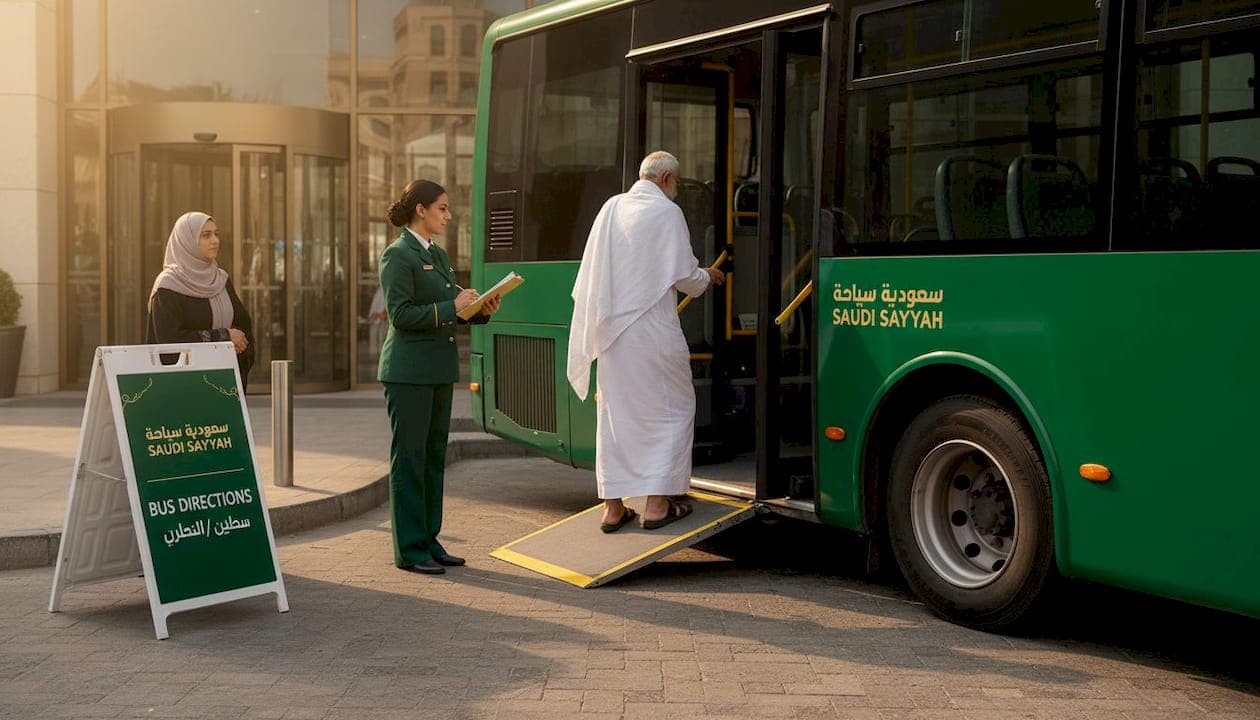
Physical accessibility refers to the hardware: step-free vehicle entry, low-floor buses, hydraulic lifts, and wide doorways that accommodate mobility aids like wheelchairs and walkers. A vehicle that requires a traveler to climb three steps is not accessible, regardless of what the brochure says.
Information accessibility means clear signage in multiple languages, digital displays, and real-time updates. For Western pilgrims unfamiliar with Arabic script or Saudi transit systems, readable wayfinding is essential. Without it, even a physically accessible vehicle becomes difficult to use.
Staff support is often the most overlooked element. Trained escorts, multilingual assistance, and on-call help for boarding and alighting are critical, especially during peak crowd periods around prayer times.
Communication support covers pre-trip confirmations, driver contact details, and real-time tracking. Many Western travelers rely on apps and digital confirmations that match how they book transport at home. Services that provide QR-coded tickets, driver photos, and GPS tracking reduce anxiety significantly.
Emergency readiness rounds out the criteria. Vehicles should carry basic first aid, and drivers should know protocols for medical situations. This is especially relevant for elderly pilgrims and those with chronic conditions.
Key accessibility criteria to check for any transport option:
- Step-free entry with ramps or hydraulic lifts
- Wide doors and secured wheelchair spaces inside the vehicle
- Multilingual signage and digital route displays
- Escort or companion seating available on request
- Driver training in assisting passengers with mobility needs
- Emergency protocols and first aid readiness
- Digital booking with confirmation records
The Saudi government's push through Vision 2030 is directly relevant here. The Vision 2030 Hajj/Umrah program expanded capacity to 16.92 million Umrah pilgrims in 2025, supported by infrastructure upgrades including the Haramain railway, airport expansions, and smart tech platforms like Nusuk for bookings and transport coordination, all with accessibility as a stated priority.
"Accessibility is not a feature you add on. It is a standard every transport provider must meet from the start."
Pro Tip: Before confirming any booking, call or message the provider directly and ask specifically whether their vehicles have hydraulic lifts, ramp access, and wheelchair-secured spaces. Do not rely solely on website descriptions.
For travelers with specific mobility needs, elderly pilgrim transport tips offer targeted advice. Those planning their first trip should also review first-time Umrah planning resources to understand the full logistics picture.
Key features of door-to-Haram shuttles and electric carts
Shuttles and electric carts are the most commonly used accessible transport options for the hotel-to-Haram leg of the journey. When properly configured, they offer a safe, predictable, and comfortable ride even during peak periods.
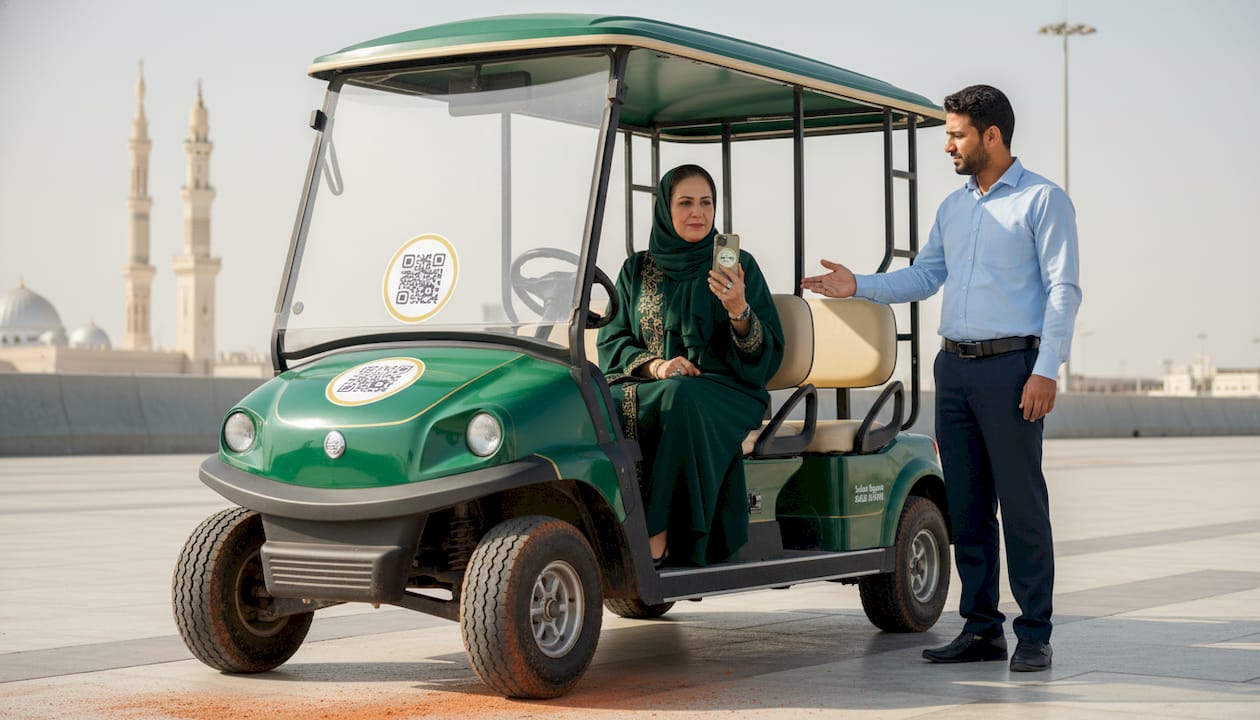
Hotel-to-Haram electronic transport booking via Nusuk or official portals includes door-to-door service, QR-coded tickets, dedicated routes through tunnels, wheelchair-accessible low-floor buses with ramps, and optional ritual escorts for pilgrims who need guidance.
Here is a comparison of standard versus accessible shuttle and cart features:
| Feature | Standard shuttle | Accessible shuttle/cart |
|---|---|---|
| Vehicle entry | Step-up entry | Step-free with ramp or lift |
| Ticketing | Paper or verbal | QR code, digital confirmation |
| Wheelchair space | Not guaranteed | Secured, dedicated space |
| Staff support | Driver only | Trained escort available |
| Route type | General road | Dedicated tunnel/lane |
| Tracking | Not available | Real-time GPS tracking |
| Communication | None pre-trip | Driver photo, contact info sent |
A typical accessible shuttle journey from your hotel to the Haram works like this:
- Book online or via the Nusuk platform at least 48 hours before your intended trip, selecting accessible vehicle type.
- Receive a digital confirmation with QR ticket, driver photo, vehicle registration, and estimated pickup time.
- Driver arrives at your hotel entrance. The vehicle deploys its ramp or hydraulic lift for boarding.
- Boarding assistance is provided by a trained escort if requested during booking.
- Travel through a dedicated route, separate from general pedestrian and vehicle traffic, reducing exposure to crowds.
- Arrive at an accessible drop-off point near the Haram entrance, with direct access to step-free entry zones.
- Escort guides you to your destination within the Haram grounds if that service was selected.
Electric carts follow a similar process but cover shorter distances within designated zones close to the Haram perimeter. They are particularly useful for pilgrims who can manage some walking but need support for longer stretches.
Pro Tip: During peak seasons like Ramadan and the months leading to Hajj, accessible vehicles fill up quickly. Book at least one week in advance and confirm your booking again 24 hours before travel.
For a step-by-step walkthrough of securing your vehicle, booking accessible transport has detailed guidance. If you are also considering premium options, luxury and accessible options covers vehicles that combine comfort with full accessibility features.
Rail, airport, and taxi accessibility for Umrah journeys
Beyond the hotel-to-Haram shuttle, most Western pilgrims travel through at least two major transport legs: an international airport arrival and a rail or road connection between cities. Understanding what accessibility looks like across these legs is essential for smooth end-to-end planning.
Airport accessibility. Major Saudi airports serving Umrah pilgrims, including King Abdulaziz International Airport in Jeddah and Prince Mohammad bin Abdulaziz Airport in Medina, have expanded facilities significantly. These include dedicated assistance desks for travelers with disabilities, motorized carts for long terminal walks, accessible restrooms, and direct tarmac transfers using air bridges where available. However, as US State Dept accessibility guidance notes, holy sites are mostly accessible but many hotels and transport options are not fully compliant, making pre-verification essential.
Haramain railway. The high-speed rail line connecting Makkah, Madinah, King Abdullah Economic City, and Jeddah is one of the most accessible transport options in the region. Stations have elevator access, tactile flooring, accessible ticketing counters, and dedicated spaces on trains for wheelchair users. The Vision 2030 Hajj/Umrah program has placed the Haramain railway at the center of its inclusive transport strategy, with capacity built to handle millions of pilgrims per season.
Taxis and ride-hailing. Standard taxis vary widely. Apps like Uber and Careem operate in Saudi Arabia and allow you to request larger vehicles, but accessible options with ramps or lifts are not consistently available through these platforms. Specialized accessible taxi services exist but must be booked in advance through verified providers.
| Transport type | Ramp/lift access | Multilingual support | Pre-booking required | Real-time tracking |
|---|---|---|---|---|
| Airport transfer | Sometimes | Yes | Recommended | With private providers |
| Haramain railway | Yes (stations) | Partial | Yes via Nusuk | No |
| Standard taxi | Rarely | Limited | No | App-based only |
| Accessible taxi | Yes | Varies | Yes | With select providers |
| Hotel shuttle | Varies | Varies | Yes | With select providers |
"Confirm every accessibility feature in writing before you travel. A ramp listed on a website is not the same as a ramp available at 3am on your departure morning."
Key features to verify across all transport legs:
- Elevator or lift access at railway and airport terminals
- Signage in English and Arabic at minimum
- Assistance request systems at check-in and boarding
- Dedicated pickup and drop-off zones for accessible vehicles
- Companion or escort seating policies
Detailed guidance on airport transfer accessibility covers the specific steps for arriving and moving through Saudi airports with accessibility needs. Pilgrims flying into Jeddah should also review Jeddah-Makkah transport options to compare all available routes and their accessibility ratings.
Critical tips for booking and using accessible transport
Knowing what features to look for is useful. Knowing exactly how to secure them before you land in Saudi Arabia is what actually protects your journey. Here is a practical, sequential approach to booking accessible Umrah transport.
- Create a Nusuk account before you apply for your visa. The platform is mandatory for booking official transport services, and many visa approvals are linked to confirmed transport bookings through compliant providers.
- Select accessible vehicle types explicitly. On Nusuk and partner platforms, filter for wheelchair-accessible options. Do not assume a generic "comfortable vehicle" meets accessibility standards.
- Confirm hydraulic lift or ramp availability. Hydraulic lifts are specifically designed to prevent injury during boarding and are required for travelers who cannot use ramps independently.
- Verify dedicated lane or tunnel routing. Accessible vehicles that use dedicated tunnels avoid the crush of foot traffic near the Haram, which is critical for safety during peak prayer times.
- Request written confirmation of all accessibility features. Save this as a PDF or screenshot. Reference it if any discrepancy arises on the day of travel.
- Book return transport at the same time. Many travelers secure outbound transport but forget the return leg, which can be harder to arrange last-minute during high-demand periods.
- Identify a backup contact. Have the name and direct number of a ground transport coordinator, not just an automated booking reference.
Before confirming any provider, check these features specifically:
- Does the vehicle have a ramp and a hydraulic lift, or only one?
- Is the wheelchair space inside the vehicle secured with straps?
- Is there a companion seat directly next to the accessible space?
- What is the cancellation and rebooking policy if your schedule changes?
- Does the driver speak English or have a translation app available?
As US State Dept guidance confirms, many transport providers in Saudi Arabia do not fully meet accessibility standards despite claims to the contrary. Verification is not optional.
Pro Tip: Download your booking confirmations and driver details to your phone's local storage before departure. In areas with poor connectivity near the Haram, cloud-based apps may not load quickly enough when you need information fast.
The Umrah safety guide covers broader safety considerations that complement your transport planning. Travelers moving in groups should also check group transport options to coordinate vehicles that accommodate mixed mobility needs.
Why accessible transport matters more than ever for Umrah pilgrims
Official infrastructure upgrades are real and significant. The Haramain railway, Nusuk, and airport expansions represent genuine progress. But the gap between what is built and what is consistently delivered on the ground remains wide.
US State Dept reports note that while holy sites are mostly accessible, inconsistencies persist across hotels and transport. Narrow elevators, single-step entrances, and poorly trained staff are still common. A ramp exists, but it is blocked. A lift is installed, but out of service. Staff know the route, but not how to assist a passenger safely.
True accessibility is about more than hardware. It is about whether the person using the service arrives safely, with dignity, and without unnecessary stress. For Western pilgrims on their first Umrah, that standard matters deeply. Checking pro group travel tips can also help groups plan for varied mobility needs within a single party, which is often the case for family groups traveling together.
The practical lesson: infrastructure improvements set a floor, not a ceiling. The ceiling is set by the specific provider, the specific driver, and the specific vehicle you board on the day of your trip. Verify everything. Document everything. Build time buffers into every leg of your journey.
Experience reliable accessible transport with Saudi Sayyah
Accessible, well-organized transport is available for Umrah pilgrims who know where to look and what to ask for.
Saudi Sayyah offers tailored transport solutions built specifically for pilgrims who need reliable, verified accessible vehicles. The fleet includes the latest model year vehicles equipped with advanced features, paired with experienced drivers trained to assist passengers with diverse mobility needs. Before every trip, travelers receive driver photos, vehicle details, and real-time GPS tracking through a geolocation-enabled platform, eliminating uncertainty at every stage of the journey. Browse the full view accessible vehicle fleet or explore accessible transport services to find options that fit your schedule and requirements.
Frequently asked questions
Which transport options are wheelchair-friendly for Umrah pilgrims?
Low-floor buses with ramps, dedicated electric carts, and accessible hotel-to-Haram shuttles can all be booked via Nusuk and official portals, with wheelchair-secured spaces and optional escort services available.
Is it mandatory to use Nusuk for booking accessible Umrah transport?
Yes. Nusuk is required for booking official shuttles, electric carts, and other regulated transport services as part of the formal Umrah visa and travel process.
How can Western pilgrims verify a provider's accessibility claims?
Contact providers directly before booking, request photos or written confirmation of specific features like ramps and hydraulic lifts, and cross-reference with official Nusuk guides to confirm compliance.
Are airport and Haramain railway accessible for those with limited mobility?
Both have significantly improved accessibility features as part of Vision 2030, including elevators, dedicated spaces, and assistance services, but confirming specific arrangements ahead of travel remains essential.