
TL;DR:
- Shared transport options include public buses, shared taxis, hotel shuttles, and government-operated buses.
- Cost, reliability, proximity, and ease of booking are key factors to determine the best transport for pilgrims.
- Combining different services based on schedule, comfort, and group needs ensures smooth Umrah travel.
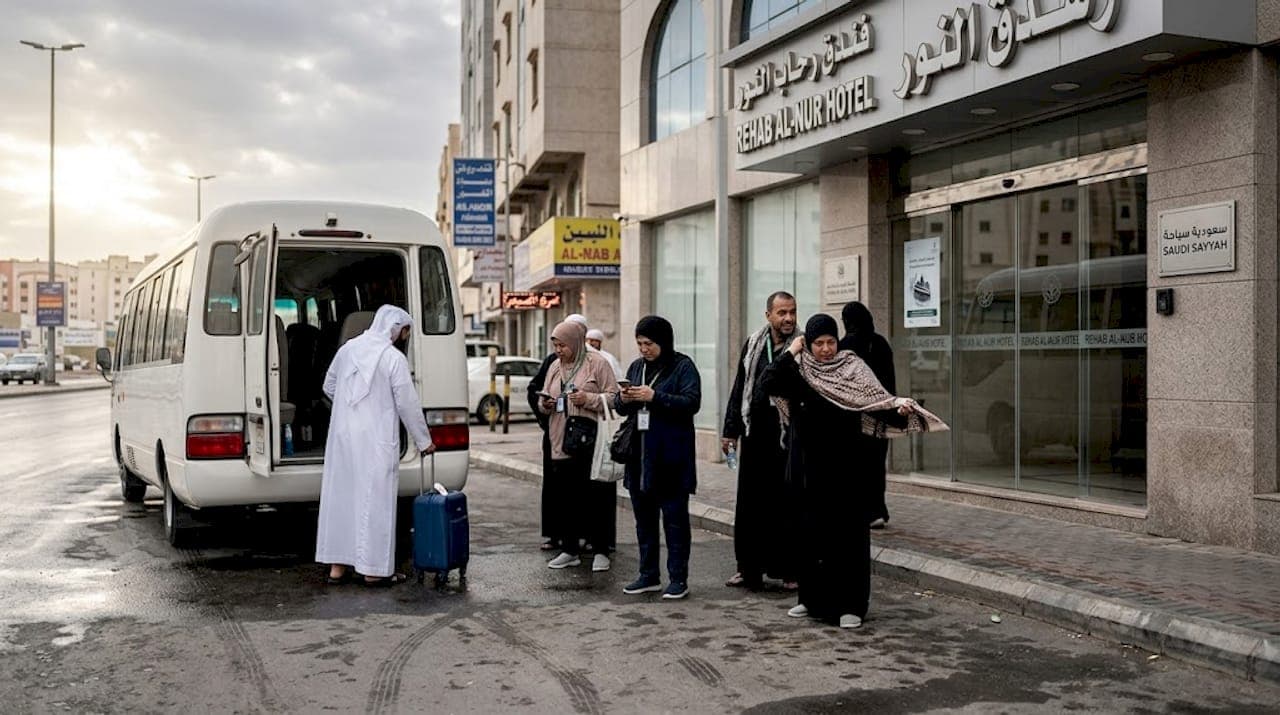
Arriving in Makkah for Umrah is a profound moment. But the practical side of getting around can quickly become stressful, especially when you are unfamiliar with local transport networks. Shared transport options range from public buses to hotel shuttles, and each works differently depending on your budget, group size, and schedule. Knowing which option fits your situation before you land saves time, money, and unnecessary confusion. This guide breaks down the main shared transport choices available to pilgrims, lays out clear comparison criteria, and helps you decide which option works best for your specific needs.
Table of Contents
- How to evaluate shared transport for Umrah
- Public buses: The Makkah Bus system
- Shared taxis: Flexible and efficient
- Hotel and government shuttle buses: Comfort and accessibility
- Summary table: Comparing top shared transport options
- What most transport guides don't tell you
- Plan your Umrah transport with Saudi Sayyah
- Frequently asked questions
Key Takeaways
| Point | Details |
|---|---|
| Evaluate key factors | Choose shared transport by considering cost, comfort, proximity, and reliability. |
| Makkah Bus advantage | The Makkah Bus system covers hundreds of stations and connects efficiently to holy sites. |
| Shared taxi flexibility | Shared taxis provide direct routes with set prices and offer fast, convenient rides. |
| Hotel shuttle comfort | Hotel and government shuttle buses are often free and ideal for comfort-focused or elderly pilgrims. |
How to evaluate shared transport for Umrah
Not all shared transport is equal. Before picking any option, it helps to assess a few basic criteria so you can match the service to your actual needs.
Here are the key factors to consider:
- Reliability: Does the service run on a consistent schedule, or is timing unpredictable?
- Cost: Is the service free, fixed-fare, or variable? Hotel shuttles are often complimentary, while taxis charge per person.
- Frequency: How often does the service run? Higher frequency means shorter wait times.
- Drop-off proximity: Does the route get you close to Masjid al-Haram or your specific destination?
- Ease of booking: Can you reserve a spot in advance, or do you need to show up and wait?
- Group size and mobility: Larger groups or pilgrims with mobility needs may require different vehicle types or dedicated services.
Cost is one of the biggest differentiators. Hotel shuttles are frequently included in your accommodation package. Public buses cost very little. Shared taxis fall somewhere in between, charging per seat rather than per vehicle.
When planning your Umrah trip, it is worth checking whether your hotel offers a shuttle service before you book any transport separately. Government shuttles and hotel-provided transfers are especially common and useful during Umrah season, so timing your visit around peak operational periods can actually work in your favor.
Pro Tip: Ask your hotel directly about shuttle schedules before arrival. Many properties run fixed routes to the Haram several times daily, and knowing the timetable in advance helps you plan prayers and visits without rushing.
With the basics in mind, let's break down what actually makes a shared transport solution effective for your spiritual journey.
Public buses: The Makkah Bus system
Once you know your criteria, start with the most widely accessible public option: the Makkah Bus.
The Makkah Bus is a large-scale public transit system designed specifically to serve pilgrims and residents in Makkah. It is one of the most significant transport projects in the region. The Makkah Bus network operates 438 stations connecting hotels and neighborhoods to Masjid al-Haram, serving millions of pilgrims annually.
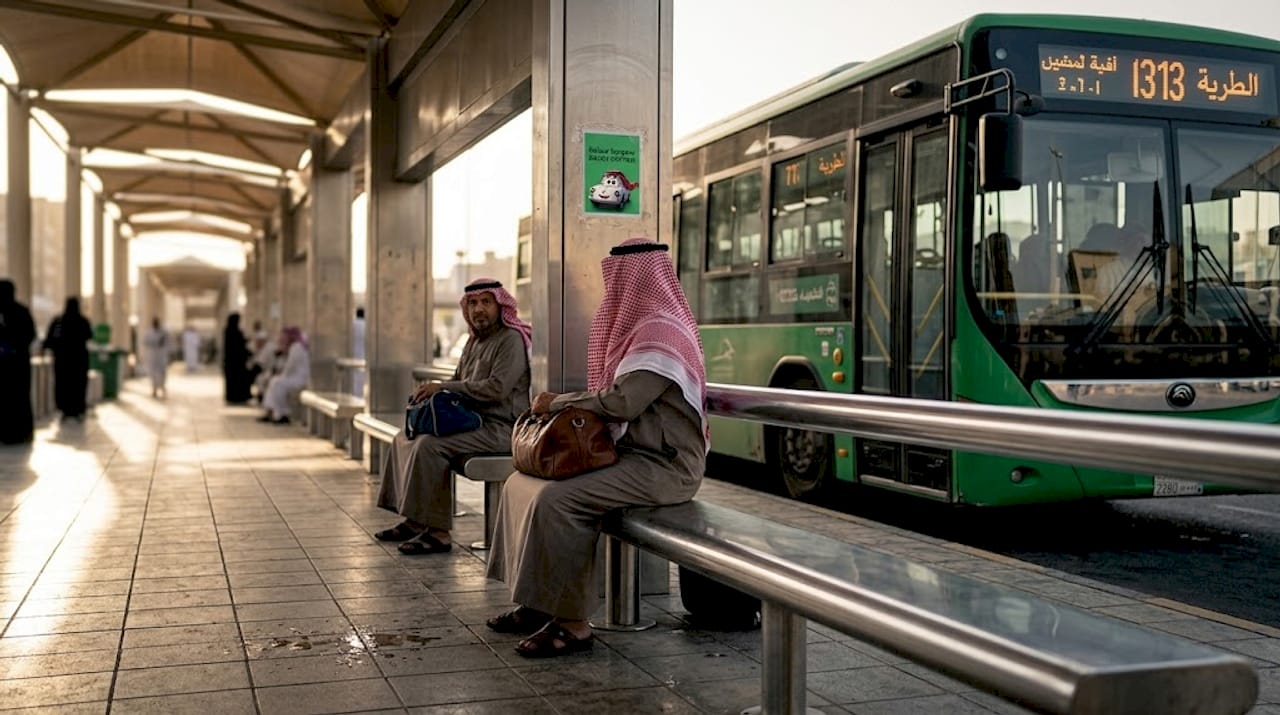
Here is a quick overview of the system:
| Feature | Detail |
|---|---|
| Total stations | 438 |
| Primary coverage | Hotels, neighborhoods, Masjid al-Haram |
| Typical frequency | Every 10 to 20 minutes on main routes |
| Cost | Low fare or free during trial phases |
| Accessibility | Suitable for most pilgrims |
The buses are air-conditioned and generally well-maintained. Major stops include areas near the Haram, key hotel clusters, and residential neighborhoods. Coverage is broad, which makes it a practical daily option for pilgrims staying within Makkah.
However, peak prayer times bring heavy crowding. Early morning and post-Isha periods see the highest passenger volumes. If you need to travel during these windows, expect longer waits and limited seating.
Benefits of the Makkah Bus:
- Wide network with hundreds of stops
- Budget-friendly for all pilgrim types
- Runs frequently on core routes
- Direct access to areas close to the Haram
- No booking required, just board and go
For travelers arriving from Jeddah who want to understand all options from Jeddah to Makkah, the Makkah Bus becomes relevant once you are already inside the city. It is not an intercity service, but it is one of the most reliable ways to move within Makkah once you have settled in.
Shared taxis: Flexible and efficient
If your group prefers convenience and direct routes, shared taxis are the next top choice.
Shared taxis in Makkah operate on popular fixed routes used by pilgrims. Unlike private taxis, you share the ride with other passengers going to the same general destination, which keeps costs low. Drivers typically wait at designated points until the vehicle fills up before departing.
Key things to know about shared taxis:
- Fixed routes: Most shared taxis serve high-demand pilgrim destinations like Masjid Aisha, Mina, and Aziziyah.
- Per-person pricing: You pay for your seat, not the whole vehicle.
- Departure style: Taxis usually leave once full, so wait times vary.
- Late-night availability: Shared taxis often run later than buses, making them useful after night prayers.
- Small groups: Ideal for groups of two to four people needing a direct, no-transfer route.
Short routes are typically very affordable. Shared taxis to Masjid Aisha cost around 10 SAR per person for a round trip, making them one of the most cost-effective options for common pilgrim routes.
For pilgrims performing Umrah multiple times, the round-trip pricing on short routes is a major advantage. You are not locked into a fixed bus schedule, and you get a direct ride rather than multiple stops.
Exploring the best taxi routes for common pilgrim destinations can save both time and money. If you want a smoother experience, understanding the process of booking a shared taxi before you travel is well worth the preparation.
Pro Tip: Always confirm whether the fare quoted is one-way or round trip before you get in. On busy routes, drivers sometimes quote return fares by default, but it is always better to ask directly to avoid any misunderstanding at the destination.
Hotel and government shuttle buses: Comfort and accessibility
Next, don't overlook the dedicated shuttles provided directly to pilgrims by hotels and government initiatives.
These shuttles represent one of the most convenient shared transport options available, particularly for first-time pilgrims or those traveling with elderly family members.
Here is how to access hotel and government shuttle services:
- Confirm with your hotel at booking. Ask specifically whether a shuttle to the Haram is included in your stay.
- Request the schedule on arrival. Most hotel shuttles run at fixed intervals, often aligned with prayer times.
- Register if required. Some larger hotels ask guests to sign up for shuttle seats, especially during busy periods.
- Check government shuttle points. Official shuttle stops are usually marked near major accommodation zones.
- Carry your hotel key card or ID. Some services are restricted to verified guests.
Hotel shuttles to the Haram are common and often complimentary. Government shuttles during peak seasons actively link accommodations to holy sites, providing structured, crowd-managed transport for large volumes of pilgrims.
Government shuttle programs are especially active during Ramadan and other peak Umrah periods. They are designed to reduce congestion and ensure pilgrims can access major sites without relying on private transport.
For pilgrims landing at major airports, understanding hotel airport shuttles is an important first step. A broader guide to airport transfers can also help you map the full journey from landing to reaching your accommodation.
Comfort levels on hotel shuttles tend to be noticeably higher than public buses. Seating is more organized, vehicles are newer in most cases, and the routes are direct.
Summary table: Comparing top shared transport options
To help you decide at a glance, here is how each shared transport option measures up on the essentials.
| Transport type | Cost | Coverage | Flexibility | Frequency | Comfort | Booking |
|---|---|---|---|---|---|---|
| Makkah Bus | Low | Wide (438 stations) | Low | High | Moderate | No booking needed |
| Shared taxi | Low to moderate | Key pilgrim routes | High | Variable | Moderate | On-demand |
| Hotel shuttle | Often free | Hotel to Haram | Low | Fixed schedule | High | Ask hotel |
| Government shuttle | Free or low | Major holy sites | Low | Seasonal | Moderate to high | On-site registration |
Quick recommendations by pilgrim profile:
- Budget travelers: Makkah Bus for daily movement, shared taxis for specific destinations
- Solo pilgrims: Shared taxis for flexibility, Makkah Bus for routine trips
- Families with children: Hotel shuttle for ease and safety, Makkah Bus as backup
- Elderly pilgrims: Hotel shuttle or government shuttle for comfort and organized access
- First-time pilgrims: Hotel shuttle first, then expand to public options as you get familiar
Reviewing the reliability factors for Umrah transport before committing to any option can prevent last-minute problems, especially during high-traffic periods near prayer times.
The right transport mix often combines two or three options. Using the hotel shuttle for early morning prayers, the Makkah Bus for afternoon movement, and shared taxis for evening flexibility covers most pilgrim needs efficiently.
What most transport guides don't tell you
Most transport comparisons focus entirely on price and coverage. What they miss is timing. The single biggest variable in Makkah transport is not which service you use, but when you use it. A hotel shuttle at 3 AM runs smoothly and quickly. That same shuttle at 12 PM post-Dhuhr prayer might be standing room only with a 20-minute wait outside in summer heat.
The Makkah Bus handles millions of pilgrims annually, but that volume concentrates into predictable windows. Pilgrims who understand prayer time traffic patterns, and plan their transport around them rather than against them, consistently report smoother experiences.
Shared taxis are often dismissed as informal or unreliable. In practice, on well-established routes, they are one of the most dependable options available. Drivers know demand patterns better than any app. The lack of a digital booking interface does not mean lack of reliability. It just requires different planning.
For first-time pilgrims, the instinct is to default to the most familiar-looking option. That usually means private taxis or ride-hailing apps. But for short, high-frequency routes within Makkah, shared options are almost always faster during peak periods because they bypass the app queue entirely.
Plan your Umrah transport with Saudi Sayyah
Understanding shared transport options is only part of the journey. Having a reliable, confirmed ride from the airport to your accommodation sets the right tone from the start.
Saudi Sayyah provides fully bookable, pre-confirmed shared and private transfer services for Umrah pilgrims. The platform sends driver details, vehicle information, and real-time tracking before every trip, so there are no surprises. Booking is straightforward, the system is internationally compliant, and the service runs on a schedule you can plan around. Visit saudisayyah.com to review available routes and confirm your transfer before you travel.
Frequently asked questions
Are Makkah Buses free for all pilgrims in 2026?
The Makkah Bus was free during its initial trial phase, but regular service may require a low fare. Check current pricing at the time of travel.
How much do shared taxis cost for short Umrah routes?
Shared taxis on short routes like to Masjid Aisha typically cost around 10 SAR per person for a round trip, making them a budget-friendly option.
Do all hotels provide free shuttles to the Haram?
Many hotels offer complimentary Haram shuttles, but availability varies by property. Always confirm the shuttle schedule directly with your hotel before arrival.
Which shared transport is best for elderly pilgrims?
Hotel and government shuttles offer the most organized and comfortable experience for elderly pilgrims, with structured seating and direct routes to holy sites.