

TL;DR:
- Personalized travel assistance combines expert support and technology to create tailored pilgrim itineraries. It reduces logistical stress, enabling pilgrims to focus on spiritual rituals and adapt plans to individual needs. The human element remains essential for handling disruptions and ensuring meaningful experiences.
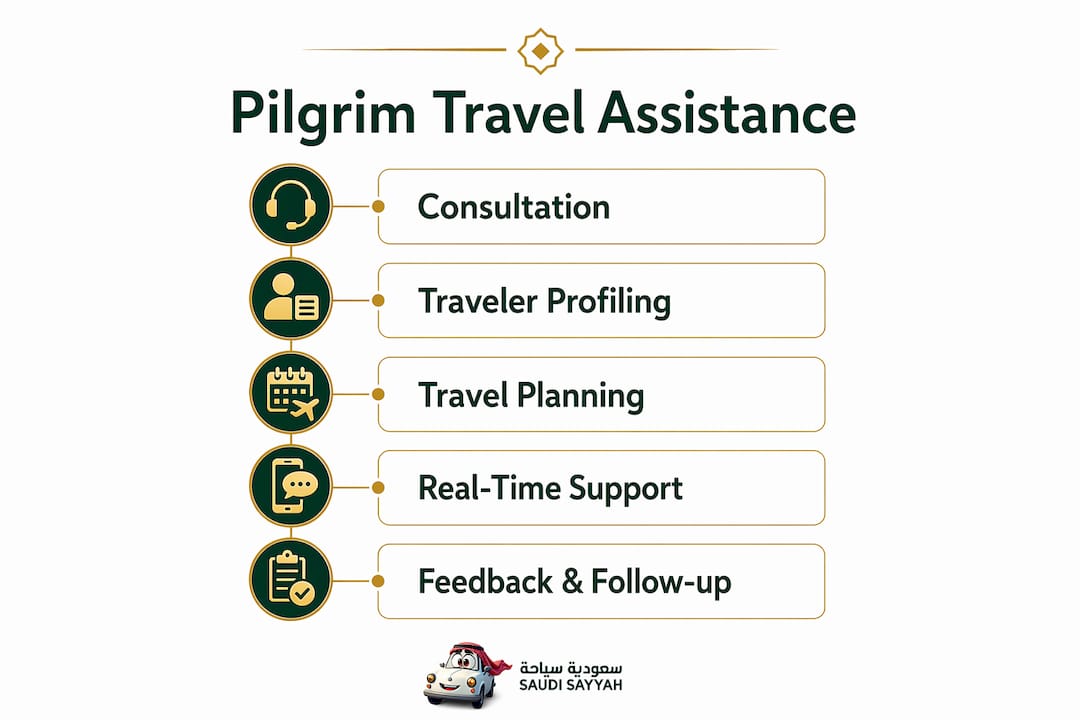
Personalized travel assistance is defined as a hybrid service combining expert human support and technology to create tailored travel plans and deliver real-time problem-solving throughout a trip. For pilgrims traveling to the holy lands, this service is not a luxury. It is a practical necessity. The logistical complexity of Hajj or Umrah, combined with the emotional weight of a first sacred visit, makes generic travel planning inadequate. Pilgrims need a service that anticipates their needs, manages disruptions, and keeps the focus on what matters most: the spiritual experience itself.
What is personalized travel assistance for pilgrims?
Personalized travel assistance is a bespoke service model that uses advanced traveler profiling and human expertise to build trips around individual needs rather than standard templates. The industry term for this approach is "concierge travel management," and it goes well beyond booking flights and hotels. For pilgrims, it means every element of the trip, from transport timing to accommodation proximity to the Haram, reflects personal priorities and physical needs.

The core difference between generic booking and personalized assistance is anticipation. Advanced algorithms and human experts work together to integrate personal preferences into a comprehensive travel profile before the trip begins. That profile then drives every decision. A pilgrim who uses a wheelchair gets accessible vehicle arrangements confirmed in advance. A first-time Umrah traveler gets step-by-step guidance on local customs before landing in Makkah.
Saudisayyah applies this model directly to pilgrim transport. The platform sends driver photos, vehicle details, and real-time tracking before every trip, removing uncertainty at each stage of the journey.
What services are included in personalized travel assistance?
Comprehensive personalized travel services cover itinerary design, accommodation selection, transport arrangements, on-trip expert support, and tailored local experiences. For pilgrims, these components take on specific forms.
Core service components include:
- Itinerary customization: Trip flow built around prayer schedules, ritual timing, and personal pace rather than a fixed group timetable.
- Transport coordination: Private or group vehicle arrangements that account for mobility needs, group size, and route preferences between Makkah, Madinah, and Mina.
- Accommodation matching: Hotel or apartment selection based on proximity to the Masjid al-Haram, budget, and accessibility requirements.
- 24/7 concierge support: Direct communication via text or phone to manage disruptions, rebook transport, or resolve local issues in real time.
- Emergency troubleshooting: Human-led problem solving for flight cancellations, lost documents, or sudden health concerns during the trip.
The human element is what separates this service from a standard booking app. Automated tools handle speed and confirmation. Human concierges handle nuance, judgment, and the unexpected.
Pro Tip: Ask any provider whether their support team is available during Saudi Arabia's local nighttime hours. Many disruptions happen outside business hours, and a concierge who is offline at midnight is not truly a 24/7 service.
How does personalized travel assistance enhance the pilgrim experience?
Personalized assistance reduces the logistical burden so pilgrims can focus on their spiritual goals. This is the central benefit, and it is not a small one. Pilgrims who spend mental energy tracking transport schedules, managing group coordination, or handling booking errors arrive at the Haram exhausted rather than present.
Personality-based travel planning matches destination pace and travel style to individual psychological needs, reducing travel burnout and supporting mental well-being. For pilgrims, this means a provider who understands that some travelers need quiet recovery time between rituals, while others want a tightly scheduled day. Neither preference is wrong. Both need to be planned for.
"The 'magic' of personalized travel is in anticipating needs before they are explicitly stated, emphasizing emotional and psychological experience design over mere logistics."
The security of real-time support also changes the pilgrim's experience in a measurable way. Human availability for midnight disruptions or local transit problems helps travelers maintain control and reduce stress. Knowing that a real person can resolve a problem at any hour provides peace of mind that no app notification can replicate.
Specific ways personalized assistance improves the pilgrim experience:
- Pace control: Itineraries built around the pilgrim's physical stamina, not a group average.
- Ritual alignment: Transport and accommodation scheduled around Fajr, Dhuhr, and Asr times without the pilgrim needing to negotiate each day.
- Accessibility planning: Wheelchair-accessible vehicles and ground-floor accommodation confirmed before departure, not requested on arrival.
- Local knowledge: Guidance on crowd patterns at the Haram, optimal walking routes, and safe areas for elderly or mobility-limited pilgrims.
- Emotional continuity: A consistent point of contact who knows the pilgrim's profile and does not require re-explanation at each stage.
What should pilgrims look for when choosing travel assistance services?
The right provider combines pilgrimage-specific experience with a clear balance of technology and human support. Generic travel agencies rarely understand the ritual timing, crowd dynamics, or accessibility challenges specific to Hajj and Umrah. Pilgrims should prioritize providers who demonstrate direct knowledge of these factors.
| Evaluation criterion | What to look for |
|---|---|
| Pilgrimage experience | Proven track record with Hajj or Umrah travelers, not just general tourism |
| Human availability | 24/7 support with local Saudi Arabia coverage, including overnight hours |
| Technology integration | Real-time tracking, driver identification, and booking confirmation tools |
| Multilingual support | Arabic and English at minimum, with additional languages based on pilgrim origin |
| Pricing transparency | Clear planning fees with no hidden commissions on accommodation or transport |
Custom travel designers typically start with a 30–60 minute consultation to identify traveler style and constraints. That initial conversation is a strong quality signal. A provider who skips this step and jumps straight to a package quote is selling a template, not a tailored service.
Pro Tip: Request a sample itinerary for a pilgrim profile similar to yours before committing. A provider confident in their personalization process will share one without hesitation.
For group pilgrimages, the evaluation adds another layer. The complete group pilgrimage checklist covers the key coordination points that separate a smooth group trip from a logistical failure.
How to integrate personalized assistance with group transport for pilgrimages
Group transport and personalized assistance are not opposites. The best pilgrim experiences combine both. Integrating concierge support with group vehicle management increases smoothness and reduces stress across the entire group, not just for individual travelers.
Practical integration points include:
- Timing coordination: Concierge staff align vehicle departure times with prayer schedules and ritual completion, not fixed clock times.
- Vehicle selection: Fleet options matched to group size, with accessible vehicles confirmed for any mobility-limited members.
- Contingency planning: Backup transport arrangements confirmed before departure, so a vehicle delay does not cascade into a missed ritual.
- Individual accommodation within group logistics: Pilgrims with specific needs, such as elderly travelers or those with medical requirements, receive tailored arrangements inside the group framework.
- Live communication: A single point of contact manages both the group coordinator and individual pilgrim queries, preventing information gaps.
For pilgrims traveling with elderly family members, specialized transport for elderly pilgrims covers the specific vehicle and accessibility requirements that standard group bookings often miss. For multi-city itineraries covering Makkah, Madinah, and Taif, managing multi-city pilgrim trips provides a practical framework for sequencing transport and accommodation across locations.
The group travel planning guide from a vetted partner outlines discovery consultations and itinerary design principles that apply directly to pilgrim groups with complex or sensitive transport requirements.
What are the emerging trends in personalized pilgrim travel assistance?
The travel industry is moving toward a hybrid model where fast self-service automation pairs with human concierges who provide clarity and emotional intelligence. This shift is especially relevant for pilgrimage travel, where the stakes are high and the margin for error is low.
| Trend | Application for pilgrims |
|---|---|
| AI-assisted traveler profiling | Builds detailed preference profiles from booking history and consultation data |
| Real-time mobile updates | Sends live transport status, driver location, and schedule changes to pilgrims |
| Geolocation-enabled fleet management | Tracks vehicles and confirms arrival times without pilgrim-initiated contact |
| Multilingual live chat | Connects pilgrims to support staff in their native language during the trip |
| Personality-based itinerary design | Matches trip pace and experience selection to individual psychological profiles |
Saudisayyah already applies geolocation-enabled tracking and pre-trip driver identification to every booking. These features reflect the direction the entire industry is moving: less guesswork, more confirmed information delivered before the pilgrim needs to ask.
The modern blend of automation and human support in complex transport management is covered in detail for travelers who want to understand how these systems work together in practice.
Key Takeaways
Personalized travel assistance works for pilgrims because it combines human judgment with technology to anticipate needs, manage disruptions, and keep the focus on the spiritual purpose of the trip.
| Point | Details |
|---|---|
| Core definition | Personalized assistance is a hybrid concierge model combining technology and human expertise. |
| Pilgrim-specific value | It reduces logistical stress so pilgrims can focus on rituals and spiritual goals. |
| Provider selection | Prioritize providers with pilgrimage experience, 24/7 local support, and transparent pricing. |
| Group integration | Concierge support and group transport work best when coordinated from a single point of contact. |
| Emerging technology | Geolocation tracking, real-time updates, and AI profiling are now standard in quality pilgrim services. |
Why the human element still matters most
The technology in personalized travel assistance is impressive. Real-time tracking, automated confirmations, and AI profiling all reduce friction. But the part that actually changes a pilgrim's experience is the human on the other end of the phone at 2:00 AM when the connecting flight cancels.
I have seen pilgrims arrive in Jeddah with no ground transport, no local contact, and no idea how to reach their accommodation. Every one of those situations was preventable. The common thread was not bad technology. It was the absence of a real person with local knowledge and the authority to act.
Avoiding templates and focusing on deep initial conversations about pace and personal comfort is what separates a meaningful trip from a managed one. Providers who skip the consultation and sell packages are not offering personalized assistance. They are offering a slightly customized version of the same thing everyone else gets.
The pilgrims who have the best experiences are the ones who invest time in the planning conversation, share their physical limitations honestly, and choose a provider who treats those details as the starting point rather than an afterthought. Technology makes the trip run. Human judgment makes it meaningful.
— Fa
Saudisayyah's approach to pilgrim travel support
Pilgrims planning Hajj or Umrah need transport that is confirmed, tracked, and matched to their specific needs before they land.
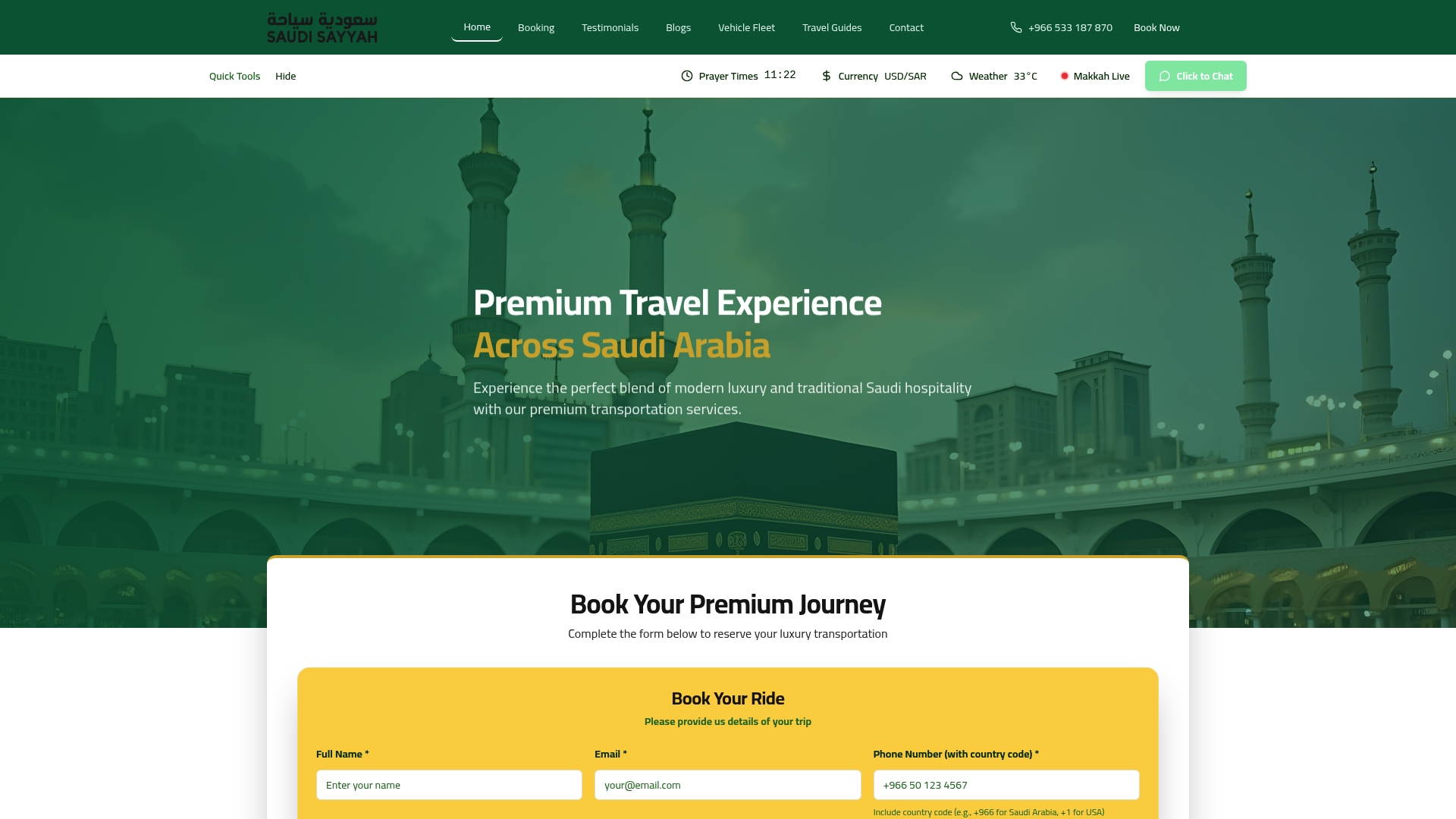
Saudisayyah provides custom car hire and fleet options built specifically for pilgrim travel in Saudi Arabia. Every booking includes driver identification, vehicle details, and geolocation tracking sent directly to the pilgrim before departure. The fleet covers individual transfers, accessible vehicles for elderly or mobility-limited pilgrims, and coordinated group transport across Makkah, Madinah, and surrounding areas. For pilgrims who want to see the full range of available vehicles, the premium fleet options are listed with specifications and capacity details.
FAQ
What is the difference between a travel concierge and a travel agent?
A travel agent books pre-packaged trips. A travel concierge provides personalized planning, real-time support, and active problem-solving throughout the journey, including managing disruptions as they happen.
How does personalized travel assistance help first-time pilgrims?
Personalized assistance gives first-time pilgrims a confirmed plan, a local contact, and real-time support. It removes the uncertainty of navigating unfamiliar logistics in a high-pressure spiritual environment.
What technology do personalized travel services use for pilgrims?
Quality providers use geolocation tracking, real-time mobile updates, and AI-assisted traveler profiling. Saudisayyah sends driver photos, vehicle details, and live tracking before every trip.
How far in advance should pilgrims book personalized travel assistance?
Booking three to six months before departure gives providers enough time to complete the initial consultation, confirm transport and accommodation, and build contingency plans for the full itinerary.
Can personalized assistance work for large pilgrim groups?
Yes. The most effective approach combines a single concierge point of contact with coordinated group transport, ensuring both group-level logistics and individual needs are managed without conflict.