
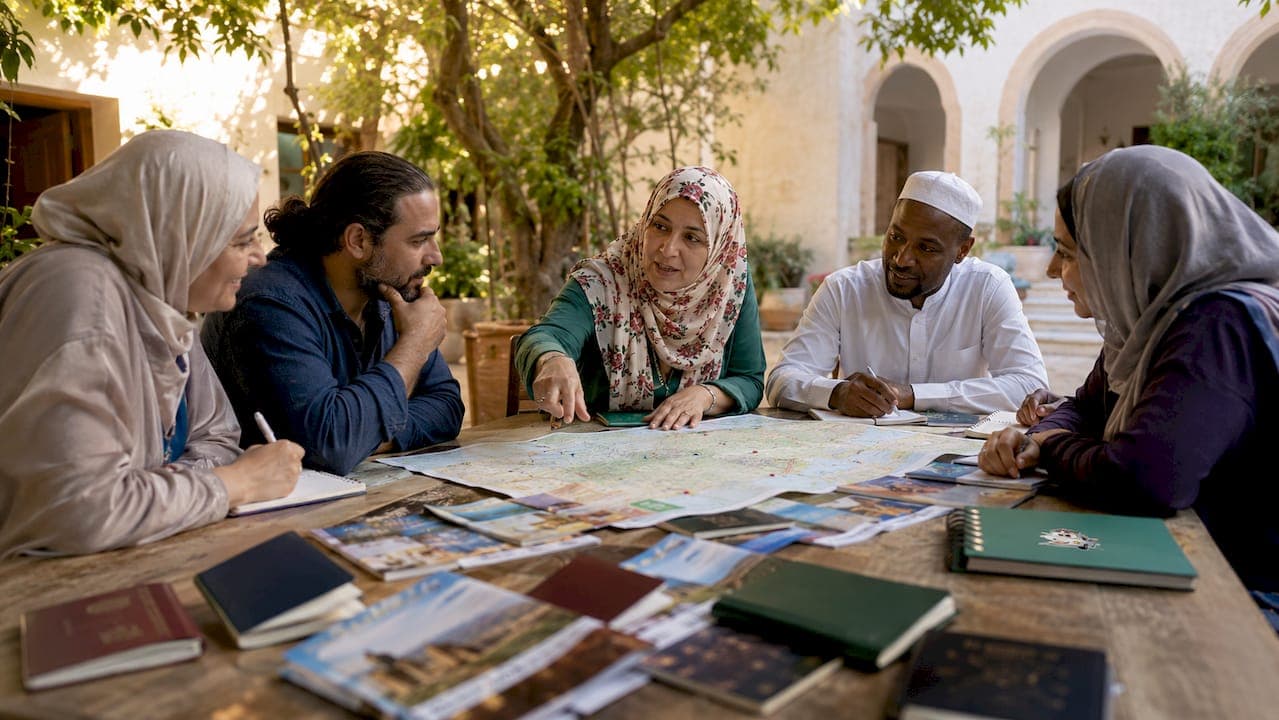
TL;DR:
- Effective group pilgrimage planning requires securing accommodations and certified guides at least a year in advance. Distributing shared supplies across multiple bags prevents crises from lost luggage, and combining digital tools with paper fallback plans ensures smooth logistics. Clear communication and early preparation are vital for a safe, meaningful, and well-coordinated spiritual journey.
A checklist for group pilgrimage travel is a structured set of steps and items that covers spiritual preparation, documentation, packing, and on-the-ground coordination for large religious journeys. Group pilgrimages to holy sites like Makkah, Jerusalem, or Medina require months of advance planning. The stakes are high: a missed visa deadline or a lost luggage strategy can derail the experience for dozens of people at once. This guide covers every major planning category, from booking timelines to emergency fallback plans, so you and your group arrive prepared.
1. Checklist for group pilgrimage travel: start with timing
Choosing the right travel dates is the single most consequential decision in group pilgrimage planning. Peak local traffic falls on Fridays, Saturdays, and Sundays at most holy sites. Large groups traveling on those days face crowded accommodations, slower transport, and less access to key sites. Scheduling departures on weekdays reduces friction across every other logistical category.
Timing also determines accommodation availability. Hotels near holy sites in Jerusalem fill 12 or more months before Easter and 8–10 months before autumn seasons in 2026. That window is shorter than most planners expect. Locking in dates early gives you the leverage to negotiate room blocks and confirm transport contracts.
Pro Tip: Build a two-week buffer into your planning calendar before any deposit deadline. Groups almost always need more time to confirm final headcounts than organizers anticipate.
2. Secure accommodations well in advance
Accommodation is the hardest variable to recover once it slips. For popular pilgrimage seasons, 4-star hotels near the Old City in Jerusalem book out more than a year ahead. That pattern holds across other major holy sites during peak religious calendars. Waiting until six months out often means settling for properties far from the sites your group came to visit.
When booking room blocks, request a rooming list template from the property at the time of reservation. This document becomes the backbone of your group coordination. Assign rooms by mobility needs, family units, or spiritual role within the group before you arrive. Changes made on arrival day cost time and create confusion.
For multi-city itineraries, the multi-city pilgrim trip guide from Saudisayyah covers how to sequence accommodations across stops without creating logistical gaps between cities.
3. Book certified guides early
Hiring an uncertified guide is not just a quality issue. It is a legal one. The Israeli Ministry of Tourism requires official two-year certification for all licensed tour guides. Uncertified guides can be denied entry to key religious sites, which directly affects your group's itinerary. The same credentialing standards apply in varying forms across Saudi Arabia and other pilgrimage destinations.
Certified guides do more than open doors. They provide historical and spiritual context that transforms a site visit into a meaningful experience. For first-time pilgrims especially, that layer of interpretation is irreplaceable. Confirm guide credentials in writing before signing any contract.
4. Documents, payments, and registrations
Every pilgrim in the group needs a passport valid for at least six months beyond the return date. Collect passport copies from all travelers at registration and store them in a shared, access-controlled digital folder. Visa applications for group travel often require coordinated submission, so a single missing document can delay the entire group's approval.
Group travel insurance must be purchased early. Many providers limit cancellation coverage if the policy is purchased more than 14–21 days after final payment. That window closes faster than most planners realize. Purchase group policies as a single transaction to simplify claims and ensure uniform coverage across all travelers.
Payment scheduling for group pilgrimages follows a standard structure:
- Initial deposit: $300–$500 per person to hold reservations
- Mid-point payment: typically due 90–120 days before departure
- Final balance: due 45–60 days before departure, after which registration closes
- Printed confirmations: distribute to every traveler, not just the group leader
Registration numbers finalize logistics like bus counts and rooming lists. Closing registration before final payment is standard practice. Communicate that deadline clearly to your group in writing.
5. Group travel packing list and luggage strategy
Packing for a group pilgrimage differs from individual travel in one critical way: shared items must survive the possibility of lost luggage. Distribute shared group supplies across multiple suitcases rather than consolidating them in one bag. If that bag is delayed, the group still has access to essentials. This single strategy prevents the most common group packing crisis.
For personal packing, the pilgrimage travel essentials list should account for both climate and spiritual dress requirements:
- Modest, site-appropriate clothing for each day of the pilgrimage
- Labeled compression cubes for event-specific outfits (e.g., prayer garments, formal attire for ceremonies)
- Comfortable walking shoes rated for cobblestone or uneven terrain
- Personal medications with copies of prescriptions in English and the local language
- Portable phone charger and universal adapter
- Printed emergency contact card with hotel address, group leader number, and local emergency services
Pro Tip: Assign one person per subgroup of 5–8 travelers to carry a shared first-aid kit. Distributing this responsibility prevents both duplication and gaps.
| Category | What to pack | Notes |
|---|---|---|
| Clothing | Modest layers, prayer garments | Label with name and group ID |
| Documents | Passport copy, visa, insurance card | Store one set digitally |
| Health | Medications, first-aid basics | Include prescription copies |
| Tech | Charger, adapter, offline maps | Download maps before arrival |
| Shared items | Snacks, group signage, first aid | Split across multiple bags |
6. Group transport coordination
Transport is where group pilgrimages most often lose time. A single bus arriving late can cascade into missed site access windows, delayed meals, and a frustrated group. Confirm vehicle capacity, driver credentials, and pickup times in writing at least 30 days before departure.
For groups with elderly pilgrims or travelers with mobility needs, transport for elderly pilgrims requires vehicles with step-free access and drivers experienced with slower boarding times. Build extra time into every transfer. A group of 30 takes three times longer to board than a group of 10.
Saudisayyah's geolocation-enabled platform sends driver photos, vehicle details, and real-time tracking before every trip. That level of pre-trip communication removes the uncertainty that typically causes group transport delays.
7. Communication and emergency planning
Reliable group communication starts before departure, not after a problem occurs. Designate one primary messaging app for the entire group and test it with all travelers before leaving home. WhatsApp and Telegram both support large group threads and work across most international carriers.
Digital signals fail at many pilgrimage sites. A no-phone fallback plan with paper cards listing hotel addresses, group leader contacts, and meeting points is not optional. It is the backup that keeps the group safe when technology fails.
"Pilgrims who carry paper fallback cards with hotel addresses and meeting points maintain group cohesion even when digital signals fail completely at crowded holy sites. Every traveler in the group should carry one, not just the group leader."
Establish two fixed meeting points at each major site: one primary and one backup. Communicate both at the start of each day. If someone is separated, they know exactly where to go without needing a phone signal.
For health and mobility emergencies, the safe pilgrimage health guide from Saudisayyah covers protocols for medical incidents at holy sites, including how to locate local emergency services quickly.
8. Centralized digital coordination tools
Static documents fail group pilgrimages. Shared digital spreadsheets with real-time update capability outperform PDF itineraries for managing rooming lists, meeting points, and emergency contacts. When a room assignment changes or a pickup time shifts, everyone sees the update immediately.
A well-structured group coordination spreadsheet covers five tabs: traveler roster with passport details, rooming assignments, daily itinerary with transport times, emergency contacts, and a payment tracking log. Assign one person as the document owner and give read access to all group leaders. Limit edit access to prevent accidental changes.
Real-time coordination tools improve group cohesion over static documents, particularly when managing variables that change during the trip itself. Build the spreadsheet before registration closes so it captures accurate data from the start.
Key takeaways
A successful group pilgrimage requires locking in accommodations and certified guides at least 10–12 months out, distributing shared supplies across multiple bags, and maintaining both digital and paper-based communication systems throughout the trip.
| Point | Details |
|---|---|
| Book accommodations early | Hotels near major holy sites fill 10–12 months before peak pilgrimage seasons. |
| Purchase insurance within 14–21 days | Late insurance purchases lose pre-departure cancellation coverage. |
| Distribute shared supplies | Split group items across multiple bags to protect against lost luggage. |
| Use paper fallback cards | Every traveler needs a printed card with contacts and meeting points for signal-dead zones. |
| Centralize coordination digitally | A shared, real-time spreadsheet outperforms static PDFs for managing group logistics. |
What I've learned from planning group pilgrimages
The most common mistake I see is treating the checklist as a packing list rather than a planning system. Packing is one item on the list. The real work is sequencing: what must happen before what, and who owns each step.
Group size changes everything. A group of 15 can absorb a missed connection. A group of 45 cannot. Once you cross roughly 30 travelers, you need subgroup leaders with their own checklists, not just one central organizer trying to track everyone. I've watched well-intentioned pilgrimages fall apart not because of bad planning, but because one person was carrying too much responsibility with no backup.
The spiritual dimension also gets underestimated in logistics-heavy planning. Pilgrimage planning requires balancing spiritual intentions with logistical realities to preserve the purpose of the trip. When the schedule is too tight, pilgrims feel rushed at the very sites they traveled thousands of miles to experience. Build in unstructured time at each major site. That buffer is not wasted. It is the point.
Communication failures are the most preventable problem and the most common one. Every group I've worked with that skipped the paper fallback card eventually needed it. Digital tools are the primary system. Paper is the backup. You need both.
— Fa
Saudisayyah transport for group pilgrimage planning
Group pilgrimage logistics depend on transport that shows up on time, fits the group's size, and communicates clearly before every pickup.

Saudisayyah operates a fleet of late-model vehicles suited for pilgrim groups of all sizes, from small family parties to large organized tours. The pilgrim transport services page covers available vehicle categories, booking workflows, and group pricing. Every booking includes driver photos, vehicle details, and real-time GPS tracking sent directly to the group leader before departure. For groups with specific mobility or capacity needs, the full fleet overview lists vehicle specifications and accessibility features. Saudisayyah's booking system is fully automated and internationally compliant, which removes the coordination burden from group organizers at the most demanding point in the trip.
FAQ
How far in advance should a group pilgrimage be planned?
Start planning at least 10–12 months before departure for popular seasons. Hotels near major holy sites in Jerusalem book out more than a year before Easter and autumn pilgrimage periods.
What documents does every pilgrim in a group need?
Each traveler needs a passport valid for at least six months past the return date, a visa appropriate to the destination, travel insurance documentation, and a printed confirmation of all bookings.
When should group travel insurance be purchased?
Purchase group travel insurance within 14–21 days of final payment. Policies purchased after that window typically exclude pre-departure cancellation coverage.
How do you manage communication if phones stop working at a pilgrimage site?
Give every traveler a paper card with the hotel address, group leader contact number, and two fixed meeting points. Digital signals fail regularly at crowded holy sites, and paper cards are the most reliable fallback.
What is the best way to coordinate a group pilgrimage itinerary?
Use a shared digital spreadsheet with real-time editing access for group leaders. It should cover the traveler roster, rooming assignments, daily transport times, and emergency contacts in separate tabs.