
TL;DR:
- Respectful travel to sacred sites involves modest dress, quiet behavior, and cultural awareness. Preparation and observation help visitors avoid offenses and deepen their spiritual experience. Following site-specific rules and adopting a humble mindset ensures respectful and meaningful visits.
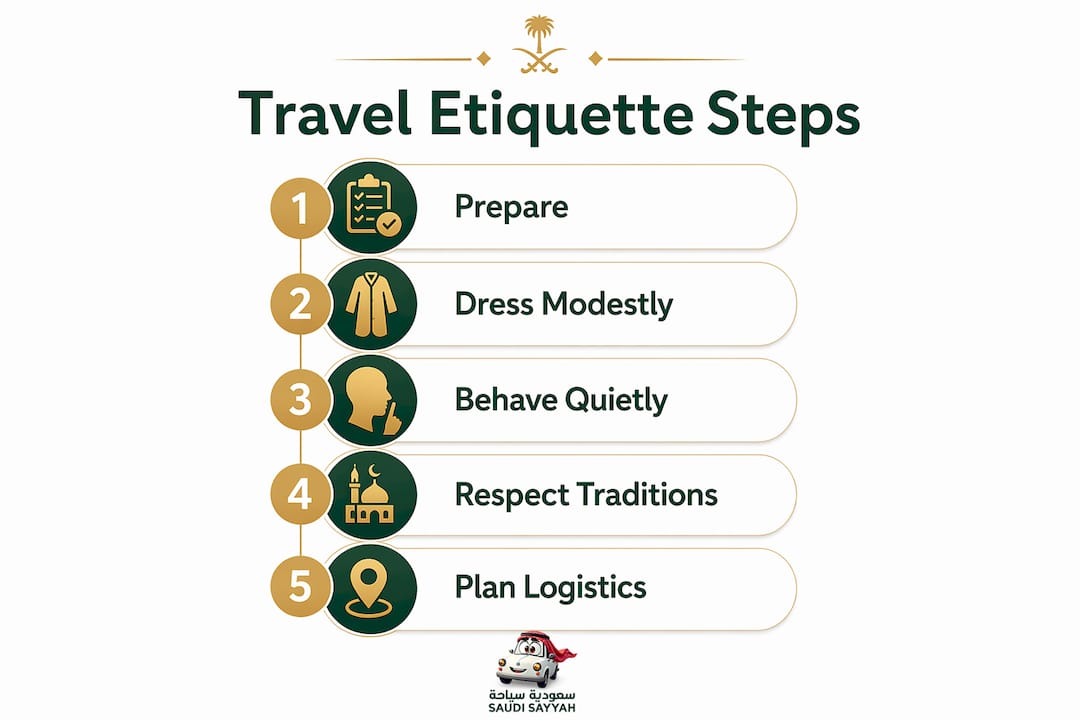
Religious travel etiquette is the practice of showing respect through modest dress, quiet behavior, and cultural awareness when visiting sacred places. Pilgrims and tourists who understand what is religious travel etiquette before they arrive gain access to richer experiences and avoid the friction that comes from unintentional offense. The core principles apply across Islam, Christianity, Hinduism, Buddhism, Judaism, and Sikhism, though the specific requirements vary by site and tradition. Getting these basics right is not complicated. It requires preparation, observation, and a willingness to let the sacred space set the tone.
What is religious travel etiquette and why does it matter?
Religious travel etiquette is defined as the set of respectful behaviors, dress standards, and conduct norms that visitors follow at sacred sites to honor local customs and active worshippers. The term overlaps with what scholars of religious tourism call "sacred site protocol," a recognized framework used by site administrators worldwide to manage visitor behavior.
Sacred sites are not tourist attractions but places where people engage in deep spiritual activity. Disrespect or ignorance can cause real offense and damage long-term relations between communities and visitors. That consequence is not abstract. A visitor who walks into a mosque during Friday prayers with bare shoulders and a camera raised does not just break a rule. That person disrupts an act of worship for hundreds of people.
The practical stakes are equally real. Sites like Bangkok's Grand Palace and major European basilicas enforce dress codes at the entrance. Visitors in shorts or tank tops are turned away at the entrance by security guards, sometimes requiring them to rent sarongs or coverings for a deposit. Knowing the rules before you arrive saves time, money, and embarrassment.
What are the common dress codes and why do they matter?
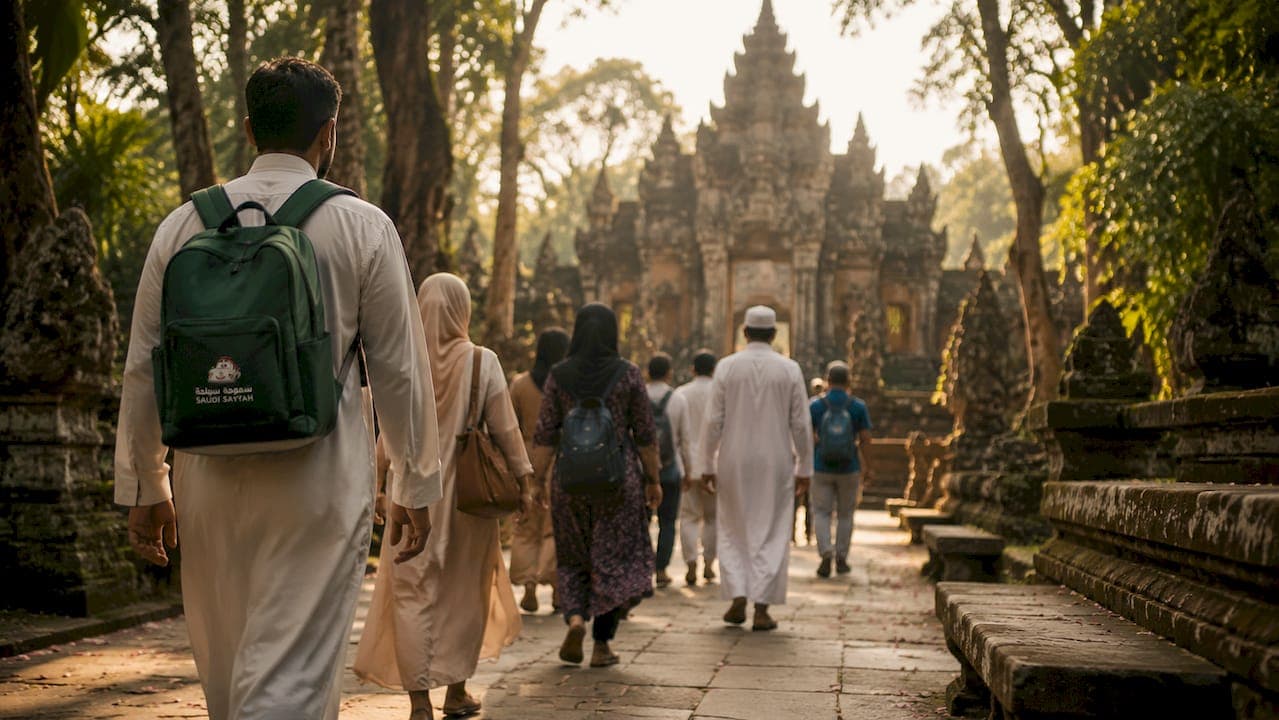
Dress codes are the most visible and most enforced element of etiquette for visiting religious sites. The universal baseline requires clothing that covers shoulders and knees. That standard applies across mosques, temples, churches, and synagogues on every continent.
Beyond the baseline, requirements become more specific by tradition:
- Mosques: Women must cover their hair and arms to the elbow. Men wear long pants. Shoes are removed before entering the prayer hall.
- Hindu temples: Some prohibit leather items entirely, including belts and bags. Traditional dress is encouraged, and some temples require it for entry.
- Buddhist temples: Modest clothing matters not just when standing but also when seated. Sitting with feet pointed toward a shrine or altar is considered disrespectful regardless of what you are wearing.
- Synagogues: Men cover their heads with a kippah, often provided at the entrance. Women cover their shoulders and, in Orthodox settings, their hair.
- Sikh gurdwaras: Both men and women cover their heads. Shoes are removed and feet are washed before entering.
- Christian churches: Requirements vary widely. Catholic and Orthodox churches typically require covered shoulders and knees. Some require women to cover their heads.
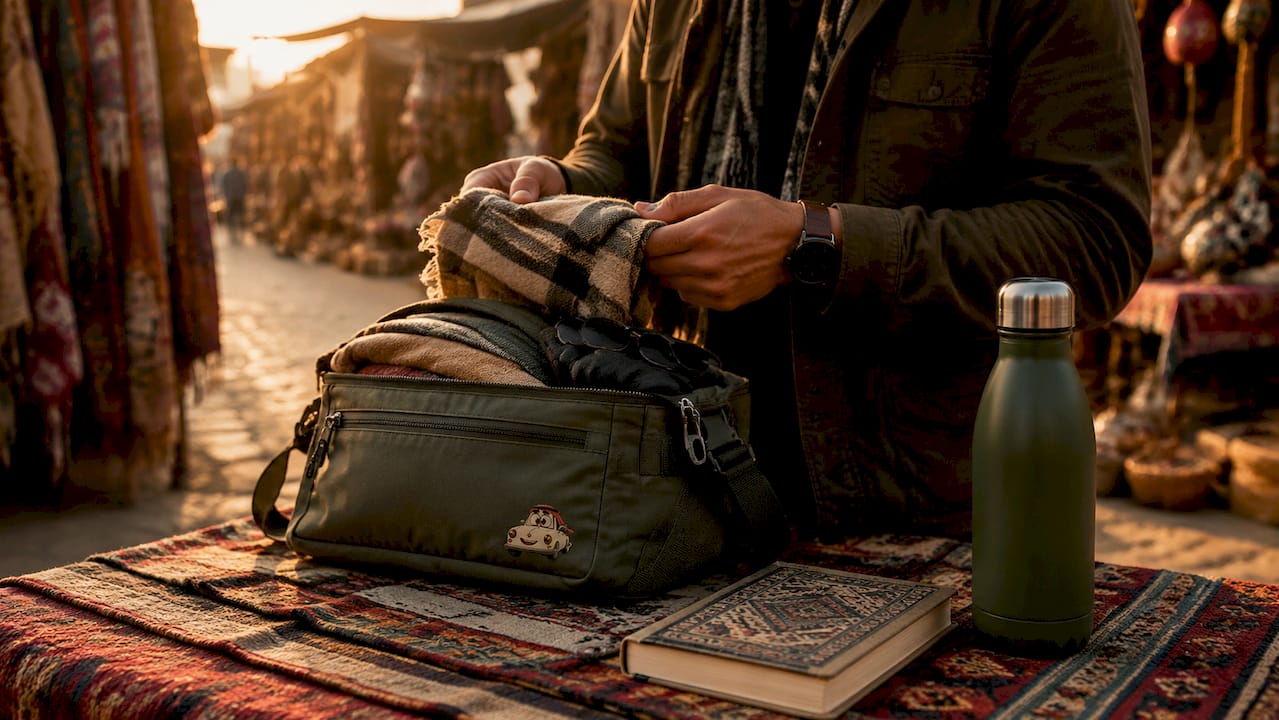
Pro Tip: Carry a lightweight scarf in your day bag. It covers your hair, wraps around your shoulders, or ties around your waist as a skirt. One item solves most dress code problems instantly and avoids the queue for borrowed coverings.
Adaptable clothing matters most when you are visiting multiple sites in one day. A loose linen shirt and lightweight pants work across nearly every tradition. Avoid printed graphics, logos, or anything that could be read as irreverent. When you pack for a pilgrimage, treat modest dress as a non-negotiable layer, not an afterthought.
How should visitors behave inside sacred sites?
Behavior inside a sacred site communicates respect as clearly as clothing does. Silence and quiet movement signal respect at virtually every sacred site in the world. Lower your voice to a whisper. Turn your phone to silent before you enter. Keep children calm and close.
The most reliable guide to correct behavior is the people already there. Watch how local worshippers move, where they stand, and what they avoid. Follow their lead before consulting any guidebook. That observation habit prevents most mistakes.
Specific behaviors to follow at any sacred site:
- Photography: Ask before you photograph anyone. Many mosques prohibit photography during prayer times entirely. Some Hindu shrines ban cameras in the inner sanctum. When in doubt, put the camera away.
- Gender-specific areas: Separate prayer areas for men and women exist in mosques, many synagogues, and some Hindu temples. Entering the wrong section is a serious breach.
- The right hand rule: Always use your right hand to accept offerings like prasad, distribute items, or interact with sacred objects. The left hand is considered unclean in many South Asian and Middle Eastern traditions.
- Shoe removal: Remove shoes when required and carry them in a bag rather than leaving them at the entrance if you are concerned about theft or loss.
- Offerings and donations: Place donations with both hands or the right hand only. Never toss coins or items casually.
Pro Tip: Put the camera down at solemn moments. The memory you form by being fully present is more lasting than any photograph, and the act of not photographing signals genuine respect to worshippers around you.
Sacred sites should not be treated as social media backdrops. Meaningful travel involves researching traditions, asking respectful questions, and choosing presence over content creation.
What practical challenges do travelers face and how can they prepare?
Preparation prevents the most common problems pilgrims and tourists encounter at religious sites. The challenges are physical, logistical, and cultural, and each one has a practical solution.
- Heat and barefoot walking. In locations like Myanmar, you may be required to walk barefoot across marble floors that reach extreme temperatures at midday. Pack thin, breathable socks. They protect against both heat and hygiene concerns in shared barefoot areas.
- Queue time for borrowed coverings. Relying on mosque-provided coverings can add 20–30 minutes to a visit due to queues. Carrying your own scarf or wrap eliminates that delay entirely.
- Religious observance schedules. Sites close or restrict access during prayer times, festivals, and holy days. Check the local prayer schedule before you plan your visit. Arriving just before a prayer time means waiting outside or leaving and returning.
- Unexpected closures. Religious observances and local events close sites without advance notice on international travel platforms. Build flexibility into your schedule. Experts recommend limiting priority experiences to one major site per half-day rather than stacking multiple visits.
- Cultural misunderstandings. Legal sensitivities vary by country. In some destinations, photographing certain religious sites is restricted by law, not just custom. Research local regulations before you travel.
Pro Tip: Slow your itinerary down deliberately. One site visited with full attention and proper preparation delivers more than three sites rushed through with avoidable friction at each entrance.
For group travel, logistics become more complex. Coordinating dress code compliance, arrival timing, and site access for a group requires advance planning. Resources on group transport for pilgrimages address how to align transportation schedules with religious site rhythms.
How does mindset shape your experience at sacred places?
Mindset is the factor most travelers overlook when preparing for religious tourism. Viewing dress codes and silence as rules to memorize is a misconception. They are better understood as a posture of respect, where you let the sacred environment set the tone and prioritize observation over agenda.
The most common resistance travelers express is the feeling that "respect should go both ways." That mindset creates avoidable friction. Adopting modest clothing is a minor, practical concession that signals cultural intelligence and opens access to deeper experiences. The visitor who arrives prepared and humble consistently reports richer encounters than the one who arrives with conditions.
"Sacred spaces ask something of you the moment you enter. The travelers who give that something freely, without negotiation, are the ones who leave changed. The ones who resist are the ones who leave with only photographs."
Curiosity and discretion are not opposites. Asking a guide or local worshipper a respectful question about a tradition you do not understand is welcomed in most religious communities. Assuming you already know, or treating the site as a backdrop for your own narrative, closes that door. Recognizing sacred sites as living traditions, not historical exhibits, changes how you move through them.
Key Takeaways
Respectful conduct at sacred sites requires modest dress, quiet behavior, and a mindset of genuine cultural deference, not just rule compliance.
| Point | Details |
|---|---|
| Universal dress baseline | Cover shoulders and knees at every sacred site; add hair and elbow coverage for mosques. |
| Carry your own scarf | A personal scarf eliminates queue time for borrowed coverings and adapts to any tradition. |
| Silence signals respect | Lower your voice, silence your phone, and follow the lead of local worshippers inside. |
| Slow your itinerary | Limit visits to one major site per half-day to accommodate schedules and unexpected closures. |
| Mindset over memorization | Treat etiquette as a posture of respect, not a checklist, to access deeper cultural experiences. |
What I have learned from watching travelers at sacred sites
The sharpest lesson I have taken from years of observing pilgrims and tourists at sacred sites is this: preparation is an act of respect before you even arrive. The travelers who research dress codes, check prayer schedules, and pack a scarf move through these spaces with ease. The ones who show up unprepared spend their time managing friction instead of experiencing the place.
I have watched visitors remove their shoes without being asked, fold them neatly, and place them to the side. That small act draws a smile from the site attendant every time. I have also watched visitors argue at the entrance over a dress code they could have read about in five minutes. The difference in what each person takes away from that visit is not subtle.
The most meaningful moments I have witnessed at sacred sites came when travelers put their phones down, stood still, and simply paid attention. No photograph captures what that stillness feels like. Humility and curiosity, practiced together, are the most effective tools any traveler carries.
— Fa
How Saudisayyah supports pilgrims traveling to sacred sites
Arriving at a sacred site prepared and on time is half the work of respectful religious travel. Saudisayyah provides transportation built around the rhythms of pilgrimage, with professional drivers experienced in navigating prayer schedules, site access windows, and the specific needs of first-time visitors to the holy lands.

The Saudisayyah fleet carries pilgrims in comfort, with real-time tracking, driver details sent before every trip, and a fully automated booking system that removes logistical uncertainty. For pilgrims traveling to Makkah and Madinah, that reliability matters as much as any packing list. Explore Saudisayyah's transport services to plan a trip that respects both your schedule and the sacred spaces you are visiting. For those coordinating group travel, efficient Umrah transport guidance is also available.
FAQ
What is the dress code for visiting a mosque?
Women must cover their hair, arms to the elbow, and legs. Men wear long pants. All visitors remove shoes before entering the prayer hall.
Can you take photos inside religious sites?
Photography rules vary by site and tradition. Many mosques prohibit cameras during prayer times, and some Hindu shrines ban them in inner sanctums. Always ask before photographing people or sacred objects.
How do you show respect at a Buddhist temple?
Remove your shoes, dress modestly, and avoid pointing your feet toward any shrine or altar. Speak quietly and follow the behavior of local worshippers around you.
What should you pack for visiting multiple religious sites?
Pack lightweight, loose-fitting pants, a long-sleeved shirt, and a personal scarf. Thin socks protect against hot marble floors in barefoot areas. Avoid leather items if visiting Hindu temples.
How do you handle prayer time closures at religious sites?
Check local prayer schedules before planning your visit and build flexibility into your itinerary. Limit visits to one major site per half-day to accommodate closures and waiting time.