

TL;DR:
- Smart travel solutions are integrated, technology-driven systems that automate and personalize every stage of a trip, from booking to post-arrival logistics. They leverage AI, biometrics, IoT devices, and data analytics to reduce friction, respond automatically to disruptions, and consolidate travel touchpoints into single platforms. Using these tools, travelers experience faster processing, tailored recommendations, real-time safety updates, and meaningful cost savings.
Smart travel solutions are defined as integrated, technology-driven systems that automate, personalize, and connect every stage of a trip, from initial booking through post-arrival logistics. These platforms combine AI, real-time data feeds, biometric verification, and connected apps to reduce the friction that traditional travel planning creates. Tools like AI Trip Tracker, NOBL Air smart luggage trackers, and Sabre IQ represent the practical face of this shift. The result is a travel experience that adapts to you rather than forcing you to adapt to it.
What is smart travel solutions and how do they work?
Smart travel solutions are the industry's term for connected travel ecosystems that move travelers from fragmented, manual planning into automated, AI-driven itineraries consolidating flights, hotels, ground transport, and payments in one place. The phrase "travel management solutions" is the more formal industry label, but both terms describe the same category of technology. What separates them from ordinary booking tools is backend data connectivity. When a flight is delayed, the system does not wait for you to notice. It reacts, rebooking connections and alerting ground transport automatically.
The technology stack behind these systems includes several distinct layers. AI handles personalized itinerary building and real-time updates. Biometric systems, now standard at major international airports, use facial recognition and digital identities to reduce airport wait times significantly. IoT devices like NOBL Air luggage trackers provide real-time bag location and instant separation alerts, adding a layer of accountability that airline baggage systems alone cannot match. Data analytics engines power dynamic pricing and demand forecasting, giving both travelers and providers better information at the moment decisions are made.
- AI itinerary tools: Platforms like AI Trip Tracker pull confirmation emails automatically, track flights live, and connect on-demand ride booking in a single interface.
- Biometric verification: Facial recognition at border control and boarding gates cuts processing time and removes the need to present physical documents repeatedly.
- IoT luggage tracking: Devices like NOBL Air provide real-time bag location and instant alerts when bags are separated from the traveler.
- Data analytics: Dynamic pricing engines and demand forecasting tools give travelers access to cost and availability data that was previously visible only to airlines and hotels.
Pro Tip: Set up AI Trip Tracker to forward all booking confirmation emails automatically. The app parses the data and builds your itinerary without manual entry, which means your trip is organized before you even think about packing.
Traditional travel management vs. smart travel solutions

The gap between traditional and smart travel management is not a matter of degree. It is a structural difference in how information flows.
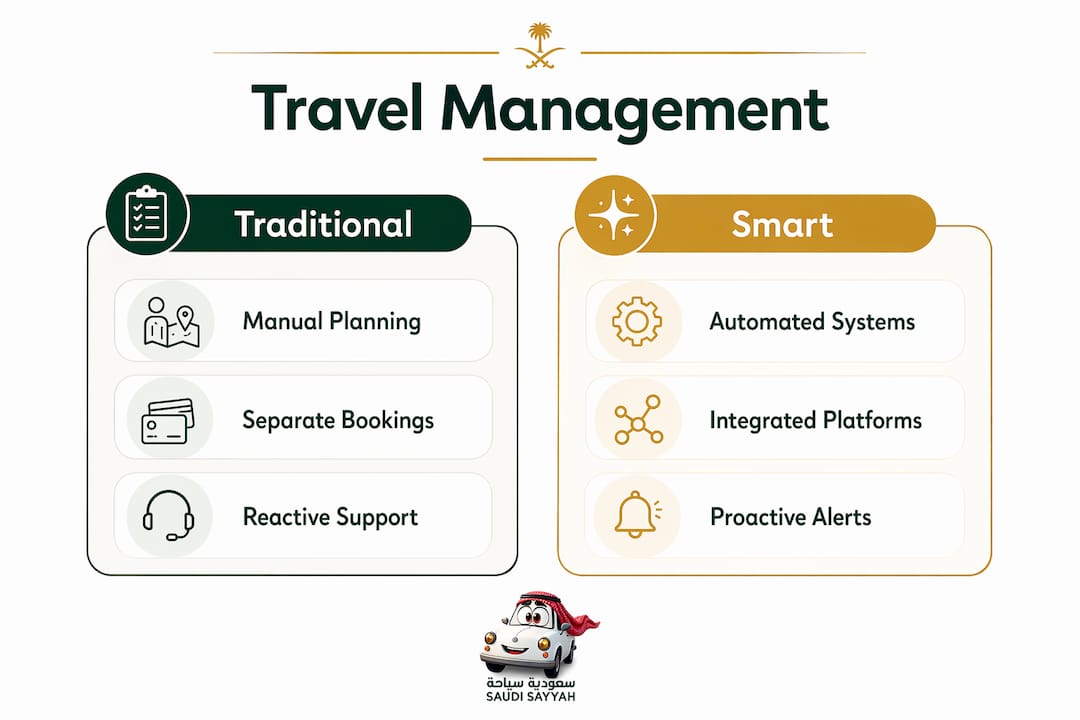
| Factor | Traditional travel management | Smart travel solutions |
|---|---|---|
| Planning process | Manual research across multiple websites | AI-generated itineraries from a single platform |
| Booking updates | Static confirmations sent by email | Real-time alerts pushed to your device |
| Disruption response | Traveler contacts airline or hotel directly | Automated rebooking triggered by the system |
| Document handling | Physical passports, boarding passes, vouchers | Digital identities and verified credentials stored in one ecosystem |
| Loyalty and payments | Separate apps and cards for each program | Consolidated digital wallet with integrated loyalty |
Traditional travel management treats each touchpoint as a separate transaction. You book a flight on one platform, a hotel on another, and arrange ground transport through a third. When something changes, you are the one making calls. Smart travel platforms collapse multiple touchpoints including flights, hotels, payments, and loyalty programs into a single interface. The efficiency gain is not marginal. Travelers who use connected platforms report spending significantly less time managing logistics and more time on the purpose of their trip.
Pro Tip: Before your next trip, audit how many separate apps and websites you use to manage travel. If the number exceeds three, a connected platform will save you measurable time and reduce the chance of missing a critical update.
What benefits do smart travel solutions offer travelers in 2026?
The practical advantages of smart travel technology fall into four categories, each addressing a specific pain point that traditional planning leaves unresolved.
-
Reduced wait times and smoother airport experiences. Biometric systems at airports now process travelers faster than manual document checks. Facial recognition replaces repeated passport presentations at check-in, security, and boarding, cutting the time spent in queues at each stage.
-
Personalized recommendations and flexible bookings. AI engines analyze your past travel behavior, preferences, and real-time availability to surface options that match your actual priorities rather than generic best-sellers. Flexible booking policies, increasingly standard on connected platforms, let you adjust plans without penalty when circumstances change.
-
Enhanced safety with real-time risk mapping. Tools like the Ozzi App provide real-time risk mapping and 24/7 geofencing with automated emergency alerts. These capabilities were once limited to corporate security teams. By 2026, they are accessible to individual travelers as standard features in safety-focused apps.
-
Improved luggage tracking and reduced stress. Independent trackers like NOBL Air maintain visibility over checked bags even when airline systems fail. When a bag is misrouted, the traveler already knows its location before the airline does, enabling faster recovery. Travelers who use independent luggage tracking report a measurable reduction in the anxiety that accompanies checked baggage.
-
Cost savings through dynamic pricing access. Data analytics tools surface pricing patterns and availability windows that manual searching misses. Travelers who use AI-powered booking tools consistently find lower average fares by acting on demand forecasting data rather than intuition.
How to use smart travel solutions and apps effectively
Adopting smart travel technology does not require replacing everything at once. The most effective approach is to layer tools onto your existing habits, starting with the highest-friction points in your current process.
- Start with itinerary consolidation. AI Trip Tracker is the clearest entry point. Forward booking confirmations to the app and let it build a live itinerary automatically. The real-time flight tracking feature alone eliminates the need to check airline apps separately.
- Add a luggage tracker before your first checked bag. NOBL Air attaches to your bag and connects to your phone. You receive an alert the moment your bag moves outside a defined range, which is far more reliable than waiting for airline baggage claim updates.
- Consolidate loyalty programs and digital wallets. Platforms that integrate loyalty points, digital payment credentials, and verified identity documents reduce the number of physical items you carry and speed up every transaction from hotel check-in to airport lounge access.
- Set automated disruption alerts. Most connected travel platforms allow you to configure alerts for gate changes, delay thresholds, and connection risk. Activating these before departure means the system monitors your trip so you do not have to.
- Use geofencing safety tools for unfamiliar destinations. Apps like Ozzi provide automated emergency assistance and real-time risk data for locations you have not visited before. This is particularly useful for first-time visitors to destinations with complex logistics.
Pro Tip: Integrate your digital wallet with your travel platform before departure. Platforms that consolidate loyalty credentials and payment methods let you bypass physical document requirements at border crossings, which is a concrete time saver on multi-country itineraries.
For a deeper look at how automation is reshaping the logistics behind these tools, the role of automation in travel covers the enterprise-grade systems driving these changes in 2026.
What does the future of smart travel solutions look like?
The direction of smart travel technology in 2026 points toward greater unification and more autonomous decision-making, with some important caveats travelers should understand.
| Trend | Current state | Near-term direction |
|---|---|---|
| Unified travel ecosystems | Multiple platforms with partial integration | Single ecosystems covering all touchpoints |
| AI decision-making | Suggestions and alerts | Autonomous rebooking and itinerary adjustment |
| Biometric adoption | Major international airports | Regional and domestic airports globally |
| Privacy and data security | Emerging regulatory frameworks | Stricter consent requirements and data portability |
| Real-time communication | Push alerts for disruptions | Proactive, predictive communication before issues occur |
Travelers demand instant, contextual support during disruptions, and providers are investing heavily in real-time communication technology to meet that expectation. The next phase moves beyond reactive alerts toward predictive systems that identify problems before they affect the traveler. A flight delay that would have required a phone call in 2022 triggers an automatic rebooking in 2026, with the new itinerary waiting in your app before the original departure time passes.
Privacy remains the most significant challenge. Connected ecosystems that consolidate loyalty programs, digital wallets, and biometric credentials hold substantial personal data. Regulatory frameworks are tightening, but travelers should read data-sharing policies carefully before granting platforms access to identity documents or location data. The convenience is real. So is the responsibility to understand what you are sharing and with whom. Researchers working toward consensual definitions of smart tourism tools note that sound, adaptable standards matter more than chasing the latest gadget.
Key takeaways
Smart travel solutions work because they connect data across every travel touchpoint, enabling automation and personalization that manual planning cannot replicate.
| Point | Details |
|---|---|
| Definition is specific | Smart travel solutions are integrated, tech-driven systems, not just apps or booking tools. |
| Technology layers matter | AI, biometrics, IoT trackers, and data analytics each solve a distinct friction point in the travel process. |
| Connected beats fragmented | Platforms that consolidate flights, hotels, payments, and loyalty outperform separate tools on every efficiency measure. |
| Privacy requires attention | Consolidated ecosystems hold significant personal data; travelers should review data-sharing terms before adopting any platform. |
| Start with one high-friction point | Itinerary consolidation via AI Trip Tracker or luggage tracking via NOBL Air delivers immediate, measurable value. |
Why smart travel technology changed how I think about planning
I used to treat travel planning as a research project. Multiple tabs, spreadsheets, and confirmation emails scattered across three inboxes. The first time I used a connected platform that pulled all of that into a single live view, the reaction was not excitement. It was mild embarrassment at how much time I had been wasting.
What I have found after working with these tools is that the real value is not in the features. It is in what you stop doing. You stop checking the airline app every 20 minutes. You stop worrying whether your bag made the connection. You stop calling hotel front desks to confirm reservations. The system handles the monitoring, and you get that attention back.
The part most travel technology articles skip is the privacy trade-off. Giving a platform access to your email to parse booking confirmations, your location for geofencing, and your biometric data for identity verification is not a trivial decision. The convenience is genuine. But travelers who adopt these tools without reading the data policies are making a choice they may not fully understand. My recommendation is to start with tools that offer clear, limited data use, like AI Trip Tracker for itinerary management, before moving to platforms that require broader access.
The technology shaping travel in 2026 is genuinely useful. Use it deliberately, not just because it is available.
— Fa
Reliable transport in Saudi Arabia, handled by Saudisayyah
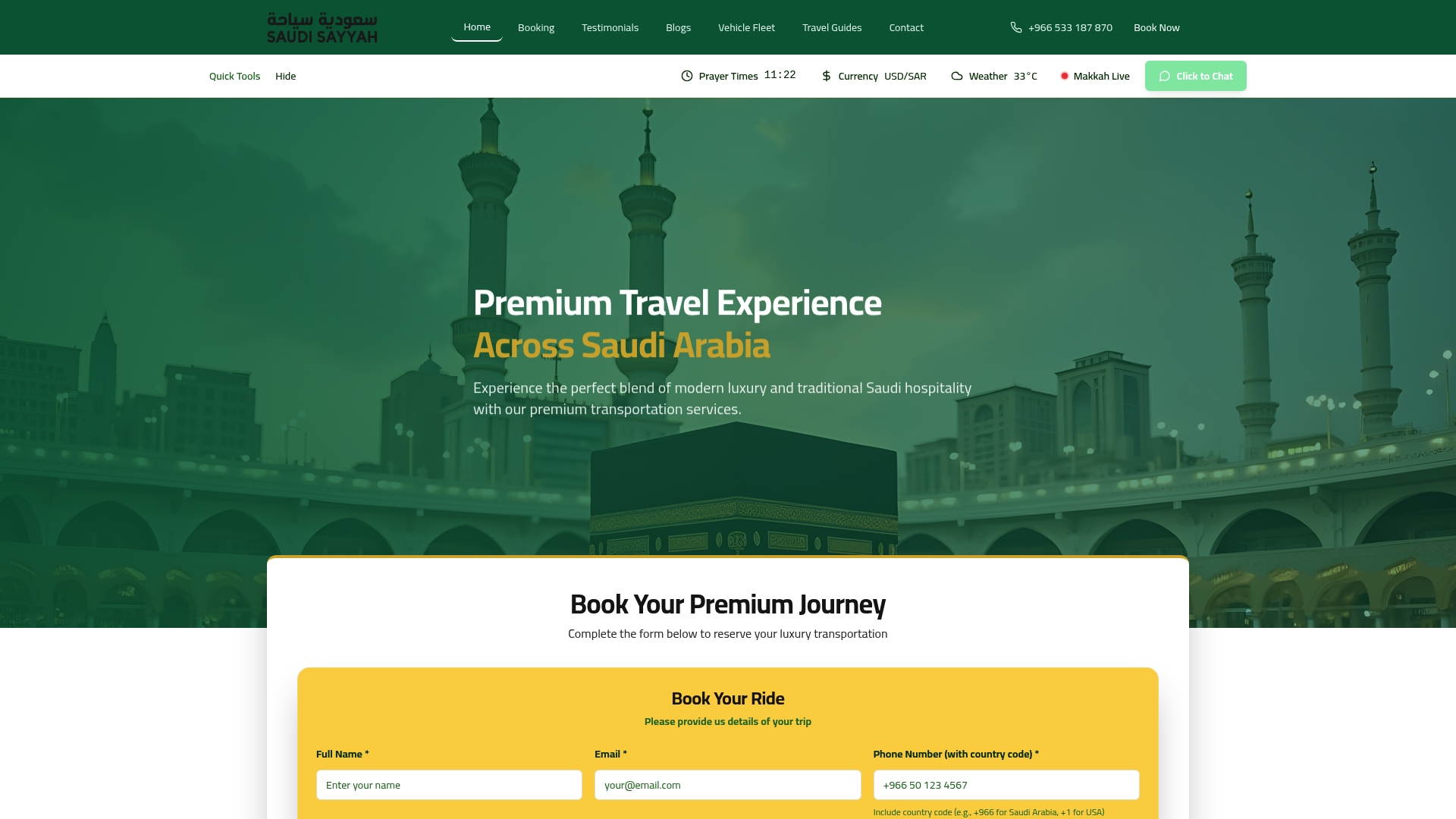
Saudisayyah applies the same principles that define smart travel solutions to ground transport across Saudi Arabia. The platform sends driver photos, vehicle details, and live GPS tracking before every trip, so there are no surprises at pickup. The fully automated booking system handles scheduling, confirmation, and real-time communication without manual intervention.
For pilgrims visiting Makkah and Madinah for the first time, that level of certainty matters. Saudisayyah's premium transport fleet includes the latest model year vehicles with experienced professional drivers who know the routes that matter most. For travelers who want logistics handled before they land, explore Saudisayyah's full transport services and book with confidence.
FAQ
What is smart travel solutions in simple terms?
Smart travel solutions are technology systems that automate and connect every part of a trip, from booking through arrival, using AI, real-time data, and integrated apps. They replace manual planning with automated itinerary management and proactive disruption response.
What are the main benefits of smart travel technology?
The primary benefits include reduced airport wait times through biometric processing, real-time disruption alerts with automated rebooking, independent luggage tracking via devices like NOBL Air, and consolidated loyalty and payment management in a single platform.
Which smart travel apps are most useful for individual travelers?
AI Trip Tracker consolidates itinerary data and provides live flight tracking from a single interface. NOBL Air handles luggage location monitoring. Safety-focused apps like Ozzi provide real-time risk mapping and geofencing alerts for unfamiliar destinations.
How do smart travel solutions handle flight disruptions?
Connected platforms monitor flight status continuously and trigger automated responses when disruptions occur, including rebooking alternatives and ground transport adjustments, without requiring the traveler to initiate contact with airlines or hotels.
Are smart travel solutions safe to use from a privacy standpoint?
Connected platforms collect significant personal data including location, identity credentials, and travel history. Travelers should review each platform's data-sharing policies carefully and prioritize tools with clear, limited data use before granting access to sensitive information like biometric credentials.