

TL;DR:
- Travel insurance for pilgrims provides coverage for medical emergencies, trip disruptions, and risks unique to pilgrimage travel. Shariah-compliant Takaful insurance operates on mutual cooperation principles, avoiding interest, gambling, and uncertainty. The best policies include high medical limits, mass gathering coverage, and explicit protection against trip cancellation and evacuation.
Travel insurance for pilgrims is defined as a specialized category of coverage that protects against medical emergencies, trip disruptions, and pilgrimage-specific risks that standard health policies do not address. The types of travel insurance for pilgrims range from comprehensive multi-risk plans to Shariah-compliant Takaful policies built around Islamic financial principles. Saudi Arabia mandates health insurance linked to Hajj visas with 90 days of coverage to accommodate early arrivals and extended stays. That requirement is a floor, not a ceiling. Most experienced pilgrims buy supplementary coverage to fill the gaps that visa-linked insurance leaves open.
1. What are the main types of travel insurance for pilgrims?
Four core insurance categories apply to pilgrims traveling to Saudi Arabia. Each serves a different purpose, and the right plan for you depends on your health status, budget, and travel itinerary.
- Comprehensive travel insurance. This is the broadest option. It bundles emergency medical care, medical evacuation, trip cancellation, trip interruption, and baggage loss into one policy. For pilgrims, this is the most practical starting point because it addresses the widest range of risks in a single purchase.
- Medical-only travel insurance. This plan covers emergency healthcare abroad but excludes trip cancellation and baggage protection. It suits pilgrims who already have separate trip protection or who want to keep costs low.
- Pilgrimage-specific travel insurance. These plans are built for Hajj and Umrah travelers. They include coverage for mass gathering events, heat-related illnesses, repatriation of remains, and features like Badal Hajj, which funds a proxy pilgrimage if you cannot complete your own due to a covered medical event.
- Shariah-compliant Takaful insurance. This model replaces conventional insurance with a mutual cooperation structure that avoids interest, gambling, and excessive uncertainty. It is the preferred option for pilgrims who require full compliance with Islamic law.
Pro Tip: Do not assume your domestic health plan covers you abroad. Most national health insurance programs provide little or no reimbursement for overseas emergency care, which makes a dedicated travel policy non-negotiable for pilgrimage travel.
2. How Shariah-compliant Takaful insurance works for pilgrims
Takaful is the industry term for Islamic cooperative insurance. It operates on the principle that participants contribute to a shared pool and support one another in times of need, rather than paying premiums to a for-profit insurer.
The Takaful model avoids three elements prohibited under Islamic law:
- Riba (interest). Funds in the pool are invested only in Shariah-compliant assets, never in interest-bearing instruments.
- Maysir (gambling). Coverage is structured as mutual aid, not a speculative contract where one party profits from another's loss.
- Gharar (excessive uncertainty). Policy terms are transparent and clearly defined to eliminate ambiguous or deceptive contract conditions.
A Shariah supervisory board, staffed by qualified Islamic scholars, certifies that the policy structure and investment practices meet these standards. Any surplus remaining in the shared pool after claims are paid is either returned to participants or donated to charity.
Selecting a Shariah-board certified Takaful plan ensures full compliance with Islamic law, which enhances peace of mind for many pilgrims. The certification is not cosmetic. It means independent scholars have reviewed the contract, the investment portfolio, and the claims process.
Typical Takaful pilgrim plans cover emergency medical expenses, trip disruption, Badal Hajj, and repatriation. Some also include coverage for lost travel documents and delayed flights. For pilgrims who want both religious compliance and practical protection, a certified Takaful plan is the strongest available option.
3. What specific coverage features should pilgrims look for?
Knowing what to look for separates a policy that pays out from one that denies your claim. The following features are non-negotiable for pilgrimage travel.
Medical expense limits
Experts recommend limits above $50,000 for pilgrimage travel. Hajj involves intense physical exertion in extreme heat, and heat stroke treatment, hospitalization, and intensive care in Saudi Arabia can be costly. A low-limit policy creates serious financial exposure.
Emergency evacuation and repatriation
Medical evacuation to your home country can cost tens of thousands of dollars without coverage. Repatriation of remains is a separate benefit that covers the cost of returning a deceased pilgrim home. Both benefits should appear explicitly in your policy wording.
Trip cancellation and interruption
This benefit reimburses non-refundable travel costs if you cancel before departure or cut your trip short due to a covered reason. Visa issues and geopolitical events are common reasons pilgrims need this coverage. Standard policies often exclude war-related events, so verify that language carefully.
Lost or stolen belongings
Coverage for lost or stolen items should include passports, religious texts, and personal electronics. Replacing a passport abroad requires time and money. A policy that covers document replacement expenses saves significant stress.
Mass gathering coverage
Many standard travel policies exclude coverage for events with crowds exceeding 10,000 people. Hajj and Umrah are mass gatherings by definition. A policy that does not explicitly include mass gathering coverage can deny every claim you file. This exclusion is the single most dangerous gap in off-the-shelf travel insurance for pilgrims.
Duration matching
Your policy must cover your full travel period, not just the days of the pilgrimage itself. Mandatory visa insurance covers 90 days to accommodate early arrivals and extended stays. Your supplementary policy should match that window.
Pro Tip: Read the exclusions section of any policy before the benefits summary. Insurers write exclusions in plain language. If "mass gathering" or "civil unrest" appears in the exclusions without a carve-out, that policy is not built for pilgrimage travel.
4. How to choose the best travel insurance for your pilgrimage
Selecting the right plan requires matching your personal risk profile to the right coverage structure. Work through these steps before you buy.
- Disclose pre-existing conditions honestly. Some specialized insurers cover conditions like diabetes and hypertension from day one. Others impose waiting periods or charge a rider fee. Concealing a condition voids your policy at the worst possible moment.
- Match coverage duration to your full itinerary. Include pre-pilgrimage days in Makkah or Madinah, any post-pilgrimage travel, and your return flight. A policy that expires before your flight home leaves you exposed.
- Confirm Saudi Arabia acceptance. Check that your insurer has a network of partner hospitals in Makkah, Madinah, and Jeddah. Direct billing arrangements mean you pay nothing upfront during a medical emergency.
- Verify mass gathering and conflict coverage explicitly. Ask your insurer in writing whether your policy covers pilgrimage mass gatherings and regional conflict events. Get the answer in writing before you pay.
- Compare full policy wording, not just price. Two plans at the same price point can have vastly different exclusions. The fine print on geopolitical exclusions and mass gathering clauses determines whether your policy is useful.
- Buy supplementary coverage on top of visa insurance. Visa-linked insurance often excludes evacuation, trip cancellation, and baggage protection. A supplementary plan fills those gaps at a relatively low additional cost.
- Consider elderly pilgrim needs separately. Older pilgrims face higher medical risk and may need specialized transport arrangements alongside higher medical coverage limits. Some insurers offer senior-specific pilgrimage plans with adjusted premiums.
For group travel, coordinate insurance across all members before departure. A group travel guide for Saudi Arabia covers the logistics of coordinating coverage and transport for multiple pilgrims traveling together.
Key Takeaways
The most effective pilgrim travel insurance combines mandatory visa health coverage with a supplementary policy that explicitly covers mass gatherings, medical evacuation, and trip cancellation.
| Point | Details |
|---|---|
| Mandatory visa insurance is a starting point | Saudi Arabia requires 90-day health coverage, but it rarely covers evacuation or trip cancellation. |
| Mass gathering exclusions are a critical risk | Standard policies often deny claims at Hajj and Umrah. Verify explicit coverage before buying. |
| Takaful plans meet religious and legal needs | Shariah-board certified Takaful policies avoid riba, maysir, and gharar for full Islamic compliance. |
| Medical limits should exceed $50,000 | Heat-related emergencies and hospitalization in Saudi Arabia can be expensive without adequate limits. |
| Documentation determines claim success | Keep discharge summaries, receipts, and police reports organized throughout your trip. |
What I've learned about pilgrim insurance that most articles miss
The biggest mistake pilgrims make is treating health insurance and travel insurance as the same thing. They are not. Health insurance covers ongoing care. Travel insurance covers the risks that happen around the care: evacuation, trip cancellation, lost documents, and out-of-network hospital access. You need both, and they serve different functions.
The mass gathering exclusion is the issue I see overlooked most often. Pilgrims buy a policy that looks solid on paper, then discover after a denied claim that the insurer classified Hajj as an excluded mass gathering event. That exclusion is buried in fine print that most people never read. Reading it before you buy takes ten minutes and can save you thousands of dollars.
I also think the Takaful conversation is more relevant in 2026 than it has ever been. More certified Takaful products are available now, and the coverage features are competitive with conventional plans. For pilgrims who want religious compliance without sacrificing practical protection, the options are genuinely good.
One final point: organized documentation is the difference between a paid claim and a rejected one. Carry a folder with your policy number, insurer emergency contact, discharge summaries, and any police reports. Claims that arrive with complete paperwork get processed. Claims that arrive without it often do not.
Plan your insurance at the same time you book your flights. Waiting until the week before departure limits your options and increases your risk.
— Fa
Saudisayyah transport services for pilgrims in Saudi Arabia
Pilgrims who plan their insurance carefully also plan their ground transport carefully. The two go together.
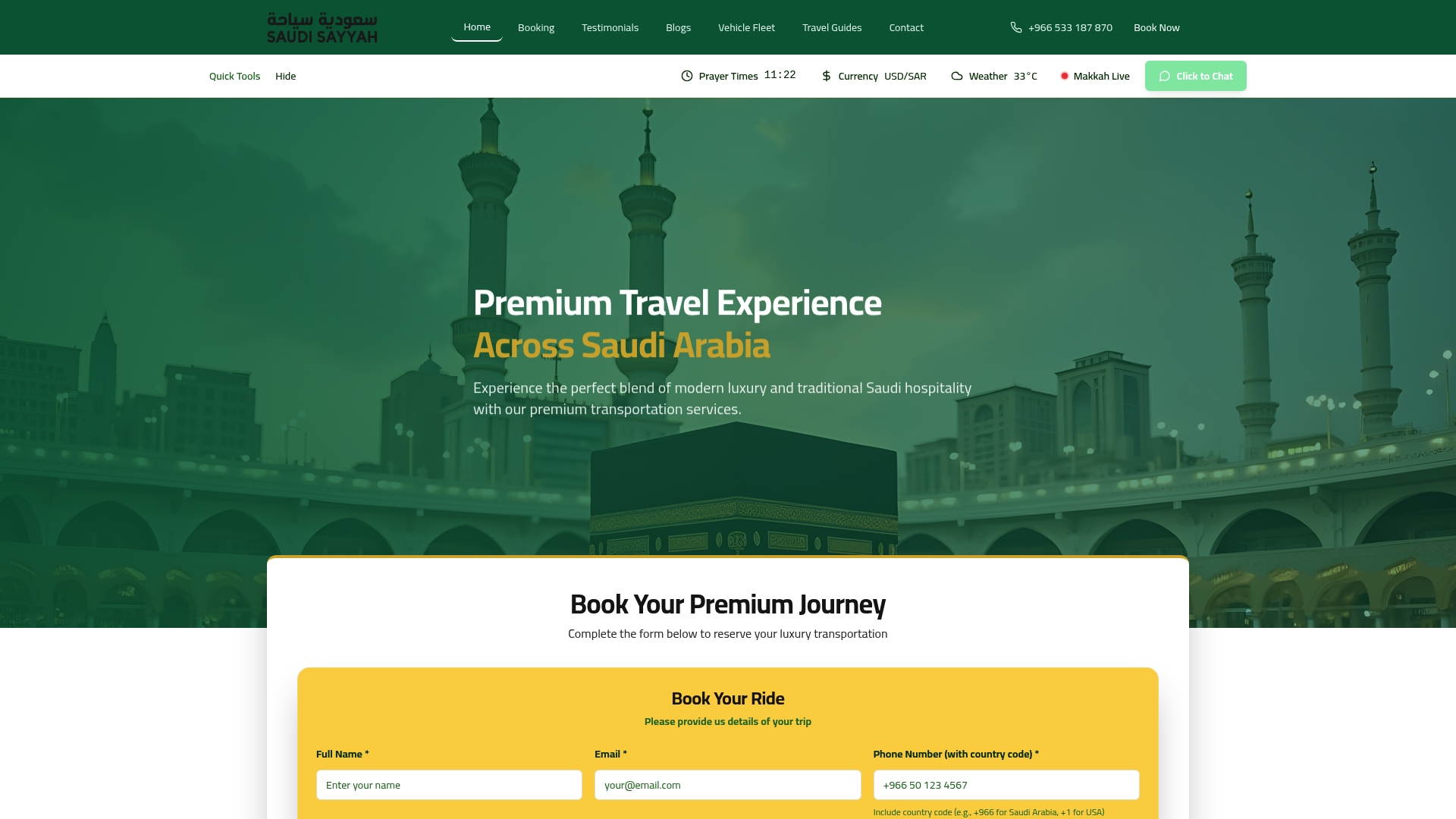
Saudisayyah provides professional transport for Umrah and Hajj pilgrims across Saudi Arabia, with a fleet of late-model vehicles, experienced drivers, and a geolocation-enabled platform that sends you driver photos and real-time tracking before every trip. For pilgrims visiting the holy cities for the first time, that level of visibility removes a significant source of uncertainty. You can review the full range of pilgrim transport services on the Saudisayyah website. Pilgrims planning their full itinerary can also use the holy cities planning guide to coordinate transport, insurance, and logistics in one place.
FAQ
What is travel insurance for pilgrims?
Travel insurance for pilgrims is a policy that covers medical emergencies, trip cancellations, evacuation, and baggage loss during Hajj or Umrah travel. It complements mandatory visa health insurance by covering risks that standard health plans exclude.
Is health insurance the same as travel insurance for pilgrims?
No. Health insurance covers ongoing medical care, while travel insurance covers evacuation, trip cancellation, out-of-network hospital access, and lost belongings. Pilgrims need both types of coverage.
Do standard travel policies cover Hajj and Umrah?
Many standard policies exclude mass gatherings, which means they can deny claims filed during Hajj or Umrah. Pilgrims must confirm that their policy explicitly covers pilgrimage events before purchasing.
Can pilgrims with pre-existing conditions get coverage?
Yes. Certain specialized insurers cover conditions like diabetes and hypertension from the first day of coverage. Other conditions may require a rider fee or carry a waiting period, so disclose all conditions accurately when applying.
What is a Takaful insurance plan?
Takaful is a Shariah-compliant insurance model based on mutual cooperation. Participants contribute to a shared pool, and any surplus after claims is returned or donated to charity, avoiding interest, gambling, and excessive uncertainty as required by Islamic law.