
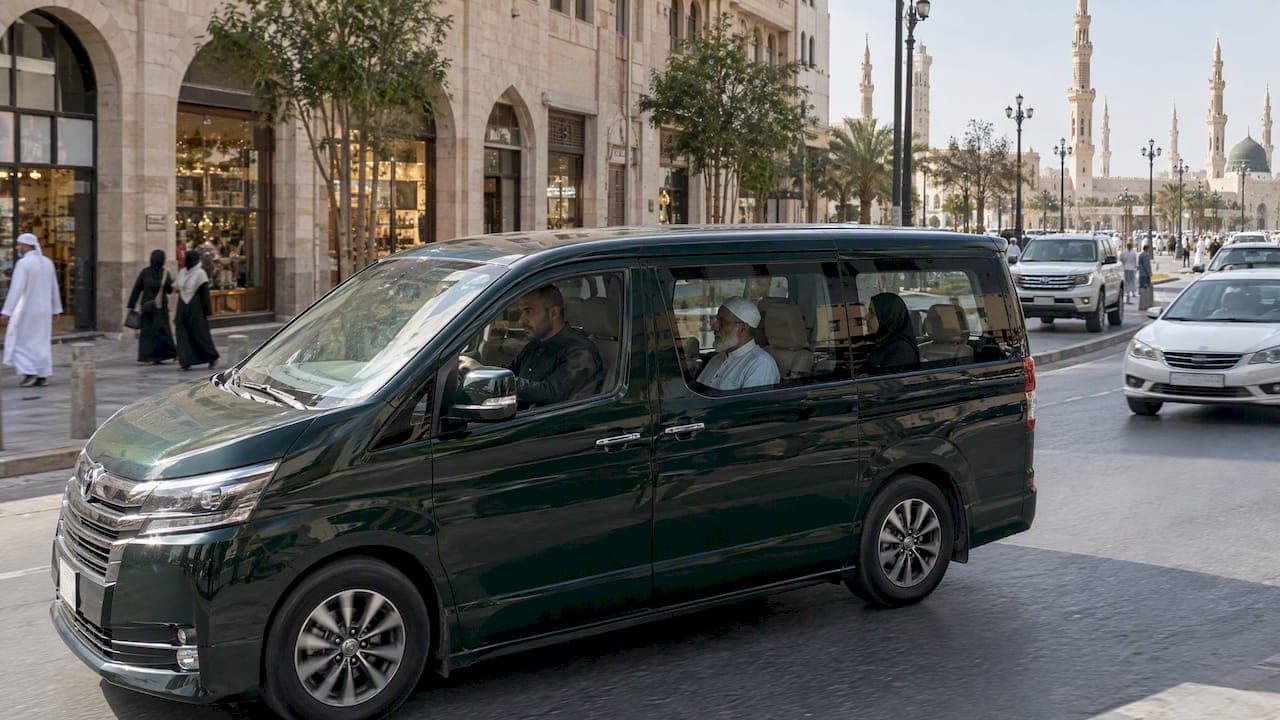
A successful multi-stop transfer plan means one thing: a confirmed booking with permits lined up, driver and vehicle details in hand, and live tracking active before departure. The immediate next step is to gather visa, flight, and Nusuk information, then reserve a verified provider. Platforms like Saudi Sayyah that combine automated booking with real-time tracking fit this exact need.
TL;DR:
- Book airport pickups and first transfer legs four to six weeks ahead during pilgrimage seasons; reserve visits requiring permits once Nusuk confirms appointment windows.
- For sites requiring permits, use official Nusuk appointments linked to your visa; workarounds from outside providers are invalid and may leave you unable to enter.
- Schedule routes around fixed appointment and prayer times, group nearby stops, and add buffers; confirm waiting fees for hourly hire or fixed transfers in writing.
- Before paying, verify the driver’s professional card, vehicle safety standards, seatbelt capacity, and written fares; request a named backup and a local contact.
- Before each leg, request the driver’s photo, vehicle plate, and live GPS link, plus pickup alerts and an escalation contact for delays.
Table of Contents
- Planning checklist and booking timeline
- How Nusuk permits and transport rules shape your bookings
- Sequencing stops and two sample itinerary templates
- Choosing the right vehicle for your group
- Operational details to confirm before you pay
- Why tracking and communication reduce transfer risk
- What providers see going wrong, and how to avoid it
- How Saudi Sayyah fits into your transfer plan
- FAQ
- Sources
Planning checklist and booking timeline
Multi-stop transfer planning starts with information, not bookings. Gather the following before contacting any provider:
- Passport and visa number
- Nusuk account login and any issued permits
- Flight arrival and departure times
- Hotel addresses for each stop
- Full group roster, including ages and mobility needs
Timing matters as much as the list itself. Reserve airport pickups and the first transfer leg earliest, ideally four to six weeks ahead during busy pilgrimage seasons. Ziarah stops come next, booked as soon as Nusuk permits are confirmed, since appointment windows are fixed and cannot shift to match a transfer schedule.
A few practical checks round out the plan:
- Confirm vehicle capacity covers luggage, prayer rugs, and seating comfortably.
- List any accessibility requirements in writing before booking.
- Ask about waiting-time rates and hourly hire options for flexible legs.
- Request written confirmation of every booked segment, not a verbal promise.
Our guide to airport transfers for Umrah pilgrims covers pickup timing in more detail, and our guide for first-time visitors walks through the full checklist for travelers planning their first pilgrimage.
How Nusuk permits and transport rules shape your bookings
Permit timing drives everything else. Visits to sites such as Al-Rawdah Al-Sharifiyah require an appointment issued through the official Nusuk permit system, and that appointment fixes a time window your transfer plan has to work around, not the reverse.
Official Nusuk bookings tied to your visa are mandatory. U.S. Embassy guidance warns that third-party workarounds for permit or booking systems leave travelers unprepared, and only a verified booking linked to your visa number reliably grants access at time-sensitive sites.
Penalties for noncompliant transport operators include fines, alongside suspensions, vehicle impoundment, and deportation for serious violations by non-Saudi offenders, according to stricter Transport General Authority enforcement. Before booking, verify:
- The driver holds a valid professional card.
- The vehicle meets current cleanliness and safety standards.
- Fare terms are disclosed upfront, in writing.
Sequencing stops and two sample itinerary templates
Build the schedule around fixed points first. Flight times, Nusuk appointment slots, and prayer times do not move, so every other stop gets placed around them.
- List immovable times: arrival, departure, permit windows, prayer times.
- Group geographically close stops together to cut transit time.
- Add buffer time between each leg for traffic and prayer breaks.
- Confirm the sequence with your provider in writing before the trip.
Two templates illustrate how this works in practice.
Template A: Airport to hotel to evening Ziarah. Pickup at arrivals, direct transfer to the hotel, rest period, then an evening Ziarah visit scheduled with a buffer before and after the nearest prayer time.
Template B: City guided Ziarah with three mosque visits. Morning departure, three timed mosque stops sequenced by distance, a midday rest and meal break, then return transport.
Waiting policies change these timings. An hourly hire absorbs permit delays without a new booking, while a fixed-leg transfer may charge extra for waiting beyond the agreed window, so confirm which model applies to each leg before you commit.
Choosing the right vehicle for your group
Vehicle choice depends on passenger count and luggage volume more than personal preference; consider options from Reliant Transportation that specialize in group vehicle solutions suitable for multi-stop itineraries. A sedan suits one or two travelers with light bags; a larger MPV fits a family with luggage and prayer rugs; a minibus or coach handles larger groups traveling together across multiple stops.
- Confirm storage space for luggage and prayer rugs before booking.
- Check seatbelt count matches passenger count, including children.
- Ask about climate control for long intercity legs.
- Request accessibility features such as ramps or low-step entry in writing when needed. Our guide to booking accessible transport covers this in more depth.
Pro Tip: Book one size up when traveling with elderly relatives or young children, since extra space reduces discomfort on longer multi-stop days.
Vehicle class also affects price and compliance, since larger vehicles carry different TGA fare and licensing rules than standard sedans. Our fleet page outlines available vehicle classes for reference.
Operational details to confirm before you pay
Service failures usually come from unclear details, not bad luck. Pin down these points in writing before any payment:
- Pickup buffer of at least 45 to 60 minutes before timed mosque visits and international flight departures.
- A clear description of how driver handoffs work on intercity or multi-leg trips, including who is responsible at each handoff point.
- Cancellation and refund terms, documented in the confirmation message or email.
- A named backup driver or vehicle option in case of mechanical issues.
- A local contact number that answers during your transfer window, not just during business hours.
Our fixed-price Jeddah Airport to Makkah transfer page shows what a clearly documented single-leg booking looks like, which is a useful template for confirming multi-stop details. For broader cost expectations across legs, our Umrah 2026 transport costs guide breaks down typical pricing shapes.
Why tracking and communication reduce transfer risk
Pre-trip driver photos, a vehicle plate number, and a live GPS link remove the single biggest source of pickup confusion: not knowing who is coming or where they are. Ask for these three items before every leg, not just the first one.
- Request automated status alerts for pickup and arrival times.
- Confirm an escalation contact in case the driver is delayed.
- Ask whether tracking is shared continuously or only at pickup.
Booking platforms that share driver photos, vehicle details, and real-time tracking reduce pickup confusion and improve traveler confidence on multi-stop days. These features also lower the chance of arriving late to a time-sensitive site, since both passenger and provider can see delays as they happen rather than after the fact.
What providers see going wrong, and how to avoid it

Late booking is the most common mistake, followed closely by missing the link between a Nusuk permit and the transfer schedule. Unclear pickup points cause the rest of the confusion.
Fixed-rate legs, a clear written booking brief, and a driver photo with live tracking sent before the trip solve most of this. For a first-time pilgrim, the one-line checklist is simple: confirm the permit first, book the transfer around it, and get the driver's details in writing before you leave for the airport.
— Fa
How Saudi Sayyah fits into your transfer plan
Point to Point Transportation covers single legs between fixed addresses. Ziarah Packages handle multi-stop religious site visits. Airport Transfers cover arrival and departure, and Hire by the Hour absorbs permit delays without a new booking each time.
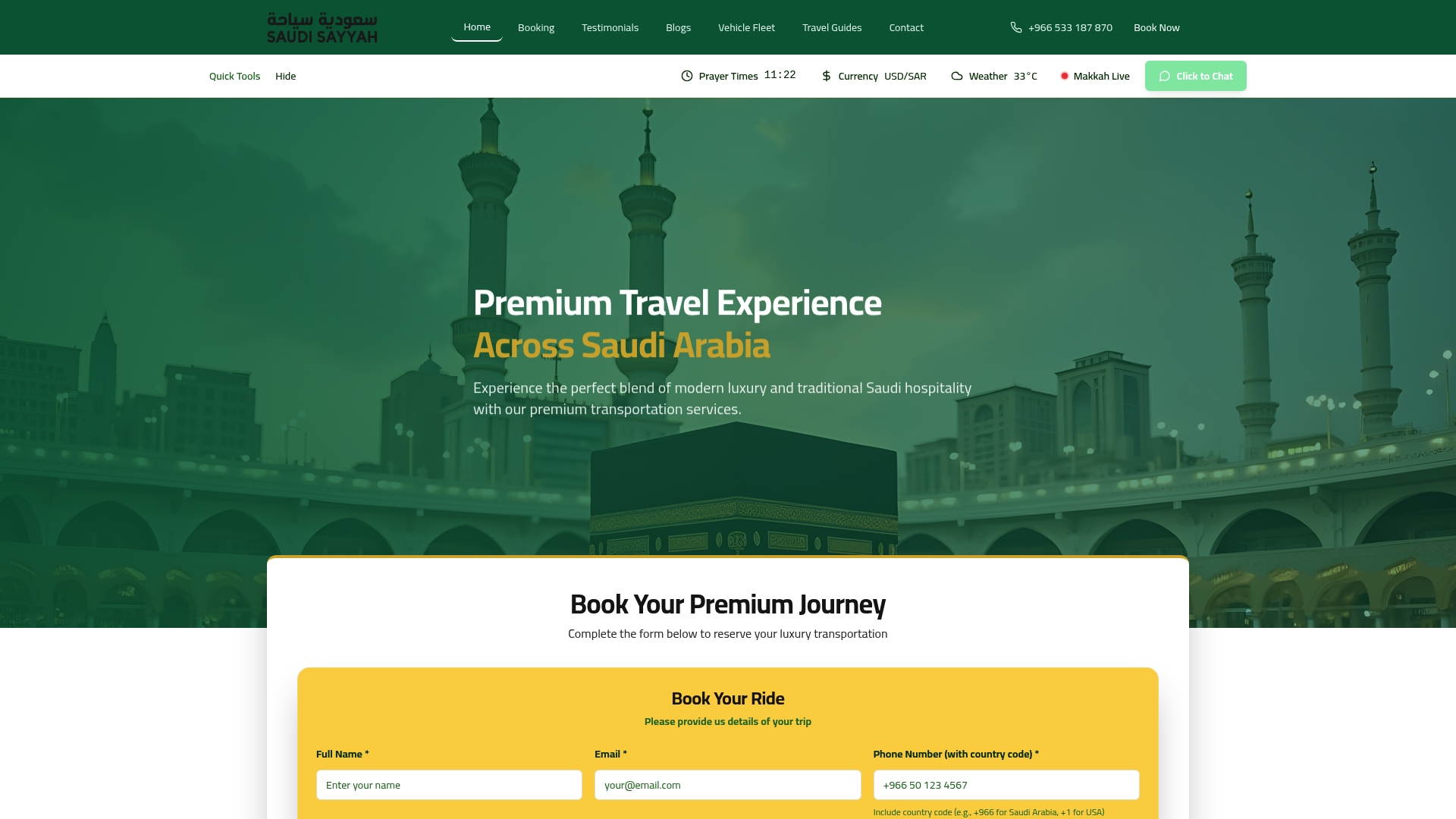
- Automated booking confirms each leg in writing, with no manual back and forth.
- Real-time tracking and pre-trip driver photos remove pickup guesswork.
- Professional drivers and a modern fleet cover group sizes from sedans to larger vehicles.
| Service | Fits this need |
|---|---|
| Point to Point Transportation | Single fixed-address transfers |
| Ziarah Packages | Multi-stop religious site visits |
| Airport Transfers | Arrival and departure legs |
| Hire by the Hour | Flexible, permit-dependent timing |
Check our services page for Point to Point, Ziarah, and hourly hire options, or browse our fleet page to match a vehicle to your group before booking.
FAQ
How far ahead should I book a multi-stop transfer?
Book airport and first-leg transfers four to six weeks ahead during busy pilgrimage periods, and add Ziarah legs as soon as your Nusuk permit is confirmed. Permit timing, not personal preference, usually sets the final schedule.
Do I need a Nusuk permit for every mosque visit?
Certain visits, including Al-Rawdah Al-Sharifiyah, require an appointment permit issued through the official system and tied to your visa. Third-party workarounds for this permit are not valid and can leave you unable to enter.
What should I check before hiring a transfer provider?
Confirm the driver holds a valid professional card and the vehicle meets current standards under Transport General Authority rules, then ask for pre-trip driver photos and live tracking in writing.
How much does a multi-stop transfer typically cost?
Pricing depends on vehicle class, number of legs, and whether you choose a fixed-rate booking or hourly hire; Saudi Sayyah lists Point to Point, Ziarah, Airport, and Hire by the Hour services with pricing available on request through our services page.
What happens if my pickup time changes unexpectedly?
A provider offering hourly hire or clearly documented waiting policies can absorb a delayed permit slot or flight change without a new booking. Confirm this flexibility and a backup driver or vehicle option before you travel, as outlined in the official Umrah and visit guide.
Sources
- Issuance of Rawdah Sharif Permit (Men / Women)
- Saudi Arabia imposes stricter penalties for taxi drivers under new transport regulations
- Hajj and Umrah pilgrimage travelers — U.S. Embassy public guidance