
TL;DR:
- Tracking in pilgrimage uses GPS, IoT sensors, and AI to monitor pilgrim safety and movement. The technology enables proactive crowd management, reduces incidents, and improves navigation for pilgrims and organizers alike. Successful implementation depends on proper user education and device comfort, ensuring continuous and reliable tracking during sacred journeys.
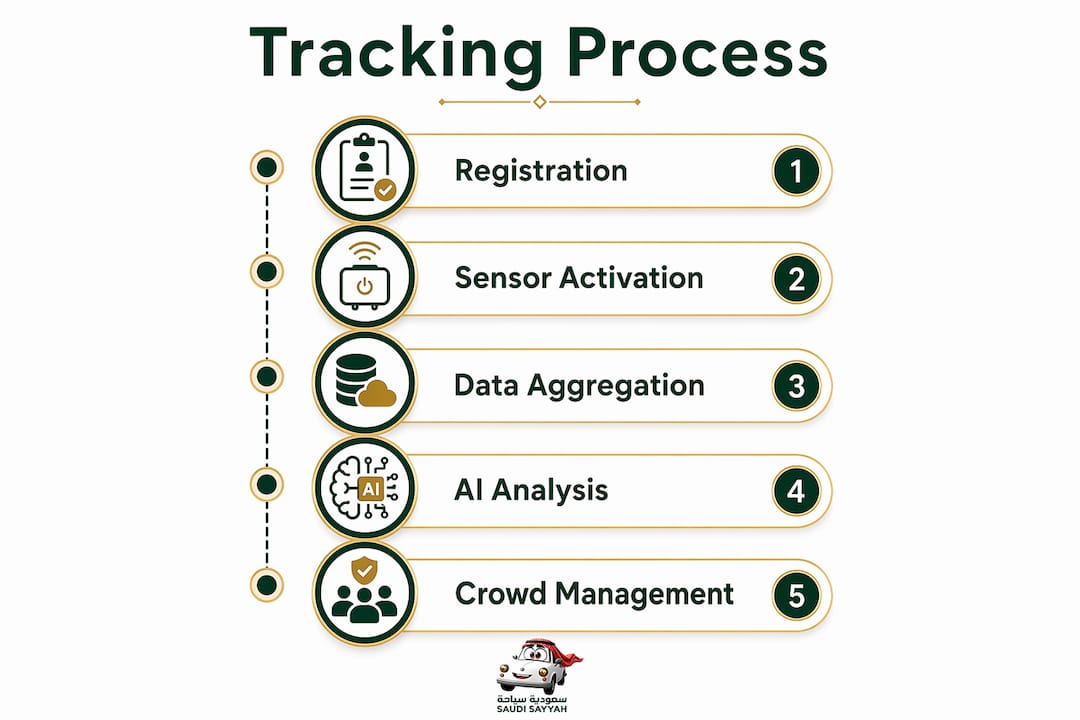
Tracking in pilgrimage is defined as the use of GPS, IoT sensors, AI analytics, and location-based services to monitor pilgrim movements, ensure safety, and guide navigation across sacred sites. The role of tracking in pilgrimage has grown from a basic lost-person tool into a full safety infrastructure. Saudi Arabia now operates over 15,000 cameras integrated with the AI system Basir to predict crowd density in real time. For pilgrims attending Hajj or Umrah, understanding how these systems work is the first step toward a safer, better-coordinated visit to the holy lands.
What is the role of tracking in pilgrimage?
Tracking in pilgrimage serves three core functions: locating pilgrims, managing crowd flow, and enabling fast emergency response. Without it, mass gatherings of millions of people across compressed sacred sites become nearly unmanageable. The 2026 Hajj season demonstrated how AI and digital protocols can transform pilgrimage logistics into a managed safety network. That shift moves pilgrimage management from reactive to proactive, which is a fundamental change in how organizers protect pilgrims.
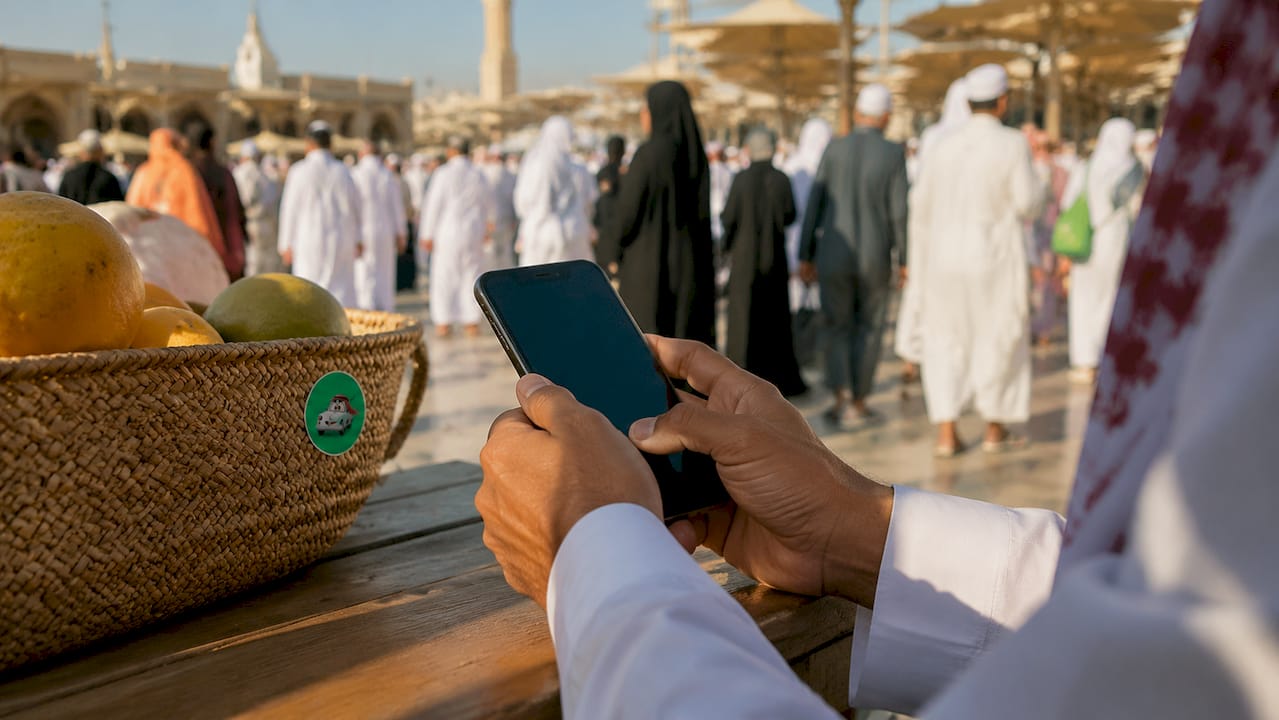
Tracking also reduces the burden on individual pilgrims. When systems monitor crowd density automatically, pilgrims receive alerts before bottlenecks form rather than after. That means less time lost, less physical risk, and more focus on the spiritual purpose of the visit. The importance of tracking in pilgrimage is clearest when you consider that millions of people from hundreds of countries converge on the same sites within days of each other.
How do modern tracking technologies work during pilgrimages?
Modern pilgrimage tracking relies on layered technology, not a single system. Each layer covers the gaps left by the others.
- GPS and GNSS: Satellite positioning works well outdoors and in open areas. It provides the base location layer for most tracking devices and apps.
- Wi-Fi and network positioning: These fill the indoor gap. Mosques, tunnels, and covered walkways block satellite signals, so Wi-Fi triangulation takes over. Multi-technology integration is required because GPS alone fails in dense, indoor pilgrimage environments.
- IoT smart sensors: The 2026 Hajj deployed smart sensor systems in Mina camps linked to the mandatory Nusuk card. These sensors track movement and operational compliance without requiring pilgrims to interact with any device.
- Smart wearables: GPS-enabled smartwatches and bracelets allow individual tracking. They also carry panic buttons for direct emergency alerts.
- Drones and cameras: Saudi Arabia's 15,000-camera network, paired with drone patrols, gives operators a live aerial view of crowd distribution across Mecca and Medina.
- AI predictive analytics: The Basir system processes camera feeds and sensor data to predict where crowd pressure will build before it becomes dangerous.
Pro Tip: If you are attending Hajj or Umrah, register your Nusuk card details before arrival. Sensors in Mina and other sites read your card automatically, so your location is logged even if your phone battery dies.
The key insight here is integration. No single technology covers every environment a pilgrim passes through. A pilgrim moves from an open plaza to a crowded indoor corridor to a tent camp within hours. Only a system that switches between GPS, Wi-Fi, and sensor data maintains continuous coverage across that route.
What are the benefits of tracking for pilgrims and organizers?
Tracking delivers measurable benefits on both sides of the pilgrimage equation: for the individual pilgrim and for the teams managing millions of people.
- Reduced lost-person incidents. Thousands of lost-person cases occur every year during major pilgrimages. Mobile location-based service (LBS) apps cut search times significantly and reduce the stress placed on both pilgrims and their group leaders.
- Faster emergency response. When a pilgrim activates a panic button or a sensor detects an unusual crowd surge, response teams receive an exact location instantly. That speed is the difference between a manageable incident and a tragedy.
- Proactive crowd management. Predictive analytics from systems like Basir identify bottlenecks before they form. Organizers can redirect foot traffic, open additional gates, or deploy staff to a zone before pressure becomes dangerous.
- Improved navigation. Apps like the Hajj Companion App provide turn-by-turn guidance across sacred sites. Pilgrims who have never visited before can follow a route without relying on a guide for every step.
- Lower stress, stronger focus. When pilgrims know their group leader can locate them and that emergency help is one button press away, anxiety drops. That mental space is returned to the spiritual purpose of the visit.
The benefits of tracking in spiritual journeys extend beyond logistics. Predictive crowd analytics reshape the pilgrim's role from a passive participant in a crowd to an active node in a safety network. That is a meaningful shift in how pilgrims experience mass gatherings.
What challenges exist with pilgrimage tracking?
Tracking technology only works when pilgrims actually use it correctly. That is where the 2026 Hajj revealed a significant gap. 70% of pilgrims reported difficulty operating mandated GPS smartwatches during the season. The technology existed, but user education had not kept pace with the rollout.
Several other challenges affect how tracking performs in practice:
- Device comfort and compliance. Pilgrims wear tracking devices for days in heat and crowds. Discreet, comfortable devices drive better long-term compliance. Bulky or irritating wearables get removed, which breaks the monitoring chain.
- Indoor GPS failure. Satellite signals cannot penetrate the dense structures of mosques and covered walkways. Systems that rely only on GPS lose contact with pilgrims in exactly the places where crowds are most concentrated.
- Battery life. A tracking device that dies mid-pilgrimage provides no protection. High-density wireless environments also drain batteries faster than normal use.
- Privacy concerns. Continuous location monitoring raises legitimate questions about data use. Pilgrims have a right to understand what data is collected, who holds it, and how long it is retained.
Pro Tip: Before your pilgrimage, attend any device orientation session offered by your travel operator or national Hajj mission. Fifteen minutes of hands-on practice with a GPS watch or LBS app prevents hours of confusion during the actual pilgrimage.
User education determines success more than the technology itself. A well-designed device that pilgrims do not know how to use provides less protection than a simpler tool they can operate confidently. Organizers and travel providers who invest in pre-departure training see better tracking compliance and fewer lost-person incidents.
What practical tracking tools can pilgrims use?
Pilgrims have access to several tools that directly improve safety and navigation. Knowing which ones to use and how to prepare them before departure makes a real difference.
- Hajj Companion App. The LBS-based Hajj Companion App supports pilgrims with GPS navigation, group communication, and a panic button that sends your location to your group leader or emergency services. Download and configure it before you leave home.
- Nusuk card. Register your Nusuk card and keep it accessible at all times. Smart sensors in Mina and other sites read it automatically. It is your digital identity within the pilgrimage management system.
- GPS smartwatch or bracelet. If your national Hajj mission provides a wearable, wear it consistently. Charge it every night. Treat it as you would your travel documents.
- Geofenced safe zones. Many tracking apps define safe zones for your group. Stay within those boundaries when possible. If you exit a geofenced area, your group leader receives an alert.
- Portable battery pack. A compact power bank keeps your phone and wearable charged through long days. In crowded environments, charging points are scarce and competition for them is high.
- Group check-in schedule. Agree on a fixed check-in time with your group, even if you have tracking apps. Technology fails. A scheduled human check-in is a reliable backup.
For pilgrims attending Umrah, the same principles apply. Essential travel technologies for Umrah include location apps, digital booking confirmations, and real-time transport tracking, all of which reduce uncertainty during the visit.
Key takeaways
Tracking in pilgrimage is the single most effective tool for converting reactive lost-person management into proactive, data-driven safety across millions of pilgrims.
| Point | Details |
|---|---|
| Multi-technology is required | GPS alone fails indoors; effective tracking combines GPS, GNSS, Wi-Fi, and IoT sensors. |
| User education drives results | 70% of pilgrims struggled with GPS watches in 2026, proving that device usability matters as much as the technology. |
| Proactive beats reactive | AI systems like Basir predict crowd pressure before it peaks, allowing organizers to act before incidents occur. |
| Comfort drives compliance | Discreet, lightweight tracking devices see higher long-term use, which keeps monitoring continuous and effective. |
| Apps extend individual safety | Tools like the Hajj Companion App give pilgrims navigation, communication, and emergency alerts in one place. |
Tracking, tradition, and the question of balance
The 2026 Hajj season made one thing clear to me: the debate about technology in pilgrimage is not really about technology. It is about trust. Pilgrims who understood what the GPS watch did and why it was required wore it without complaint. Those who received it in a box with no explanation felt surveilled rather than protected.
That distinction matters enormously. Tracking integrates spiritual pilgrimage with digital governance, and that creates a new kind of relationship between pilgrims and the institutions managing their safety. The technology itself is neutral. What determines whether it helps or alienates pilgrims is how it is introduced, explained, and supported.
The future direction is predictive, not just reactive. Systems that can model crowd behavior 20 minutes ahead of real time will give organizers enough lead time to prevent the conditions that cause stampedes. That is genuinely life-saving capability. But it only works if pilgrims trust the system enough to keep their devices charged and on their wrists.
My honest view: the spiritual and the digital are not in conflict here. A pilgrim who arrives safely, navigates confidently, and returns home without incident has had a better pilgrimage than one who spent hours lost or anxious. Tracking, done well, protects the experience it appears to interrupt.
— Fa
How Saudisayyah supports pilgrims on the ground
Real-time tracking does not stop at your wrist or your phone. It extends to how you move between sacred sites.
Saudisayyah's geolocation-enabled platform sends you driver photos, vehicle details, and live transport tracking before every trip. You know exactly who is picking you up and where they are. That visibility connects directly to the broader tracking infrastructure pilgrims rely on during Hajj and Umrah. Saudisayyah's fleet of late-model vehicles and experienced drivers keeps your ground transport on schedule, so your movement between sites stays coordinated with your group's plan. Explore pilgrim transport services or review the available fleet options to plan your ground transport before departure.
FAQ
What is the role of tracking in pilgrimage?
Tracking in pilgrimage monitors pilgrim locations using GPS, IoT sensors, and AI analytics to ensure safety, enable fast emergency response, and prevent dangerous crowd buildup at sacred sites.
What tracking tools are available for pilgrims?
Pilgrims can use the Hajj Companion App for navigation and panic alerts, GPS smartwatches provided by national Hajj missions, and the Nusuk card, which is read automatically by smart sensors in Mina camps.
Why does GPS sometimes fail during pilgrimage?
GPS signals cannot penetrate dense indoor structures like mosques and covered walkways. Effective tracking systems combine GPS with Wi-Fi positioning and IoT sensors to maintain coverage across all environments.
How does tracking improve safety during Hajj?
AI systems like Basir analyze camera feeds and sensor data to predict crowd pressure before it peaks. That gives organizers time to redirect foot traffic and deploy staff before dangerous conditions develop.
What should pilgrims do if they struggle with tracking devices?
Attend any pre-departure orientation session offered by your travel operator or national Hajj mission. Hands-on practice before arrival is the most effective way to avoid confusion with GPS watches or LBS apps during the pilgrimage itself.