
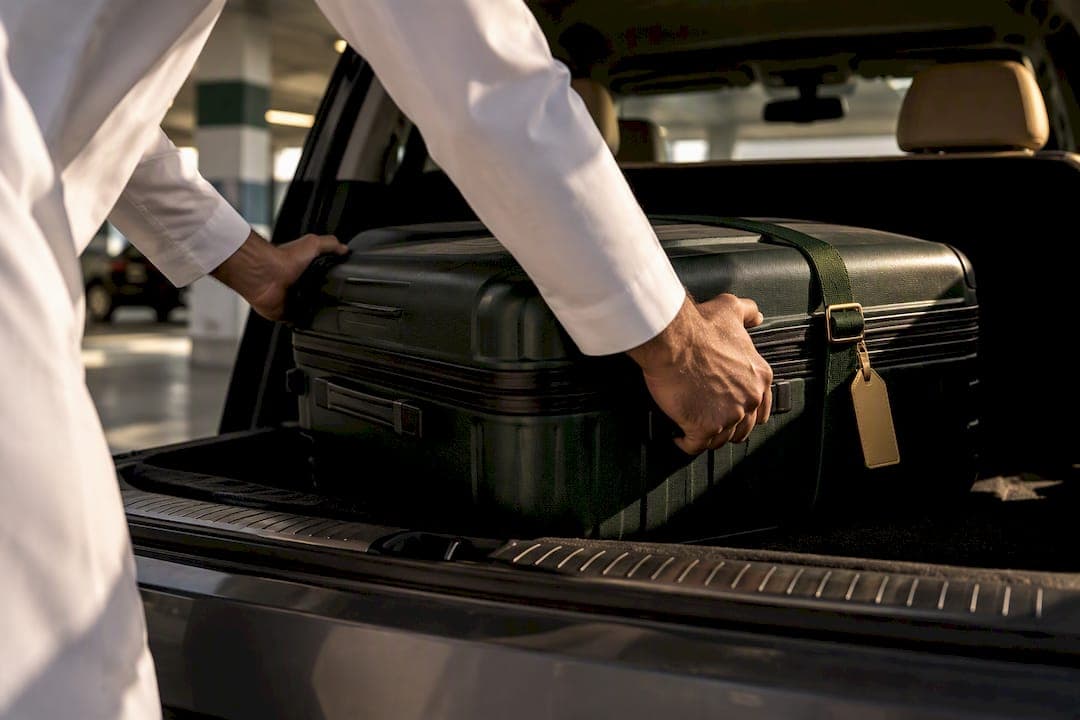
Pack heavy items low and close to the rear seat, secure everything with straps or a net, and never block your rear view or exceed load limits. Skip these steps and loose bags become moving hazards during braking or turns. The General Directorate of Traffic guidance treats overloaded or badly secured cargo as a real violation, and experienced operators follow the same load rules on every trip.
TL;DR:
- Proper load distribution places heavy, dense items low and towards the rear seat to maintain vehicle stability during turns and sudden stops.
- Secure all loose items with straps, cargo nets, or barriers to prevent shifting and reduce the risk of projectiles in crashes or hard braking.
- Check that roof racks and roof boxes do not exceed vehicle load limits, and always tighten straps evenly while testing stability before driving.
- Keep all load within the vehicle’s outline and never block lights, license plates, or vital visibility, as violations can result in fines and safety hazards.
- Conduct a quick pre-trip handling test and safety check, including tire pressure, light visibility, and brake feel, to ensure vehicle safety with the added load.
Table of Contents
- Quick safety checklist to run through at the vehicle
- How to load the trunk and rear seat area safely
- How to secure cargo: straps, cargo nets, barriers and DIY fixes
- Roof bags and roof boxes: safe use and important cautions
- Legal rules and penalties for unsafe or oversized loads
- Pre-trip checks and a short handling test after loading
- Operational tips from a verified transport operator
- What actually matters when you pack a car
- When to hire a verified transport provider instead of packing your own car
- Sources
- FAQ
Quick safety checklist to run through at the vehicle
Run this before you pull out of the driveway. Two minutes now saves problems later.
- Heavy items go low and toward the front of the cargo area.
- Fill gaps between bags so nothing shifts side to side.
- Secure loose items with straps or a cargo net.
- No items on the parcel shelf, ever.
- Check that rear visibility is clear through the mirror.
- Confirm the emergency kit is reachable, not buried.
Folding the rear seats to fit more gear. Strap everything down first. Unsecured cargo can slide forward into the cabin during hard braking, based on safety guidance on stacking bags in a car.
How to load the trunk and rear seat area safely
Start with the heaviest, densest items. Place them low, centered, and as close to the rear seat as the trunk allows. This keeps the vehicle's center of gravity stable and reduces sway on turns.
- Dense items first: suitcases, water containers, tool bags.
- Soft items second: use pillows, clothing bags, or blankets to fill gaps and wedge lighter pieces in place.
- Nothing above the rear seatback: stacking higher blocks your rear view and turns bags into projectiles on a hard stop.
- Folded seats: strap cargo to a factory anchor point or use a cargo barrier so nothing slides forward.
Safety guides on arranging luggage before a trip note that placing heavy items low and forward, then filling remaining gaps, keeps loads from shifting during sudden stops, according to practical steps for arranging car luggage.
Pro Tip: Pack a soft bag or rolled blanket last. It works as a wedge between hard suitcases and stops rattling on rough roads.
Sedans have less room to work with than SUVs or hatchbacks, so the gap-filling step matters more. A hatchback's shorter cargo floor means heavy items sit closer to the rear seat by default, which helps stability. An SUV gives more vertical space, which makes the "no stacking above the seatback" rule more important, not less.
How to secure cargo: straps, cargo nets, barriers and DIY fixes
Use whatever your vehicle has built in first. Most SUVs and hatchbacks include factory anchor points in the trunk floor or side panels.
- Cargo straps: hook to anchor points, route over or around the load, and tighten until the bag does not shift when pushed.
- Cargo nets: better for a mix of small, loose items that would slip out of a single strap.
- Load-retention bars: useful for tall SUVs where cargo sits above the seatback line and needs a physical barrier, not just tension.
Pro Tip: Push each secured bag firmly by hand before you drive. If it moves more than an inch, tighten the strap or add another anchor point.
Without proper gear, a seat belt can hold a single bag in place for a short trip, and rope works in a pinch if tied tight with no slack. Both are weaker than purpose-made straps and should not replace them for anything heavy or for a longer drive. Route any strap through door frames or seat-belt anchors carefully. Using ISOFIX or LATCH points for cargo instead of a proper anchor can damage the hardware or interfere with a child seat mount later.

Newer vehicles with more anchor points and dedicated cargo dividers make this whole step faster, a point covered in family-oriented vehicle features for 2026.
Roof bags and roof boxes: safe use and important cautions
Check your owner's manual for the dynamic roof load limit before mounting anything. This number, not the bag's advertised capacity, sets the real ceiling.
- Confirm your roof rack is rated for the load and compatible with the bag or box.
- Lay a non-slip mat under the bag to stop sliding.
- Position the zipper toward the rear so wind does not force it open.
- Tighten straps evenly on both sides, then give the bag a firm wiggle test before driving.
Manufacturer installation guides for rooftop cargo bags stress the same load-limit and wiggle-test steps, according to rooftop cargo bag installation instructions. Exceeding the roof limit affects handling and braking, and it raises the risk of losing the load entirely at speed. Check clearance for low garages, drive-throughs, and parking structures before you leave, since a loaded roof box adds real height.
Legal rules and penalties for unsafe or oversized loads
Fines for exceeding permitted load dimensions include financial penalties depending on severity, according to the General Directorate of Traffic. That range covers loads that stick out past the vehicle's outline or sit stacked too high, both common mistakes on road trips.
- Keep every load within the vehicle's outline, front to back and side to side.
- Never cover a taillight, headlight, or license plate with luggage.
- Tie down anything that extends past the trunk lid or roofline.
The Transport General Authority's guidance on securing transported goods frames these rules as a safety measure first, with fines as the backup. A load that stays inside legal limits is also far less likely to shift, block your view, or come loose in an accident.
Pre-trip checks and a short handling test after loading
Do this in the driveway, not on the highway.
- Check tire pressure and adjust for the added weight if your vehicle's manual specifies a higher setting.
- Check that all lights, including brake lights, are unobstructed.
- Roll slowly and brake gently to feel for pulling or delayed stopping.
- Take a slow, tight turn and listen for shifting or rattling inside the trunk.
- Confirm the warning triangle, first-aid kit, and phone charger are within reach, not under the luggage.
Adjusting your driving speed for a loaded vehicle matters just as much as the load itself. Details on legal limits are covered in this guide to speed limits.
Operational tips from a verified transport operator
Professional drivers run a version of this checklist before every trip, not just long ones. Load distribution gets checked bag by bag, not by feel. Vehicle capacity is matched against passenger count and luggage volume before the trip is even confirmed, a step outlined in luggage capacity guidance for common vehicle types. Drivers also verify anchor points, tire pressure, and lights as a standard pre-trip step, similar to what is described in why vehicle details matter for a safe journey.

Hiring a verified operator removes the packing and checking burden entirely. That trade matters most for travelers unfamiliar with local roads, vehicle limits, or the fine details of load rules.
What actually matters when you pack a car
Most advice on this topic focuses on gear: buy a net, buy a strap, buy a roof box. Gear is not the weak point. The weak point is the two-minute check most drivers skip: the wiggle test, the rear-view check, the tire pressure adjustment. A perfectly strapped load still fails if the driver never confirms it held.
The regulatory framing gets this right in a way most consumer guides do not. Rules on load dimensions and fines exist because unsecured cargo behaves like a projectile in a sudden stop, not because of paperwork. Treat the legal limit as the safety limit, since they are the same line.
If there is one habit worth adopting over any single product, it is the handling test after loading. It takes thirty seconds and catches problems no amount of strapping can guarantee against on its own.
— Fa
When to hire a verified transport provider instead of packing your own car
Skip the packing, checking, and roof-load math entirely by booking a transfer instead. Professional drivers arrive with a vehicle matched to your luggage volume, checked and ready before pickup.

- No packing stress: drivers handle load distribution and securing according to best practices.
- Capacity considerations: vehicles are arranged to accommodate passenger and luggage count.
- Professional pre-trip checks: tires, lights, and load are verified before the trip begins.
Details on the full range of transfers, from airport pickups to hourly hire, are listed on the services page.
Sources
- SPA: General Directorate of Traffic warnings / load fines
- Transport General Authority: Guide for Securely Fixing Goods Transported on Truck
- Al-Ain: How to arrange luggage in the car before travel (practical steps)
FAQ
What are the main safety features in a car?
Core safety features include seat belts, airbags, anti-lock brakes, and structural crumple zones, none of which work as intended if loose cargo is thrown forward in a collision. Securing luggage protects these systems from being defeated by shifting weight.
What is a car safety system, exactly?
A vehicle safety system is the combination of built-in features, like seat belts and airbags, working together with responsible driving and loading practices to reduce injury risk. Properly secured cargo is part of that system, not separate from it.
How do I arrange bags in the trunk?
Place heavy, dense items low and close to the rear seat, then fill gaps with soft items to stop shifting. Never stack bags above the rear seatback, since this blocks visibility and turns items into projectiles during hard braking, as noted in guidance on arranging car luggage.
What should be in a car emergency kit?
A basic car emergency kit includes a warning triangle, a first-aid kit, a phone charger, and a flashlight, kept within reach rather than buried under luggage. Keeping these accessible matters as much as having them at all.