
TL;DR:
- Family-oriented vehicles prioritize advanced safety features, flexible interiors, and convenience tech to enhance family travel safety and practicality. Modern models include standard ADAS, rear-seat protections, and regulated belt reminders, with space and seating configurations designed for easy reconfiguration and child safety. Choosing the right vehicle depends on specific needs, with minivans leading in utility, SUVs offering higher ground clearance, and tech like teen driver systems requiring ongoing parental engagement to be effective.
Family-oriented vehicles are defined by their integration of advanced safety systems, flexible interior space, and convenience technologies that make every trip safer and more practical for parents and children alike. The features of family-oriented vehicles evaluated by sources like U.S. News and the IIHS span 14 vehicle categories, measuring everything from crash-test performance to device charging placement. Whether you are comparing minivans, SUVs, or three-row crossovers, the right combination of family car safety features determines how well a vehicle actually serves your household on daily drives and long road trips.
1. What are the top safety features in family-oriented vehicles?
Safety is the defining priority in any family vehicle, and 2026 models reflect that with more integrated protection than any previous generation. Advanced driver-assistance systems (ADAS) now appear as standard equipment across most family segments, covering blind spot monitoring, lane-keeping assist, automatic emergency braking, and rear cross-traffic alerts. These systems reduce collision risk before an incident occurs, which matters most when children are on board.
Rear seat protection has become a focal point for regulators and automakers. 20% fewer vehicles qualified under the IIHS's stricter 2024 rear crash-test standards compared to older benchmarks. That figure tells you that many vehicles still in showrooms have back seats that do not meet the latest protection thresholds, so checking rear-seat ratings specifically is not optional for families.
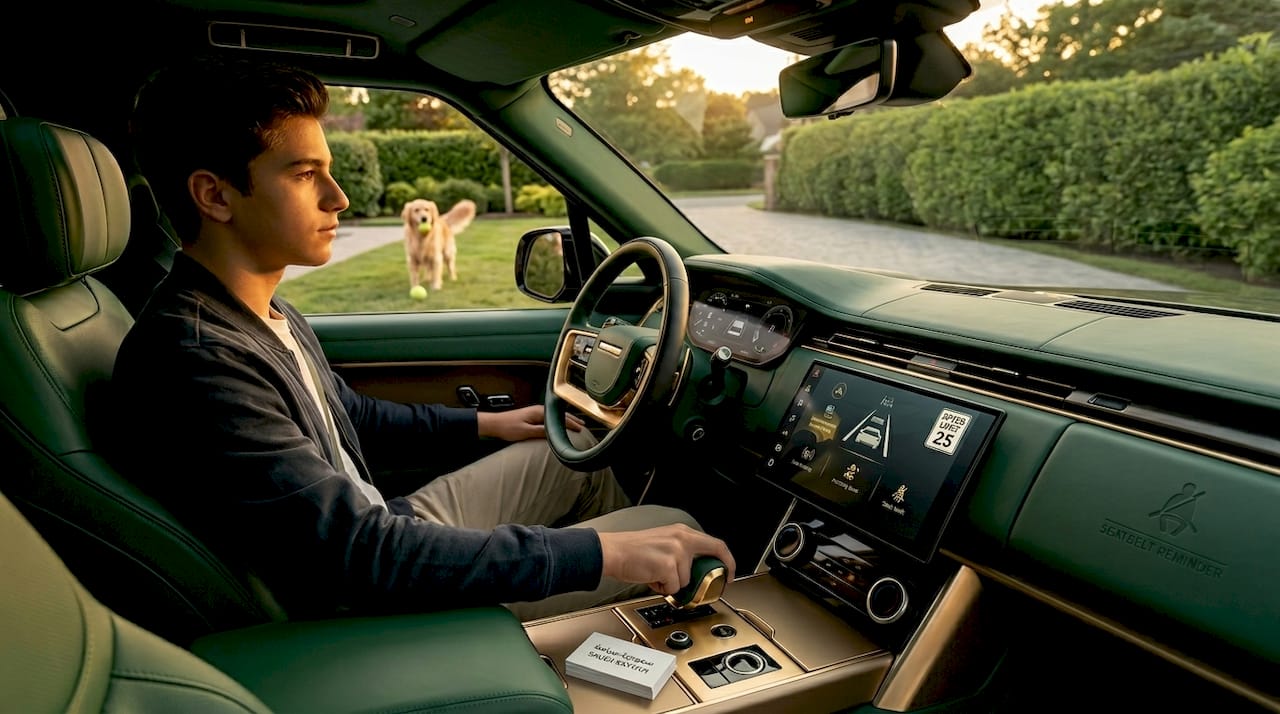
Federal regulation now reinforces rear seat belt compliance. A 2026 NHTSA final rule mandates start-of-trip visual warnings showing which rear seat belts are buckled. Occupant detection is not required because only approximately 7% of 2022 vehicles had that technology, but the buckle-sensor warnings still give parents a clear dashboard confirmation before the vehicle moves.
Additional safety features worth verifying on any shortlist:
- LATCH anchors in multiple seating rows for child safety seats
- Child-proof door locks on rear doors
- Rear seat belt reminder systems with per-seat visual indicators
- Automatic emergency braking with pedestrian detection
- Blind spot detection with rear cross-traffic alert
IIHS and NHTSA crash-test ratings are the most reliable benchmarks for comparing family vehicle safety. Always check rear-seat scores separately from the overall rating, since front-seat performance can mask weaker back-seat results.
2. How do space and seating features support family travel?
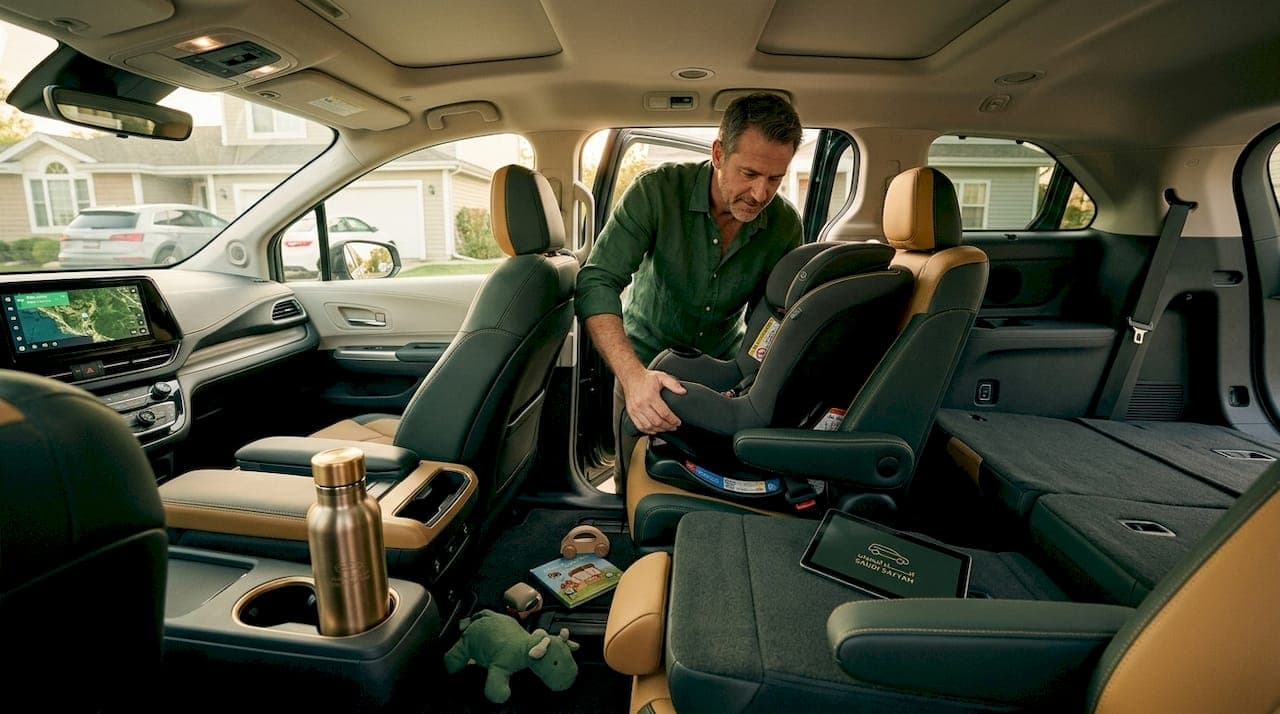
Interior space in a family vehicle is not just about raw cubic footage. Practical space utility depends on how seats fold, slide, and reconfigure around the gear families actually carry. The 2026 Kia Carnival delivers between 86 and 145.1 cubic feet of cargo volume depending on seat arrangement, which illustrates how a single vehicle can shift from passenger-first to cargo-first configuration within minutes.
The 2026 Honda Odyssey takes a different approach with its Magic Slide second-row seats, which slide laterally to create a walk-in path to the third row without removing or fully folding any seat. The third row folds in a one-motion 60/40 split, so reconfiguring the cabin takes seconds rather than minutes. That kind of design directly reduces the frustration of loading children and strollers at a parking lot.
Sliding doors versus conventional doors is a practical distinction that gets underestimated. Sliding doors on minivans allow full door opening in tight parking spaces, let children exit without swinging a door into an adjacent car, and make car seat installation significantly easier. For families managing infant seats, convertible seats, and booster seats simultaneously, that difference affects every single school run.
| Feature | Minivan (e.g., Kia Carnival, Honda Odyssey) | SUV (e.g., three-row crossover) |
|---|---|---|
| Door type | Sliding power doors | Conventional hinged doors |
| Third-row access | Walk-in or slide-through | Tumble or fold-and-dive seat |
| Cargo with all seats up | 33–40 cu ft typical | 15–20 cu ft typical |
| Cargo with rear seats folded | Up to 145 cu ft | 70–90 cu ft typical |
| Car seat installation ease | High (wide opening, flat floor) | Moderate (narrower opening) |
Pro Tip: When test-driving any family vehicle, bring your actual car seat and install it in the third row. Clearance specs on paper do not account for seat angle, belt routing, or headroom above the installed seat.
3. What convenience features make family vehicles easier for road trips?
Convenience in a family vehicle means reducing friction at every point of the trip, from loading the car to keeping passengers occupied for hours. Device charging ports placed throughout the cabin, not just at the front console, are now a standard expectation. U.S. News 2026 Best Cars for Families evaluations specifically include device charging placement as a scored criterion, recognizing that rear-seat passengers need power access as much as drivers do.
Remote engine start lets parents cool or warm the cabin before loading children, which matters in extreme climates. Automatic parking brake hold removes the need to manually engage the brake at every stop, reducing driver fatigue on urban routes with frequent traffic signals. These are not luxury additions. They are features that reduce cognitive load during the most demanding driving conditions families face.
Key convenience features to look for in family cars:
- Multiple USB-C and USB-A charging ports in second and third rows
- Rear-seat entertainment screens with HDMI or wireless streaming
- Dual-zone or tri-zone climate control so rear passengers set their own temperature
- Easy-clean seat materials such as stain-resistant fabric or leatherette
- Power sliding doors with hands-free operation for loading with full arms
- Wireless smartphone integration via Apple CarPlay and Android Auto
Pro Tip: Check whether rear entertainment screens have headphone jacks or Bluetooth audio output. Screens without audio separation mean the entire cabin hears the same content, which defeats the purpose on long trips with mixed-age passengers.
4. How do teen driver safety technologies reduce risky driving?
Teen driver safety systems represent one of the most significant advances in family vehicle technology over the past three years. These systems monitor driving behavior in real time, flagging hard braking, rapid acceleration, speeding, and phone use. The data is then shared with parents through a connected app, creating a feedback loop between the vehicle and the household.
A 2026 randomized trial of 240 parent-teen dyads found that combining in-vehicle smartphone driving feedback with parent communication training lowered risky driving incidence by 32%. That reduction is meaningful because it came from pairing technology with ongoing parental engagement, not from technology alone. Families that set up the system and then stopped discussing driving behavior with their teen saw smaller gains.
The practical implication is clear. Teen driver systems that include parent communication prompts, not just data dashboards, produce better outcomes. Features like speed alerts, curfew notifications, and geofencing add structure, but sustained parental involvement is what converts the technology into actual behavior change. When evaluating vehicles for families with teen drivers, ask specifically whether the system integrates with a parent app and whether it prompts follow-up conversations rather than just logging events.
Core teen driver features available in 2026 family vehicles include speed limit alerts, volume caps on the audio system, and report cards summarizing trip behavior. Ford's MyKey system and GM's Teen Driver technology are two widely available examples that cover most of these functions across their respective lineups.
5. Comparing family vehicle categories: minivans, SUVs, and crossovers
Choosing between vehicle categories is one of the first decisions families face, and the right answer depends on specific usage patterns rather than general preferences. Minivans lead on interior utility, sliding door convenience, and flat-floor cargo configurations. SUVs and three-row crossovers offer higher ground clearance, available all-wheel drive, and a driving profile that many families prefer on highway trips.
| Category | Safety ratings | Seating flexibility | Cargo capacity | Best for |
|---|---|---|---|---|
| Minivan | High (IIHS Top Safety Pick common) | Excellent (sliding, folding, walk-in) | Up to 145 cu ft | Large families, frequent car seat use |
| Three-row SUV | Varies by model | Good (fold-flat third row) | 70–90 cu ft max | Families wanting AWD and higher ride |
| Midsize SUV | Generally high | Limited (two rows only) | 60–75 cu ft max | Smaller families, urban driving |
Pickup trucks with extended or crew cabs appear in some family vehicle discussions, but their rear seat dimensions and lack of sliding door access make them a secondary choice for families with young children. They perform well for families that also need towing capacity, but the cargo bed does not substitute for enclosed, weather-protected storage when traveling with children.
Top family-friendly vehicles in the 2026 U.S. News awards span all three categories, confirming that no single type dominates every use case. The scoring system rewards vehicles that combine safety ratings, interior space, reliability, and family-specific features into a single package, which means the best choice for your family depends on which combination of those factors matches your actual driving life.
For families traveling in Saudi Arabia, particularly for Umrah or Hajj, vehicle safety benchmarks from international markets provide a useful reference point when evaluating transport options, since the core safety and space criteria apply regardless of geography.
Key takeaways
The most effective family vehicles combine rear-seat safety ratings, flexible seating configurations, and integrated teen driver systems rather than relying on any single feature category.
| Point | Details |
|---|---|
| Rear seat safety matters independently | Check IIHS rear-seat scores separately, since front ratings do not reflect back-seat protection. |
| Space utility beats raw cargo numbers | Sliding doors, walk-in access, and split-fold seats determine practical usability more than cubic footage alone. |
| Teen driver tech requires parental engagement | A 32% reduction in risky driving events requires feedback plus ongoing parent communication, not just app setup. |
| Rear seat belt reminders are now regulated | 2026 NHTSA rules require start-of-trip visual warnings showing which rear belts are buckled. |
| Vehicle category choice depends on use case | Minivans lead on interior utility; three-row SUVs offer AWD and driving profile advantages for different family needs. |
What families often get wrong about vehicle selection
The most common mistake is treating safety ratings as a single number. Families look at an overall IIHS or NHTSA score and move on, without realizing that a vehicle can score well on front-impact tests while performing poorly in rear-seat evaluations. With children seated in the back, that distinction is the one that actually matters.
Space decisions follow a similar pattern. Families compare cargo volume figures and conclude that a three-row SUV with 88 cubic feet of maximum cargo space is comparable to a minivan with 145 cubic feet. What those numbers do not capture is how the space is accessed, whether the floor is flat when seats fold, and whether a stroller fits without disassembly. The Honda Odyssey's Magic Slide design and the Kia Carnival's flat-fold configuration are worth more in daily use than a higher cubic footage number in a vehicle with awkward seat folding.
Teen driver systems are the feature category most likely to be purchased and underused. Parents activate the system, review the first few trip reports, and then stop engaging with the data. The 2026 JAMA trial evidence is direct on this point: the technology only produces meaningful safety gains when parents use it as a starting point for ongoing conversation, not as a passive monitoring tool. If your household is not prepared to discuss driving behavior regularly, the system will not deliver its full benefit.
The practical advice is to test every feature you plan to rely on during the test drive itself. Install the car seat. Fold the third row. Open the sliding door with one hand while holding a bag. Run through the infotainment system without the salesperson's help. Features that require a tutorial to operate will not get used consistently, and consistency is what makes family vehicle features actually work.
— Fa
Travel with your family in a vehicle built for it
Saudisayyah operates a fleet of late-model vehicles selected specifically for family travel in Saudi Arabia, including transport for Umrah and Hajj pilgrimages.

Every vehicle in the Saudisayyah fleet includes advanced safety features, rear-seat comfort, and the space families need for longer journeys. The booking platform sends driver details, vehicle information, and real-time tracking before every trip, so there are no surprises on arrival. For families traveling to the holy lands for the first time, that level of preparation matters. Explore family vehicle hire options and find the right vehicle for your group size and route.
FAQ
What are the most important features to look for in family cars?
Rear-seat crash-test ratings, LATCH anchor availability, ADAS coverage, and flexible seating configurations are the highest-priority features. Device charging placement and teen driver controls are secondary but relevant for most families.
Are minivans safer than SUVs for families?
Safety depends on the specific model, not the category. Minivans frequently earn IIHS Top Safety Pick ratings, but three-row SUVs can match or exceed those scores. Always compare rear-seat ratings specifically for any vehicle under consideration.
How do rear seat belt reminder systems work in 2026 vehicles?
Under the 2026 NHTSA rule, vehicles must display a start-of-trip visual warning showing which rear seat belts are buckled, using buckle sensors rather than occupant detection technology.
Do teen driver monitoring systems actually reduce risky driving?
Yes. A 2026 clinical trial found a 32% reduction in risky driving events when in-vehicle feedback was combined with parent communication training, compared to feedback alone.
How much cargo space does a family minivan offer?
The 2026 Kia Carnival offers between 86 and 145.1 cubic feet of cargo space depending on seat configuration, making it one of the highest-capacity options in the family vehicle segment.