

TL;DR:
- Managing travel logistics and risks is essential for maintaining an uninterrupted Umrah pilgrimage experience.
- Effective planning includes emergency preparedness, stable accommodations, and real-time support to prevent disruptions from derailing spiritual focus.
Travel continuity is the proactive management of travel logistics and risks to maintain an uninterrupted pilgrimage experience from departure to return. For Umrah pilgrims, this concept goes beyond booking flights and hotels. A single missed connection, an unplanned accommodation change, or a transport failure can derail days of spiritual preparation. Understanding why ensure travel continuity matters is the first step toward protecting your pilgrimage from the disruptions that now define modern travel.
Why ensure travel continuity during Umrah?
Travel continuity, known in risk management as journey resilience planning, is the practice of anticipating disruptions before they occur and having clear responses ready. For Umrah pilgrims, the stakes are higher than for leisure travelers. You are traveling to perform a sacred obligation, often for the first time, in an unfamiliar country with compressed schedules tied to prayer times and ritual windows.
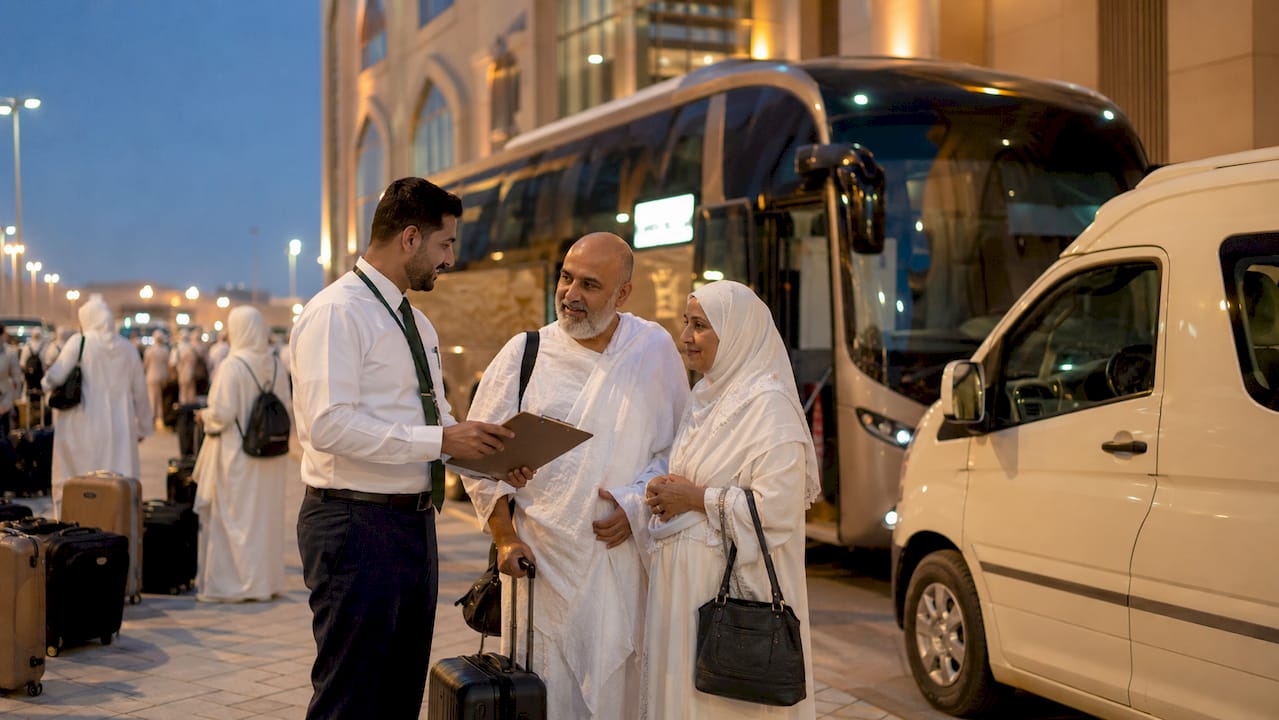
Travel disruptions are now frequent and cascading, with experts describing the current environment as a "polycrisis" where uncertainty is structural rather than exceptional. That means a delay in one part of your trip does not stay contained. It ripples forward into missed transfers, lost hotel nights, and reduced time at the holy sites.
The importance of travel continuity for pilgrims also includes physical and mental well-being. Disrupted logistics force reactive decisions under stress, which drains energy you need for worship. Pilgrims who plan for continuity arrive calmer, more focused, and better prepared to fulfill their spiritual purpose.
What are the key risks that threaten travel continuity during Umrah?
Several categories of risk can break the chain of a well-planned pilgrimage. Recognizing them before you travel is the foundation of any effective continuity plan.
- Geopolitical instability. 79% of corporate travel managers rank geopolitical instability as the top travel risk. For Umrah pilgrims, this translates to sudden airspace restrictions, border policy changes, or regional tensions that alter flight routes without warning.
- Airline delays and missed connections. Pilgrims traveling through multi-stop itineraries face compounding risk. A two-hour delay in a connecting city can mean missing a ground transfer in Jeddah or Madinah entirely.
- Accommodation disruptions. Overbooking, last-minute hotel changes, and frequent moves between properties are common during peak pilgrimage seasons. Each move forces a new adaptation cycle that costs time and energy.
- Health emergencies. Saudi Arabia's climate, crowd density, and physical demands of Umrah rituals create real health risks. Without a pre-defined emergency protocol, a medical situation can halt the entire trip.
- Transport failures on the ground. Unreliable ground transport is one of the most common complaints among pilgrims. A driver who does not show up or a vehicle breakdown between Makkah and Madinah has no easy fix without backup contacts.
Waiting for a crisis before defining emergency protocols results in chaos. Pilgrims who arrive without documented backup plans face the worst outcomes when things go wrong. The solution is not to predict every problem but to have a clear response framework ready before you board your first flight.
How do travel continuity strategies improve the Umrah pilgrimage experience?
Concrete strategies exist for both pilgrims and their travel providers. Applying them before departure converts potential chaos into manageable situations.
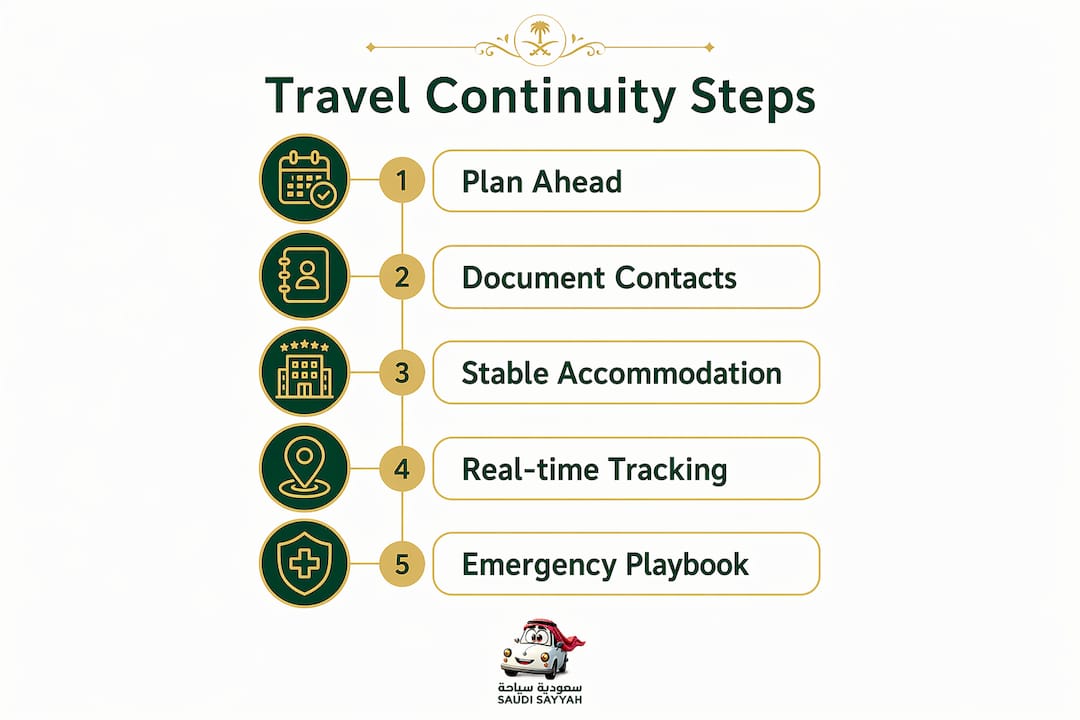
- Build a documented emergency playbook. Write down your airline booking references, hotel confirmation numbers, emergency contacts in Saudi Arabia, and your travel provider's 24/7 support line. Keep a printed copy and a digital backup. Regular crisis exercises improve coordination and confidence when real disruptions occur.
- Choose providers with 24/7 human support. Automated systems fail at the worst moments. A human agent who can rebook a flight or arrange an emergency vehicle at 2 a.m. is not a luxury. It is the new standard for managing itinerary changes effectively.
- Minimize accommodation moves. Staying in one base for five or more nights reduces the physical and mental cost of repeated check-ins and check-outs. For multi-city pilgrim trips, plan your Makkah and Madinah stays as separate stable bases rather than moving every two nights.
- Diversify your transport contacts. Relying on a single transport vendor during peak pilgrimage season is a single point of failure. Maintaining digital contact repositories with multiple verified transport options mitigates overbooking and service failures.
- Use technology for real-time monitoring. Platforms that provide live driver tracking, vehicle details, and instant rebooking reduce the gap between a disruption and its resolution. Saudisayyah's geolocation-enabled platform sends driver photos and real-time tracking before every trip, removing the uncertainty that causes most ground transport anxiety.
Pro Tip: Save your transport provider's WhatsApp or direct line as a contact before you land. In a disruption, you want one tap to reach a human, not a search through your email.
How does maintaining routine and energy consistency protect pilgrims during travel?
Travel disrupts natural rhythms. Disrupted routines lead to unpredictable energy, fragmented sleep, and reduced recovery, increasing exhaustion at exactly the time you need to be physically and spiritually present. For Umrah pilgrims, this is not a minor inconvenience. Fatigue during Tawaf or Sa'i is a real risk.
The concept of "portable discipline" addresses this directly. Portable discipline means carrying a small set of non-negotiable daily anchors, such as consistent meal times, a fixed sleep window, and your pre-prayer preparation routine, regardless of where you are. Maintaining anchor rituals signals stability to the body and prevents the energy loss that comes from constant adaptation.
Practical anchors that protect pilgrim energy include:
- Fixed meal timing. Eating at consistent times, even if the food changes, keeps blood sugar stable and reduces fatigue.
- A consistent sleep window. Aiming for the same sleep and wake times across your trip, adjusted for local prayer schedules, reduces jet lag and mental fog.
- Pre-prayer preparation as a ritual anchor. Performing wudu and preparing for Salah at consistent times creates a psychological signal that the day has structure, even when logistics shift around you.
- Limiting daily decisions. Decision fatigue is real. Pre-planning your transport, meals, and movement routes for each day frees mental energy for worship.
"Pilgrims lose their mental edge not in chaos but through drift. Maintaining standards in motion preserves focus and spiritual energy."
Staying within the same hotel brand across multiple cities reduces friction through consistent Wi-Fi, familiar room layouts, and digital check-in. That consistency compounds over a two-week pilgrimage into meaningful energy savings. The role of hospitality in pilgrimage is precisely this: reducing the cognitive load of unfamiliar environments so pilgrims can focus on what they came to do.
What practical steps can Umrah pilgrims take to ensure travel continuity in 2026?
The benefits of travel continuity are only realized through preparation. These steps apply before and during your trip.
- Conduct a pre-trip risk assessment. Identify your highest-risk connection, your most vulnerable accommodation night, and your ground transport gaps. Write them down and assign a backup for each.
- Verify 24/7 support before booking. Ask your transport and accommodation providers directly: "What happens if my flight is delayed by six hours?" If the answer is vague, choose a different provider.
- Prepare your luggage for multi-stop travel. Efficient luggage preparation for complex itineraries reduces time lost at each transition point and lowers the risk of lost bags disrupting your schedule.
- Book stable base stays. Plan for a minimum of five nights in Makkah and five nights in Madinah. Shorter stays force more moves and more adaptation cycles.
- Use platforms with easy rebooking. Easy rebooking tools maintain continuity when flights change or transport falls through. Confirm this feature exists before you finalize your booking.
| Continuity step | When to act |
|---|---|
| Document emergency contacts and booking references | At least two weeks before departure |
| Confirm 24/7 support with all providers | At booking, then again 48 hours before travel |
| Pack anchor routine items (prayer mat, familiar foods) | During packing |
| Save transport provider's direct contact | Before landing in Saudi Arabia |
| Review daily itinerary for decision-heavy moments | Each evening for the following day |
Key Takeaways
Maintaining travel continuity for Umrah requires documented emergency plans, stable accommodation bases, portable daily routines, and verified 24/7 transport support before departure.
| Point | Details |
|---|---|
| Define risks before departure | Identify your highest-risk connection and accommodation gaps, then assign a backup for each. |
| Require 24/7 human support | Automated systems fail at critical moments; confirm live human support with every provider you book. |
| Stay five or more nights per base | Longer stays reduce adaptation cycles and preserve physical and mental energy for worship. |
| Keep portable daily anchors | Fixed meal times, sleep windows, and pre-prayer routines stabilize energy amid logistical changes. |
| Use real-time transport technology | Platforms with live tracking and instant rebooking close the gap between disruption and resolution. |
Why logistics and spiritual focus are the same problem
Pilgrims often treat travel logistics and spiritual preparation as two separate tasks. They are not. Every hour spent managing a transport failure or hunting for a new hotel room is an hour taken from prayer, reflection, and rest. I have seen pilgrims arrive at the Masjid al-Haram exhausted and disoriented, not because the journey was long, but because it was fragmented. Each small disruption, a missed pickup, an unexpected room change, a delayed meal, accumulated into a state of mental noise that took days to clear.
The pilgrims who arrive focused are almost always the ones who planned for continuity. They did not plan for a perfect trip. They planned for a recoverable one. They had a backup driver's number. They stayed in one place long enough to feel settled. They kept their prayer preparation routine even when the schedule shifted. That is not over-preparation. That is the minimum required to protect a trip that carries this much meaning.
The practical and the sacred are not in tension here. Protecting your logistics is how you protect your intention.
— Fa
Saudisayyah transport for uninterrupted Umrah travel
Reliable ground transport is the most common point of failure for pilgrims, and the easiest one to solve before you land.
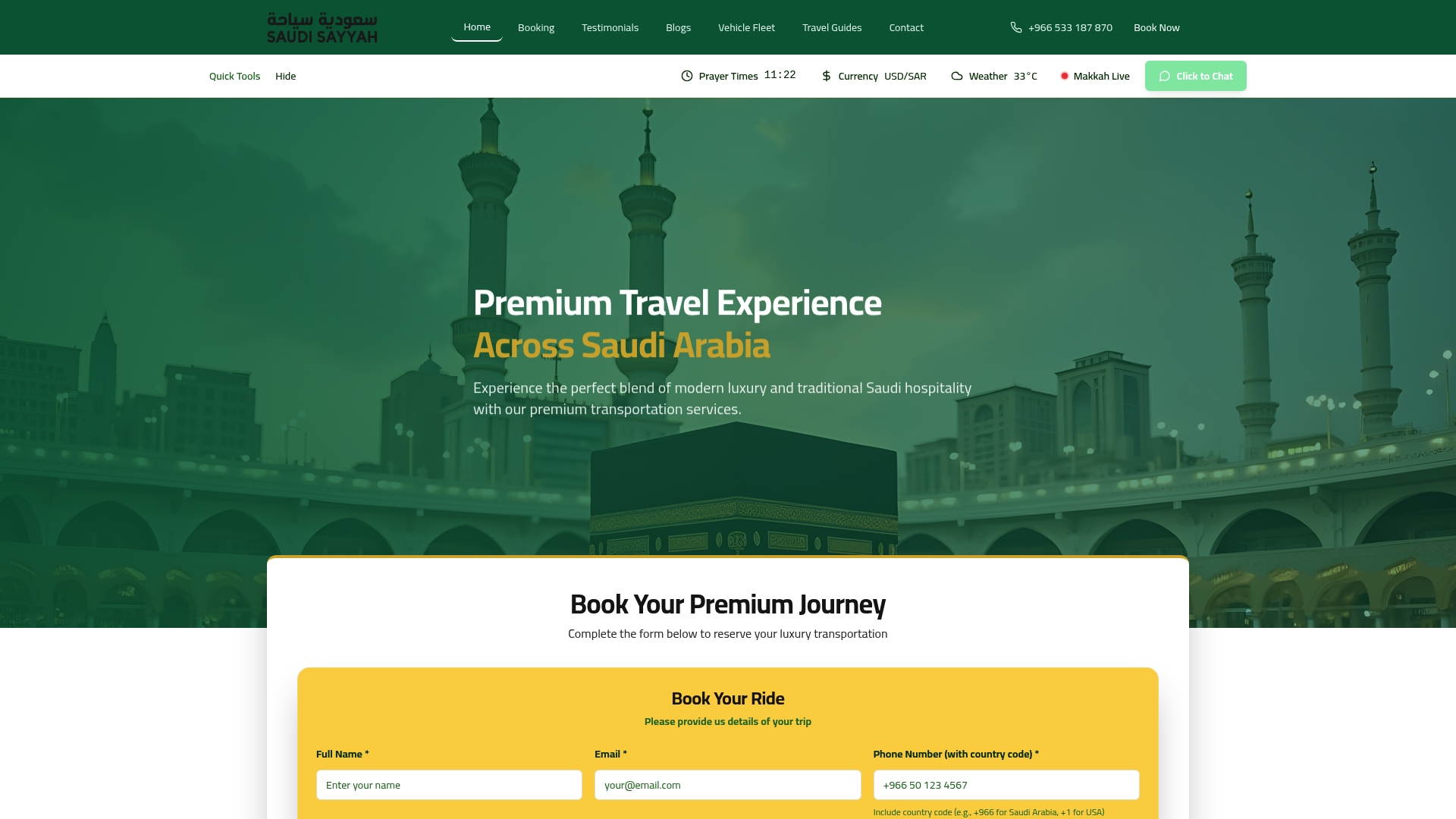
Saudisayyah provides 24/7 transport support across Saudi Arabia, with a fleet of late-model vehicles and professional drivers experienced in pilgrim routes between Makkah, Madinah, and Jeddah. Before every trip, the platform sends you your driver's photo, vehicle details, and live tracking. That means no waiting, no uncertainty, and no last-minute scrambles. For pilgrims who want to protect their schedule and their energy, Saudisayyah's car hire services cover the full range of transport needs. You can also review available fleet options to match your group size and travel requirements before booking.
FAQ
Why does travel continuity matter for Umrah pilgrims?
Travel continuity protects pilgrims from cascading disruptions that consume time, energy, and focus needed for worship. A single transport failure or accommodation change can derail an entire day of spiritual activity.
What is the biggest risk to travel continuity during Umrah?
Geopolitical instability ranks as the top travel risk for 79% of travel managers, but ground transport failures and frequent accommodation moves are the most common day-to-day disruptions for pilgrims specifically.
How many nights should a pilgrim stay in one place?
Staying five or more nights in a single base reduces adaptation fatigue and helps the body settle into a stable routine. Shorter stays force repeated adjustment cycles that drain energy.
What should a pilgrim include in an emergency travel playbook?
A playbook should include airline booking references, hotel confirmation numbers, a 24/7 transport contact, and the nearest Saudi health facility to each accommodation. Keep both a printed and digital copy.
How does real-time transport tracking support travel continuity?
Live tracking removes the uncertainty of whether a driver is coming, which is the most common source of ground transport anxiety. Platforms like Saudisayyah send driver details and live location before every pickup, giving pilgrims confirmed information rather than guesswork.