
TL;DR:
- Digital tools like the Nusuk app, pre-arrival eSIM, AI crowd monitoring, and organized digital documents are essential for a safe and smooth Umrah pilgrimage. Proper preparation—testing apps, offline maps, and securing hardware—reduces cognitive load and prevents logistical issues during the trip. Leveraging these technologies enhances safety, efficiency, and spiritual focus amid the crowds and high temperatures of Makkah and Madinah.
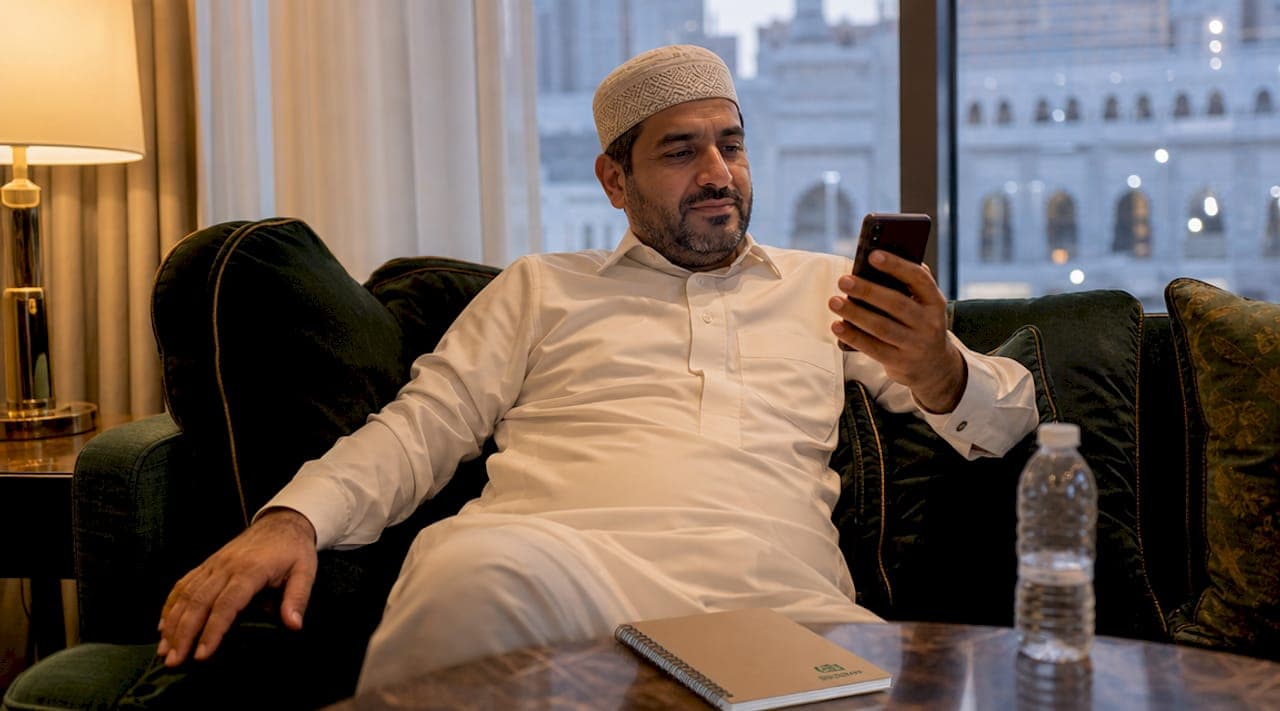
Essential travel technologies for Umrah are digital apps, connectivity tools, and hardware devices that support navigation, communication, and safety throughout the pilgrimage. The role of technology in Umrah 2026 has moved well beyond convenience. Tools like the Nusuk app, Airalo eSIM, and AI-powered crowd monitoring systems now form the operational backbone of a well-prepared pilgrimage. Nearly 40% of first-time pilgrims experience severe disorientation on arrival, yet that figure drops by 90% when GPS-enabled travel apps with offline maps are in use. That single statistic defines why tech preparation is not optional.

1. Top apps every Umrah pilgrim should install
The Nusuk app is the single most important digital tool for Umrah pilgrims in 2026. It handles visa applications, ritual permits, integrated maps, and real-time support in one place. Nusuk achieves 99.9% uptime and uses biometric authentication alongside strong encryption to protect passport data, payment details, and location information. That level of reliability makes it the anchor around which all other apps should be organized.
Beyond Nusuk, Tawakkalna and Sehhaty handle health compliance and safety verification. Both apps were central to permit management during COVID-19, when digital health checks enabled pilgrimage to continue under strict restrictions. Their continued use reflects how digital tools have shifted from communication aids to health and logistics infrastructure.
For prayer times and Qibla direction, Muslim Pro and Athan are the most widely used options. Both support offline functionality and multilingual interfaces, which matters when network congestion peaks during Tawaf or Sa'i. Offline map capabilities in apps like Google Maps and Maps.me allow pilgrims to pre-download Makkah and Madinah city maps before departure, removing dependence on live data during high-density crowd periods.
Pro Tip: Download and update all apps at least two weeks before departure. Enable offline maps for Makkah and Madinah during that same window. Testing app access at home eliminates the risk of discovering a login or permission issue after landing in Saudi Arabia.
For a deeper look at required pilgrim apps and their specific features, the Saudisayyah blog covers the full 2026 breakdown.
2. Reliable mobile connectivity for pilgrims
Connectivity is the infrastructure that makes every app on this list function. Without stable mobile data, offline maps become the only fallback, and real-time safety alerts go dark. The Airalo eSIM Tahsil plan on Zain 5G is the most practical connectivity option for international pilgrims. Pricing starts at $4.40 for 1 GB over 3 days, scaling to $47.85 for larger packages. That pricing structure makes it accessible regardless of trip length or budget.
The key advantage of a pre-arrival eSIM over a local SIM card purchased at King Abdulaziz International Airport or Jeddah's city center is immediate activation. Buying a physical SIM in Saudi Arabia requires time at a counter, identity verification, and often a wait. An eSIM provisioned before departure means Nusuk, Tawakkalna, and navigation apps are live the moment the plane lands.
Pro Tip: Test your eSIM and confirm all government apps are accessible before boarding. A five-minute check at home prevents a two-hour problem on arrival.
Network congestion during peak Umrah periods is real. Offline map pre-download is not a backup plan. It is a primary strategy, because live navigation can fail precisely when crowds are largest and orientation is most critical.
3. AI-driven safety and crowd management tools
Artificial intelligence is now embedded in the Saudi government's approach to managing the two million-plus pilgrims who perform Umrah annually. AI systems analyze crowd density data in real time, predict congestion points before they become dangerous, and push alerts directly to pilgrim devices. AI-powered crowd monitoring reduces risk by enabling proactive rerouting rather than reactive crowd control.
The apps Al-Haramain and Al-Mutawif both incorporate real-time crowd status updates informed by this AI infrastructure. Pilgrims receive congestion alerts for the Grand Mosque, Zamzam areas, and key transit corridors. Acting on those alerts, rather than following the crowd instinctively, is one of the highest-value behaviors a pilgrim can adopt.
AI and 5G-powered systems in Saudi Arabia also include multilingual smart robots deployed at key sites to provide real-time assistance and historical information in multiple languages. For pilgrims who do not speak Arabic, these systems reduce reliance on finding a human guide during busy periods.
RFID wristbands and wearable devices add another layer of safety. They store personal identification data and medical information, allowing emergency responders to access critical details without language barriers. Group leaders can also use RFID-enabled coordination tools to locate separated members in dense crowds. These are not consumer gadgets. They are tools that Saudi authorities and licensed tour operators actively deploy.
4. Hardware devices that support your tech setup
A capable smartphone is the foundation of every other technology on this list. The device needs to handle GPS, run multiple apps simultaneously, and maintain performance in high heat. Flagship models from Samsung, Apple, and Google all meet this standard. Mid-range devices can work, but processing lag during navigation in a crowd is a genuine safety concern.
High-capacity power banks are non-negotiable. GPS, active data connections, and screen brightness drain batteries fast, and the heat in Makkah accelerates that drain further. A 20,000 mAh power bank provides two to three full charges for most smartphones. Charging points inside the Grand Mosque complex are limited and often occupied.
Biometric security on the device itself protects sensitive data. Fingerprint or face unlock prevents unauthorized access to Nusuk, banking apps, and stored documents if a phone is lost or stolen. This is a hardware feature, not an app setting, and it should be confirmed active before departure.
Optional additions worth considering include Bluetooth translators for pilgrims traveling with non-English-speaking group members, and smart wristbands for group coordination. Neither is required, but both reduce friction in specific scenarios.
Pro Tip: Pack a short USB-C cable and a compact multi-port charger. Hotel rooms in Makkah and Madinah often have limited outlets, and charging multiple devices overnight requires planning.
5. Organizing and protecting digital documents
Digital document management is where many pilgrims lose time and create unnecessary stress. The solution is a single, cloud-synchronized folder containing every critical file: visa approval, hotel booking confirmation, health records, Nusuk permit screenshots, and emergency contacts. Centralizing documents digitally reduces stress, prevents loss, and allows instant sharing with travel group members.
Google Drive, iCloud, and Microsoft OneDrive all support offline access to synced files. That means documents remain accessible even when data connectivity drops. The folder should be shared with at least one other person in the travel group before departure. If one phone is lost or damaged, the group retains access to all critical information.
Security practices for digital documents include:
- Biometric lock on all devices storing sensitive files
- Two-factor authentication on cloud storage accounts
- Encrypted PDF storage for passport scans and visa approvals
- Offline copies downloaded to the device, not just stored in the cloud
Testing access to government apps and permits before travel is equally important. Log into Nusuk, confirm permit status, and verify that all uploaded documents display correctly. A failed login discovered in Makkah is far harder to resolve than one caught at home two weeks earlier.
Key takeaways
The most effective approach to Umrah tech preparation combines government-endorsed apps, pre-arrival eSIM connectivity, AI-powered safety tools, and a centralized digital document system.
| Point | Details |
|---|---|
| Nusuk app is the core tool | It manages visas, permits, maps, and support with 99.9% uptime and biometric security. |
| Pre-arrival eSIM beats local SIM | Airalo on Zain 5G activates immediately and starts at $4.40, avoiding airport delays. |
| AI crowd alerts reduce risk | Apps like Al-Haramain push real-time congestion warnings before dangerous density builds. |
| Power bank is required hardware | Heat and GPS drain batteries fast; a 20,000 mAh bank covers two to three full charges. |
| Digital folder prevents document loss | A shared, cloud-synced folder with offline access protects all critical travel files. |
What I've learned about tech and the Umrah experience
Most pilgrims approach technology as a backup plan. They install apps the night before departure, assume their home SIM will work, and keep documents scattered across email threads and screenshots. That approach creates exactly the kind of logistical friction that pulls attention away from the spiritual purpose of the trip.
The pilgrims who use tech tools for Umrah most effectively treat preparation as a separate task completed weeks in advance. They test every app, confirm every login, and download offline maps before they pack a single bag. The difference in experience is not marginal. It is the difference between spending mental energy on logistics and spending it on the pilgrimage itself.
The insight that most articles skip is this: cognitive load is the real enemy. Integrated platforms like Nusuk reduce cognitive load by putting visa, permit, navigation, and support in one place. Every additional app that duplicates a function already covered by Nusuk adds friction rather than removing it. The goal is fewer apps used well, not more apps installed and ignored.
AI crowd alerts deserve more attention than they typically receive. Most pilgrims treat them as optional notifications. They are not. Acting on a congestion alert from Al-Haramain or Al-Mutawif before a crowd builds is one of the most practical safety decisions a pilgrim can make. The technology exists. Using it consistently is the only variable.
Carry a physical backup. A printed copy of your visa approval and hotel address, stored separately from your phone, has resolved more problems than any app I have seen. Technology fails. Paper does not.
— Fa
Plan your Umrah transport with Saudisayyah
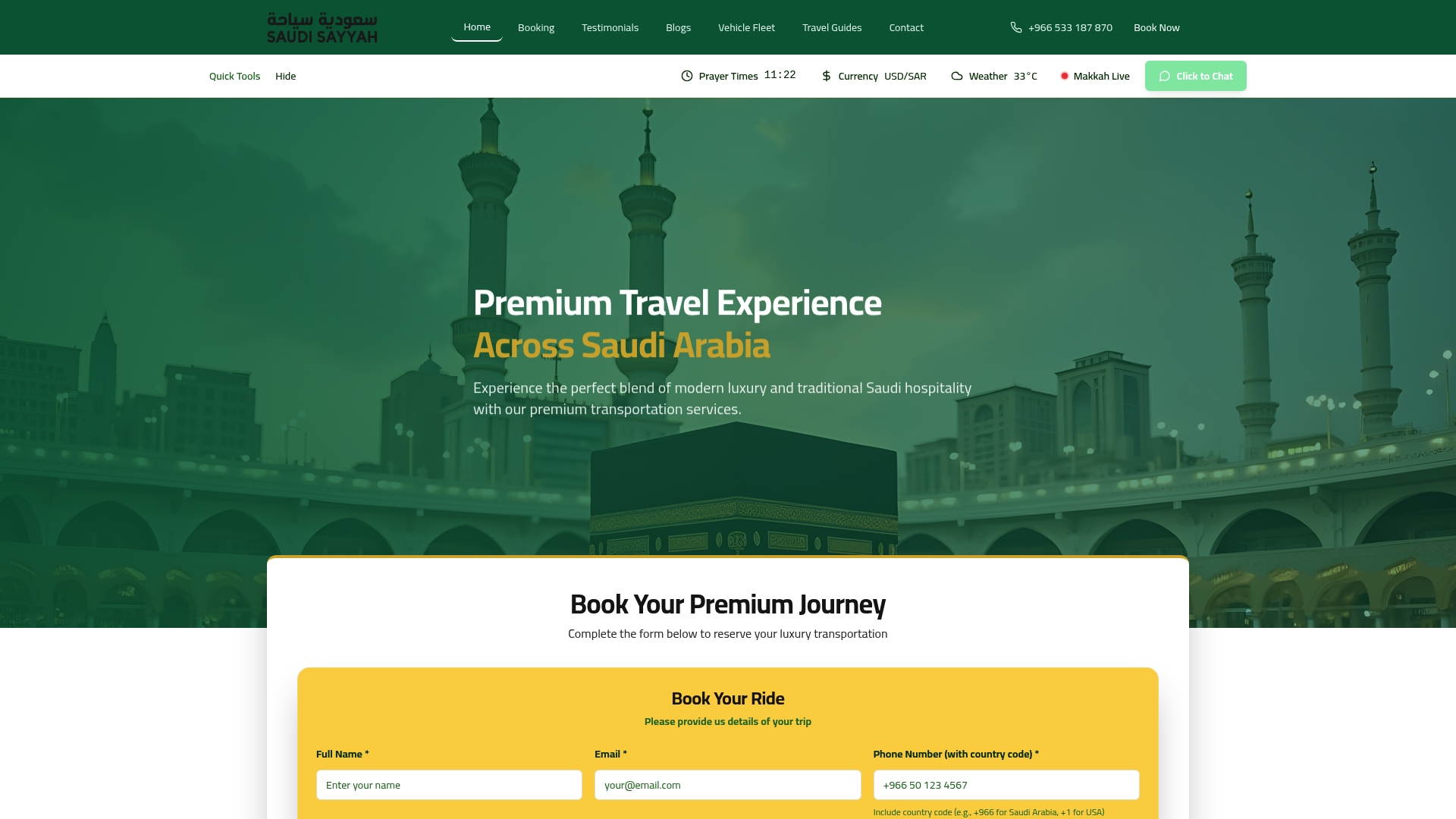
Saudisayyah builds its transport service around the same principle that defines good travel technology: eliminate surprises. The geolocation-enabled platform sends driver photos, vehicle details, and real-time tracking before every trip. The fleet uses latest-model vehicles with GPS integration and advanced safety features, designed specifically for safer Umrah travel. For pilgrims coordinating arrivals, inter-city transfers, or Ziyarah visits, early booking through Saudisayyah's car hire services locks in availability during peak Umrah periods. The booking system is fully automated and internationally compliant, so confirmation arrives instantly with no follow-up required.
FAQ
What is the most important app for Umrah pilgrims?
The Nusuk app is the primary tool for Umrah pilgrims in 2026. It manages visa applications, ritual permits, integrated maps, and real-time support in a single platform with 99.9% uptime.
Should I buy a SIM card in Saudi Arabia or use an eSIM?
A pre-arrival eSIM is the faster option. Services like Airalo on Zain 5G activate immediately upon arrival, while purchasing a local SIM at the airport requires counter time and identity verification.
How do AI tools improve safety during Umrah?
AI-powered crowd monitoring apps analyze density data in real time and push congestion alerts to pilgrim devices before dangerous buildup occurs, enabling proactive rerouting rather than reactive crowd management.
What hardware should I pack for Umrah?
A capable smartphone, a high-capacity power bank of at least 20,000 mAh, and a compact multi-port charger cover the core hardware needs. Biometric security should be active on all devices.
How should I store travel documents for Umrah?
Store all documents in a single cloud-synchronized folder with offline access enabled, shared with at least one group member. Use biometric locks and two-factor authentication on all accounts holding sensitive files.