
TL;DR:
- Religious tourism involves travel centered on spiritual or faith-based purposes, affecting over 600 million trips annually worldwide. It includes pilgrimages, visits to holy sites, festivals, retreats, and cultural tours, with destinations like Makkah, Vatican City, and Varanasi drawing millions. Managing the sector requires balancing infrastructure, reverence, and traveler needs to preserve sanctity and ensure a meaningful experience.
Religious tourism is travel undertaken primarily to fulfill spiritual or faith-based purposes, such as completing a pilgrimage, visiting a holy site, or participating in a sacred festival. The sector generates approximately 600 million trips annually worldwide, with over 300 million of those classified as pilgrimages. That volume places faith-based travel among the largest and oldest segments of the global tourism industry. The global religious tourism market was valued at $254.3 billion in 2023 and is projected to reach $671.93 billion by 2030. Those numbers confirm that spiritual travel is not a niche category. It is a major economic force.
What is religious tourism, and how is it defined?
Religious tourism is defined as travel where the primary motivation is spiritual or religious in nature. The standard industry term used by tourism researchers and bodies such as UN Tourism is "faith-based tourism," though "religious tourism" and "pilgrimage tourism" are used interchangeably across academic and trade contexts. What separates it from cultural tourism is intent. A traveler visiting the Vatican to appreciate Renaissance art is a cultural tourist. A traveler visiting the Vatican to attend Mass or receive a papal blessing is a religious tourist. The spiritual purpose transforms an ordinary site into a sacred space.
Religious tourism operates on a spectrum that includes core spiritual rituals at one end and supporting services at the other. Accommodation near shrines, guided religious tours, and transport between holy sites all fall within the sector. The traveler's inner spiritual goal and the outer recreational experience often overlap, which is why the sector attracts both devout practitioners and secular visitors with cultural or heritage interests.
What activities and services are included in religious tourism?
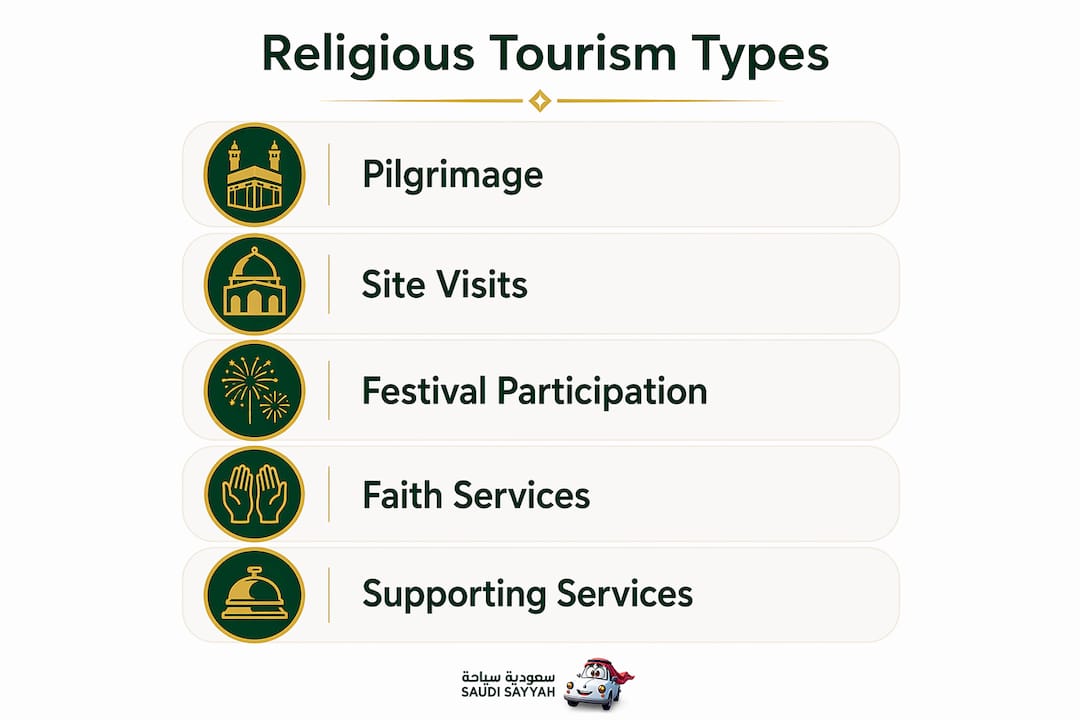
Faith-based travel covers a wide range of activities, not just formal pilgrimage. The types of religious tourism services include:
- Pilgrimages: Structured journeys to sacred sites, such as Hajj to Makkah or the Camino de Santiago in Spain.
- Visits to holy sites: Mosques, churches, temples, shrines, and monasteries visited for prayer, reflection, or ritual.
- Religious festivals and events: Kumbh Mela in India, Easter Week in Seville, or Eid prayers at the Grand Mosque.
- Missionary and volunteer travel: Faith-motivated trips combining service work with spiritual purpose.
- Retreats and monastery stays: Extended stays at religious communities for prayer, meditation, or spiritual direction.
- Cultural and heritage tours: Secular visitors exploring religious architecture, art, and history at sacred sites.
Each category draws a different traveler profile. Pilgrims completing Hajj have specific ritual obligations and tight logistical requirements. Retreat participants need quiet, structured environments. Cultural tourists want guided interpretation and flexible access. Destinations that recognize this diversity build differentiated offerings rather than one-size-fits-all programs.
Pro Tip: If you are planning a first visit to a major religious site, research the site's specific codes of conduct before you travel. Dress requirements, photography rules, and access restrictions vary significantly between traditions and can affect your experience on arrival.
Why do people engage in religious tourism?
Traveler motivations in faith-based travel span a wide range, from strict religious obligation to personal wellness. Understanding that spectrum helps explain why the sector continues to grow even among non-religious populations.
- Religious obligation. For Muslims, Hajj is one of the Five Pillars of Islam and a duty for every able-bodied adult who can afford it. For Catholics, visiting Rome or Santiago de Compostela carries centuries of devotional tradition. Obligation drives predictable, recurring demand.
- Fulfilling vows and giving thanks. Many travelers visit shrines or holy sites after recovering from illness or surviving hardship. These thanksgiving journeys are common across Hinduism, Christianity, and Islam.
- Cultural and heritage exploration. Travelers with no active religious practice visit Angkor Wat, Hagia Sophia, or the Western Wall because these sites represent the peak of human civilization. Traveler demographics blur the line between devout pilgrim and cultural tourist at most major sites.
- Wellness and mental health. The post-pandemic period has accelerated a trend toward wellness-based religious travel. Faith-based travel now attracts both religious practitioners and secular seekers who value the mental, physical, and spiritual benefits of sacred environments.
- Community and belonging. Shared ritual creates powerful social bonds. Traveling with family or a faith community to a sacred site reinforces identity and strengthens relationships in ways that standard leisure travel rarely achieves.
The motivational mix matters for service providers. A pilgrim completing a religious obligation needs reliability and logistical support above all else. A wellness traveler needs calm, comfort, and flexibility. Destinations and transport operators that understand this difference deliver better experiences.
Which are the major global destinations for religious tourism?
Three destinations consistently rank at the top of global faith-based travel: Makkah, Vatican City, and Varanasi. Each illustrates a different model of religious tourism at scale.

Makkah (Mecca), Saudi Arabia is the most visited religious destination on earth. Hajj draws over two million pilgrims in a single week each year, and Umrah attracts tens of millions more across the calendar. The Saudi government has invested heavily in infrastructure around the Grand Mosque to manage these volumes, though crowd management remains a permanent operational challenge. Saudisayyah operates transport services specifically designed for pilgrims traveling between Makkah, Madinah, and Jeddah, providing real-time tracking and pre-trip driver details to reduce uncertainty for first-time visitors.
Vatican City serves as the spiritual center of the Catholic Church and draws millions of visitors annually to St. Peter's Basilica and the Vatican Museums. The site balances active religious use with one of the world's highest-traffic cultural tourism programs. Managing the coexistence of worshippers and sightseers requires designated quiet zones and time-specific access to preserve the spiritual character of the space.
Varanasi, India is Hinduism's holiest city and sits on the banks of the Ganges River. Visitor volumes can reach up to 35 times the local population during major festivals. That pressure tests infrastructure, water quality, and crowd safety simultaneously.
| Destination | Primary Faith | Key Challenge |
|---|---|---|
| Makkah, Saudi Arabia | Islam | Crowd management during Hajj and Umrah seasons |
| Vatican City | Christianity | Balancing worship access with mass cultural tourism |
| Varanasi, India | Hinduism | Infrastructure strain during peak festival periods |
| Jerusalem, Israel | Judaism, Christianity, Islam | Multi-faith access and geopolitical complexity |
| Lourdes, France | Christianity | Medical pilgrim accommodation and accessibility |
Pro Tip: Booking transport and accommodation for Makkah or Madinah well in advance of the Hajj or Umrah season is not optional. Capacity at every level fills months ahead of peak periods, and last-minute arrangements routinely result in higher costs and lower service quality.
What are the challenges and considerations in managing religious tourism?
Managing faith-based travel at scale is genuinely difficult. The core tension is between preserving spiritual sanctity and accommodating large numbers of visitors with diverse needs.
- Infrastructure strain. Roads, public transit, hotels, and sanitation systems around major pilgrimage sites were often built for far smaller populations. Varanasi and Makkah both face recurring pressure on basic services during peak seasons.
- Visitor behavior and codes of conduct. Many travelers arrive without adequate knowledge of local religious customs. Inappropriate dress, photography in restricted areas, and noise in sacred spaces create friction between pilgrims and casual visitors.
- Heritage preservation. High foot traffic physically degrades ancient structures. The stone floors of the Church of the Holy Sepulchre in Jerusalem and the ghats of Varanasi both show measurable wear from millions of annual visitors.
- Environmental impact. Mass pilgrimages generate significant waste. The Ganges River faces pollution pressure directly linked to Kumbh Mela and daily ritual activity in Varanasi.
- Transport continuity. Logistics such as real-time information access, queue management, and transport continuity are critical to successful religious travel. Breakdowns in any of these areas convert a spiritually meaningful trip into a stressful ordeal.
"Effective management of religious tourism requires balancing spiritual experience with facilitating services like transport, crowd control, and communication. Well-managed sites see higher visitor satisfaction and preserve sanctity."
The sites that handle these pressures best share one characteristic: they treat service infrastructure as part of the spiritual offering, not a separate logistical concern. When transport and communication services work reliably, pilgrims can focus on the purpose of their visit rather than managing anxiety about logistics. That shift in attention is the difference between a meaningful pilgrimage and a stressful trip. For travelers planning Umrah pilgrimage logistics, understanding these challenges in advance reduces surprises on the ground.
Key Takeaways
Religious tourism is one of the world's largest travel sectors, driven by spiritual obligation, cultural interest, and wellness motivations, and it requires purpose-built services to function well at scale.
| Point | Details |
|---|---|
| Core definition | Religious tourism is travel where spiritual or faith-based purpose is the primary motivation. |
| Scale of the sector | The market was valued at $254.3 billion in 2023 and is projected to reach $671.93 billion by 2030. |
| Traveler diversity | Sites serve both devout pilgrims with ritual obligations and secular visitors with cultural interests. |
| Top destinations | Makkah, Vatican City, and Varanasi lead global faith-based travel by visitor volume and significance. |
| Service quality matters | Reliable transport, real-time communication, and crowd management directly affect the quality of the pilgrimage experience. |
Religious tourism is more than a market category
I have spent years reading about and working adjacent to faith-based travel, and the thing that strikes me most is how poorly the commercial tourism industry understands what pilgrims actually need. Most travel commentary treats religious tourism as a subset of cultural tourism with a dress code. That framing misses the point entirely.
A pilgrim completing Hajj or traveling to Varanasi for a parent's last rites is not a tourist who happens to be religious. The spiritual purpose is the entire reason for the trip. Every logistical failure, every missed connection, every moment of confusion, lands differently for that traveler than it would for someone on a beach vacation. The stakes are higher. The emotional investment is deeper.
What concerns me about the sector's growth is the risk of commercialization outpacing reverence. When a destination generates billions in economic activity, the pressure to add hotels, souvenir markets, and tour packages is enormous. That pressure is not inherently wrong. Religious tourism sustains livelihoods around pilgrimage sites and has done so for centuries. The problem arises when commercial interests crowd out the spiritual character of a place.
The best operators I have seen treat service quality as an act of respect for the traveler's purpose. That means real-time communication, not just a booking confirmation. It means drivers who understand that a pilgrim arriving in Makkah for the first time deserves calm and clarity, not confusion. Technology can support that standard. It cannot replace the underlying commitment to getting it right.
— Fa
Saudisayyah transport services for pilgrims
Pilgrims traveling to Makkah and Madinah need transport that works without surprises. Saudisayyah provides fully automated, internationally compliant booking for car hire and private transport across Saudi Arabia's holy cities.
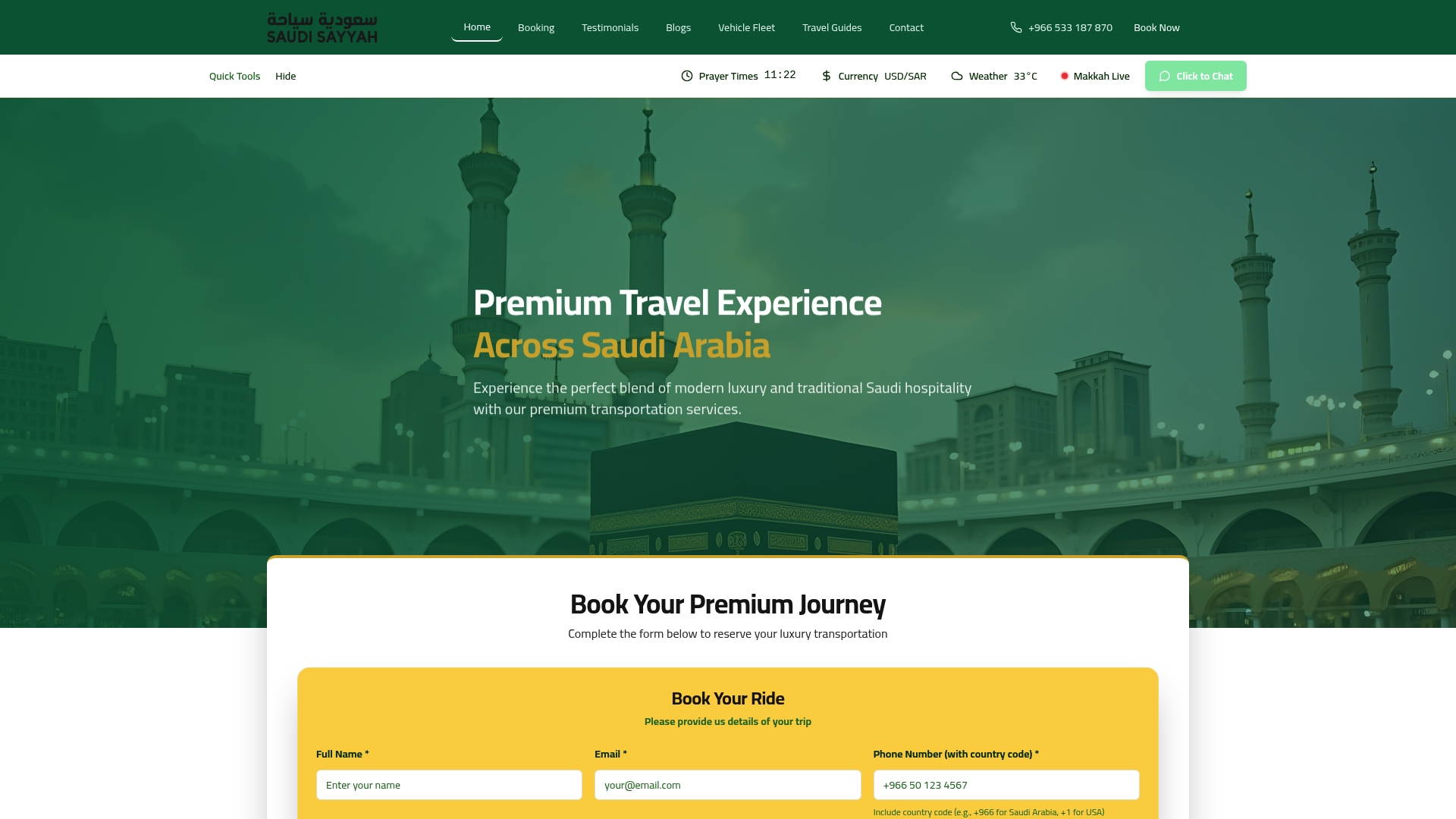
Every booking includes driver photos, vehicle details, and real-time GPS tracking sent before the trip begins. The fleet uses the latest model year vehicles, and drivers carry years of experience on pilgrimage routes. For first-time visitors who need clarity at every step, Saudisayyah's platform maintains constant communication from booking to drop-off. View the full range of pilgrim transport options or check live Makkah updates before your trip.
FAQ
What is the definition of religious tourism?
Religious tourism is travel where the primary motivation is spiritual or faith-based, including pilgrimages, visits to holy sites, and participation in religious festivals. It differs from cultural tourism in that the traveler's intent is devotional rather than purely educational or recreational.
How many people participate in religious tourism each year?
Religious tourism generates approximately 600 million trips annually worldwide, with over 300 million of those classified as pilgrimages. The global market was valued at $254.3 billion in 2023.
What are the main types of religious tourism?
The main types include pilgrimages, visits to sacred sites such as mosques and temples, participation in religious festivals, missionary travel, spiritual retreats, and monastery stays. Each type attracts a different traveler profile with distinct service needs.
Which destinations are most popular for religious travel?
Makkah in Saudi Arabia, Vatican City, and Varanasi in India rank among the most visited religious destinations globally. Jerusalem, Lourdes, and the Camino de Santiago in Spain also draw millions of faith-based travelers each year.
What are the biggest challenges in religious tourism?
The main challenges are infrastructure strain from high visitor volumes, heritage preservation, visitor behavior management, environmental impact, and transport reliability. Sites that invest in real-time logistics and communication tools consistently deliver better pilgrim experiences.