
TL;DR:
- Technology is transforming pilgrimage management through AI crowd control, real-time monitoring, and digital platforms that improve safety and efficiency. Pilgrims utilize apps for planning, navigation, and spiritual connection, but should balance their use to maintain meaningful engagement. Future innovations focus on seamless, invisible infrastructure that enhances accessibility and safety while preserving the sacred experience.
Every year, millions of pilgrims travel to sacred sites across the world carrying faith, intention, and increasingly, a smartphone. The role of technology in pilgrimage is no longer just about booking flights or finding hotels. It shapes how crowds move, how rituals are supported, and how pilgrims stay safe in some of the most densely populated gatherings on earth. What happens behind the scenes, from AI command centers to real-time crowd sensors, changes the physical experience in ways most pilgrims never see. This guide breaks down exactly how technology operates at every layer of the modern pilgrimage, and what it means for you.
Table of Contents
- Key takeaways
- The role of technology in pilgrimage logistics
- Digital tools for everyday pilgrims
- Virtual pilgrimage: possibilities and boundaries
- Balancing authenticity and tech dependence
- Future technologies shaping pilgrimage
- My perspective on technology and the sacred journey
- How Saudisayyah supports your pilgrimage travel
- FAQ
Key takeaways
| Point | Details |
|---|---|
| AI manages crowd safety | Backend AI systems reduce wait times and prevent crowd surges at major pilgrimage sites. |
| Apps extend journey planning | Digital tools for pilgrims cover permits, prayer times, navigation, and real-time updates before and during travel. |
| Virtual pilgrimage supplements, not replaces | Religious authorities broadly recognize digital pilgrimage as a companion to physical ritual, not a substitute. |
| Mindful tech use matters | Over-reliance on connectivity creates risks; experienced pilgrims keep physical backups of key documents. |
| Future tech is accessibility-focused | Biometric systems, multilingual platforms, and ethical AI are being built with spiritual values in mind. |
The role of technology in pilgrimage logistics
When you walk through a crowded pilgrimage site, the infrastructure keeping you safe is largely invisible. That is by design. Saudi Arabia's Nusuk platform is one of the clearest examples of how digital systems now sit at the core of pilgrimage management. The platform serves over 51 million users globally, with 60% of those users outside the Kingdom. It unifies visa processing, permits, and on-site coordination in one place.
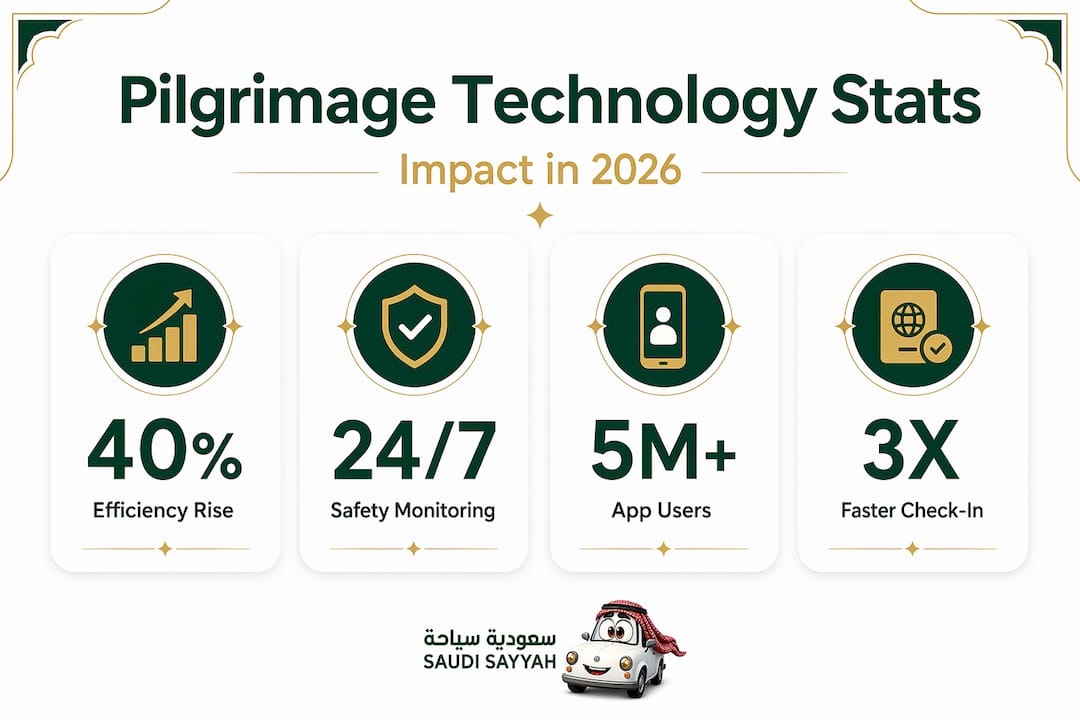
The impact on operations is measurable. Saudi Arabia's AI-driven Hajj management increased operational efficiency by 40% and cut waiting times by up to 35 minutes. That is not a minor improvement. In a crowd of two million pilgrims, 35 minutes of wait reduction changes safety outcomes entirely.
The same principle applies at Tirumala in India. The temple's AI Integrated Command and Control Centre processes 3.6 lakh data payloads per minute and monitors 6,000 cameras simultaneously. During the 2026 summer rush, it helped reduce darshan wait times while managing millions of visitors across a short window. Real-time monitoring also improves emergency response, giving security teams advance notice of crowd surges before they become dangerous.
Here is what makes these systems particularly effective:
- Sensor-based tracking. Smart readers and wearable tags let operators monitor pilgrim density and predict bottlenecks up to 30 minutes ahead.
- Integrated command centers. Security, medical, and operational teams share one data feed, so responses are coordinated, not siloed.
- Preemptive crowd management. AI command centers enable preemptive surge management, redirecting pilgrims before queues become dangerous rather than reacting after the fact.
- Unified digital platforms. The Nusuk Masar platform reduces processing time across visa, contracting, and operational services through a single digital system.
Pro Tip: Check whether your pilgrimage site uses an official app for permits or crowd updates before you travel. Registering early gives you faster access and reduces on-site paperwork.
Digital tools for everyday pilgrims
Logistics run better with AI. But the apps you carry in your pocket affect your day-to-day experience just as much. The Nusuk mobile app, for example, handles everything from pre-arrival permit registration to on-site guidance and real-time notifications. You can learn more about how these apps work in practice at this 2026 travel app guide for pilgrims.

Beyond logistics, technology and spiritual journeys overlap in meaningful ways. 28% of U.S. adults now use digital apps for spiritual purposes, a figure that reflects a broader shift toward tech-supported religious practice. Apps that deliver prayer times, Quranic audio, meditation guidance, and virtual community connections are now standard tools for millions of pilgrims.
The practical benefits include:
- Pre-arrival planning. Flight coordination, accommodation access, permit uploads, and itinerary management handled before you land.
- On-site navigation. Real-time maps that update based on crowd density, directing you toward less congested routes.
- Prayer and ritual support. Apps that sync prayer times with your exact location, removing the need to calculate manually.
- Community connection. Virtual groups where pilgrims from the same region share updates, coordinate meetups, and support one another during the journey.
The risk with all of this is distraction. Technology designed to support pilgrimage can pull attention away from it if you are not deliberate. The goal is to use these tools before or between rituals, not during them.
Pro Tip: Set your phone to Do Not Disturb mode during core rituals and limit app checking to designated rest periods. The time-saving hacks pilgrims use most effectively treat tech as a before-and-after tool, not a constant companion.
Virtual pilgrimage: possibilities and boundaries
Digital pilgrimage is a real category now. Platforms stream live footage from sacred sites, offer guided virtual visits, and host online communities where participants share in rituals from a distance. Digital pilgrimage is recognized as a virtual space of remembrance and community, providing access for those who cannot physically attend.
The table below compares what digital pilgrimage can and cannot offer:
| Dimension | Digital pilgrimage | Physical pilgrimage |
|---|---|---|
| Accessibility | Available to anyone with internet access | Requires travel, health, finances, and permits |
| Community | Online groups, livestreams, shared ritual content | Embodied presence with millions of fellow pilgrims |
| Spiritual validity | Recognized as a supplement by most religious authorities | Fulfills formal religious obligations |
| Sensory experience | Visual and audio only | Full physical immersion in sacred space |
| Cost | Low to none | Significant logistical and financial investment |
Religious authorities have been consistent on one point. Virtual pilgrimages are broadly viewed as companions to physical ritual, not substitutes. For a first-time pilgrim, a virtual walkthrough of Makkah or Jerusalem before travel is genuinely useful orientation. For someone physically unable to attend, it offers connection and spiritual continuity.
"Technology does not replicate the embodied experience of pilgrimage. But it extends its reach. Someone bedridden in another country can participate in communal prayer, follow the ritual in real time, and feel connected to something larger. That has real spiritual value, even if it differs from the physical act." — Streaming Hajj research, hajj.solutions
What technology cannot do is replicate the physical experience of standing in a crowd of believers, the sensory weight of sacred space, or the personal transformation that comes from the difficulty of the journey itself. These remain irreducibly physical.
Balancing authenticity and tech dependence
Here is the honest tension in the impact of tech on pilgrimage: the same tools that make the journey safer and easier can undermine the very qualities that make it meaningful. Experts note that over-reliance on technology risks distraction from spiritual presence, turning a sacred journey into a managed itinerary.
Network congestion is a practical problem as well. During peak rituals, data networks at major pilgrimage sites can slow or fail under the load of millions of simultaneous users. Experienced pilgrims carry physical backups of permits and maps for exactly this reason, and it remains sound advice regardless of how reliable the digital systems appear.
Here are four practices that pilgrims consistently report as effective:
- Download everything offline before arrival. Maps, permits, prayer schedules, and emergency contacts should be accessible without a data connection.
- Limit social media during rituals. Some pilgrims intentionally limit social media during pilgrimage to preserve direct experience and spiritual focus. The documentation impulse can wait.
- Use tech for safety, not performance. Apps work best for navigation, health monitoring, and family contact, not for curating a public pilgrimage narrative.
- Set boundaries before you leave home. Decide in advance which apps you will use and when. Arriving without a plan means defaults take over.
Pro Tip: The most useful thing technology does on a pilgrimage is work without you noticing it. Backend crowd management, real-time routing adjustments, and coordinated emergency response are all designed to be invisible. The customer service tips that matter most are the ones that rely on systems you never have to think about.
The technology supporting pilgrimage at major sites is deliberately minimal and non-intrusive. Multilingual interfaces, accessible interfaces, and backend AI are all designed to facilitate rather than dominate the experience. That philosophy is worth adopting personally as well.
Future technologies shaping pilgrimage
The next generation of pilgrimage technology is already in development at several major sites. The direction is toward greater accessibility, better safety, and deeper integration with the physical infrastructure of sacred spaces, all without making technology more visible to the pilgrim.
Key developments include:
- Biometric systems. Facial recognition and fingerprint verification at entry points reduce queuing and eliminate document fraud.
- Multilingual AI interfaces. Real-time translation and localized support for pilgrims from dozens of countries, removing language as a barrier.
- Ethical AI collaboration. Technology firms are working increasingly with religious leaders to develop AI that respects spiritual values, moving beyond a purely technical approach to pilgrimage management.
- Augmented reality guidance. Early-stage AR tools overlay ritual instructions and navigation cues without requiring pilgrims to stare at a screen.
- Smart infrastructure integration. Buildings, pathways, and gathering spaces with embedded sensors that adjust lighting, airflow, and foot traffic routing automatically.
The goal in all of this is the same: optimal pilgrim experience happens when technology is invisible, with backend AI adjusting flows without interrupting spiritual focus. The best version of technology in religious travel is the one you never have to think about.
My perspective on technology and the sacred journey
I have watched the conversation about technology in religious travel shift considerably over the past several years. The early debate was mostly defensive, whether technology threatens the authenticity of pilgrimage. That debate missed the point.
The more I have looked at how AI functions at Hajj, how apps reduce the anxiety of first-time pilgrims arriving in a foreign country, and how virtual communities sustain religious connection for those who cannot travel, the clearer it becomes that technology does not threaten pilgrimage. Misuse of it does. The risk is not the tool. It is the assumption that the tool makes preparation unnecessary.
What I find most interesting is the invisible layer. Backend systems that redirect crowds, coordinate medical responses, and shorten queues are doing something remarkable: they make the physical experience more human by removing the friction that disrupts it. Most pilgrims never know this is happening, and that is exactly how it should work.
The pilgrims I have seen use technology most effectively treat it like infrastructure. They rely on it to handle logistics so they can focus entirely on why they made the trip. The ones who struggle are those who let the technology become the experience, photographing everything, posting continuously, checking apps mid-prayer. That is not a technology problem. It is a priorities problem.
The future of modern pilgrimage experiences will be shaped by how well developers, religious leaders, and pilgrims themselves agree on what the technology is for. So far, the trajectory looks right.
— Fa
How Saudisayyah supports your pilgrimage travel
Planning the logistics of a Hajj or Umrah journey involves more than flights and accommodation. Getting between Makkah, Madinah, and the airport reliably, in a vehicle you trust, with a driver who knows the routes, matters more than most pilgrims anticipate until they arrive.
Saudisayyah is built for exactly this. The platform sends you driver photos, vehicle details, and real-time tracking before every trip, so there are no surprises on arrival. The booking workflow for pilgrimage taxis is fully automated and internationally compliant, meaning you can confirm transport from anywhere in the world before you land. The fleet covers everything from solo travelers to large group transfers, with late-model vehicles and experienced drivers who have navigated peak pilgrimage conditions many times over.
Explore Saudisayyah's full range of pilgrimage transport services and book with the same kind of reliability that the best pilgrimage technology promises at every other stage of your journey.
FAQ
What is the role of technology in pilgrimage safety?
AI-powered command centers, real-time crowd sensors, and smart card tracking all work together to prevent dangerous crowd surges and speed up emergency response at major pilgrimage sites like Makkah and Tirumala.
Does using technology during pilgrimage reduce its spiritual value?
Most religious authorities view technology as a supplement to pilgrimage, not a threat to it. The key is using digital tools for logistics and safety while keeping them out of core ritual moments.
What digital tools do pilgrims commonly use?
Pilgrims rely on official platforms like the Nusuk app for permits and crowd updates, plus prayer time apps, offline navigation maps, and real-time translation tools to support daily travel needs.
Can virtual pilgrimage replace physical pilgrimage?
No. Virtual platforms provide connection and accessibility for those unable to travel, but religious authorities widely recognize digital pilgrimage as a companion to physical practice, not a formal substitute.
What should pilgrims do if technology fails on-site?
Download permits, maps, and emergency contacts before arrival and keep printed backups. Network congestion during peak rituals is common, and physical copies remain the most reliable fallback.