

TL;DR:
- Seamless transfers ensure that pilgrims move smoothly from airports to holy sites without delays or confusion. Managing all trip segments through a single provider and using real-time data improves reliability and reduces stress. Properly coordinated transfers increase satisfaction and protect the spiritual timing of pilgrimage rituals.
Smooth, integrated transitions between travel legs define the role of seamless transfers in pilgrimage travel. When each handover point works without friction, pilgrims move from airport to hotel to holy site without confusion, delays, or missed connections. The industry term for this is intermodal integration, and it describes how multiple transport modes connect under a single coordinated system. For Umrah pilgrims, where prayer schedules and ritual timings are fixed, this coordination is not a convenience. It is a requirement.
How do seamless transfers improve the pilgrimage travel experience?
Coordinated transport networks deliver more value than any single vehicle or route can provide alone. The reason is simple: the weakest point in any trip is the transfer, not the ride itself. A flight that lands on time means nothing if no driver is waiting, or if the pilgrim cannot find the pickup zone.

Smooth transfers reduce this risk by shifting the coordination burden away from you and onto the provider. Standard transfers force travelers to manage luggage, validate tickets, and navigate unfamiliar terminals. Well-coordinated transfers handle all of that in advance. The pilgrim's only job is to walk to the vehicle.
Real-time data sharing is the engine behind this reliability. Shared data enables proactive disruption management, which means a delayed flight triggers an automatic driver reschedule before the pilgrim even lands. That kind of response is only possible when operators share information across the full trip chain.
Common friction points in pilgrimage travel include:
- Airport arrivals: Long walks to pickup zones, unclear signage, and no driver contact information
- Hotel to Haram transfers: Unpredictable wait times and no real-time vehicle tracking
- Inter-city legs: Disconnected bookings between Makkah and Madinah with no coordinated handover
- Return trips: Missed airport connections due to underestimated travel times from holy sites
Pro Tip: Book all legs of your trip through a single provider. When one operator holds responsibility for the full chain, disruptions get managed before they reach you.
What are the key components of effective seamless transfers?
Effective transfer coordination depends on several specific elements working together. Miss one, and the whole chain weakens.
-
System-level operator coordination. Vehicles, drivers, and schedules must connect under a single operational plan. Providers who hold responsibility for the whole movement chain reduce disruption risk far more than those managing only one leg.
-
Clear wayfinding at transfer points. Signage, pickup zone labels, and driver identification must be unambiguous. First-time pilgrims arriving in Jeddah or Madinah often face language barriers and unfamiliar airport layouts.
-
Unified booking and payment. Separate tickets for separate legs create payment friction and gaps in accountability. A single booking that covers airport pickup, hotel transfer, and holy site access removes that risk entirely.
-
Real-time communication tools. Driver location, vehicle type, and advance alerts reduce transfer friction significantly. Pilgrims who know exactly where their driver is and what the car looks like arrive calmer and more focused.
-
Physical accessibility. Minimal walking distances between drop-off and entry points matter, especially for elderly pilgrims or those with mobility limitations. Good transfer design accounts for this from the start.
Pro Tip: Before you travel, confirm your driver's name, photo, and vehicle plate number. Saudisayyah sends this information automatically before every trip through its geolocation-enabled platform.
How can pilgrims ensure their transfers remain smooth?
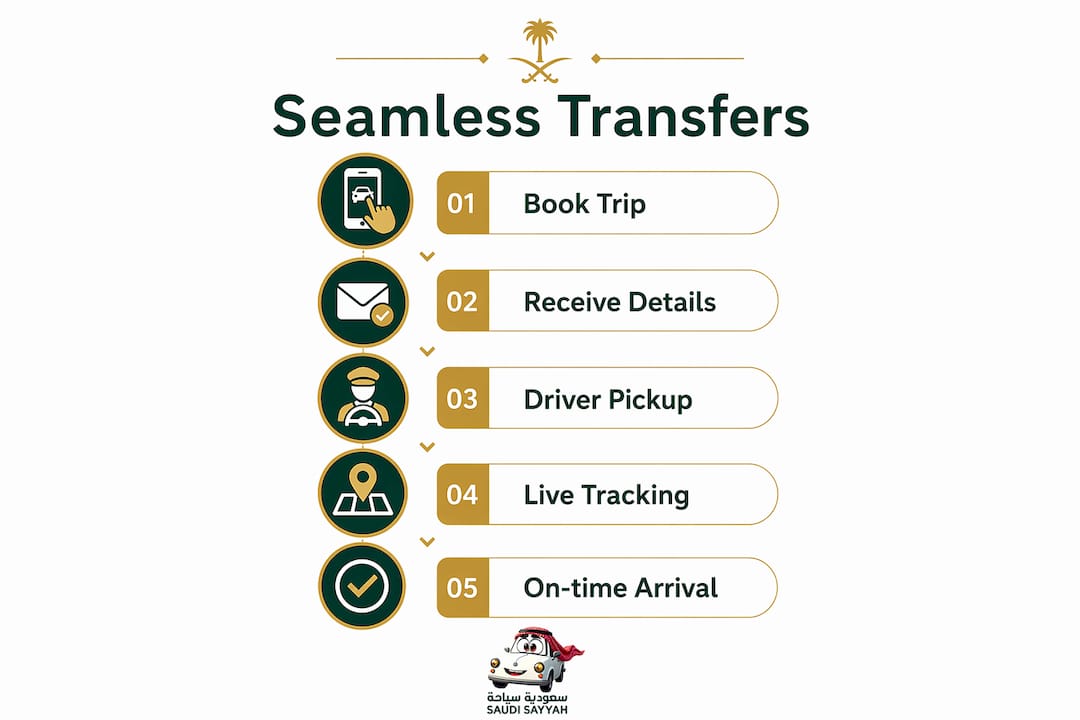
The biggest mistake pilgrims make is booking each leg of the trip independently. A flight from one provider, a hotel transfer from another, and a holy site shuttle from a third creates three separate points of failure with no coordination between them. Managing the itinerary as a single continuous operation reduces that risk dramatically.
Practical steps to protect your transfers:
- Book coordinated multi-leg trips. Use a provider that covers airport pickup, inter-city travel, and holy site access under one booking. Read more about managing multi-city pilgrim trips to understand what this looks like in practice.
- Use real-time tracking apps. Technology that shows your driver's live location removes the anxiety of waiting in an unfamiliar place. The role of technology in pilgrimage travel has grown significantly, and real-time tracking is now a baseline expectation.
- Communicate special needs early. Wheelchair access, extra luggage, or traveling with elderly family members all require advance notice. Providers who know your needs in advance can prepare the right vehicle and route.
- Verify schedules 24 hours before each leg. Ritual timings in Makkah and Madinah are fixed. Confirm your pickup times the day before to catch any scheduling conflicts early.
- Understand your transfer points. Know which terminal your flight arrives at, where your hotel pickup zone is, and how long each leg typically takes. Coordinated airport pickups depend on accurate timing from both sides.
Pilgrims often underestimate the risk concentrated at transfer points. The ride itself rarely fails. The gap between rides is where disruptions happen.
What impact do efficient transfers have on pilgrim satisfaction?
Integrated transfer systems reduce traveler anxiety and produce measurably higher satisfaction scores. The reason is not just comfort. It is time. Every minute saved at a transfer point is a minute available for prayer, reflection, or rest.
"If travelers have to think about their next step or wait at transfer points, the system has failed. True transfer quality hides its complexity entirely from the traveler." — Transportation design research, Homesight
Missed connections carry a cost beyond inconvenience. Pilgrims who miss a shuttle to the Haram during peak prayer times may not get another chance that day. Treating transfers as continuous service threads reduces this risk and builds trust in the overall travel arrangement.
The table below shows how transfer quality affects key areas of the pilgrimage experience:
| Area | Poor transfer coordination | Well-coordinated transfers |
|---|---|---|
| Arrival stress | High. No driver contact, unclear pickup zone | Low. Driver details sent in advance |
| Time at holy sites | Reduced by delays and missed connections | Maximized by reliable, on-time pickups |
| Cognitive load | Pilgrim manages every handover manually | Provider handles all coordination |
| Ritual schedule adherence | At risk from unpredictable wait times | Protected by real-time schedule management |
| Overall satisfaction | Low. Disruptions overshadow the experience | High. Focus stays on the spiritual purpose |
Transfer productivity benefits extend beyond comfort. Pilgrims who arrive rested and on time are more present for the rituals they traveled thousands of miles to perform.
Key Takeaways
Well-coordinated transfers protect the pilgrimage experience by removing logistical friction at every handover point, letting pilgrims focus entirely on worship.
| Point | Details |
|---|---|
| Book as one operation | A single provider covering all legs eliminates gaps in accountability and coordination. |
| Technology reduces friction | Real-time tracking and advance driver alerts are the most effective tools for transfer reliability. |
| Transfer points carry the most risk | Disruptions concentrate at handovers, not during rides. Plan and verify each one in advance. |
| Cognitive load belongs with the provider | Pilgrims should not manage their own logistics. A good provider handles all coordination invisibly. |
| Ritual schedules demand precision | Fixed prayer times mean missed transfers have spiritual consequences, not just logistical ones. |
Why transfer quality defines the pilgrimage, not just the trip
I have seen pilgrims arrive in Jeddah with perfect flights and perfect hotels, then spend two hours in the wrong terminal because no one confirmed the pickup zone. The flight was fine. The hotel was fine. The transfer failed. That two-hour gap did not just cost time. It cost the mental calm that the whole trip was built around.
The conventional view treats transfers as the boring part of travel planning. Book the flight, book the hotel, figure out the middle part later. That approach works for leisure travel where schedules are flexible. It does not work for Umrah, where Fajr prayer waits for no one and the window for Tawaf can close before a delayed shuttle arrives.
What I have found is that pilgrims who invest in coordinated transfers report a fundamentally different experience. Not because the vehicles are nicer, though that matters too. Because they never had to think about logistics at all. The complexity was invisible. That invisibility is the actual product.
Technology has made this achievable at scale. Geolocation tracking, automated booking workflows, and real-time driver communication have removed the guesswork that used to define ground transport in Saudi Arabia. Pilgrims traveling in 2026 have access to transfer quality that simply did not exist a decade ago.
Prioritize transfer coordination the same way you prioritize your Ihram and your visa. It is not a detail. It is the structure that holds the whole experience together.
— Fa
Saudisayyah's transfer services for Umrah pilgrims
Saudisayyah coordinates ground transport for Umrah pilgrims across every leg of the trip, from King Abdulaziz International Airport to the Haram and between Makkah and Madinah.
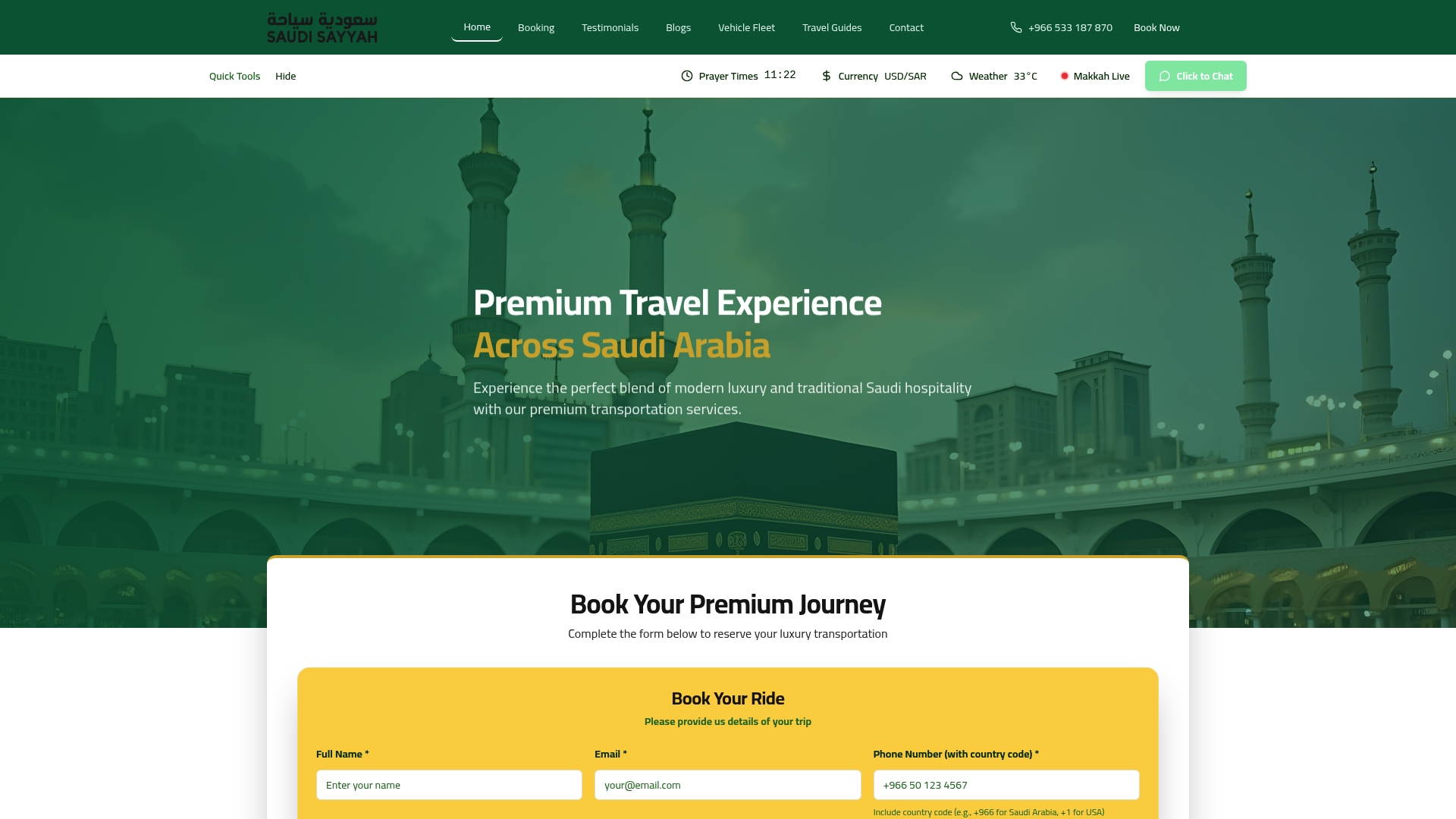
Every booking through Saudisayyah includes driver photos, vehicle details, and live GPS tracking sent directly to your phone before pickup. The pilgrimage transport services cover airport arrivals, hotel transfers, and holy site access under a single coordinated booking. The vehicle fleet uses current-model-year vehicles with capacity for groups, families, and pilgrims with accessibility needs. Saudisayyah's booking system is fully automated and internationally compliant, which means your schedule is protected even when flight times change. Coordination is handled end to end, so you do not manage a single handover yourself.
FAQ
What is the role of seamless transfers in Umrah travel?
Smooth, coordinated transfers connect each leg of the pilgrimage, from airport to hotel to holy site, without gaps in communication or accountability. They protect ritual schedules and reduce travel stress by shifting all logistics to the provider.
Why do transfer points carry more risk than the rides themselves?
Disruptions concentrate at handovers because that is where coordination between operators breaks down. A well-managed ride means nothing if the next vehicle is not confirmed, tracked, and on time.
How does real-time tracking improve transfer reliability?
Real-time visibility gives pilgrims driver location, vehicle details, and arrival alerts before each pickup. This removes the uncertainty that causes most transfer anxiety.
What is the best way to book transfers for Umrah?
Book all legs through a single provider who manages the full trip chain. Separate bookings for separate legs create coordination gaps that no individual traveler can reliably close. Review the pilgrim transport booking workflow for a step-by-step approach.
How do seamless transfers affect time at holy sites?
Reliable, on-time transfers maximize the hours available for worship and reflection. Every delay at a transfer point directly reduces time at the Haram, where schedules are fixed and cannot be adjusted.