
TL;DR:
- Planning a pilgrimage with efficient travel methods reduces fatigue and preserves energy for prayer and reflection. Utilizing high-speed rail, coordinated group transport, and well-planned walking routes enhances predictability, comfort, and cost savings throughout the journey. Embracing system-based travel and buffers ensures pilgrims arrive prepared spiritually, physically, and mentally.
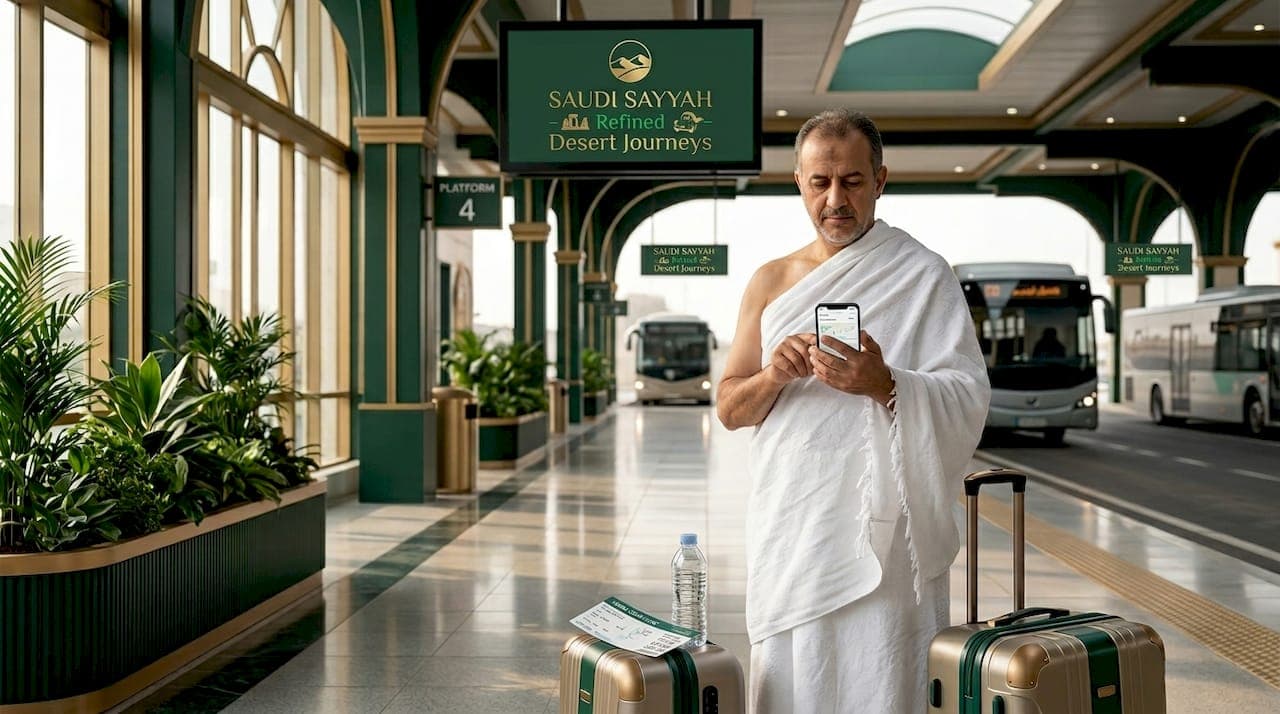
Planning a pilgrimage involves far more than booking flights and hotels. Crowds, fatigue, time pressure, and unfamiliar infrastructure can drain energy that belongs in prayer and reflection. The examples of efficient travel covered here are practical, tested, and specific to the challenges pilgrims face: long intercity legs, dense holy site crowds, walking-heavy days, and tight worship schedules. Whether you are making your first Umrah or refining a routine you have done before, these methods help you move with less friction and arrive with more energy for what matters.
Table of Contents
- Key takeaways
- 1. What makes efficient travel examples worth following
- 2. Haramain High-Speed Railway: the strongest single example
- 3. Multimodal group transport: buses, the Mashaer Metro, and Nusuk Card coordination
- 4. Budget-conscious long-distance travel: buses over flights and trains
- 5. Walking route optimization within pilgrimage cities
- My perspective on what efficient pilgrimage travel actually means
- Transport for your pilgrimage, handled by Saudisayyah
- FAQ
Key takeaways
| Point | Details |
|---|---|
| Buffer time beats speed | Planning 20 minutes for a 12-minute walk prevents missed prayers and reduces fatigue over a full pilgrimage. |
| Rail over road for intercity legs | The Haramain High-Speed Railway cuts Makkah to Madinah travel from 5 hours to just over 2 hours. |
| Nusuk Card removes decision points | Carrying your Nusuk Card eliminates identity verification delays in crowded boarding areas. |
| Repeatable routes preserve energy | Walking the same shaded, landmarked route daily reduces decision fatigue and conserves physical stamina. |
| Buses cut long-distance costs by half | Booking long-distance buses a week ahead can reduce transport costs by 40 to 60 percent versus flights or trains. |
1. What makes efficient travel examples worth following
Not every "time-saving" tip actually saves time for a pilgrim. Efficient travel methods succeed or fail based on a specific set of criteria. Understanding these criteria helps you filter good advice from generic travel content.
The most useful framework focuses on five factors:
- Time predictability. A method that saves 30 minutes on average but occasionally adds 90 minutes is less useful than one that consistently takes 45 minutes. Predictability protects your prayer schedule.
- Cost-to-comfort ratio. Saving money matters, but not if the trade-off is exhaustion that reduces your capacity to perform worship.
- Decision load. Fewer choices during a trip means less mental fatigue. Pre-assigned transport with confirmed timing beats hailing a cab and negotiating.
- Navigation simplicity. Routes with clear landmarks, fewer road crossings, and consistent signage reduce stress significantly in unfamiliar cities.
- Local infrastructure compatibility. In Saudi Arabia, methods that integrate with the Nusuk Card system, assigned transport slots, and official bus routes outperform improvised alternatives.
Pro Tip: If you are evaluating any new transport method, ask one question first: "What happens when this goes wrong?" If the failure mode adds more than 30 minutes to your day, the method has a reliability problem that efficiency cannot fix.
2. Haramain High-Speed Railway: the strongest single example
For intercity travel between Makkah and Madinah, the Haramain High-Speed Railway is the clearest example of efficient travel you can point to in a pilgrimage context. The numbers make the case immediately. The Haramain covers 449 km in approximately 2 hours and 10 minutes, compared to roughly 5 hours by road. That is nearly 3 hours returned to rest, prayer, or preparation.
The train's comfort factors go beyond speed. Air conditioning is consistent, seating is assigned, and the schedule is fixed. You know exactly when you arrive. That predictability matters enormously when you have a worship program to follow.
| Feature | Haramain Train | Road Transfer |
|---|---|---|
| Travel time | ~2h 10m | ~5h |
| Cost range | SAR 150 to SAR 250 | Varies by taxi/bus |
| Schedule reliability | Fixed departure times | Traffic-dependent |
| Comfort level | High, assigned seating | Variable |
| Airport integration | Yes, via KAIA station | Requires separate transfer |
The airport integration is a detail many pilgrims miss. The KAIA station connection puts travelers on the main Haramain line approximately 30 to 35 minutes from Makkah. If you land at King Abdulaziz International Airport, you can reach your accommodation in Makkah without a long taxi negotiation.
Pro Tip: Book economy class if budget is the priority, but consider business class for the Madinah to Makkah leg at the end of your trip. Arriving in Makkah fresh for Tawaf is worth the SAR 100 difference.
- Book tickets through the official Saudi Railways platform well ahead of travel dates.
- Arrive at the station 30 minutes before departure. Boarding closes earlier than most travelers expect.
- Keep your passport and Nusuk Card accessible. Both are checked at the gate.
3. Multimodal group transport: buses, the Mashaer Metro, and Nusuk Card coordination
Individual transport improvisation during Hajj or peak Umrah periods almost always loses to the organized group system. The scale of the operation is the reason. During Hajj 2026, over 33,000 buses and 5,000 taxis managed pilgrim movement using assigned time slots and GPS tracking. No individual arrangement competes with that level of coordination.
The Nusuk Card is central to why this system works. It stores personal data, medical information, accommodation details, and service provider linkages in one place. When you board assigned transport, the card eliminates verification questions in crowded areas. You move faster because the system already knows who you are and where you need to go.
- Assigned vehicles with timed boarding windows prevent the mass crowding that occurs when pilgrims self-organize.
- GPS tracking means delays in one part of the network can be compensated for in others.
- The Nusuk Card also supports reunification if pilgrims become separated from their group.
Treating pilgrimage movement as a coordinated queuing system, rather than open movement, is what separates manageable travel from chaotic travel. System-level orchestration consistently outperforms individual improvisation at scale. (Hajj 2026 Transport Preparation)
The Mashaer Metro, covering the triangle of Makkah, Mina, and Arafat, functions on the same principle. Capacity is enormous. The train moves more pilgrims per hour than any road-based alternative. If your group has access to assigned Metro slots, use them without exception.
For first-time pilgrims, a detailed overview of pilgrimage transport logistics helps clarify how these systems connect.
4. Budget-conscious long-distance travel: buses over flights and trains
Outside Saudi Arabia, one of the most overlooked examples of efficient travel is the deliberate shift to long-distance buses for regional movement. This is not about discomfort. It is about reframing what efficiency means when the goal is arriving with funds intact.
A documented case shows that month-long Europe travel costs dropped from €600 to €700 down to approximately €350 to €400 by favoring buses booked roughly a week in advance. That is a 40 to 60 percent reduction without sacrificing the ability to reach multiple destinations.
Here is how to apply this method practically:
- Identify your route at least 10 days before departure. Bus prices increase sharply in the final 48 hours.
- Check overnight routes first. A bus that departs at 10 PM and arrives at 6 AM replaces one night of accommodation costs. That changes the actual cost comparison dramatically.
- Compare door-to-door times, not station-to-station. Trains often win on raw speed, but bus stations are frequently more central. The total time difference shrinks.
- Build in a 45-minute buffer at each end for luggage retrieval and connection times. Bus terminals in some cities are large and require walking time.
- Carry snacks and a neck pillow. The single biggest complaint about overnight buses is avoidable discomfort.
Pro Tip: For pilgrims traveling through multiple countries to reach Saudi Arabia, a combination of one long-haul flight and regional bus connections to the airport can reduce total travel costs by 25 to 35 percent versus a multi-leg flight itinerary.
The mental shift required is simple: treat time-in-transit as rest time, not wasted time. An overnight bus with reasonable seats is sleep, not sacrifice.
5. Walking route optimization within pilgrimage cities
The most underestimated examples of efficient travel in Makkah and Madinah involve nothing more than your feet and a repeatable plan. Getting walking wrong compounds every other travel problem. Getting it right multiplies the value of every other efficiency you build.
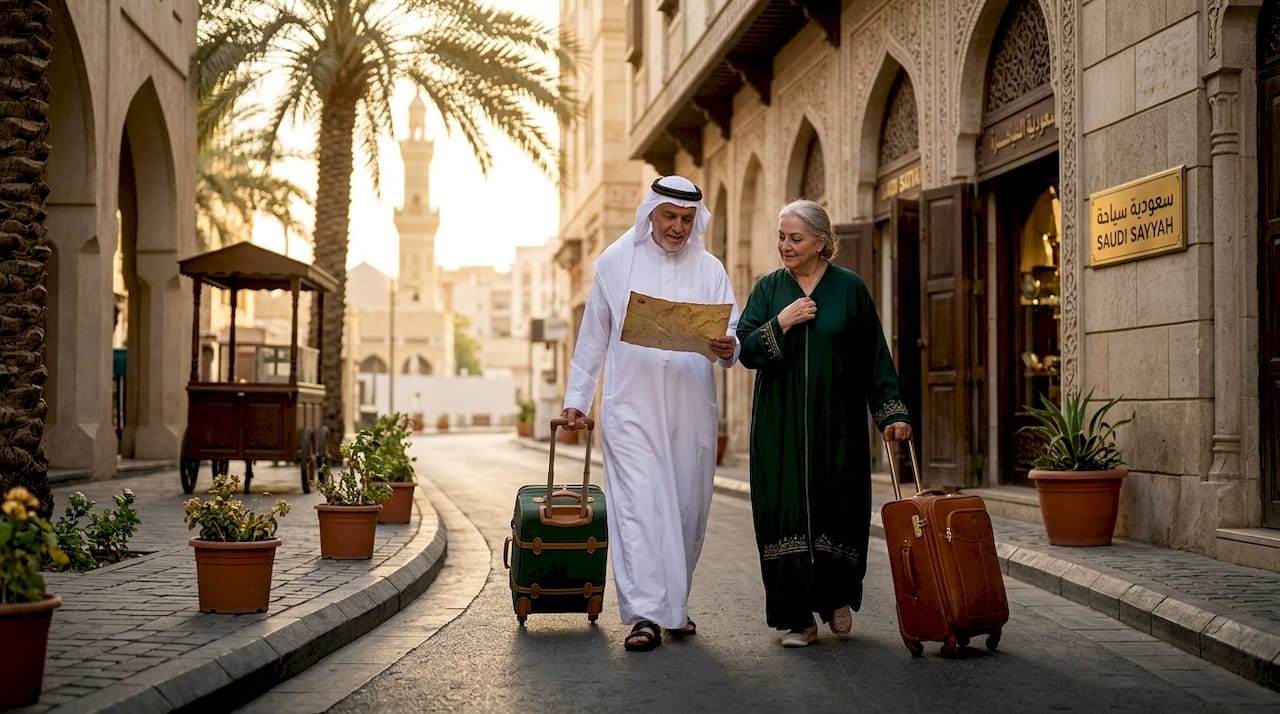
Efficient routes in Makkah prioritize shade, landmarks, and fewer road crossings over raw shortest-path distance. A route that adds two minutes but eliminates three decision points is faster in practice because you will not slow down to orient yourself repeatedly.
The buffer time principle matters here more than anywhere else. Planning 20 minutes for a 12-minute walk, and 45 minutes for a 30-minute meal, creates a schedule that holds together under real pilgrim conditions. Without buffers, one delay cascades into a missed prayer window, which disrupts the entire day.
| Scenario | No buffer | With buffer |
|---|---|---|
| 12-min walk with crowd delay | Arrive late for prayer | Arrive on time |
| 30-min meal with queue | Miss next activity | Absorbed without disruption |
| Elevator wait at hotel | Creates downstream rush | Accounted for in plan |
For elderly pilgrims or those with mobility needs, accessible transport options reduce walking load and make daily schedules sustainable across multiple days.
- Walk the same route each morning for the first two days until it becomes automatic.
- Identify one rest point at the midpoint of each key walking leg. Sitting for five minutes is not inefficiency. It is energy management.
- Align your heaviest walking with the coolest parts of the day. Early morning and post-Isha are significantly cooler than midday in both cities.
Pro Tip: Map your three most-used daily routes before you leave home using Google Street View or similar tools. Familiarity reduces stress at the point of arrival, when everything is new and disorienting.
My perspective on what efficient pilgrimage travel actually means
I have watched pilgrims try to squeeze maximum activity into every hour of a sacred trip. The pattern is consistent: by day three, they are physically depleted, spiritually distracted, and spending half their mental energy managing delays instead of engaging in worship.
What I have found is that the best travel efficiency tips for pilgrims are not about speed. They are about removing friction. When movement is predictable and decisions are minimal, the mind is free for what it came here to do. That is the real payoff of efficient travel methods.
My take on the Haramain train debate is clear: the extra cost over a shared bus is not a luxury spend. It is a recovery investment. Three hours of seated, climate-controlled travel versus five hours of road movement is the difference between arriving ready and arriving drained.
The hardest mental shift I have seen pilgrims need to make is accepting delays as part of the system rather than failures of planning. A Nusuk Card that moves you through boarding in seconds cannot eliminate the crowd around you. Building that reality into your schedule, rather than fighting it, is what calm and manageable itineraries actually look like in practice.
Efficiency supports spiritual focus. It does not compete with it.
— Fa
Transport for your pilgrimage, handled by Saudisayyah
Choosing the right ground transport in Saudi Arabia removes one of the most stressful variables from a pilgrimage itinerary. Saudisayyah builds exactly that kind of reliability into every booking.
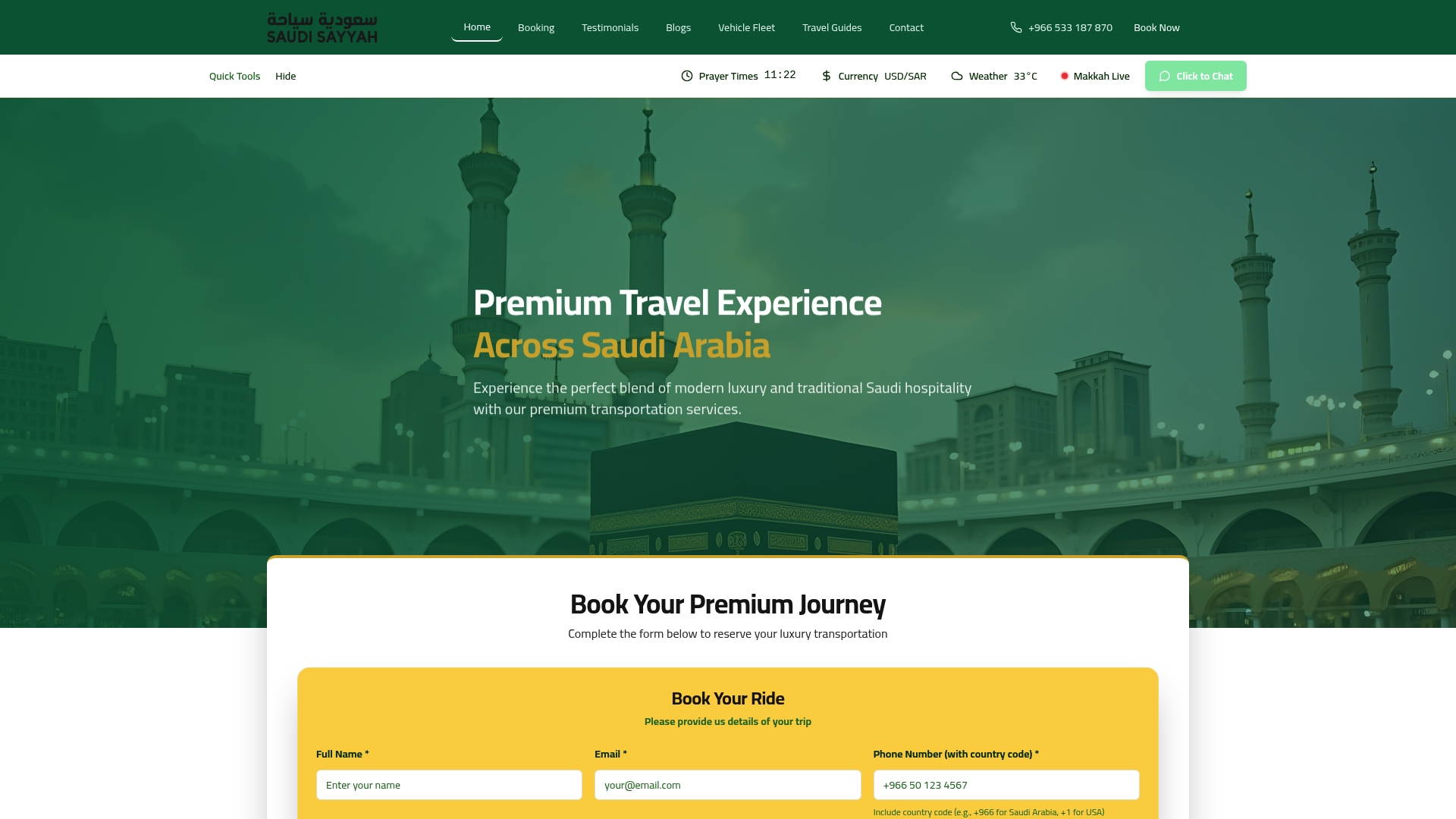
The Saudisayyah platform uses geolocation to send driver photos, vehicle details, and real-time tracking before every trip. You know who is picking you up, what they are driving, and where they are. No surprises. No last-minute uncertainty when you are managing a worship schedule that cannot afford disruption.
For pilgrims coordinating group travel, Saudisayyah's car hire services are built around the specific demands of Umrah and Hajj itineraries, including airport-to-accommodation runs, intercity transfers, and visits to holy sites. The premium vehicle fleet includes latest model year vehicles with features that make the difference on long travel days. Browse the fleet and check availability before your trip dates.
FAQ
How long does the Haramain train take from Makkah to Madinah?
The Haramain High-Speed Railway covers the 449 km route in approximately 2 hours and 10 minutes, compared to roughly 5 hours by road.
What is the Nusuk Card and why does it matter for efficient travel?
The Nusuk Card stores personal, medical, and accommodation data and controls boarding access during Hajj and Umrah transport, reducing delays in crowded verification areas.
What are the best travel efficiency tips for walking in Makkah?
Plan buffer time into every walk, choose shaded routes with fewer crossings, and repeat the same routes daily until they become automatic to reduce decision fatigue.
How much can buses save versus flights on long-distance legs?
Booking long-distance buses a week in advance can reduce transport costs by 40 to 60 percent compared to trains or flights, based on documented Europe travel comparisons.
Is private car hire more efficient than group buses during Umrah?
For flexibility and direct routing, private car hire from a provider like Saudisayyah gives you predictable timing and door-to-door service, which group buses with fixed stops cannot always match.