
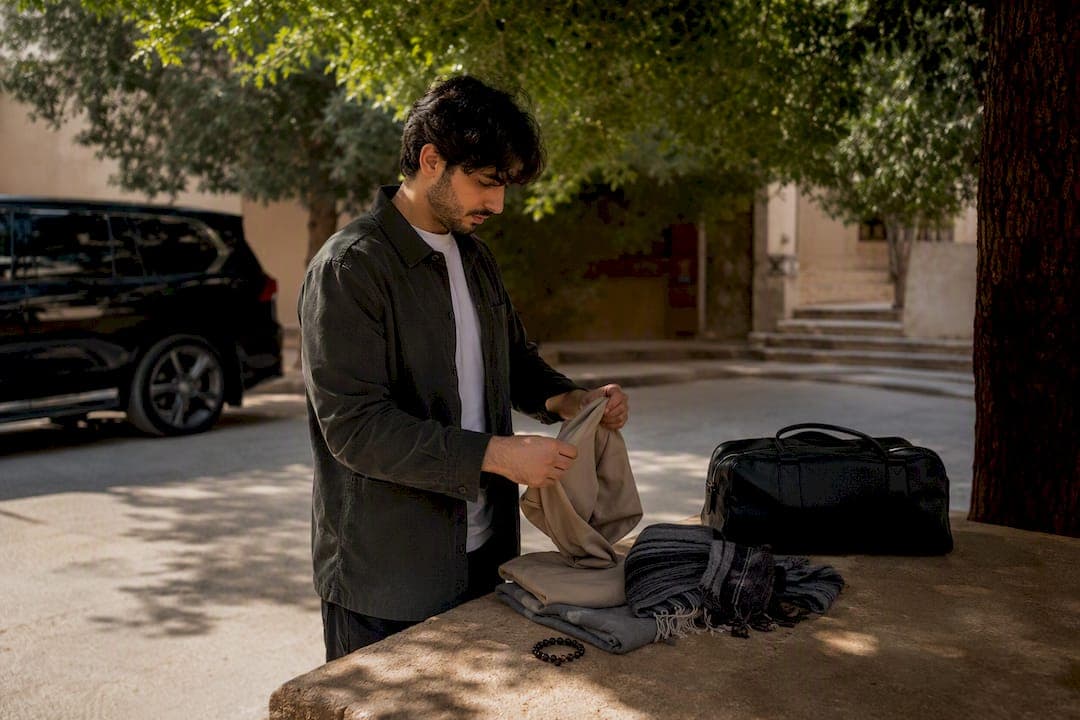
Cover your shoulders and knees, greet people with "As-salāmu ʿalaykum," use your right hand for anything you hand over, skip the alcohol, and keep public affection to a minimum. That is the entire checklist in one sentence. Break these rules and you risk more than an awkward look: the 2026 Public Decorum Charter sets fines up to 5,000 SR for violations, with steeper penalties for repeat offenses.
- Do: dress modestly, greet warmly, use your right hand, ask before photographing anyone.
- Don't: kiss or embrace in public, drink alcohol, photograph government buildings, argue with staff or officials.
Pro Tip: Saudi Sayyah tells first-time pilgrims to keep a light scarf and a photo of their passport in their day bag at all times. Both come up more often than you'd expect, whether it's a mosque visit or a quick ID check.
Key Takeaways
Respecting dress codes, right-hand customs, and prayer-time pauses prevents the vast majority of friction pilgrims and tourists encounter in daily interactions.
| Point | Details |
|---|---|
| Dress modestly everywhere | Cover shoulders and knees; carry a scarf and long layer for unplanned mosque visits. |
| Use your right hand | Apply it consistently for eating, greeting, and handing over documents or money. |
| Plan around prayer times | Expect 15 to 30 minute pauses in services five times daily; build buffers into schedules. |
| Ask before photographing | Skip government buildings and get verbal consent before photographing individuals. |
| Know the Ramadan rules | Avoid public eating, drinking, or smoking during daylight hours throughout the month. |
Table of Contents
- Before You Go: Your Local Customs Checklist for Packing and Documents
- What Should You Wear Day to Day and at Holy Sites?
- How Do You Greet People and Handle Personal Space?
- What Are the Rules Around Sharing Meals and Hospitality?
- How Do Prayer Times Affect Your Day at Mosques and Holy Sites?
- What Photography Rules Should You Follow?
- What Changes During Ramadan and Major Holidays?
- What Should You Do If Authorities Stop You?
- Your One-Page Checklist to Screenshot or Print
- A Transport Provider's View on Preparing Travelers
- What Actually Trips Up First-Time Visitors
- Where to Verify These Rules Before You Travel
- Frequently Asked Questions
- Sources
Before You Go: Your Local Customs Checklist for Packing and Documents
Getting ready before departure prevents almost every awkward moment travelers report once they land. Start with paperwork: carry a printed and digital copy of your passport, visa, and driver details, since police checkpoints and hotel check-ins routinely ask for ID. If you take prescription medication, bring the original prescription or a doctor's letter, and check current guidance from the Saudi Food and Drug Authority for anything classified as controlled.
Pack for both comfort and modesty, as advised in this guide for business travelers preparing for Saudi Arabia:
- A light scarf or shawl (useful for mosques and sudden dress-code moments)
- A modest outer layer, plus swimwear that fits your venue (resort pools allow more flexibility than public beaches)
- Comfortable closed shoes or sandals that slip off easily for mosque visits
- A small bag to carry your shoes once removed
- A local SIM card or eSIM for maps, translation, and prayer-time apps
Pro Tip: Photograph your prescriptions and emergency contacts, store them encrypted on your phone, and keep a printed backup in your bag. If your phone dies at the worst moment, paper doesn't.
What Should You Wear Day to Day and at Holy Sites?
Cover shoulders and knees. That single rule applies to both men and women and covers most situations you'll encounter, from city streets to mosque courtyards. Clothing that's overly tight, see-through, or printed with offensive slogans can draw fines under the Public Decorum Charter, so leave the graphic tees and short shorts at home.
A few concrete outfit ideas:
- City streets: long trousers and a collared shirt for men; a maxi skirt or loose pants with a long-sleeve top for women
- Mosques: full coverage plus a scarf on hand for women, long sleeves for both
- Beach or pool: a one-piece suit or rash guard at public beaches; resorts and private pools often allow more relaxed swimwear
- Evening events: darker, looser fabrics that still cover shoulders and knees
Small towns and conservative neighborhoods tend to expect stricter modesty than Riyadh or Jeddah. Pack a lightweight abaya or long cardigan you can throw on in seconds when the setting calls for it.
Pro Tip: Keep one spare long-sleeve layer in your daypack at all times. You'll use it more for entering mosques on short notice than for anything you planned around.
How Do You Greet People and Handle Personal Space?
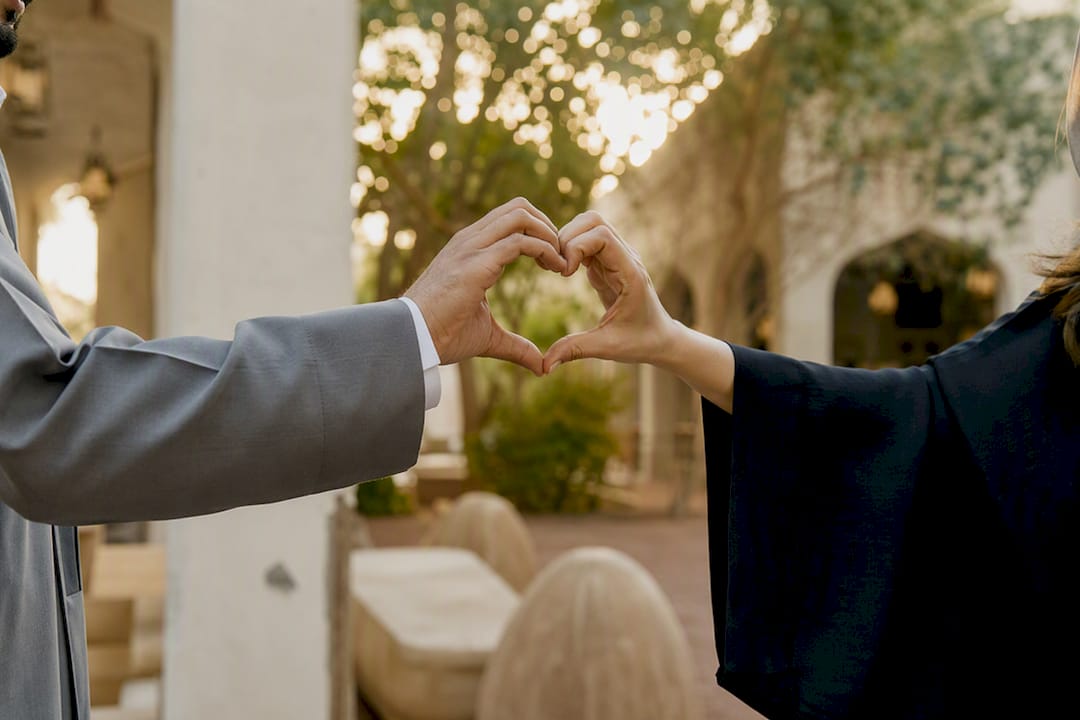
Open with "As-salāmu ʿalaykum." It signals respect immediately and tends to warm up shop and service interactions before you even ask your question. For physical greetings, wait to see whether the other person extends a hand first, especially across genders. If they don't, place your right hand over your heart with a slight nod instead of forcing a handshake.
A few ground rules worth memorizing:
- Do use titles like Mister or Doctor until someone invites you to use their first name.
- Don't initiate cross-gender physical contact.
- Do use your right hand for exchanging items, since the left hand carries different associations here.
- Don't read close male friendships (arm-linking, standing near) as anything other than platonic warmth.
Phrase bank: "As-salāmu ʿalaykum" (peace be upon you), "Shukran" (thank you), "Min fadlik" (please), "Ma'a as-salama" (goodbye), "Afwan" (you're welcome/excuse me).
Pro Tip: If a handshake feels uncertain, the heart-touch gesture reads as sincere, not awkward. Locals notice the effort.
What Are the Rules Around Sharing Meals and Hospitality?
Use your right hand for eating, serving, and passing dishes. Wait until your host invites you to start, and if you're offered Arabic coffee or dates, accept at least one round unless you have a genuine reason to decline. Refusing outright can read as rude in a culture where hospitality is a point of pride.
- Sit as directed and keep your feet pointed away from others and away from food.
- Signal you're finished with coffee by gently shaking the small cup side to side.
- Bring a small gift if invited to someone's home, and remove your shoes if your hosts do.
Tipping runs modestly: 10% at restaurants where service isn't already included, a few riyals for porters, and a bit more for guides who go out of their way. Our guide to Saudi hospitality covers the finer points of accepting invitations gracefully.
Pro Tip: Bringing dates or good-quality chocolates as a host gift never goes wrong, and it's an easy item to grab at any airport shop.
How Do Prayer Times Affect Your Day at Mosques and Holy Sites?
Dress conservatively, remove your shoes, keep your voice low, and always ask before photographing anyone inside a mosque. The five daily prayers (Fajr, Dhuhr, Asr, Maghrib, and Isha) affect far more than worship spaces: shops, restaurants, and even some transport services pause briefly around each one.
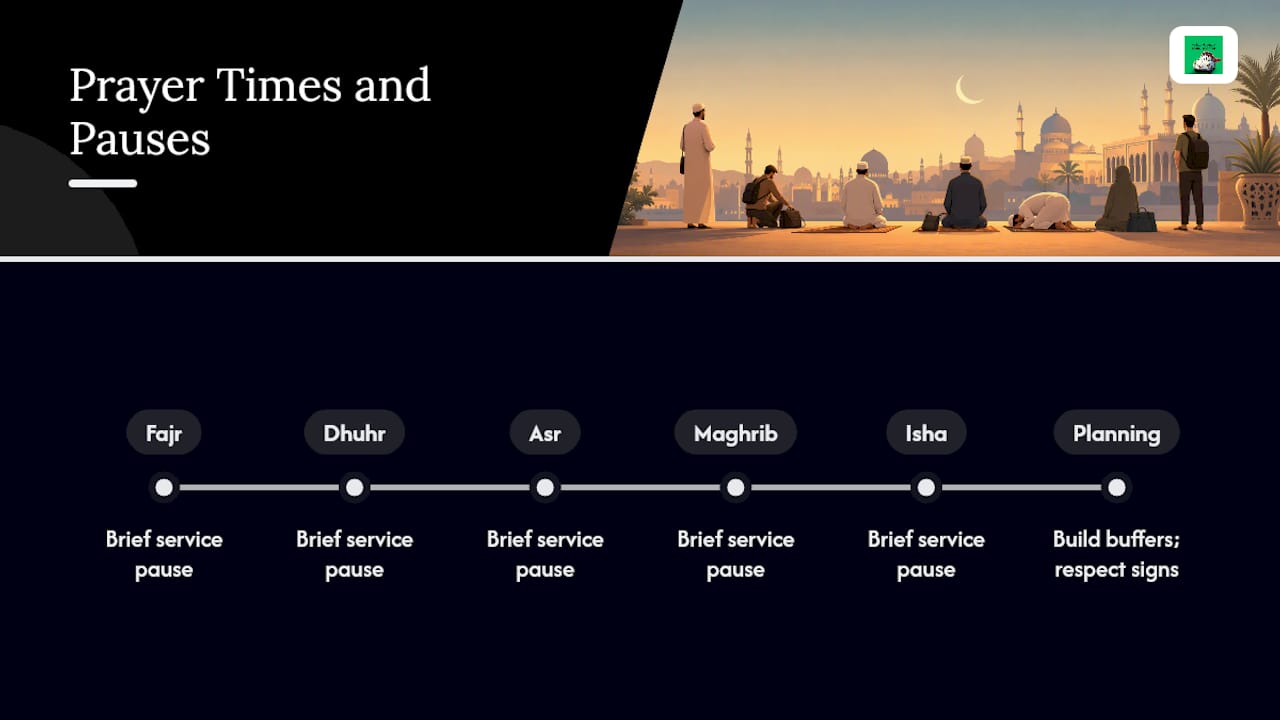
Closures typically last a short period, depending on the venue and how busy it is that day. Build buffer time into timed tickets, airport transfers, and tour pickups so a prayer pause doesn't cost you a reservation.
Access to the central sacred areas of Mecca and Medina is restricted to Muslims only. Respect checkpoints and posted signage without argument. A prayer-time app removes most of the guesswork, and our guide for first-time visitors to the holy cities walks through timing your day around them.
What Photography Rules Should You Follow?
Ask before you photograph anyone, especially women and families. Skip government buildings, military installations, and anywhere with a visible police presence, since photography restrictions apply broadly to those sites.
- Do photograph landscapes, architecture, and street scenes without close-up faces.
- Don't post confrontational footage or anything that identifies people without consent.
- Flying a drone requires a permit from the General Authority of Civil Aviation (GACA); unpermitted drones risk confiscation on the spot.
Pro Tip: If someone objects to a photo, delete it in front of them right away. Offering to show the deletion defuses tension faster than any explanation.
What Changes During Ramadan and Major Holidays?
During Ramadan, avoid eating, drinking, or smoking in public during daylight hours. Most hotels quietly offer indoor dining for guests who aren't fasting, so you won't go hungry. Public violations during Ramadan can carry fines cited up to SAR 500 in travel guidance, with repeat offenses risking harsher enforcement.
Iftar times shift slightly each evening as the fasting hours change. Evenings turn social fast once the sun sets, restaurants fill quickly, and streets get busier, so book reservations and transport ahead. Our Ramadan travel planning guide breaks down daily timing shifts. During Eid and other holidays, expect altered business hours and heavier traffic. If you're invited into a family gathering, accept graciously and let your hosts set the pace.
What Should You Do If Authorities Stop You?
Stay calm, present your ID, and follow instructions without arguing or filming. Most checkpoint interactions are routine and end quickly once you show a passport copy.
- Keep a digital and printed copy of your passport and visa on you at all times.
- Have your hotel's contact details and any transport booking information (such as your Saudi Sayyah confirmation) ready to reference.
- Avoid raising politics or religion during any official interaction.
- Do not record or post details of the exchange while it's happening.
Pro Tip: If you're ever asked to go to a station, calmly request consular contact information and keep your embassy's number saved offline, not just in an app that needs signal.
Your One-Page Checklist to Screenshot or Print
Save this before you land. It's built in the order you'll actually need it: pre-trip, arrival, then daily behavior.
Before you go: carry passport and visa copies; pack prescriptions with documentation; bring a scarf and modest layers; get a local SIM or eSIM.
On arrival: confirm transport details in advance; keep ID accessible for checkpoints; download a prayer-time app.
Every day: cover shoulders and knees; use your right hand for exchanges and eating; greet with "As-salāmu ʿalaykum"; ask before photographing anyone; skip alcohol and public affection entirely; pause plans around the five daily prayers.
Save these: your embassy's contact number, your hotel's address in Arabic, and your Saudi Sayyah booking reference if you've arranged transfers.
A Transport Provider's View on Preparing Travelers
Saudisayyah builds cultural preparation into the booking itself, not as an afterthought. Every pilgrim gets driver photos, vehicle details, and real-time tracking before the trip starts, so there's no guessing who's arriving or when. Drivers receive briefings on cultural cues, from prayer-time pauses to family seating requests, and many guests get a printed checklist alongside their booking confirmation.
That kind of pre-trip clarity matters most for people who've never made this journey before. Reviewing the fleet standards and transport services Saudisayyah offers shows how a provider built for pilgrims removes friction before it starts, whether that's a delayed pickup during Maghrib prayer or a driver who already knows to expect a family group. For details on airport-specific etiquette, our airport transfer guide for Umrah pilgrims fills in the gaps this checklist doesn't cover.
What Actually Trips Up First-Time Visitors
Most guides bury the fine print about the Public Decorum Charter under generic "be respectful" advice, and that's backwards. The fine amounts and repeat-offense penalties are the actual stakes here, and travelers deserve to know the number before they pack, not after a customs officer mentions it.
The bigger gap, though, is in how guides frame gender interaction. Treating every cue as a fixed rule ignores how much staff and venues improvise case by case. A restaurant might seat you with your family without a second thought; another might quietly redirect a mixed group of friends to a different section. Neither reaction is a personal insult. The travelers who struggle most are the ones who argue with a redirection instead of following it. Compliance costs you nothing, and confrontation gains you nothing.
One more thing worth saying plainly: the right-hand rule and the modesty rule aren't quaint customs to nod at. Get those two right, and most of the rest follows naturally.
Where to Verify These Rules Before You Travel
- Dress code legal text: Visit Saudi's Public Decorum guidance
- Photography and drone permits: Guide to KSA etiquette
Frequently Asked Questions
Is there an official local customs checklist I can rely on for legal accuracy? The closest thing is the Public Decorum Charter, which sets the actual legal standard for dress and public conduct, including fine amounts. Treat travel blogs as helpful context, not legal fact.
Can women travel without covering their hair? Yes. Head covering isn't legally required for visitors, though shoulders and knees must stay covered in public under decorum rules.
What happens if I'm caught drinking alcohol as a tourist? Alcohol is illegal for tourists, and enforcement is strict. Penalties can include fines, detention, or deportation depending on the circumstances.
Do prayer times really affect tour schedules? Yes, meaningfully. Shops, restaurants, and some transport services pause for roughly 15 to 30 minutes during each of the five daily prayers, so build that time into any tight itinerary.
Is it rude to decline coffee or dates when offered? It can come across that way. Accepting at least one small serving is the polite default unless you have a genuine dietary or health reason to decline.
This article is general information, not a substitute for advice from a qualified lawyer. Consult a qualified legal professional about your own circumstances before acting on anything here.
Sources
- Public Decorum — Visit Saudi (eVisa guidance)
- Unwritten social rules travelers should know before visiting Saudi Arabia — Backroad Planet