
TL;DR:
- Saudi hospitality is a deep cultural practice rooted in Bedouin traditions and Islamic values.
- Rituals like offering coffee, dates, and incense symbolize respect, generosity, and equality.
- Modern development enhances services but faces challenges in maintaining traditional warmth and sincerity.
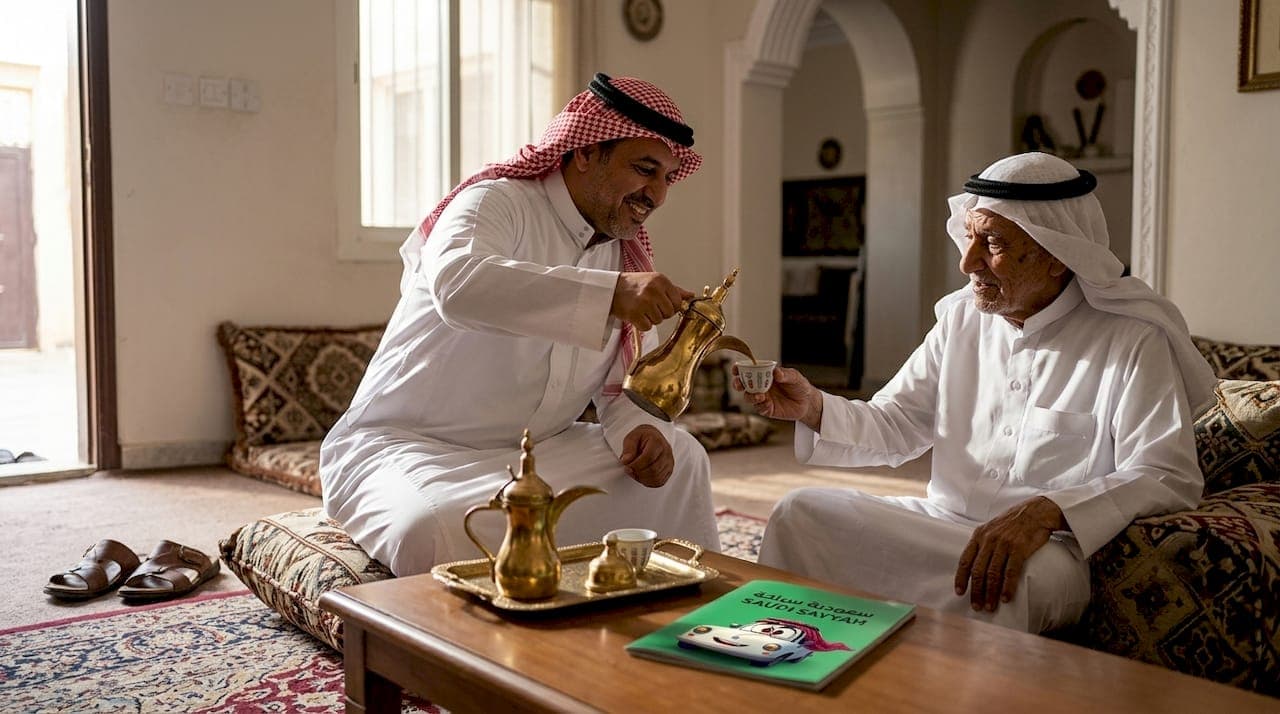
A stranger hands you a small cup of bitter coffee, presses a date into your palm, and gestures warmly toward a cushioned seat. No transaction. No expectation. Just welcome. Many first-time pilgrims arrive in Saudi Arabia expecting five-star service or formal ceremony, and instead find something far more personal. Saudi hospitality is not a product sold at the front desk of a hotel. It is a living cultural practice, woven into daily life, shaped by centuries of Bedouin tradition and Islamic values. Understanding it before you arrive changes everything about how you experience the journey.
Table of Contents
- What defines Saudi hospitality?
- Traditional rituals: Coffee, incense, and the majlis welcome
- Hospitality for Umrah pilgrims: Real experiences and spiritual meaning
- Modern transformations: Hotels, technology, and the Vision 2030 era
- Etiquette for visitors: Do's and don'ts for appreciating Saudi hospitality
- Why Saudi hospitality matters: A deeper perspective
- Make your sacred journey seamless with trusted local expertise
- Frequently asked questions
Key Takeaways
| Point | Details |
|---|---|
| Cultural foundation | Saudi hospitality is deeply rooted in Bedouin and Islamic traditions emphasizing generosity and respect. |
| Iconic rituals | Guests are welcomed with coffee, dates, incense, and sincere gestures symbolizing endless welcome. |
| Pilgrim experience | Pilgrims encounter comfort and guidance through local hospitality, especially during religious seasons. |
| Modern hospitality | The rise of luxury hotels and digital services is reshaping but not replacing traditional customs. |
| Respectful etiquette | Understanding local manners ensures visitors can engage with Saudi hospitality confidently and respectfully. |
What defines Saudi hospitality?
The word "hospitality" in the Western sense often means good service, clean rooms, and friendly staff. In Saudi Arabia, it means something older and more personal. Saudi hospitality is a core cultural value rooted in Bedouin traditions and Islamic principles that stretch back over a thousand years. The desert environment made generosity a survival necessity. Travelers crossing vast distances depended on strangers for water, shelter, and food. Refusing a guest was not just rude. It was a moral failure.
Islam reinforced these instincts. The Prophet Muhammad (peace be upon him) taught that honoring a guest is an act of faith. Guests are seen not as burdens but as blessings. This spiritual framing is key. When a Saudi host offers you food or drink, they are not performing a service. They are fulfilling a duty they consider sacred.
Some common myths are worth addressing directly:
- Myth: Saudi hospitality is about wealth and luxury.
- Reality: Sincerity matters more than cost. A cup of coffee in a modest home carries the same weight as a banquet.
- Myth: It only applies to formal visits.
- Reality: Strangers on the street regularly offer directions, water, or help without being asked.
- Myth: It is a performance for tourists.
- Reality: Locals extend the same warmth to neighbors, colleagues, and passing strangers.
"The guest is the guest of God" is a phrase heard across Saudi homes, reflecting the belief that welcoming others is an act of worship, not just courtesy.
For anyone planning a trip to the holy cities, this mindset reframes every interaction. The man who stops to help you find the right bus is not being unusually kind. He is acting exactly as his culture expects. Understanding that removes the awkwardness of receiving help and lets you accept it with genuine gratitude. The art of welcome in Saudi Arabia is not theatrical. It is deeply ordinary, which is precisely what makes it extraordinary.
Traditional rituals: Coffee, incense, and the majlis welcome
Knowing the values behind Saudi hospitality is one thing. Knowing what to expect in practice is another. The rituals are specific, meaningful, and easy to misread without context.
The greeting comes first. "As-Salamu Alaykum" (peace be upon you) is the standard opening, and responding with "Wa Alaykum As-Salam" is both polite and expected. This exchange is not small talk. It is an acknowledgment of shared humanity and faith.
After the greeting, key rituals include offering Arabic coffee (qahwa), dates, incense, and feasts like kabsa. Each element carries meaning:
| Ritual | What it signals |
|---|---|
| Arabic coffee (qahwa) | Welcome and respect |
| Dates | Sweetness, generosity, and blessing |
| Bukhoor/oud incense | Purification and honor |
| Majlis seating | Equality among guests |
| Kabsa feast | Full hospitality and abundance |
The coffee ritual has its own etiquette. Cups are small and refilled without asking. To signal you are done, gently tilt the cup side to side. Leaving it still means you want more. This small gesture matters. Getting it wrong is not offensive, but getting it right shows respect.
The majlis is the traditional guest room, often low-seated with cushions along the walls. Everyone sits at the same level. There is no head of the table. This physical arrangement reflects the cultural value of equality among guests.
Here is a simple sequence for first-time visitors receiving traditional hospitality:
- Accept the greeting warmly and respond in kind.
- Remove shoes if entering a home or majlis.
- Accept coffee and dates with your right hand.
- Sit where directed without hesitation.
- Engage in light conversation before discussing any business or purpose.
- Signal you are done with coffee by tilting the cup.
- Accept food if offered, even a small amount.
Pro Tip: Never refuse the first offer of coffee or dates outright. Even if you do not drink coffee, accepting the cup and holding it briefly is a sign of respect. You can sip slowly or simply hold it.
Saudi culture traditions around meals are equally significant. Guests are often served before hosts. Portions are generous by design. Leaving food on your plate is not rude. It actually signals that the host provided more than enough, which is considered a compliment.
Hospitality for Umrah pilgrims: Real experiences and spiritual meaning
For Umrah pilgrims, these traditions do not stay inside private homes. They spill into the streets, mosques, and public spaces around Makkah and Madinah.
Hospitality for Umrah pilgrims includes guidance, free meals, water, and seats during prayers, amplified during religious seasons. During Ramadan, entire neighborhoods organize free Iftar tables open to anyone passing by. Volunteers hand out cold water bottles near the Haram. Elderly pilgrims are guided through crowds by strangers who ask nothing in return.
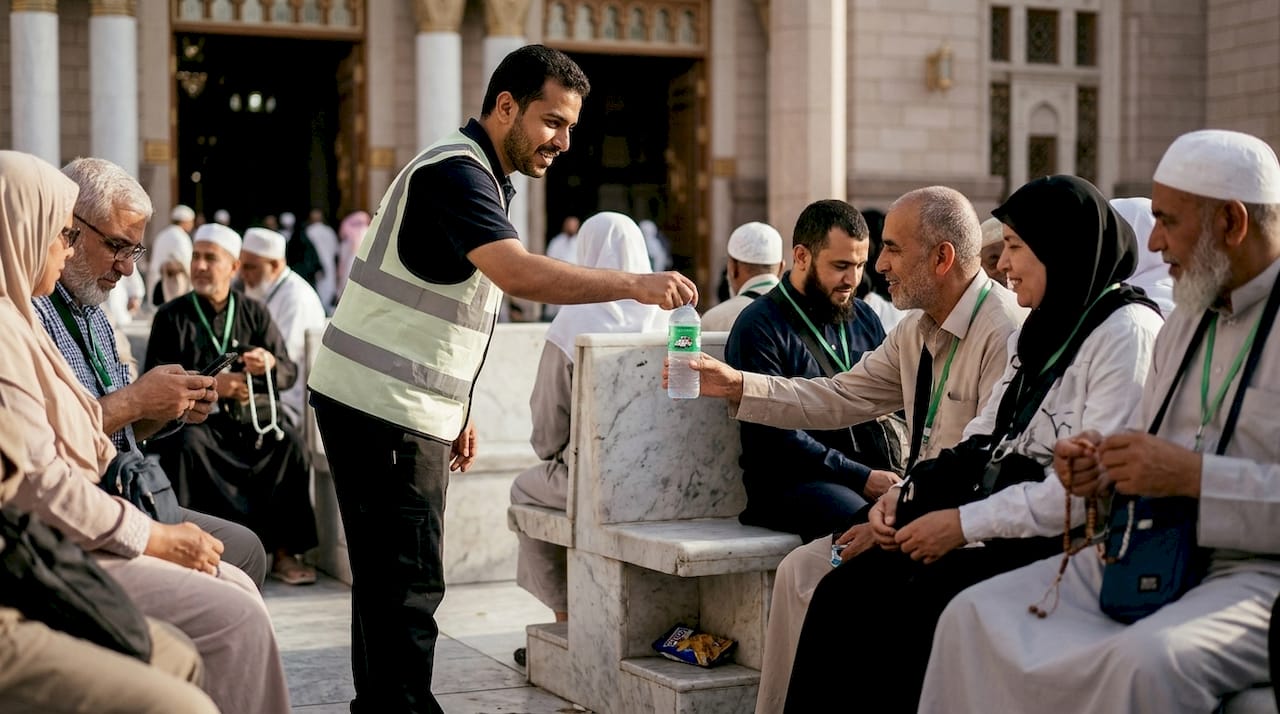
Millions of pilgrims are hosted annually, making Saudi Arabia one of the largest hosts of religious visitors anywhere in the world. The scale is staggering, yet individual acts of care still happen constantly at the human level.
| Hospitality type | Traditional host | Modern provider |
|---|---|---|
| Greeting | Personal, verbal, warm | Digital check-in, multilingual staff |
| Food and drink | Home-cooked, abundant | Hotel buffet, catering services |
| Guidance | Local knowledge, personal | Apps, signage, official guides |
| Transport support | Community-based | Professional services with tracking |
For pilgrims with mobility needs, transport for elderly pilgrims has become a focused area of improvement, with dedicated vehicles and assistance services now widely available. Smooth airport transfers for Umrah also reduce the stress of arrival in an unfamiliar country.
The emotional impact of these gestures is real. A cold cup of water handed to you mid-tawaf, or a local resident walking you to the right gate when you are lost, can feel more meaningful than any planned itinerary moment. These small acts of reliable Umrah transport and community support shape how pilgrims remember their journey. Accepting help, rather than pushing through alone, is part of honoring the hospitality being offered.
The Saudi hospitality extended to pilgrims is not accidental. It is organized, culturally expected, and spiritually motivated.
Modern transformations: Hotels, technology, and the Vision 2030 era
The landscape around Makkah and Madinah has changed dramatically over the past two decades. Makkah now has over 300,000 hotel rooms. Madinah has over 150,000. Towers with global brand names surround the Grand Mosque. The infrastructure is world-class by any measure.
Modern hospitality blends tradition with Vision 2030 upgrades like luxury hotels, digital systems, and multilingual staff. The Nusuk platform, launched to manage Umrah permits and services digitally, is one example of how technology is reshaping the pilgrim experience. Staff at major hotels now speak dozens of languages. Wayfinding apps guide pilgrims through the Haram complex in real time.
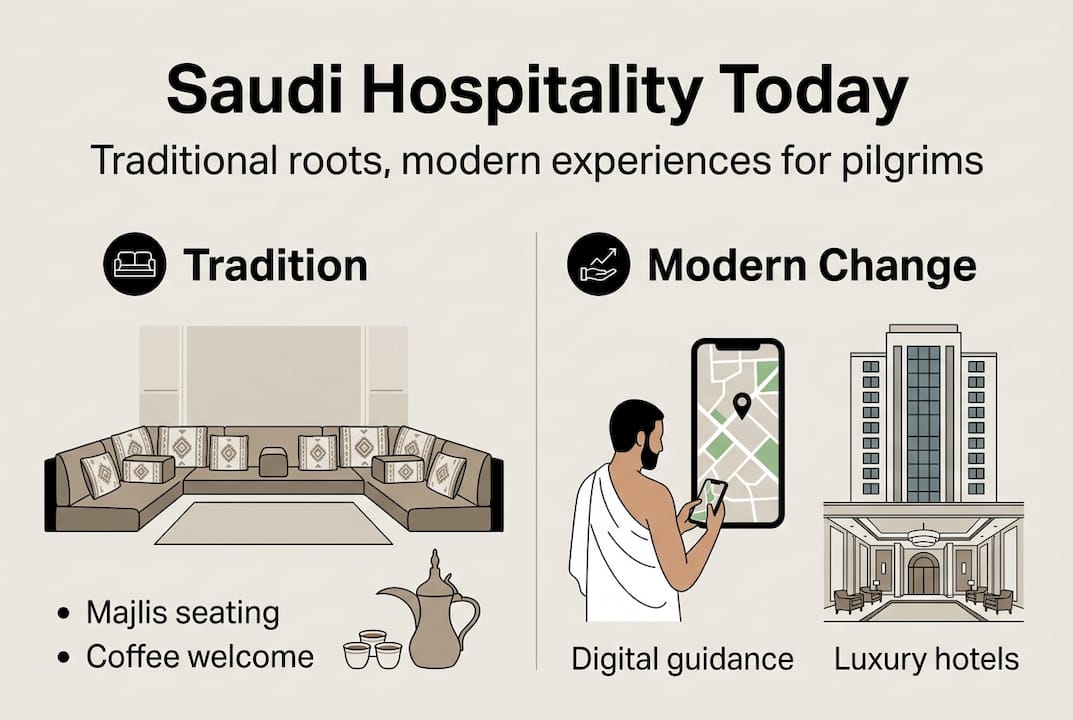
| Past practice | Present practice |
|---|---|
| Community-based hosting | Commercial hotel accommodation |
| Volunteer guides | Official tour operators and apps |
| Shared meals in homes | Hotel dining and food courts |
| Word-of-mouth transport | Booked digital transport services |
Pro Tip: Use the Nusuk app before you travel to pre-register your Umrah permit and access official service listings. It reduces wait times and helps you plan your visit to the Haram more efficiently.
The criticism of this shift is legitimate. Some scholars and cultural observers argue that raised hospitality standards through luxury development risk pricing out lower-income pilgrims and replacing authentic warmth with commercial efficiency. Traditional neighborhoods near the holy sites have been demolished to make room for hotels. The personal, informal hospitality of local families is harder to find than it was a generation ago.
For pilgrims seeking luxury transport for pilgrims or needing accessible transport booking, modern systems deliver real benefits. The tension is not between old and new. It is between efficiency and soul. The best experiences often combine both.
Etiquette for visitors: Do's and don'ts for appreciating Saudi hospitality
Knowing the culture is useful. Knowing how to behave within it is essential. A few practical guidelines make a real difference.
Dress and appearance
- Cover shoulders and knees in public spaces.
- Women should carry a scarf for entry into mosques.
- Avoid tight or revealing clothing in any religious area.
Greetings and interaction
- Use "As-Salamu Alaykum" as your standard greeting.
- Wait for a Saudi woman to extend her hand before offering yours.
- Use your right hand for eating, giving, and receiving items.
- Accept offers of food or drink graciously, even if you take only a small amount.
- Avoid prolonged eye contact with members of the opposite gender.
Etiquette for visitors involves modest dress, polite greetings, right-hand use, and respecting cultural and religious norms. These are not arbitrary rules. They reflect values around modesty, respect, and spiritual focus that define daily life in Saudi Arabia.
Common mistakes to avoid
- Public displays of affection are not appropriate.
- Refusing a hospitality offer repeatedly can come across as dismissive.
- Being too reserved or silent during a meal may be read as dissatisfaction.
- Photographing people, especially women, without permission is not acceptable.
Pro Tip: If you are unsure whether to accept a second helping or another cup of coffee, accept it. Generosity is expressed through abundance, and accepting shows appreciation.
Respect prayer times. Shops close, conversations pause, and the pace of life shifts five times a day. During Ramadan, eating or drinking in public during daylight hours is not permitted. These are not inconveniences. They are the rhythm of life here, and adapting to them is part of the experience. For a broader overview, the safe travel guide for Umrah covers additional practical tips for navigating daily life during your visit.
Why Saudi hospitality matters: A deeper perspective
Most travel guides treat hospitality as a section on manners. That misses the point. For pilgrims, genuine acts of welcome are often a practical lifeline. A stranger who guides you to the right prayer area when you are disoriented, or a volunteer who hands you water when you are exhausted mid-ritual, is not just being polite. They are holding the experience together for you.
Traditionalists preserve hospitality as a sacred duty; critics worry about commercialization; visitors find a blend. Both sides have a point. The risk of losing the informal, personal warmth to hotel lobbies and booking apps is real. But the underlying values have not disappeared. They surface in unexpected moments, from the taxi driver who refuses a tip to the shopkeeper who offers tea before discussing a price.
Visitor perspectives on hospitality consistently note that the most memorable moments are not the grand monuments but the small human gestures. Pilgrims who approach Saudi Arabia with cultural curiosity, rather than just a checklist of rituals, tend to leave with something harder to name but easier to feel. For those still planning a trip to the holy cities, that openness is the most important thing to pack.
Make your sacred journey seamless with trusted local expertise
Cultural awareness is one part of a smooth pilgrimage. Reliable, professional transport is another. Navigating Makkah and Madinah during peak seasons is demanding, and having a trusted local partner removes one major layer of stress.
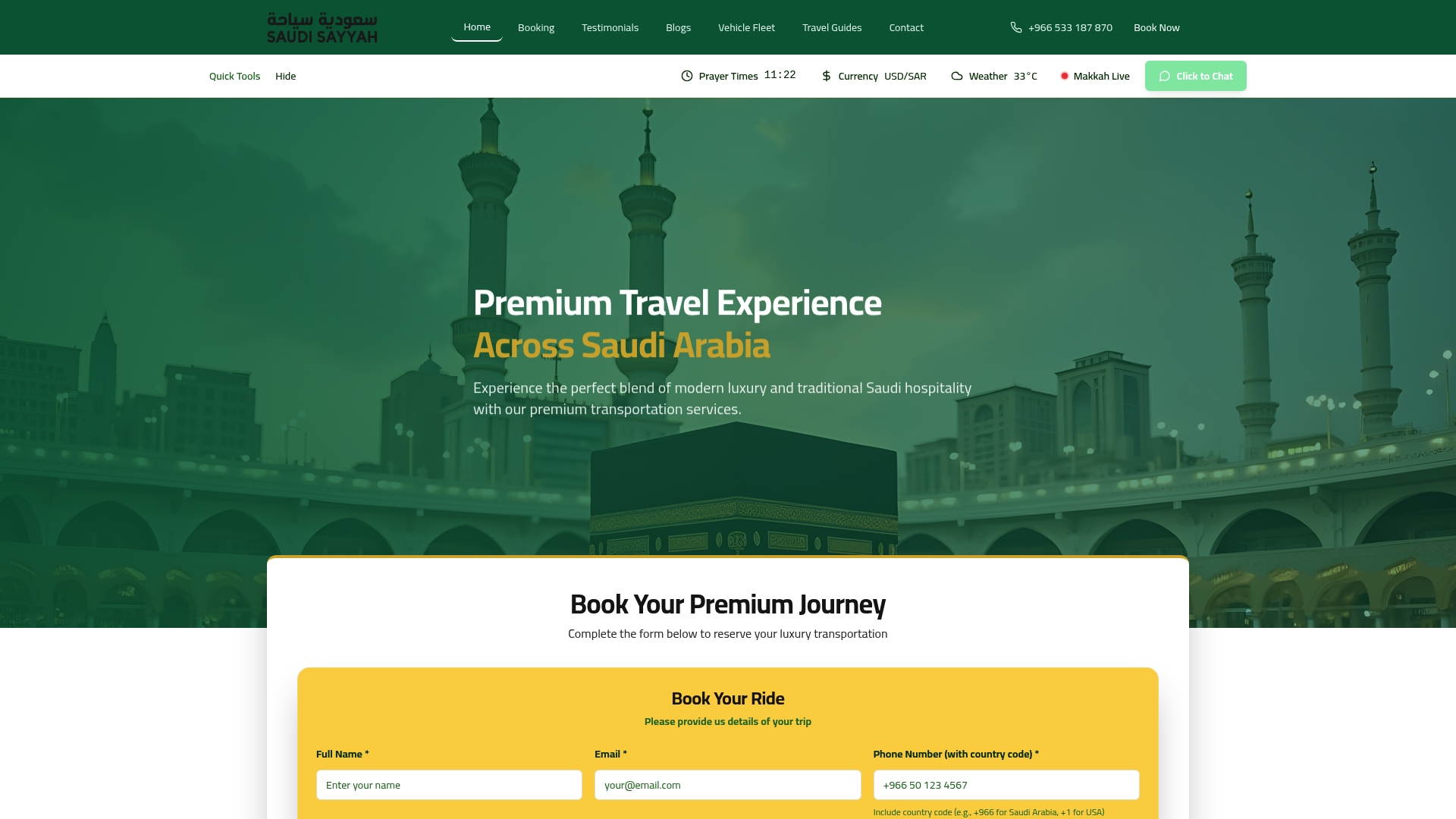
Saudi Sayyah provides Saudi car hire services built specifically for pilgrims and first-time visitors. Real-time tracking, driver details sent before every trip, and a fully automated booking system mean no surprises from the moment you land. The premium Umrah and Hajj vehicles in the fleet are late-model, well-maintained, and suited to the demands of holy city travel. Combine cultural knowledge with professional ground support, and your journey becomes what it was always meant to be.
Frequently asked questions
What is the main principle behind Saudi hospitality?
Saudi hospitality is rooted in generosity, respect, and treating guests as blessings, based on Bedouin survival ethics and Islamic religious duty.
How do Saudis traditionally welcome guests?
Guests are greeted with Arabic coffee, dates, and incense and offered seats in the majlis as symbols of warmth and equal standing.
What should pilgrims expect from locals during Umrah?
Pilgrims can expect free meals, water, and guidance from locals and volunteers, especially during prayer times and Ramadan.
Is there any etiquette visitors should follow for Saudi hospitality?
Dress modestly, greet with "As-Salamu Alaykum," use your right hand, accept offers graciously, and respect local customs around prayer times and gender interaction.
How is Saudi hospitality changing in modern times?
It now includes luxury hotels, digital platforms, and global service standards, though there is ongoing debate about preserving traditional warmth amid rapid commercial development.
Recommended
- Safe travel in Saudi Arabia: Umrah pilgrim guide 2026
- Saudi tourism strategy: essential guide for first-time Umrah travelers
- Top tips for group travel to Saudi Arabia in 2026
- Saudi Arabia airport transfers: Guide for Umrah pilgrims
- Why Umrah rites include special provisions for ill persons – Badal Umrah