
TL;DR:
- A structured workflow for holy site visits in Saudi Arabia involves securing permits, planning timings, and offline coordination. It minimizes crowding issues, streamlines entry, and ensures pilgrims spend more time in worship than navigating logistics. Proper preparation, timing, and backup plans significantly improve pilgrimage experiences.
A structured workflow for holy site visits in Saudi Arabia is defined as a step-by-step system covering permits, timing, navigation, and group coordination before and during your pilgrimage. Without this structure, pilgrims face denied entry, crowd separation, and missed worship windows at sites like Masjid al-Nabawi and Masjid al-Haram. The Nusuk app, gender-specific gate protocols, and crowd-heat timing strategies are the three pillars every organized visit depends on. This guide gives you the exact process, from pre-arrival preparation through daily execution, so your time at Saudi Arabia's holiest sites is spent in worship, not confusion.
What are the essential preparatory steps before visiting holy sites?
Preparation is the foundation of every successful pilgrimage visit. The steps below address the digital permits, documentation, and physical supplies that determine whether you get through the gate or turn back.
- Download and register on the Nusuk app. This is the official Saudi platform for managing pilgrimage permits. Registration requires your passport number and visa details, so have both ready before you start.
- Book your Rawdah permit at least 3 days in advance. Rawdah permits are released approximately three days before the visit date. Slots fill within hours of release, so set a reminder and book the moment they open.
- Prepare your documentation. Saudi authorities require a valid passport and matching visa details at every checkpoint. Keep digital and physical copies of both.
- Understand gate assignments. Men enter Masjid al-Nabawi through Bab Al-Sa'ida; women use Bab Al-Nisa gates. Knowing your gate before you arrive cuts waiting time significantly.
- Screenshot your QR codes. Mobile signal congestion at the Prophet's Mosque can prevent the Nusuk app from loading at the gate. A high-resolution screenshot of your QR code works as a reliable backup.
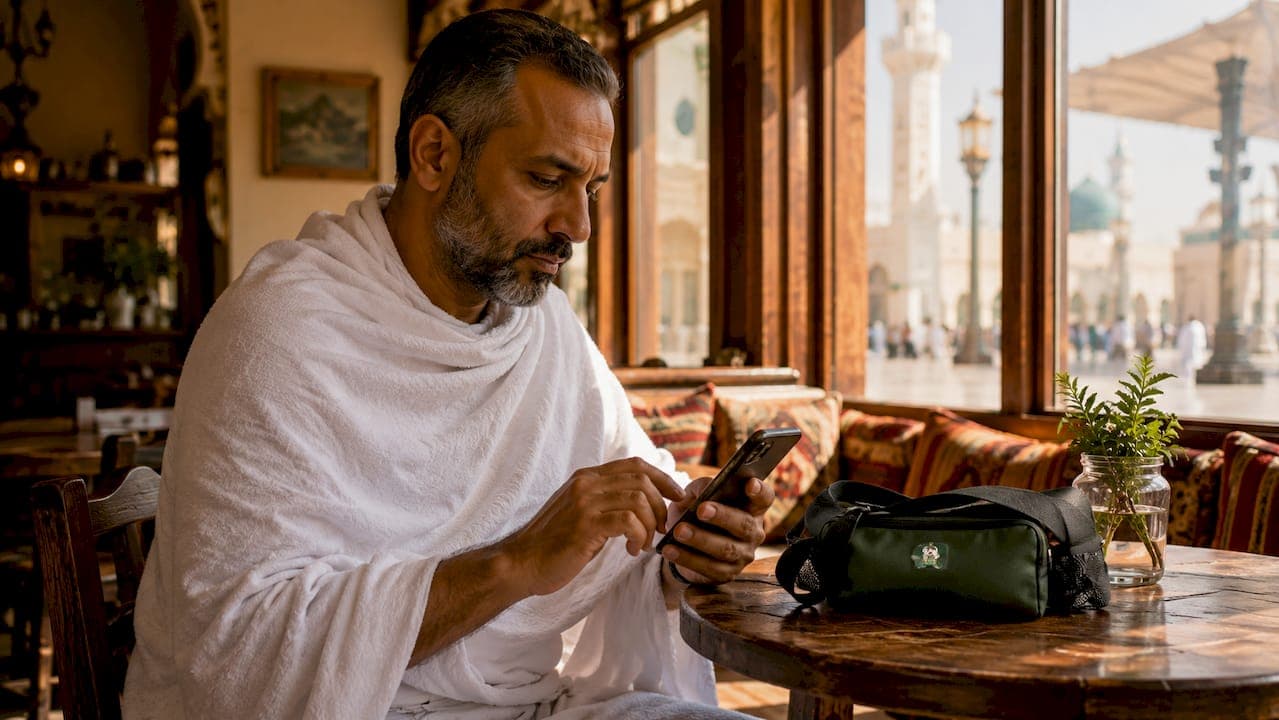
- Pack a portable battery charger. Your phone is your permit, your map, and your communication device. A dead battery at the gate creates real access problems.
Pro Tip: Print a paper copy of your QR code as a last-resort backup. Gate security accepts printed codes, and this single step has saved countless pilgrims from entry denial.
The Nusuk digital permit system replaced the old queue-and-wait process with a fairer, more orderly system. Treating the app setup as part of your sacred preparation, rather than a bureaucratic hurdle, reduces stress and improves compliance.
How to execute an efficient daily itinerary for holy site visits
A daily itinerary anchored to prayer times and site-specific opening hours is the most reliable structure for organizing religious visits. Generic schedules fail because they ignore actual crowd patterns and local timing.
- Check prayer times the night before. Build your entire day around Fajr, Dhuhr, Asr, Maghrib, and Isha. Sites fill immediately before and after each prayer, so plan arrivals and departures around these peaks.
- Arrive 20–30 minutes early to security gates. Arriving early with QR permits ready is standard practice at the Prophet's Mosque. Late arrivals risk missing their permit window entirely.
- Visit high-traffic areas during off-peak hours. Rawdah and Ziyarat visits after Isha prayer or in the early morning offer fewer crowds and cooler temperatures. This timing improves both physical comfort and spiritual focus.
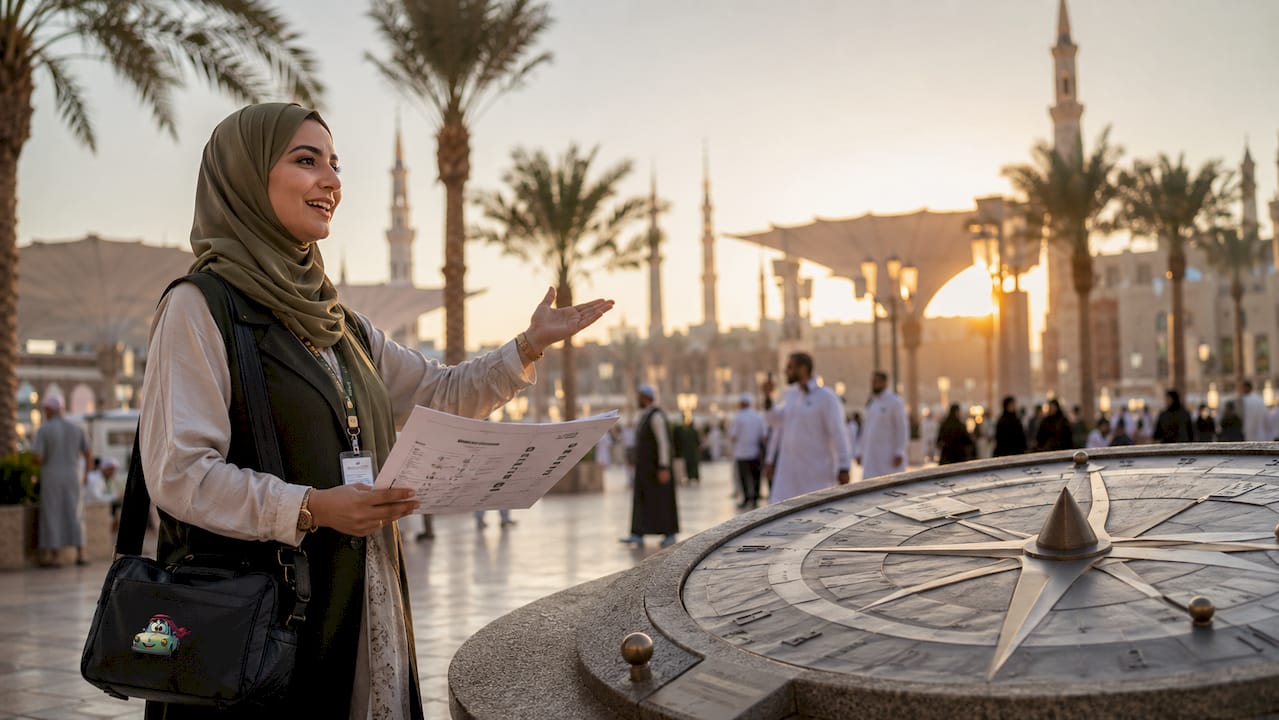
- Follow gender-specific gate guidance. Using the correct gate reduces backtracking and speeds up security screening for everyone in your group.
- Schedule rest and hydration breaks. Build a 30-minute break every two to three hours into your plan. Dehydration and fatigue are the most common reasons pilgrims cut visits short.
- Set physical meeting points. Choose one fixed landmark near each site as your group's default meeting spot if you get separated.
Pro Tip: Use the Nusuk app's prayer time feature to sync your itinerary automatically. It adjusts for your exact location in Makkah or Madinah, which matters when prayer times shift by several minutes daily.
The table below shows a sample daily schedule for a visit to Masjid al-Nabawi, built around the crowd-heat strategy.
| Time | Activity | Notes |
|---|---|---|
| 4:30 AM | Arrive at Bab Al-Sa'ida or Bab Al-Nisa | 20–30 min before Fajr; QR code ready |
| 5:00 AM | Fajr prayer in main hall | Avoid Rawdah area during peak post-prayer crowd |
| 6:00 AM | Rawdah visit (permit window) | Early morning slot; cooler and less crowded |
| 8:00 AM | Breakfast and rest at accommodation | Rehydrate; charge devices |
| 12:30 PM | Dhuhr prayer | Return to mosque; use assigned gate |
| 2:00 PM | Ziyarat of surrounding sites | Midday heat; stay hydrated |
| 9:30 PM | Post-Isha Rawdah or Ziyarat | Best low-crowd window of the day |
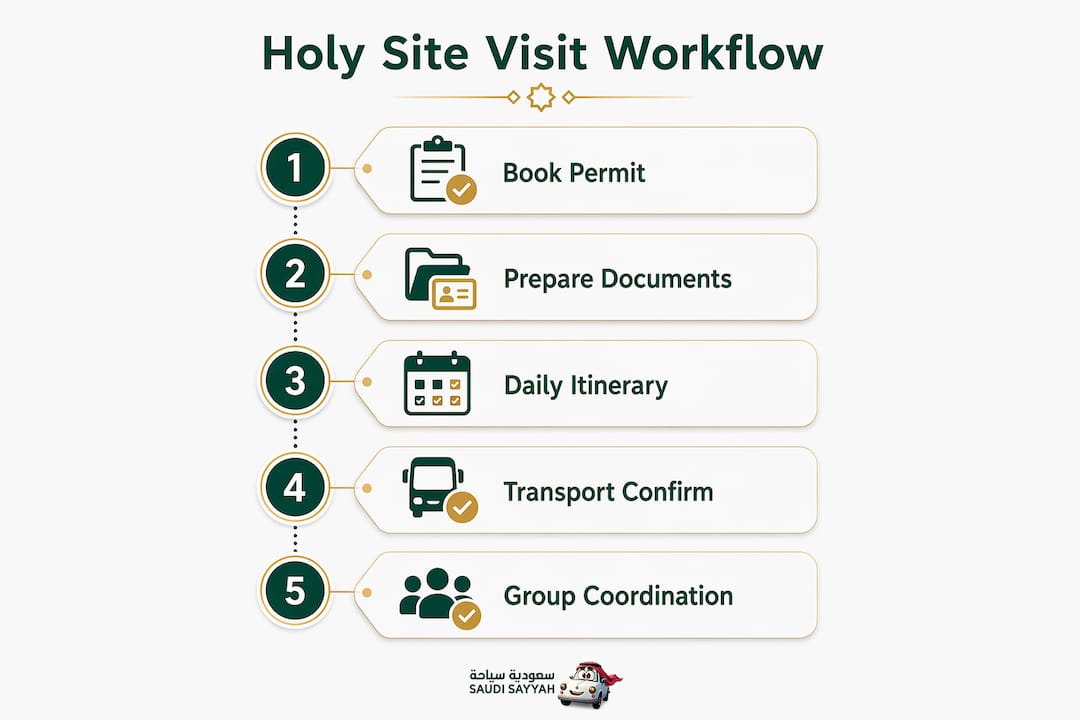
A five-part pilgrimage workflow covering hour-by-hour itineraries, crowd-heat timing, live translation, rituals guidance, and group management addresses the most common logistical failures pilgrims face. Applying even three of these five elements significantly reduces on-the-ground stress.
What are best practices for group coordination and unexpected challenges?
Group management during pilgrimage visits breaks down when pilgrims rely entirely on mobile phones. Signal congestion, dead batteries, and crowd separation are predictable problems with straightforward solutions.
- Assign a fixed meeting point at every site. Choose a specific, named landmark near each entrance before you enter. "Meet at the large clock tower entrance" is more reliable than "I'll call you."
- Carry physical address cards in Arabic. Pre-arranged meeting points and Arabic address cards are the most effective tools for managing separation during peak crowd volumes. Print one card per group member with your hotel name, address, and a local contact number.
- Screenshot all permits before entering crowded areas. App failure at the gate is a documented problem. Screenshots stored in your camera roll load instantly without a signal.
- Prepare basic Arabic phrases. A short transliteration card with phrases like "Where is the exit?" and "I need help" gives you a communication option when translation apps fail.
- Plan for medical and accessibility needs in advance. Identify the location of medical stations at each site before your visit. For pilgrims with limited mobility, transport planning for accessibility should be confirmed before departure, not on arrival.
Physical group command centers with backup plans outperform high-tech solutions when managing pilgrim groups amid network congestion and crowds. Phone reliance alone results in lost groups during peak crowd volumes. A designated offline meeting point, known to every member of your group, is the single most effective coordination tool available.
First-time pilgrims most often fail by relying on generic itineraries that ignore actual pilgrimage dates and geography. A workflow built around your specific travel dates, your group's size, and the real entry protocols at each site produces measurably better outcomes.
How to adapt your sacred site workflow for a sustainable experience?
Physical sustainability and spiritual focus are not separate goals. The pilgrims who report the most meaningful experiences are those who plan fewer stops and move more deliberately.
- Limit daily site visits to 3–4 locations. Pacing visits with rest and limited daily stops prevents physical burnout and supports deeper spiritual engagement. Trying to cover six or seven sites in a single day produces exhaustion, not fulfillment.
- Build midday rest into every day. The hours between Dhuhr and Asr are the hottest and most crowded. Use this window for rest, meals, and device charging at your accommodation.
- Shift from a checklist mentality to intentional presence. Visiting fewer sites with full attention produces a more meaningful experience than rushing through a long list. Choose two or three sites that hold personal significance and spend real time there.
- Schedule visits during cooler hours. Early morning and post-Isha visits offer lower temperatures and smaller crowds. Both factors reduce physical strain and improve concentration during worship.
- Respect mosque etiquette and cultural customs. Dress codes, quiet zones, and photography restrictions exist at every major site. Following these norms protects your access and shows respect for other worshippers.
Pro Tip: Write your intentions for each site visit the night before. This single practice shifts your mindset from logistics management to spiritual preparation and takes less than five minutes.
Advance transportation booking and local knowledge are critical to a smooth holy site visit. Confirming your transport between Makkah and Madinah before you arrive removes one of the most common sources of last-minute stress. For multi-city pilgrimage trips, scheduling transport alongside your site permits creates a single, coherent plan rather than two separate logistics problems.
Key Takeaways
A structured workflow for holy site visits in Saudi Arabia requires advance digital permits via the Nusuk app, crowd-timed itineraries, and offline backup plans to protect access and group coordination.
| Point | Details |
|---|---|
| Book Nusuk permits early | Rawdah permits release 3 days ahead and fill fast; book immediately when slots open. |
| Screenshot your QR code | Signal congestion at the Prophet's Mosque can block the app; a screenshot always loads. |
| Use off-peak timing | Post-Isha and early morning visits offer fewer crowds and cooler temperatures. |
| Limit daily stops | Visiting 3–4 sites per day prevents burnout and deepens spiritual focus. |
| Plan offline coordination | Physical meeting points and Arabic address cards outperform phone-only group management. |
What I've learned from watching pilgrims plan without a workflow
The most consistent mistake I see is treating the Nusuk app as an afterthought. Pilgrims arrive in Madinah, open the app for the first time, and discover that every Rawdah slot for the next three days is gone. The permit system is not a formality. It is the entry point to the most significant worship experience of many people's lives, and it requires the same advance attention as booking a flight.
The second pattern I've noticed is over-reliance on digital tools in environments where they routinely fail. The Prophet's Mosque hosts millions of visitors. Signal congestion is not an edge case. It is the default condition during peak hours. The pilgrims who move through the site calmly are almost always carrying printed QR codes and a physical card with their hotel address. They planned for failure before it happened.
What actually works is a hybrid approach: digital tools for booking and real-time prayer times, physical backups for everything that requires a working signal at a critical moment. The workflow is not about removing the spiritual experience from pilgrimage. It is about removing the logistical friction that prevents you from being present for it. A plan that accounts for dead batteries and crowd separation gives you more freedom, not less.
— Fa
Saudisayyah transport for your holy site visit plan
Reliable transport is the part of the pilgrimage workflow most pilgrims confirm last and regret most. Saudisayyah's premium vehicle hire services are built specifically for Umrah and Hajj logistics, with professional drivers who know the entry routes, gate locations, and timing constraints at every major site.
Saudisayyah's geolocation-enabled booking system sends driver photos, vehicle details, and real-time tracking before every trip. That means no uncertainty about pickup times when your Rawdah permit window opens at 6:00 AM. Booking transport through Saudisayyah early in your planning process, alongside your Nusuk permits, gives you a complete workflow rather than a partial one. View the full vehicle fleet to find the right option for your group size and travel dates.
FAQ
What is the Nusuk app and why do pilgrims need it?
The Nusuk app is the official Saudi platform for booking digital permits to access restricted areas like the Rawdah in Masjid al-Nabawi. Without a valid permit booked through Nusuk, entry to these areas is denied regardless of your visa status.
How far in advance should I book a Rawdah permit?
Rawdah permits are released approximately 3 days before the visit date and fill within hours. Book the moment slots become available and screenshot your QR code immediately after booking.
What should I do if my phone dies at the mosque gate?
A printed paper copy of your Nusuk QR code is accepted at security gates. Always carry a printed backup alongside your digital permit to avoid entry denial from a dead battery or signal failure.
How many holy sites should I plan to visit per day?
Limiting visits to 3–4 sites per day prevents physical exhaustion and supports better spiritual focus. Midday rest between Dhuhr and Asr is the most effective recovery window in a daily pilgrimage schedule.
How do I keep my group together at crowded holy sites?
Pre-arranged physical meeting points and Arabic address cards are more reliable than phone contact during peak crowd hours. Assign one fixed landmark near each site entrance as your group's default reunion point before you enter.