

TL;DR:
- Travel personalization tailors each trip to individual preferences, increasing booking likelihood and brand loyalty. It encompasses itinerary pacing, accommodation, dining, activities, and transportation, relying on a mix of AI and human input for best results. Proper pacing and emotional alignment are essential for restorative travel experiences.
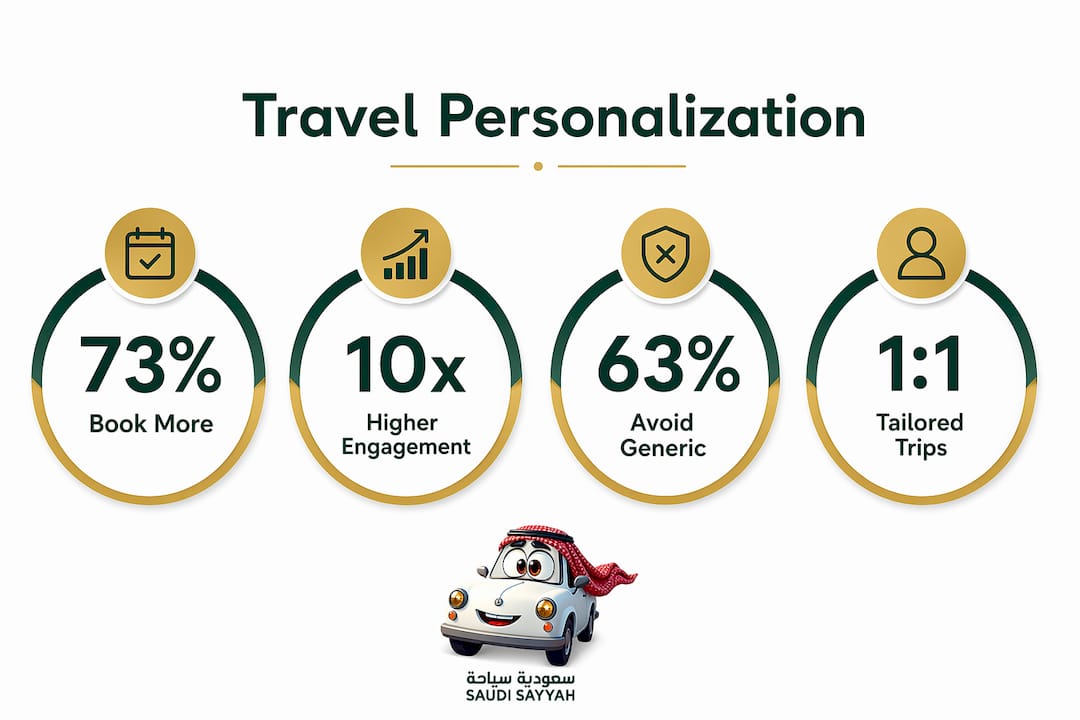
Travel personalization is defined as the practice of tailoring every element of a trip to fit an individual traveler's preferences, pace, personality, and goals rather than offering a generic package. 74% of travelers desire personalized trips, and 73% are more likely to book when an itinerary is built around their specific profile. Those numbers reflect a fundamental shift in how travelers think about planning. Custom travel planning is no longer a luxury reserved for high-end clients. It is the standard expectation across every segment of the market.
What is travel personalization, and what does it actually include?
Travel personalization is the process of designing a trip around who you are, not just what is available. The industry term for this practice is "tailored travel," and it covers far more than picking a hotel category or choosing between a beach and a mountain destination.
Personalized travel experiences typically include:
- Itinerary pacing: Matching the number of activities per day to your energy level and travel style
- Accommodation selection: Choosing properties based on your priorities, whether that is location, quiet, design, or service level
- Dining preferences: Filtering options by dietary needs, cuisine interests, and budget
- Activity curation: Building a schedule around your actual interests, not a generic "top 10" list
- Transportation choices: Selecting vehicles, routes, and transfer timing that fit your comfort and schedule
The difference between customization and personalization is subtle but important. Customization means picking from a menu of options. Personalization means the menu itself is built around you. A truly personalized itinerary accounts for how you feel on day three of a trip, not just what you want to see on day one.
Pro Tip: Before booking any trip, write down three words that describe how you want to feel at the end of it. Share those words with your travel planner or use them to filter your own research. That emotional target shapes every decision that follows.
Data-driven personalization uses your past booking behavior, search history, and stated preferences to generate recommendations. Human-driven personalization relies on a consultant who asks deeper questions about your personality, relationships, and life context. The best results come from combining both.

How does technology improve personalized travel experiences?
Technology has changed what personalization can deliver at scale. Personalized travel offers achieve 10–12 times higher conversion rates compared to generic marketing. That gap exists because relevant recommendations reduce decision fatigue and build trust faster than broad promotions ever could.
| Technology method | What it does | Traveler benefit |
|---|---|---|
| Machine learning algorithms | Analyzes past behavior to predict preferences | Faster, more relevant recommendations |
| Multimodal AI | Processes text, images, and location data together | Immersive previews before booking |
| Predictive personalization | Anticipates needs before you search for them | Fewer missed options, less research time |
| Real-time analytics | Adjusts recommendations based on live data | Accurate pricing and availability |
Multimodal AI in travel personalization enables immersive recommendations that give travelers confidence before they commit to a booking. That matters because travel purchases are high-stakes decisions. Seeing a realistic preview of a destination, hotel, or route reduces anxiety and increases satisfaction after arrival.
Pro Tip: Use AI-powered planning tools for initial inspiration and shortlisting. Then hand the refined list to a human travel designer or consultant to check pacing, logistics, and emotional fit. The combination produces better trips than either approach alone.
AI does have real limits. It processes data efficiently but cannot judge how a long transfer between two cities will feel after a red-eye flight. It cannot weigh the trade-off between a must-see landmark and the rest your body actually needs. AI-powered tools provide quick inspiration but miss complex trade-offs like fatigue and logistics, which human designers handle well. That limitation is not a flaw to work around. It is a reason to treat technology as a starting point, not a final answer.
Saudisayyah addresses this gap directly. Its geolocation-enabled platform sends driver photos, vehicle details, and real-time tracking before every trip. That level of pre-trip communication reduces uncertainty and keeps the traveler informed at every step, which is exactly what technology-driven personalization should do.
Why does pacing matter more than most travelers realize?
Pacing is the most overlooked element of custom travel planning. Most travelers focus on what they will do. The better question is how much space exists between each thing they do.
Balancing transit time, activity duration, and downtime is what separates a stressful vacation from a genuinely restorative one. A day packed with five activities across three neighborhoods sounds exciting in a spreadsheet. It feels exhausting by 3:00 PM. Personalized itinerary design accounts for that reality before the trip begins.
Personality-based travel design takes this further. The Big Five personality assessment, a well-established psychological framework, maps traits like openness, conscientiousness, and introversion to travel preferences. A high-introversion traveler benefits from longer stays in fewer locations. A high-openness traveler thrives on variety and spontaneity. Matching the itinerary structure to those traits produces a trip that feels natural rather than forced.
The most important, often overlooked, aspect of a personalized itinerary is pacing. The balance of travel time, activities, and downtime determines whether a trip restores or depletes you. Getting that balance right requires knowing the traveler, not just the destination.
True travel personalization prioritizes personality and energy levels to align trips with a traveler's natural rhythm, not just their logistics. That principle applies whether you are planning a two-week international trip or a three-day regional visit. A consultative approach, where a designer asks about your energy patterns, travel companions, and emotional goals, produces a fundamentally different result than a self-service booking tool.
Practical pacing adjustments include building in one unscheduled afternoon per four days of travel, scheduling the most physically demanding activities for the second or third day rather than the first, and placing quieter experiences after long transit segments. These are not obvious choices. They require someone who understands both the destination and the traveler.
How does personalization affect booking decisions and brand loyalty?
Personalization directly shapes whether travelers book and whether they return. 63% of travelers avoid booking with brands that fail to provide meaningful personalization throughout the travel experience. That is not a preference. It is a filter that eliminates brands from consideration entirely.
The reasons go beyond convenience. Travelers who receive personalized experiences report stronger emotional connections to the brands that provided them. Value-aware personalization creates emotional resonance and mental restoration tailored to unique traveler needs. Those outcomes, feeling genuinely restored and emotionally connected to a place, are what drive repeat bookings and word-of-mouth referrals.
Consider the difference between two travelers returning from the same destination. One followed a generic itinerary and checked off the standard sites. The other had a trip designed around their interests, pace, and personality. The second traveler is far more likely to recommend the service that built that experience and to return for a future trip.
For travel providers, the business case is straightforward:
- Personalized offers convert at significantly higher rates than generic ones.
- Travelers who feel understood are more likely to return and refer others.
- Brands that invest in personalization reduce the cost of acquiring repeat customers.
- Emotional resonance and mental restoration build loyalty that price competition cannot easily erode.
The traveler benefits are equally clear. You spend less time on a trip that does not fit you and more time on experiences that do. You return home feeling restored rather than depleted. That outcome is the actual goal of travel, and personalization is the most reliable path to it.
For travelers visiting Saudi Arabia, smart travel logistics play a direct role in whether the overall experience feels personalized or generic. Transportation that matches your schedule, comfort level, and group size is not a minor detail. It sets the tone for every part of the day.
Key Takeaways
Travel personalization produces better trips because it aligns every element of the experience with who the traveler actually is, not who a generic package assumes them to be.
| Point | Details |
|---|---|
| Personalization drives bookings | 73% of travelers are more likely to book when an itinerary is tailored to their profile. |
| Pacing is the critical variable | Balancing transit, activities, and downtime determines whether a trip restores or depletes you. |
| AI accelerates but does not replace human judgment | Technology delivers fast inspiration; human designers handle nuanced trade-offs like fatigue and logistics. |
| Poor personalization loses customers | 63% of travelers avoid brands that fail to personalize the travel experience. |
| Emotional outcomes drive loyalty | Trips that create mental restoration and emotional resonance produce repeat bookings and referrals. |
My take on blending AI and human expertise in travel design
AI tools have genuinely changed what is possible in travel planning. I use them regularly for initial research, shortlisting destinations, and checking logistics. They are fast, thorough, and surprisingly good at surfacing options I would not have found on my own.
But I have never seen an AI tool get pacing right on the first pass. It will build you a full itinerary in seconds and miss the fact that you have a six-hour transit on day two followed by your most demanding activity on day three. Human travel designers complement AI by catching exactly those trade-offs and adjusting before the trip begins, not during it.
The travelers I see getting the most out of personalized trips are the ones who treat AI as a research assistant and a human designer as the decision-maker. That combination is not redundant. It is the most efficient path to a trip that actually fits you. The role of automation in travel is growing fast, but the travelers who understand its limits will always plan better trips than those who hand everything over to an algorithm.
— Fa
Personalized transport for your trip with Saudisayyah
Personalized travel starts before you reach your first destination. The vehicle you travel in, the driver who meets you, and the information you receive before pickup all shape how the experience feels.
Saudisayyah offers customizable vehicle hire across Saudi Arabia, with a fleet of late-model vehicles matched to group size, comfort preference, and trip type. Every booking includes driver photos, vehicle details, and real-time tracking sent directly to you before departure. For travelers visiting the holy lands, many for the first time, that level of communication removes uncertainty and lets you focus on the experience itself. Explore the full fleet options to find the vehicle that fits your trip. For transport guidance that matches your travel style, choosing the right transport is a practical starting point.
FAQ
What is travel personalization in simple terms?
Travel personalization is the practice of designing a trip around an individual traveler's preferences, pace, and personality rather than using a standard package. It covers everything from itinerary pacing to accommodation type, dining, and transportation.
How does AI help with personalized travel experiences?
AI analyzes traveler behavior and preferences to generate relevant recommendations faster than manual research. Multimodal AI can process text, images, and location data together to deliver immersive previews before booking.
Why do 63% of travelers avoid poorly personalized brands?
Travelers who receive generic experiences feel unseen and are less likely to trust or return to that brand. Personalization signals that a provider understands individual needs, which directly affects booking decisions and loyalty.
What is the difference between travel customization and personalization?
Customization means selecting from a fixed set of options. Personalization means the options themselves are filtered and arranged to match who you are, including your energy level, personality, and emotional goals for the trip.
How important is pacing in a personalized itinerary?
Pacing is the single most overlooked factor in travel planning. The balance of transit time, activity duration, and downtime determines whether a trip feels restorative or exhausting, regardless of how good the individual activities are.