

TL;DR:
- Technology has transformed travel from a convenience into a vital system that manages every trip stage through AI, mobile apps, and data-driven infrastructure. Travelers leveraging these tools tend to take more trips, spend more, and enjoy personalized experiences, but must also manage privacy, outages, and algorithm biases. The future of travel technology lies in proactive solutions that prevent problems before they occur, emphasizing the importance of balancing digital tools with human judgment.
The role of technology in travel has shifted from a convenience to a necessity. Travelers who once relied on printed maps and phone calls to book hotels now manage entire trips from a single device. Yet many travelers still feel uncertain about which tools actually help versus which ones add noise. This guide cuts through that uncertainty. It covers how AI, mobile platforms, and digital booking infrastructure are changing the way people plan, execute, and experience travel in 2026, and what that means for you practically.
Table of Contents
- Key takeaways
- The role of technology in travel today
- How AI is reshaping personalization
- Mobile technology's grip on travel management
- Challenges and trade-offs worth knowing
- Using travel tech wisely
- My honest take on where this is all heading
- Simplify your next trip with Saudisayyah
- FAQ
Key takeaways
| Point | Details |
|---|---|
| AI boosts travel spending | Travelers using AI tools take more trips and spend significantly more annually than those who don't. |
| Mobile is the primary booking channel | Over 75% of travelers use smartphones to search and manage reservations from start to finish. |
| Tech has real limits | Overreliance on apps and algorithms creates risk during outages, and can reduce spontaneous discovery. |
| Data privacy is a genuine concern | Using digital travel tools requires sharing personal data, which demands careful management of permissions. |
| The best tech blends with human judgment | Technology works best when it handles logistics while you focus on the actual experience. |
The role of technology in travel today
Travel technology is not a single product. It is an ecosystem of interconnected systems that touch every stage of a trip, from the moment you search for a destination to the minute you land home.
At its core, travel tech includes:
- AI and machine learning for personalized recommendations, dynamic pricing, and customer support
- Mobile applications for booking, check-in, real-time alerts, and itinerary management
- Global Distribution Systems (GDS) that connect airlines, hotels, and agencies into a shared inventory network
- Biometric systems used at airports for identity verification and faster boarding
- Cloud platforms that allow travel companies to process millions of transactions simultaneously
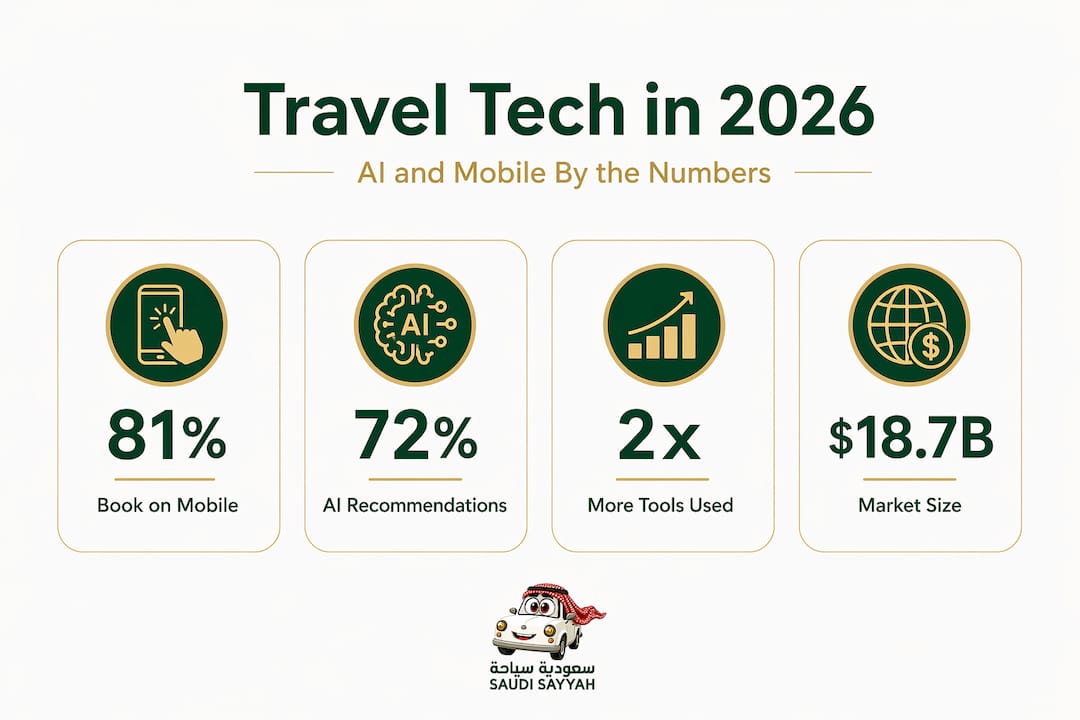
The market behind all of this is expanding fast. The global travel technology market is projected to reach USD 18.7 billion by 2034, growing at a 5.75% compound annual rate driven by AI integration and mobile wallet adoption.
One backend shift worth understanding is New Distribution Capability (NDC). This is the modern alternative to legacy GDS booking infrastructure. NDC transactions hit 21.2% of ARC agency bookings in late 2025, with GDS-distributed NDC volumes growing 162% year over year. That means richer fare content and more flexible options are now reaching travelers through standard booking channels.
Here is a simplified view of how technology maps across a typical trip:
| Trip stage | Primary technology involved |
|---|---|
| Planning | AI search, price comparison platforms, review aggregators |
| Booking | Mobile apps, NDC, online payment systems |
| Pre-departure | Digital boarding passes, biometric check-in, real-time alerts |
| In-destination | GPS navigation, translation apps, mobile wallets |
| Post-trip | Loyalty program updates, AI feedback tools, cloud receipt storage |
How AI is reshaping personalization
The impact of technology on travel is most visible in how AI now handles tasks that used to require a travel agent. 72% of travel companies use AI chatbots, providing round-the-clock support that scales across millions of users simultaneously.
But the deeper shift is in personalization. AI systems analyze past booking behavior, search history, and spending patterns to recommend options aligned with individual preferences. Someone who always books window seats, prefers boutique hotels, and avoids layovers longer than 90 minutes will see results tuned to those preferences automatically.

For corporate travelers, the change is even more significant. AI is shifting business travel from static booking tools to conversational platforms that automate policy compliance and detect real-time cost trends. A travel manager no longer needs to manually audit expense reports. The system flags anomalies and suggests corrections before approval.
Predictive analytics also help leisure travelers save money. AI monitors fare fluctuations and sends alerts when prices drop on saved routes. Travelers using AI tools spend on average $4,500 annually on leisure travel and take 3.8 trips per year, compared to $3,000 and 2.9 trips for those who don't use these tools.
Pro Tip: If you use an AI travel assistant to plan an itinerary, always cross-check the recommendations against recent traveler reviews. AI models train on historical data and can miss recent closures, seasonal changes, or local conditions.
For pilgrims planning visits to Saudi Arabia, AI-powered customer support has become a critical tool for managing logistics that once required multiple phone calls and significant lead time.
Mobile technology's grip on travel management
If there is one trend that defines the benefits of tech-enabled travel most clearly, it is the smartphone. Over 75% of travelers now use smartphones for travel search and reservation management. That number is not slowing down.
Here is how a mobile-first travel experience typically plays out:
- Search and compare. Travelers open a flight or hotel aggregator app, filter by budget and preference, and compare options in seconds.
- Book and pay. Payment goes through a mobile wallet or stored card. Mobile wallet payments for travel services grew 70% over the two years ending in 2026.
- Receive and store documents. Boarding passes, hotel confirmations, and transport details go directly into a digital wallet or app.
- Get real-time updates. Gate changes, delays, and connection alerts push directly to the lock screen.
- Navigate on arrival. GPS-based apps handle ground transportation, walking routes, and local recommendations without any pre-downloaded content.
81% of travelers book via mobile, which means the entire travel pipeline from discovery to checkout now fits inside a pocket. For digital nomads who move frequently, this is not a feature. It is the entire operating model.
Mobile apps have also changed how travelers manage disruptions. When a flight cancels, the app rebooks, sends a hotel voucher, and updates the pickup time with ground transportation providers, often before the gate agent makes an announcement.
For Umrah pilgrims, time-saving tools on mobile platforms help manage prayer schedules, transport pickups, and route navigation in a way that paper itineraries simply cannot match.
Challenges and trade-offs worth knowing
The impact of technology on travel is not uniformly positive. There are real trade-offs that informed travelers need to understand before going fully digital.
Privacy and data exposure. Every app that personalizes your experience does so by collecting data. Location history, spending behavior, and biometric scans are all stored by third parties. Reading app permissions and limiting data sharing to what is strictly necessary is a step most travelers skip.
Algorithmic bias. AI recommendation engines are trained on aggregate data, which means they can push popular destinations and suppress lesser-known ones. AI assistants may prioritize airline or platform efficiency over your individual needs when rebooking disrupted travel. Knowing this matters when you are in the middle of a tight connection.
Tech adoption gaps. Advanced travel tech infrastructure is often installed but not commercially activated at many airlines due to leadership or strategy gaps. That means the technology promise sometimes outpaces what travelers actually experience in practice.
Outage risk. Dependence on single apps creates fragility during network or system failures. A traveler whose boarding pass, hotel address, and transportation details live only in one platform is vulnerable if that platform goes down.
Technology handles logistics well. It does not handle the unexpected particularly well unless you have a backup plan.
The healthiest approach to technology and tourism is treating digital tools as support infrastructure. They handle the repetitive, logistical work. You handle the judgment calls.
Using travel tech wisely
Knowing what tools exist is half the picture. Using them well, without letting them control the trip, is the other half. Here are practices that separate competent tech-enabled travelers from the ones who end up stranded because an app crashed.
Back up everything offline. Download your boarding passes, hotel addresses, and transport contacts to your phone's local storage before you leave cell coverage. Do not rely on the cloud when you need the information most.
- Save PDF copies of all booking confirmations
- Screenshot key addresses and phone numbers
- Keep a printed backup of your passport and visa if traveling internationally
Use AI tools for planning, not for final decisions. AI itinerary builders are excellent at surfacing options. They are less reliable at understanding the nuance of what you actually want from a trip. Use them to generate ideas, then apply your own judgment.
Limit app permissions to what is necessary. A hotel booking app does not need access to your contacts or microphone. Grant location access only when the app is in use, not permanently.
- Review app permissions quarterly
- Delete apps you used once and won't use again
- Use a separate email address for travel account registrations
Know your fallback options. Before every trip, identify the local emergency numbers, the nearest embassy, and the hotel's direct phone number. Technology's influence on travel experiences is strongest when connectivity is strong. When it isn't, analog knowledge matters.
Pro Tip: Travelers using pre-arranged transport in unfamiliar destinations eliminate one of the highest-risk logistics points in any trip. Knowing exactly who is picking you up, what they look like, and where they are in real time is a direct benefit of geolocation-enabled platforms.
AI travelers use 4 digital tools per booking versus 2.2 for non-AI users. More tools do not automatically mean a better trip. They mean a more managed trip. The difference matters.
My honest take on where this is all heading
What I find most underreported about technology trends in travel is the shift from reactive to proactive systems. Right now, most travel tech solves problems after they happen. A flight delays, an app rebooks. A room isn't ready, a chatbot apologizes. The coming shift toward proactive AI means many of those problems will be prevented entirely, before you ever notice them.
I also think the algorithmic influence on destination choices deserves more scrutiny than it gets. When millions of travelers use the same AI recommendation tools, those tools will naturally concentrate traffic toward the same set of places. That is not a conspiracy. It is just how recommendation engines work. The destinations that generate the most data get recommended most. The ones with fewer reviews, fewer photos, and less booking history get passed over. That is a real cultural cost.
My honest view is that technology will not replace the desire for authentic human connection in travel. It will keep automating the logistics around it. The traveler who adapts best is not the one who uses every available tool. It is the one who knows which tools to trust for which tasks, and when to close the app entirely.
— Fa
Simplify your next trip with Saudisayyah
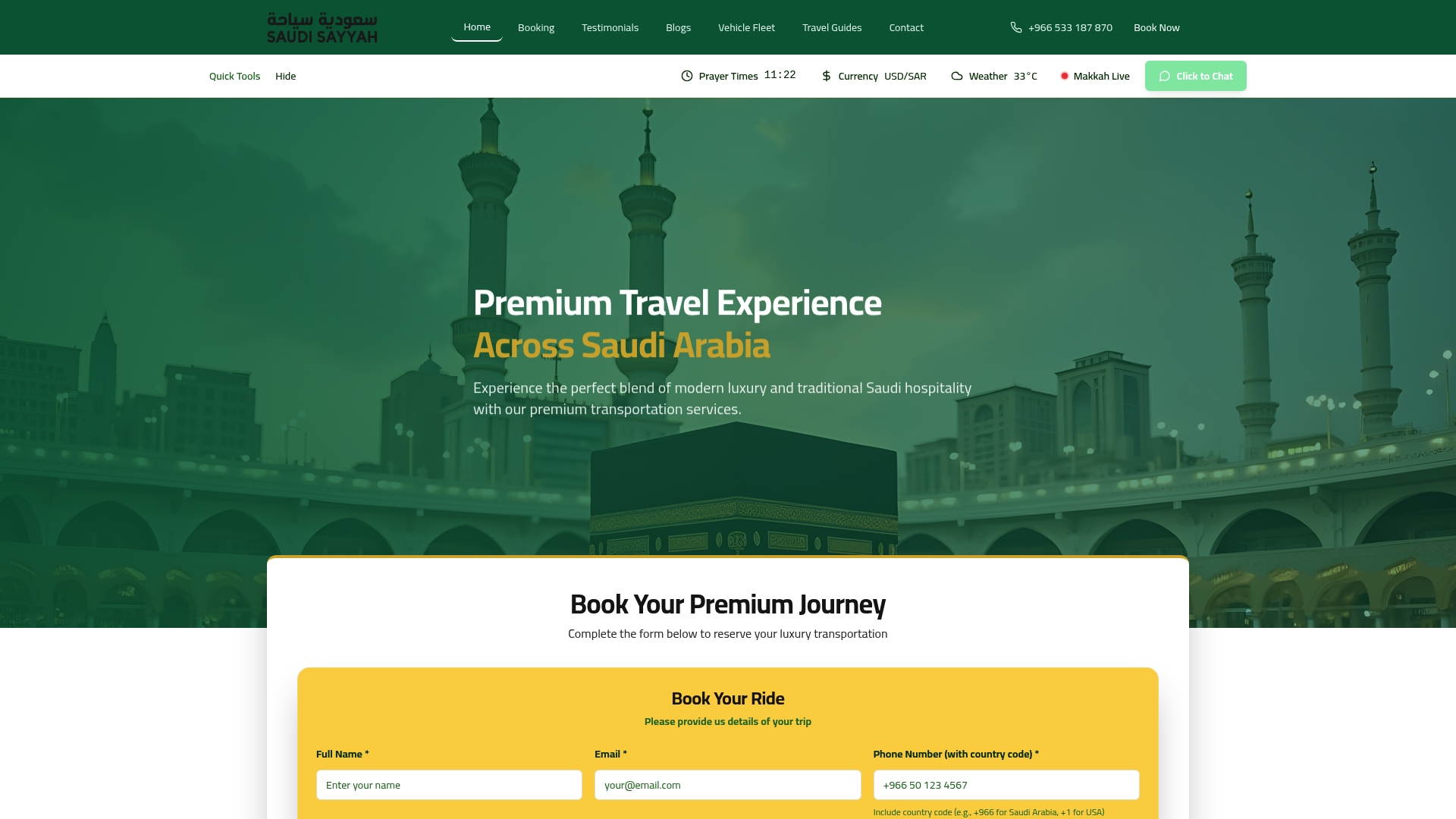
Saudisayyah builds technology directly into every stage of your ground transportation experience in Saudi Arabia. The platform sends driver photos, vehicle details, and live tracking before each pickup so you know exactly what to expect. The booking system is fully automated and internationally compliant, eliminating manual follow-ups and last-minute surprises.
For first-time visitors to Makkah and Madinah, that kind of reliability is not just convenient. It changes the quality of the entire trip. Browse the full range of car hire services or explore the vehicle fleet to find the right option for your travel group. You can also track your transport in real time through Makkah Live during your stay.
FAQ
What is the role of technology in travel today?
Technology now covers every stage of a trip, from AI-powered search and mobile booking to biometric airport check-in and real-time disruption management. It reduces friction at each logistics point while creating more personalized experiences for travelers.
How does AI improve travel planning?
AI analyzes past behavior and preferences to surface tailored recommendations, monitor price changes, and automate rebooking during disruptions. Travelers using AI tools take more trips and spend more on leisure travel annually than those who don't.
What are the main risks of relying on travel apps?
Single-app dependence creates vulnerability during outages, and AI tools can prioritize platform efficiency over your personal needs. Keeping offline backups of key documents and contacts addresses most of these risks directly.
How big is the travel technology market?
The global travel technology market is projected to reach USD 18.7 billion by 2034, expanding at a 5.75% annual rate driven by AI adoption and mobile payment growth.
How should digital nomads use travel tech effectively?
Use AI tools for research and option generation, but apply personal judgment before booking. Limit app permissions, maintain offline backups, and use geolocation-enabled ground transportation in unfamiliar cities to reduce risk.