
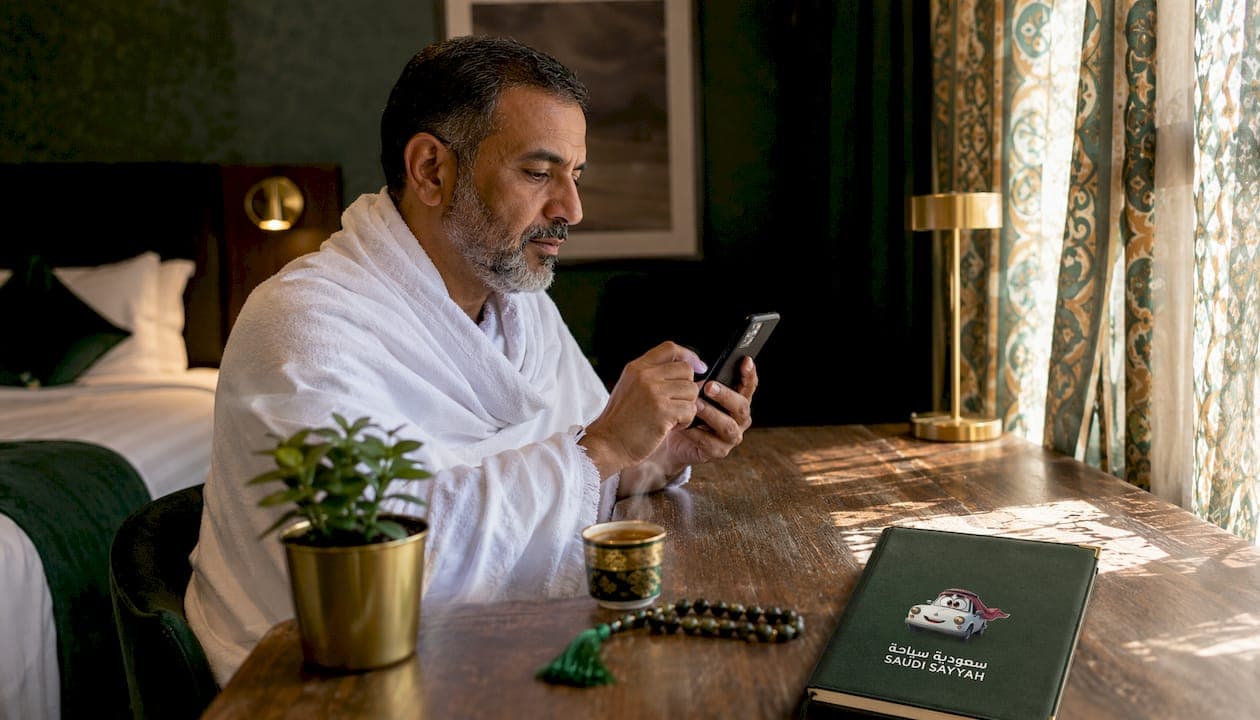
A digital concierge is an automated service platform that handles travel and transport requests around the clock, connected directly to live booking systems so it can act, not just answer. For pilgrims, three things matter most before trusting any provider: live reservation connectivity, omnichannel access via WhatsApp, SMS, or web chat, and verified driver and vehicle details before every trip.
Common services pilgrims use through a digital concierge:
- Transport booking and pickup scheduling
- Real-time driver ETA and vehicle confirmation
- Schedule updates and route change notifications
- Group logistics and staggered drop-offs
- Accommodation and check-in coordination
Table of Contents
- What does a digital concierge actually do for transport bookings?
- How a digital concierge differs from a basic chatbot
- Pilgrim use cases: pre-arrival through last-mile
- How the technology works: integrations, geolocation, and handoffs
- How to choose a digital-concierge provider for pilgrim transport
- Deployment timeline and pricing models
- Privacy, safety, and compliance for pilgrims
- How Saudisayyah applies these principles
- Key Takeaways
- A practical note before you book
- Useful sources
What does a digital concierge actually do for transport bookings?
A true digital concierge connects to live booking and reservation systems. That connection is what separates it from a basic FAQ bot. It can confirm a pickup, assign a driver, log a special request, and send a pre-trip confirmation, all without a human agent touching the request.
Core capabilities that matter for pilgrimage transport:
- Live booking connectivity: Reads and writes to the reservation system in real time, so confirmations are accurate, not templated guesses.
- Omnichannel access: WhatsApp, SMS, and web chat are standard channels. No app download required.
- Personalization: Language preference, group size, accessibility needs, and repeat-traveler history are stored and applied automatically.
- Automation: Recurring pickups, driver assignment, and pre-trip confirmation messages run without manual input.
- Human handoff: When a request exceeds the system's scope, a human agent is alerted immediately with full context.
- Uptime and SLA: Reliable providers publish uptime commitments and message-delivery guarantees, especially for peak pilgrimage seasons.
Pro Tip: Ask any provider to show you a live test: submit a booking request through WhatsApp and verify that a confirmation with driver name and vehicle details comes back within two minutes. If it cannot pass that test, the integration is not live.
How a digital concierge differs from a basic chatbot
Most chatbots answer questions from a fixed script. A digital concierge integrates with backend booking systems to trigger real-world actions. That distinction changes everything for a pilgrim who needs a confirmed ride, not a list of phone numbers.
Three structural differences:
- Live integrations: A chatbot reads a knowledge base. A digital concierge reads your actual reservation and can modify it.
- Data-aware responses: Answers are personalized to your booking, your language, and your history, not generic.
- Hospitality-trained workflows: Escalation paths, upsell logic, and service recovery flows are built in from the start.
A practical example: a pilgrim messages asking to add a second vehicle for a group of 12. A basic chatbot returns the fleet page URL. A digital concierge checks availability, quotes the fare, and books the second vehicle in the same conversation.
A digital concierge must integrate with backend booking or reservation systems to trigger real-world actions such as adjusting reservation status or processing payments. Without that integration, it behaves like a static, rule-based chatbot — and frustrates users at the moments that matter most.
| Capability | Basic chatbot | Digital concierge |
|---|---|---|
| Answers FAQs | Yes | Yes |
| Reads live reservation data | No | Yes |
| Books or modifies a trip | No | Yes |
| Sends driver photo and vehicle details | No | Yes |
| Escalates to a human agent with context | Rarely | Yes |
| Supports WhatsApp and SMS natively | Rarely | Yes |
| Handles peak-volume spikes without degradation | No | Yes |
Pilgrim use cases: pre-arrival through last-mile
Digital concierge services cover the full arc of a pilgrimage trip, from the moment a booking is confirmed to the final drop-off.
Pre-arrival
- Pilgrim submits pickup location, arrival time, and group size via WhatsApp.
- System confirms vehicle type, driver name, and license plate automatically.
- Special requests (wheelchair access, child seat, extra luggage) are logged and assigned.
On-route management
- Driver departs. Pilgrim receives a live tracking link and ETA update.
- Route changes due to traffic or road closures trigger an automatic notification.
- Multilingual driver instructions are sent to the driver's device without dispatcher involvement.
Last-mile and group logistics
- Large groups are split across multiple vehicles with staggered departure times confirmed per sub-group.
- Each group leader receives a separate confirmation with their specific vehicle and driver.
- Delays at a holy site trigger an automatic hold notification to the driver, preventing unnecessary waiting charges.
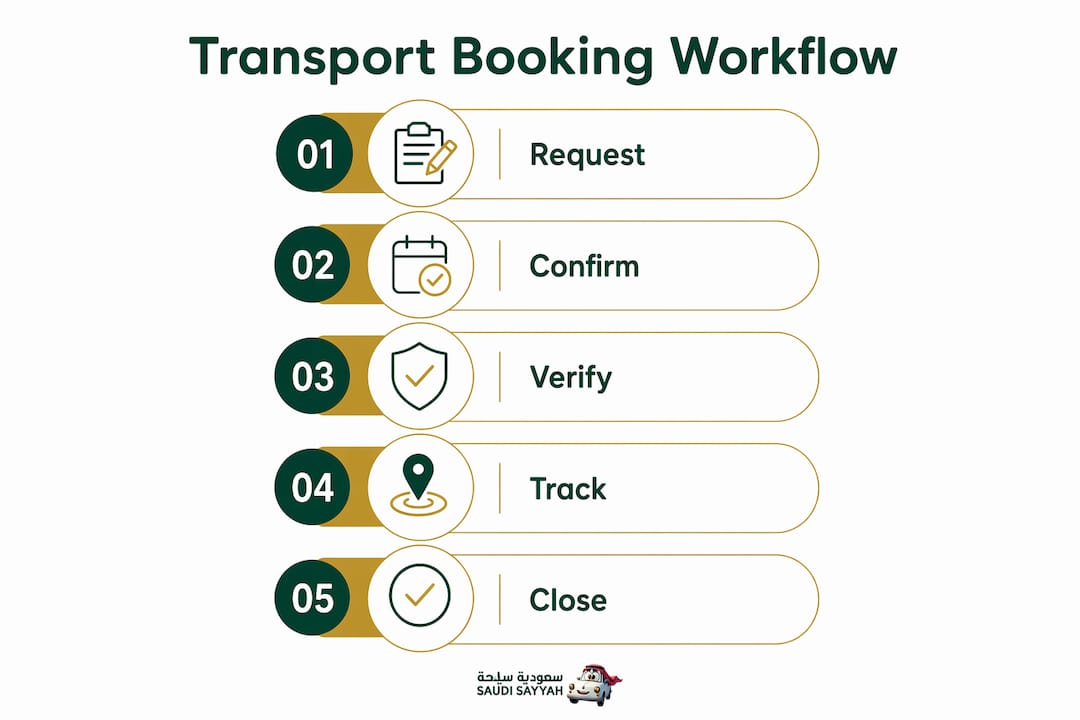
The pilgrimage taxi booking workflow follows a clear sequence: request, confirm, verify, track, and close. A digital concierge automates every step except the ride itself.
How the technology works: integrations, geolocation, and handoffs
The operational backbone of a digital concierge involves four connected systems.

| System | Function | Pilgrim-facing output |
|---|---|---|
| Booking management / reservation API | Reads and writes trip data in real time | Accurate confirmations, no double-bookings |
| Payment gateway | Processes fares securely, supports multiple currencies | Receipt on completion, no cash handling required |
| Fleet management and telematics | Tracks vehicle location, assigns drivers | Live tracking link, ETA updates |
| Messaging layer (WhatsApp/SMS/web) | Delivers all communications to the pilgrim's preferred channel | No app download needed |
Key operational details:
- Driver verification: A photo of the assigned driver and the vehicle's make, model, and plate number are sent before departure.
- Geolocation: Real-time GPS data feeds ETA calculations and triggers automated status messages at defined waypoints.
- Escalation logic: If a pilgrim sends a message the system cannot resolve, a human agent receives the full conversation thread and responds within a defined SLA window.
- Peak-load handling: Properly architected concierges handle demand spikes during Hajj and Umrah seasons without additional staffing or service degradation.
Cloud-based booking systems underpin this architecture, providing the uptime and redundancy that pilgrimage-season volumes demand.
How to choose a digital-concierge provider for pilgrim transport
Must-have checklist:
- Live connection to the booking or reservation system (not a manual sync)
- WhatsApp and SMS support without requiring an app download
- Pre-trip driver photo and vehicle details sent automatically
- Encrypted payment processing with receipt delivery
- Published SLA for message delivery and uptime
- Clear human-handoff path for complex or urgent requests
Questions to ask vendors:
- Can you show a live demo where a WhatsApp message triggers a confirmed booking?
- What is your uptime commitment during peak pilgrimage seasons?
- How is driver identity verified before each trip?
- Where is passenger data stored, and how long is it retained?
- What languages does the system support for both pilgrims and drivers?
- What happens if the system goes down mid-trip?
Red flags:
- Payment flow is opaque or requires cash on arrival with no digital receipt
- System requires a proprietary app download before any service is accessible
- No driver photo or vehicle verification before pickup
- No documented escalation path to a human agent
- Vendor cannot provide uptime history or SLA documentation
Partner directories in the transport sector often publish integration and channel-support details that make vendor comparison faster.
Deployment timeline and pricing models
Implementation time varies by integration complexity. A transport-focused deployment typically follows this schedule:
| Phase | Duration | Key activity |
|---|---|---|
| Pilot and scoping | 1–2 weeks | Define booking flows, channel requirements, language needs |
| System integration | 2–4 weeks | Connect booking API, payment gateway, fleet telematics |
| Content and training | 1–2 weeks | Load FAQ content, configure escalation rules, test edge cases |
| Go-live and monitoring | Ongoing | Monitor SLA, refine routing logic, handle exception cases |
Common pricing models:
- Subscription: Fixed monthly fee covering a defined message or booking volume.
- Per-booking: Fee charged per completed reservation; scales directly with usage.
- Per-message: Charged per outbound message; cost-effective for low-volume deployments.
- Hybrid: Base subscription plus per-booking or per-message overage for peak seasons.
Variable cost drivers include the number of supported languages, the complexity of fleet integrations, and whether the provider supplies pre-built hospitality FAQ libraries that reduce setup time.
Privacy, safety, and compliance for pilgrims
Data protection essentials:
- Minimal data retention: passenger name, contact, and trip details should be deleted after a defined period.
- Encrypted payment processing compliant with PCI DSS standards.
- Driver ID photos and vehicle data stored securely, accessible only to the assigned pilgrim.
- No third-party data sharing without explicit consent.
Safety controls to verify:
| Control | What to check |
|---|---|
| Pre-trip driver photo | Sent automatically before departure, not on request |
| Vehicle details | Make, model, color, and plate number confirmed in advance |
| Real-time tracking | Live GPS link active from driver departure to drop-off |
| Incident escalation | Direct path to a human agent or emergency contact |
| Operating licenses | Provider holds local transport and data-handling licenses |
Request written confirmation of SLA, uptime history, payment compliance certification, and local operating licenses before committing to any provider.
How Saudisayyah applies these principles
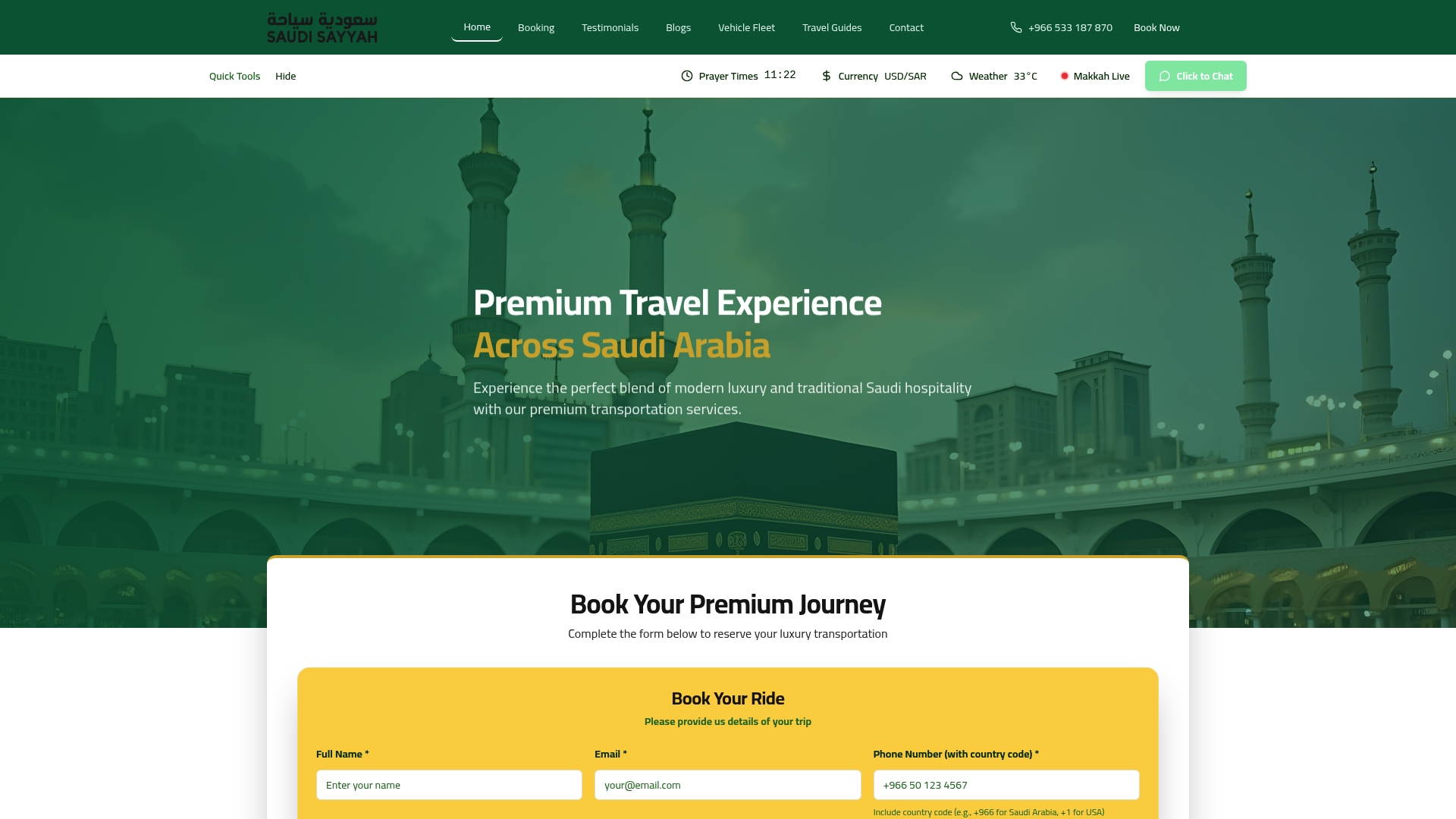
Saudisayyah operates a fully automated, internationally compliant booking system built specifically for Umrah and Hajj transport. The platform connects to live reservation data, assigns drivers automatically, and sends a driver photo, vehicle make, model, and plate number to every pilgrim before departure.
Key trust signals pilgrims can verify directly:
- Fleet details: current-model-year vehicles with documented features, available for review before booking.
- Service overview: full booking flow, driver verification steps, and pre-trip communication sequence.
- Geolocation-enabled tracking: live GPS link delivered automatically, not on request.
- Multilingual support: communications adapt to the pilgrim's preferred language.
- Human handoff: complex requests escalate to experienced staff with full conversation context.
Pro Tip: Before confirming any pilgrimage transport booking, request the driver photo and live tracking link in writing. A provider that cannot commit to delivering both at least 30 minutes before pickup has not fully automated its verification workflow.
Key Takeaways
A digital concierge is only as reliable as its live booking integration. Pilgrims should verify connectivity, driver verification, and omnichannel access before trusting any provider.
| Point | Details |
|---|---|
| Live integration is non-negotiable | A concierge without booking-system access cannot confirm, modify, or track a real trip. |
| Omnichannel access matters | WhatsApp and SMS support removes the barrier of app downloads for first-time pilgrims. |
| Driver verification is a safety baseline | Receive a driver photo and vehicle details before every departure, automatically. |
| Human handoff must be documented | Confirm the escalation path and response SLA before peak-season travel. |
| Pricing scales with complexity | Per-booking and hybrid models suit variable pilgrimage volumes better than flat subscriptions. |
A practical note before you book
The gap between a chatbot and a true digital concierge is not a marketing distinction. It is the difference between a system that can actually confirm your ride and one that sends you a link to call a number. For a first-time pilgrim managing group logistics in an unfamiliar city, that gap is significant.
Before any booking, check three things: does the system connect to live reservation data, does it send driver verification automatically, and does it work on WhatsApp or SMS without an app. If a provider cannot demonstrate all three in a live test, the automation is incomplete.
Saudisayyah's pilgrimage transport services are built to pass that test. Driver photos, vehicle details, and live tracking are delivered automatically before every trip.
Useful sources
- AltexSoft: What is a digital concierge? — Broad definition covering platform types, AI capabilities, and traveler-facing features.
- eesel AI: Digital hotel concierge explained — Covers live-data connectivity, peak-load handling, and pre-built FAQ libraries.
- eHotelier: Digital concierge at scale — Explains labor reallocation, omnichannel access, and web-based (no-download) deployment.
- WithQ: Omnichannel concierge services — Focuses on WhatsApp and SMS adoption and why forced app downloads reduce uptake.
- Decagon: How digital concierge improves operations — Explains the integration requirement that separates action-capable systems from static chatbots.
- Mappedin: What is a digital concierge? — Addresses wayfinding and complex-site navigation as an often-overlooked capability.
- Triparound: Digital concierge and supplier coordination — Covers automated supplier bookings, taxi fleet coordination, and confirmation workflows.
- SiteMinder: Digital concierge beginners' guide — Practical overview of 24/7 availability, device flexibility, and staff workload reduction.