

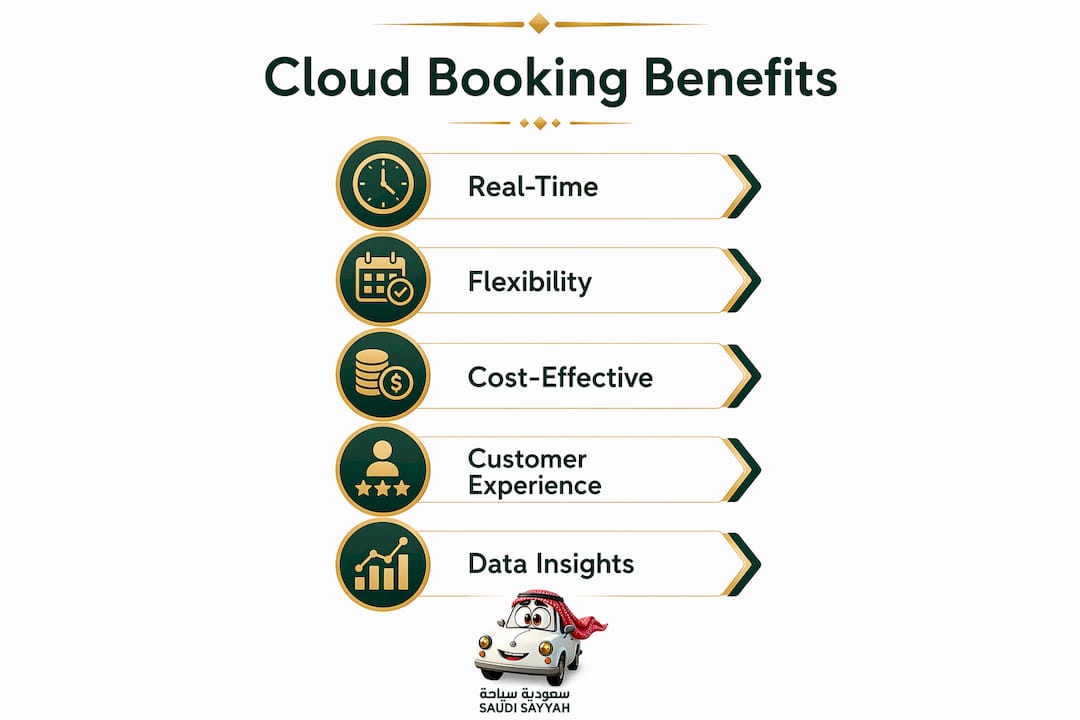
Cloud-based booking systems outperform traditional on-premise setups on every operational metric that matters to a business decision-maker: cost, speed, flexibility, and data access. The core case is straightforward. Organizations that switch to cloud booking reduce infrastructure overhead, eliminate manual scheduling errors, and give customers the 24/7 self-service access they now expect as standard.
Key operational benefits at a glance:
- Real-time inventory sync across all channels, preventing double bookings
- Automated reminders cut no-shows significantly
- Staff save substantial time monthly by eliminating manual scheduling tasks
- Remote access from any device, supporting lean and multi-site operations
- Subscription pricing replaces large upfront capital expenditure
- Centralized data enables real-time analytics and smarter pricing decisions
- Built-in encryption, automated backups, and compliance with standards like GDPR and ISO 27001
Why use cloud-based booking for real-time updates and efficiency
The most immediate operational gain from cloud booking is live synchronization. When a reservation is confirmed on any channel, inventory updates instantly everywhere, with no delay and no manual step required. On-premise systems typically push availability updates every 15–30 minutes, and that gap is enough for two channels to sell the same slot simultaneously.
For a hotel with medium-size capacity, avoiding even occasional overbooking justifies the switch economically. Cloud property management systems also automate guest confirmations, housekeeping status updates, and rate changes across every connected platform from a single dashboard.
Pro Tip: Set automated reminders at both 24 hours and 2 hours before a booking. That two-touch sequence is what drives the no-show reduction most businesses report.
Efficiency gains extend beyond the front desk:
- Rate changes push to all connected platforms simultaneously, eliminating pricing mismatches
- Housekeeping teams receive live room status updates without manual communication
- Staff reclaim several hours of daily admin time through automated check-in workflows and channel sync
- Cancellations free up slots instantly, allowing the system to rebook without human intervention
How cloud access gives your staff and managers more flexibility
Cloud booking runs in a browser. There is no server to maintain, no terminal to be physically present at, and no location restriction on who can access what. A manager can approve a cancellation from a phone, check occupancy from home, or update rates during a flight layover.

For multi-site operations, this changes the staffing equation entirely. A single manager can monitor all properties from one account without traveling between locations. If a front desk agent calls in sick, another team member can log in remotely and handle check-ins without a coverage crisis. The role of automation in travel has made this kind of distributed access a baseline expectation, not a premium feature.
Practical flexibility benefits:
- Access from laptops, tablets, and phones with no additional software installation
- Multi-property dashboards consolidate reservations, rates, and occupancy in one view
- Remote work capability supports business continuity during staff shortages or disruptions
- Cellular failover networks allow advanced operators to maintain access even during primary internet outages
Cloud booking costs less and scales with your business
On-premise systems carry two cost burdens: the upfront capital expense for servers and licenses, and the ongoing cost of IT staff to maintain them. Cloud booking converts both into a predictable monthly subscription. Cloud-first travel businesses cut infrastructure costs by up to 30% compared to on-premise setups by shifting to scalable pay-as-you-go models on platforms like AWS (Amazon Web Services).
30% infrastructure cost reduction reported by cloud-first travel businesses switching from on-premise to pay-as-you-go cloud models.
Subscription pricing also scales proportionally. A 15-room property pays less than a 50-room property on the same platform, with no need to renegotiate a license or buy an enterprise tier. Seasonal businesses can reduce subscription costs during low-occupancy periods, directly improving cash flow. Software updates, security patches, and compliance certifications are handled automatically by the vendor, removing IT maintenance from the organization's cost base entirely.
How cloud booking improves the customer experience
A large majority of customers prefer booking online, and among millennials the preference for an instant digital confirmation over a phone call is near-universal. Cloud booking delivers that experience: customers see live availability, select their slot, and receive confirmation within seconds, at any hour.

Businesses that capture after-hours bookings gain a direct revenue advantage. Approximately 75% of all bookings now happen online, meaning organizations without a cloud booking option are invisible to a large share of potential customers during off-hours. For transportation and logistics providers, the impact is equally direct. Saudisayyah's geolocation-enabled platform sends driver photos, vehicle details, and real-time tracking before every trip, giving travelers the confirmation and transparency that modern customers expect from a mobile booking experience.
Customer experience advantages include:
- 24/7 booking availability captures demand outside business hours
- Instant confirmation reduces booking abandonment
- Automated pre-arrival messages and payment integration reduce friction
- Self-service access gives customers control over scheduling without phone queues
- Integrated upsell prompts at checkout increase average booking value without staff involvement
How centralized data makes smarter decisions possible
On-premise systems create data silos. Reservations, pricing, customer history, and operational metrics live in separate databases that rarely talk to each other, making integrated analysis difficult. Cloud platforms consolidate all of those streams into one unified database, giving managers a live view of occupancy, booking pace, revenue per available room, and customer behavior simultaneously.
Real-time dashboards replace end-of-day summaries. A revenue manager can spot a demand spike and adjust pricing within minutes rather than reacting the next morning. CRM integration means customer preferences and booking history are available at every touchpoint, supporting personalized service without manual record-keeping. For organizations managing large volumes of bookings, the role of data in travel planning has shifted from a reporting function to a live operational tool.
Data centralization capabilities:
- Unified inventory, pricing, and customer history in one platform
- Real-time occupancy and booking trend reporting
- Integration with CRM, payment gateways, and revenue management tools
- Predictive analytics for demand forecasting and dynamic pricing
Security and compliance built into cloud booking systems
Security is often cited as a concern about cloud adoption. The reality is that cloud providers invest in security infrastructure at a scale no individual organization can match independently. Enterprise-grade encryption in transit and at rest, multi-factor authentication, automated daily backups, and geographic data redundancy are standard features, not add-ons.
Automatic background updates deliver continuous security improvements without scheduled downtime or manual installation. Compliance with GDPR, ISO 27001, and PCI DSS is maintained by the vendor across all customers simultaneously. For organizations handling sensitive customer data, including passport details and payment information, that vendor-managed compliance model removes a significant operational burden. Disaster recovery is built in: geographically redundant data centers mean a hardware failure at one location does not take the system offline.
Security features to verify in any cloud booking platform:
- End-to-end encryption for all data in transit and at rest
- Automated backups with geographic redundancy
- Role-based user access controls and audit logs
- Compliance certifications: GDPR, ISO 27001, PCI DSS
- Vendor-managed incident response and security patching
Which industries benefit most from cloud-based booking systems
Cloud booking software applies across any sector where scheduling, capacity management, and customer confirmation are core operations.
Hospitality and hotels were among the earliest adopters. Cloud property management systems like those used by independent hotels and chains handle OTA synchronization, direct booking engines, and housekeeping coordination from a single platform. The 2–4 hours of daily front desk time recovered through automation is a concrete, measurable gain for lean operations.
Transportation and logistics providers benefit from the integration layer. Cloud booking triggers downstream automation: driver assignments, passenger notifications, and route updates flow automatically from a confirmed reservation without manual intervention. Saudisayyah's platform applies this model directly to pilgrim transport, with real-time tracking and automated communications built into every booking. Event planners coordinating group transport can see similar gains; conference shuttle services that run on cloud platforms handle multi-leg logistics with far less manual coordination than phone-based systems require.
Tour operators and activity businesses use cloud booking to sell 24/7, manage capacity across multiple tour types, and collect prepayments that reduce no-show rates. Businesses in this category report notable year-over-year growth after adopting online booking systems.
Healthcare and wellness practices use cloud scheduling to manage appointment density, send automated reminders, and integrate with patient records, reducing the administrative load on front-office staff.
Corporate travel management teams rely on cloud platforms for real-time spend reporting, policy compliance tracking, and instant booking confirmation across global markets. The ability to pull detailed spend reports without waiting for end-of-period reconciliation is a direct client retention advantage in that segment.
Retail and service businesses of any size gain the same core benefits: 24/7 availability, automated reminders, and payment integration, without the IT overhead that once made those capabilities accessible only to large enterprises. Small businesses using automated online booking save about 15 hours monthly and see measurable reductions in missed appointments.
Saudisayyah's fully automated booking platform puts these advantages to work for pilgrim transport across Saudi Arabia. Real-time tracking, driver verification, and automated communications are standard on every booking.
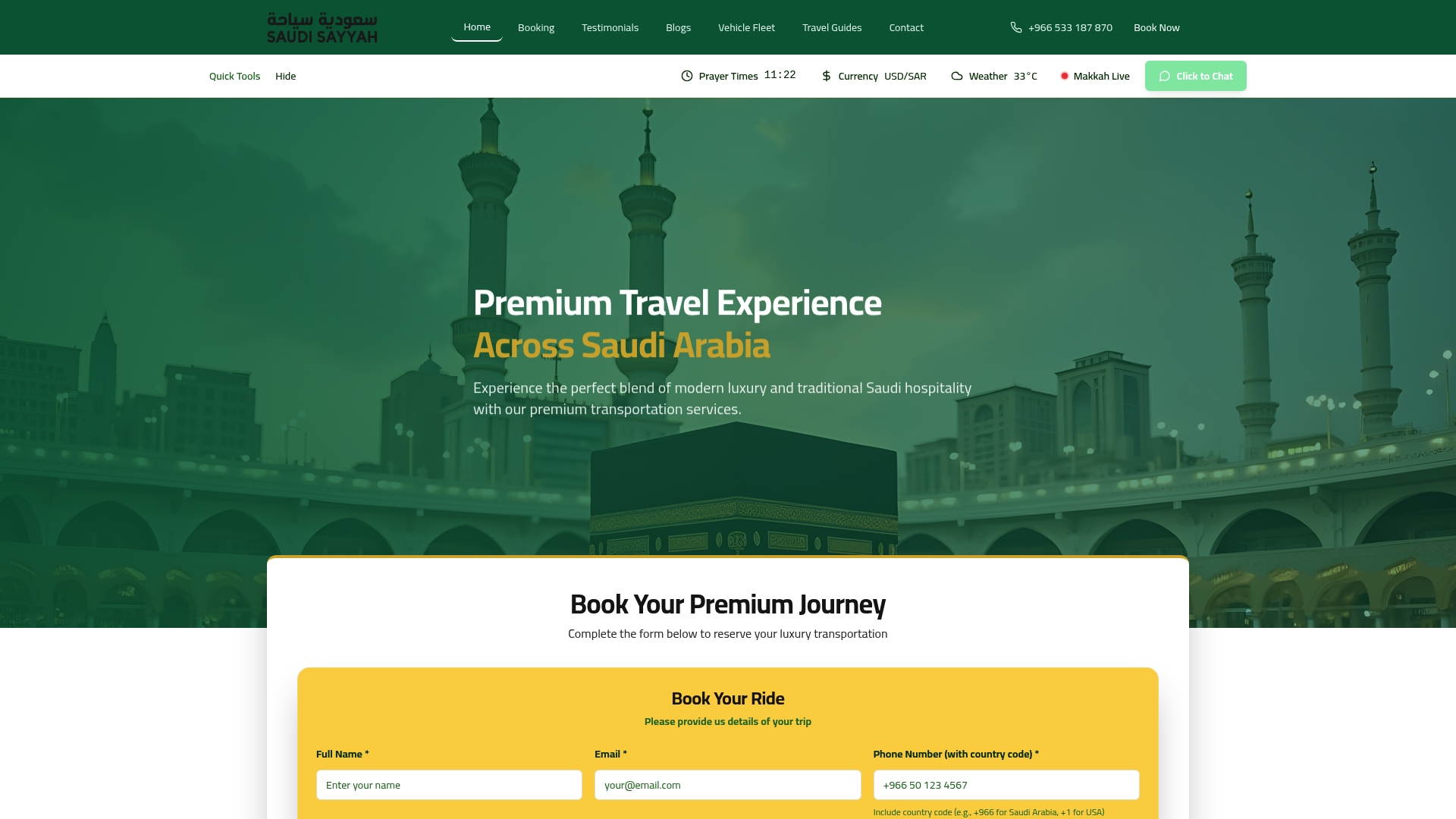
Explore Saudisayyah's transport services or review the available fleet to see how cloud-based booking operates in practice.
Key Takeaways
Cloud-based booking systems reduce costs, prevent errors, and give customers the 24/7 access they expect, making them the operationally superior choice over on-premise alternatives.
| Point | Details |
|---|---|
| Real-time sync prevents errors | Cloud systems update inventory instantly across all channels, eliminating overbookings and rate mismatches. |
| Measurable time savings | Automated scheduling saves staff about 15 hours monthly and recovers 2–4 hours of daily front desk time. |
| Lower infrastructure costs | Cloud-first travel businesses cut infrastructure costs by up to 30% versus on-premise setups. |
| Customer preference is clear | 90% of customers prefer online booking, and approximately 75% of all bookings now happen online. |
| Security is vendor-managed | Encryption, automated backups, and compliance with GDPR and ISO 27001 are maintained by the cloud provider. |