
TL;DR:
- Saudi regulations now enforce stricter service standards and penalties for providers, improving pilgrim protections.
- Effective communication, digital tools, and peer reviews are essential for navigating emergencies and service quality.
- Tailoring services to group needs and leveraging community input enhance the overall pilgrimage experience.
Navigating service providers, language barriers, and logistical hiccups is one of the least-discussed aspects of pilgrimage, yet it shapes the entire experience. Satisfaction rates exceeded 90% for foreign pilgrims in 2025, which sounds impressive until you consider that millions still encountered avoidable problems. Knowing what rights you hold, how to communicate in high-pressure moments, and which digital tools to use can be the difference between a journey defined by peace and one derailed by friction. This article gives you proven, actionable steps to make that difference.
Table of Contents
- Know your rights: The new service standards for pilgrims
- Communicate effectively: Overcoming language barriers and emergencies
- Embrace digital and peer-driven service solutions
- Tailor service expectations to your group's needs
- Why regulatory compliance alone doesn't guarantee a stress-free pilgrimage
- Simplify your sacred journey with trusted local partners
- Frequently asked questions
Key Takeaways
| Point | Details |
|---|---|
| Understand your rights | New regulations and enforcement empower pilgrims to expect fairness and responsive support from all providers. |
| Be prepared for emergencies | Keep crucial contacts, translation tools, and medical info accessible to handle any situation with confidence. |
| Use digital platforms | Leverage digital chat, verified reviews, and refund policies for real-time support and trusted service choices. |
| Tailor services to your needs | Request language, accessibility, or family-specific assistance early for the highest satisfaction. |
| Blend regulation and personal advocacy | Combine knowledge of official rules with peer-driven tips for the smoothest, most stress-free pilgrimage. |
Know your rights: The new service standards for pilgrims
Saudi Arabia has moved decisively to strengthen pilgrim protections. Under updated regulations, hospitality providers face stricter penalties and must conduct rigorous staff training to raise service levels across accommodations, catering, and transport. This is not symbolic. Authorities carry out regular inspections, and providers who fall short face fines, suspension, or removal from approved lists.
What does that mean for pilgrims on the ground? It means you have real recourse. Overbooking, uncleanliness, poor communication, and untrained staff are not just frustrating experiences anymore. They are regulatory violations. Providers know this. When you raise a concern formally, it carries weight.
Key rights and protections now in place:
- Accommodation must meet defined cleanliness and capacity standards
- Catering providers must follow food safety rules and serve appropriately sized meals
- Transport operators must use roadworthy, properly insured vehicles
- Staff must receive documented customer service and safety training
- Providers must maintain accessible complaint channels for pilgrims
One area where Saudi Arabia differs from many other countries is enforcement. Regulations exist in many pilgrimage destinations, but follow-through is inconsistent. Here, the consequences for providers are real and documented. Reliable Umrah transport is not a luxury under these rules. It is a baseline expectation.
Think of these standards the way you think about logistics customer loyalty. When providers know they will be held accountable, they work harder to get it right the first time. The 2025 satisfaction data reflects exactly that dynamic, with over 19.5 million pilgrims rating services positively at unprecedented levels.
Pro Tip: At check-in for any service, ask the provider directly whether they are registered with the Ministry of Hajj and Umrah and what their complaints process is. Any reputable provider will answer this without hesitation.
Communicate effectively: Overcoming language barriers and emergencies
Knowing your rights is just the start. Navigating on-the-ground realities means communicating well, especially in high-pressure situations. The numbers here are sobering. 23% of pilgrims face medical issues, and clear procedures improve emergency response time by 67%. That gap between a slow response and a fast one often comes down to how clearly a pilgrim or companion can communicate.
Step-by-step emergency protocol:
- Call 997 immediately for medical emergencies anywhere in Saudi Arabia
- Stay on the line and follow operator instructions even if you don't speak Arabic
- Contact your tour operator or group leader within minutes of the emergency
- Have a brief written Arabic summary of any medical conditions ready to hand to staff
- Ask hospital staff specifically for an English-speaking contact or official interpreter
- Document all care received, including doctor names, dates, and medications given
- Notify your travel insurance provider as soon as the situation stabilizes
For non-emergency communication, preparation matters just as much. Translation apps like Google Translate with offline Arabic packs work without data. WhatsApp voice messages let you play recordings from staff directly to another Arabic speaker. Many hotels near the Haram in Makkah and Madinah employ multilingual concierge staff specifically for pilgrims. Ask for them at the front desk.
"Having medical summaries prepared in Arabic before arrival, along with emergency contact numbers saved in your phone, can reduce response delays significantly in crisis situations."
Crowd and heat-related stress is another communication challenge. At peak times, the areas around the Masjid al-Haram are extremely dense. If you become separated from your group, move to a marked assistance point operated by the General Directorate of Passports or Civil Defense. These are clearly signed throughout the Haram complex. Do not try to navigate back against crowd flow alone.
For pilgrims focused on safe travel for Umrah, having a physical laminated card with your name, nationality, hotel name, and tour operator number is a practical backup when phones run out of battery or lose signal in crowded areas. Combine this with pilgrim travel hacks that optimize your schedule and reduce the time you spend in peak-density zones.
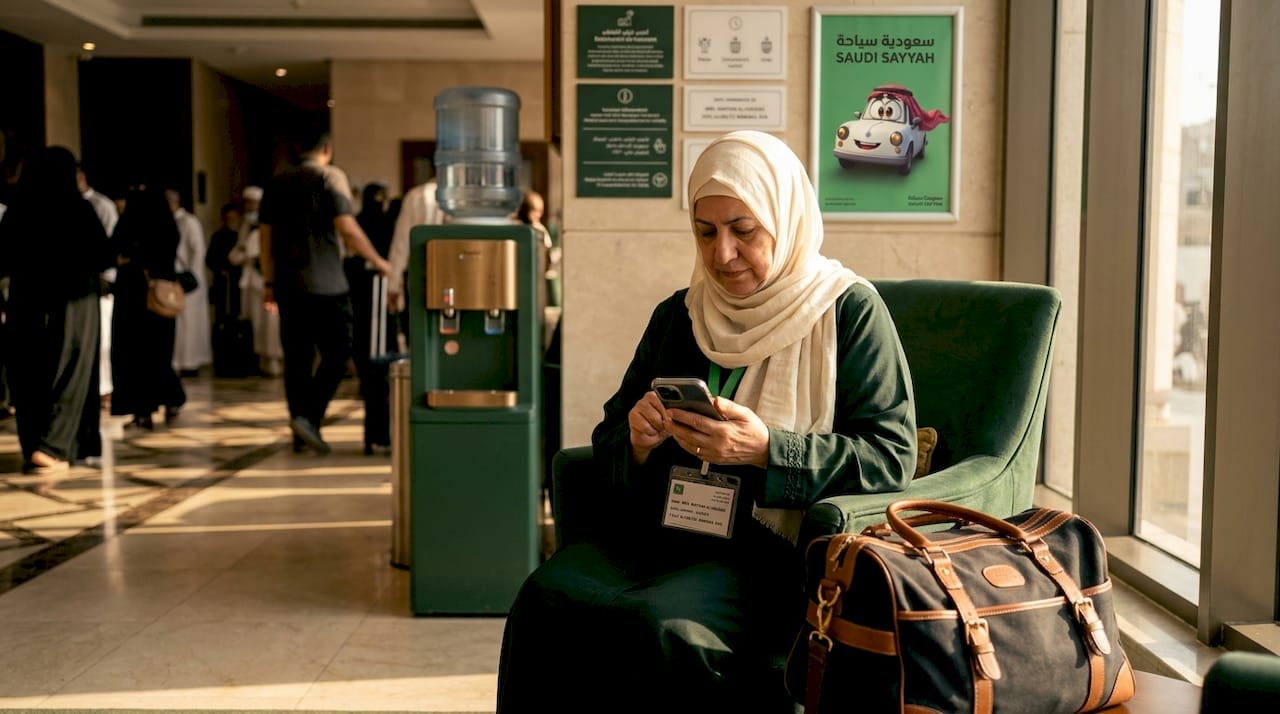
Pro Tip: Download offline maps of Makkah and Madinah before you arrive. Signal is often unreliable in high-density zones, and offline maps work without data. Mark your hotel, nearest medical center, and group meeting points before you leave for the Haram.
Embrace digital and peer-driven service solutions
With communication covered, the next step is harnessing technology and digital resources for confidence and control. Digital tools have fundamentally changed how pilgrims evaluate, book, and escalate services. Platforms that once required physical paperwork or in-person visits are now accessible from a phone in seconds.
WhatsApp, transparent refunds, and live consultations all drive trust and loyalty among modern pilgrims. These are not optional extras. They are now baseline expectations for any credible provider. If a provider cannot answer a WhatsApp message within a reasonable timeframe or cannot clearly explain their refund policy in writing, that tells you something important.
Digital channels that support pilgrims:
- Nusuk platform: Official government portal for Hajj and Umrah permits, booking management, and complaint logging
- WhatsApp Business: Used by transport and accommodation providers for booking confirmations, real-time updates, and issue resolution
- Verified review sites: Google Maps ratings, TripAdvisor, and community forums like Muslim forums or Facebook groups specific to pilgrimage travel
- Ministry of Hajj app: Real-time alerts, crowd management information, and service directories
On the provider side, Nusuk enforces rules but also limits provider choice and affects service consistency. Understanding this dual role helps you use the platform wisely. It is the most reliable verification source for whether a provider is officially approved.
Digital features vs. traditional methods:
| Feature | Digital approach | Traditional approach |
|---|---|---|
| Booking confirmation | Instant PDF, WhatsApp receipt | Paper voucher, verbal confirmation |
| Real-time tracking | GPS-enabled driver tracking | Phone calls, waiting at pickup point |
| Complaint resolution | In-app reporting, timestamped | Verbal complaint, no paper trail |
| Refund handling | Online request, automated timeline | In-person negotiation, variable outcomes |
| Reviews and verification | Verified ratings, photo evidence | Word of mouth, unverified claims |
| Emergency contact | Saved digital profile, quick share | Manual card, easy to lose |
Peer reviews carry particular weight in pilgrimage contexts. When a fellow pilgrim from your country or community describes a specific transport provider or hotel, that experience is highly relevant. It accounts for cultural expectations, dietary needs, and language considerations that generic ratings may not capture.
Pro Tip: Look for reviews that mention your specific nationality or language in the comment. These give the most accurate picture of what your experience is likely to be. Generic five-star reviews with no detail are much less useful than a specific account from someone in a similar situation.
When choosing pilgrimage transport, prioritize providers who show driver photos, vehicle registration, and real-time GPS before every trip. For those who need booking accessible transport, digital platforms make it possible to specify accessibility requirements at the time of booking rather than hoping it gets communicated correctly through a chain of intermediaries. Multilingual service capabilities are now a standard differentiator among high-performing providers.
Tailor service expectations to your group's needs
Technology aside, the final touch is making sure your unique group needs are not lost in the crowd. Saudi Arabia hosts pilgrims from nearly every country on earth. The services that work well for a solo traveler from Malaysia may not fit a family of six from Nigeria or an elderly couple from Turkey. Satisfaction data confirms this. Overall satisfaction rates are high but differ by nationality, with Oman at 96% and Indonesia at 88%. That gap reflects the role of customized support.
Group needs and matching solutions:
| Group type | Key needs | Best provider solutions |
|---|---|---|
| Solo pilgrim | Safety, communication, flexibility | Digital-first providers, WhatsApp support, flexible bookings |
| Family with children | Space, meal options, child safety | Larger vehicles, family packages, hotel family rooms |
| Elderly pilgrims | Accessibility, medical proximity, slow-paced itineraries | Accessible vehicles, hotel proximity to Haram, interpreter support |
| Organized tour group | Coordination, group pricing, schedule alignment | Group transport contracts, dedicated guide, Nusuk group permits |
| First-time pilgrim | Orientation, language help, step-by-step guidance | Providers with orientation support, multilingual staff, 24/7 contact |
How to request the support you need:
- At booking, clearly state mobility requirements, medical conditions, or language preferences in writing
- Request an English-speaking or native-language driver or guide before confirming any contract
- Ask hotels specifically about accessible rooms and elevator proximity to prayer areas
- For families, confirm whether child meals and cots are included or additional
- For elderly pilgrims, ask about wheelchair transport and proximity to Haram entrances
- For organized groups, verify that your Nusuk permits cover all group members by name
Being proactive at the booking stage saves significant time and frustration later. Providers appreciate clear communication early. It allows them to prepare appropriately. If you only mention a mobility need on arrival day, the right vehicle or room may already be allocated elsewhere.
For elderly pilgrim transport, the right vehicle makes a direct difference to comfort and safety. Providers using latest model Umrah vehicles are better equipped to handle accessibility features like low steps, wide doors, and climate control suited to older passengers traveling in Makkah's heat.
Why regulatory compliance alone doesn't guarantee a stress-free pilgrimage
Here is an uncomfortable observation. Pilgrims who study the rules, know their rights, and choose registered providers still sometimes have poor experiences. Why? Because regulation sets a floor, not a ceiling. It prevents the worst outcomes. It does not create the best ones.
The most seamless pilgrimage accounts we consistently hear share a common thread. The pilgrims involved did not just know the rules. They combined that knowledge with active digital engagement, community input, and real-time adaptability. They had WhatsApp groups with fellow travelers sharing live crowd updates. They used peer-validated transport providers, not just Ministry-approved ones. They asked specific questions at every checkpoint rather than assuming everything was handled.
Groups who depend entirely on official systems often miss this layer of informal but highly effective support. A shared translation resource in a pilgrim WhatsApp group can resolve a language problem in 30 seconds. A community forum post from last week can tell you which hotel corridor is quieter, which transport pickup spot is less congested, and which catering provider actually delivers on time.
Regulatory compliance is necessary. But it works best as a foundation. The real value comes from layering peer intelligence and digital tools on top of that foundation. That is what separates a pilgrimage that goes smoothly from one that merely avoids disaster.
Group travel options are a good example of this principle in action. Officially, group transport must meet Ministry standards. In practice, the groups who report the best experiences also vetted their providers through community channels, confirmed vehicle specs in advance, and kept a live communication thread going throughout the journey.
Simplify your sacred journey with trusted local partners
Armed with the right service strategies, taking the next step with the right partners can help you focus on what matters most.
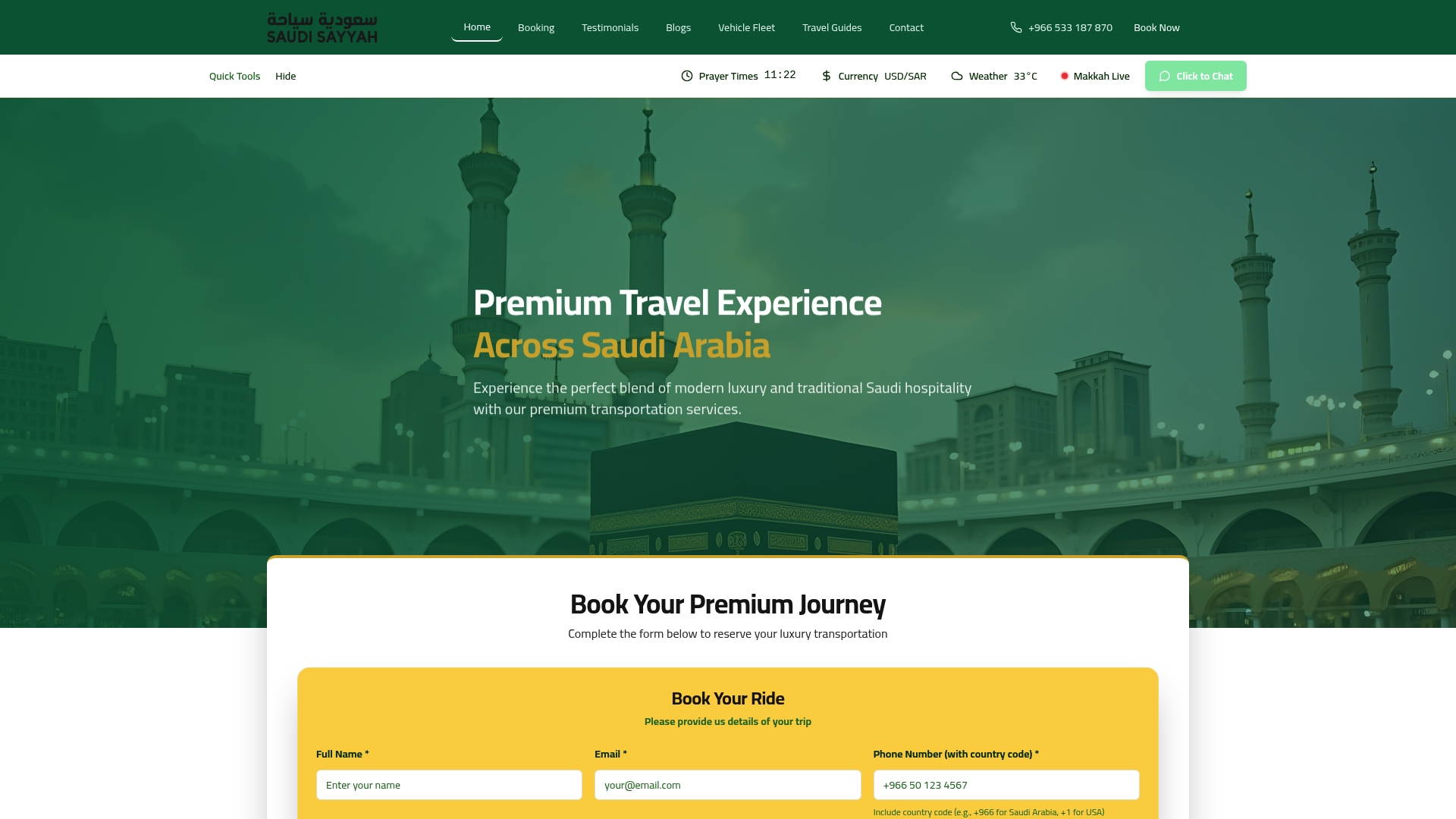
Saudi Sayyah provides technology-driven transport solutions built specifically for pilgrims. Real-time tracking, driver verification, and geolocation-enabled booking management are standard on every trip, not optional upgrades. Before your journey begins, you receive your driver's photo and vehicle details. No guessing. No waiting at the wrong location.
Explore car hire services designed for pilgrim travel at every stage. Browse the full range of Umrah transport options to find the right vehicle for your group size and accessibility needs. For pre-trip planning and real-time ground updates, Makkah live updates keeps you informed before and during your visit.
Frequently asked questions
What should I do if I encounter a service issue during Hajj or Umrah?
Notify your provider immediately, document the problem in writing, and escalate using official platforms like Nusuk if the issue remains unresolved. Providers are subject to mandatory training, regular inspections, and regulatory penalties for service violations, so formal complaints carry real weight.
How can I get help if I don't speak Arabic fluently?
Use offline translation apps and ask for English-speaking staff or interpreter services at your hotel or tour desk. Emergency response guidance recommends preparing Arabic medical summaries and digital translation tools in advance.
Is it safe to share feedback about service experiences?
Yes. Verified reviews and testimonials are encouraged and help maintain accountability across the sector. Digital testimonials and verified reviews boost service trust and improve outcomes for all pilgrims who come after you.
What is the emergency number in Saudi Arabia for pilgrims?
Call 997 for immediate emergency medical assistance during your pilgrimage. The emergency response hierarchy starts with 997, followed by your tour operator and travel insurance provider.
Can I choose my own service providers for accommodation and food?
Each Hajj mission is limited to a maximum of two approved providers contracted via the Nusuk platform. Maximum of two contracts per mission cover accommodation and catering, and all must be arranged through official Nusuk channels.