
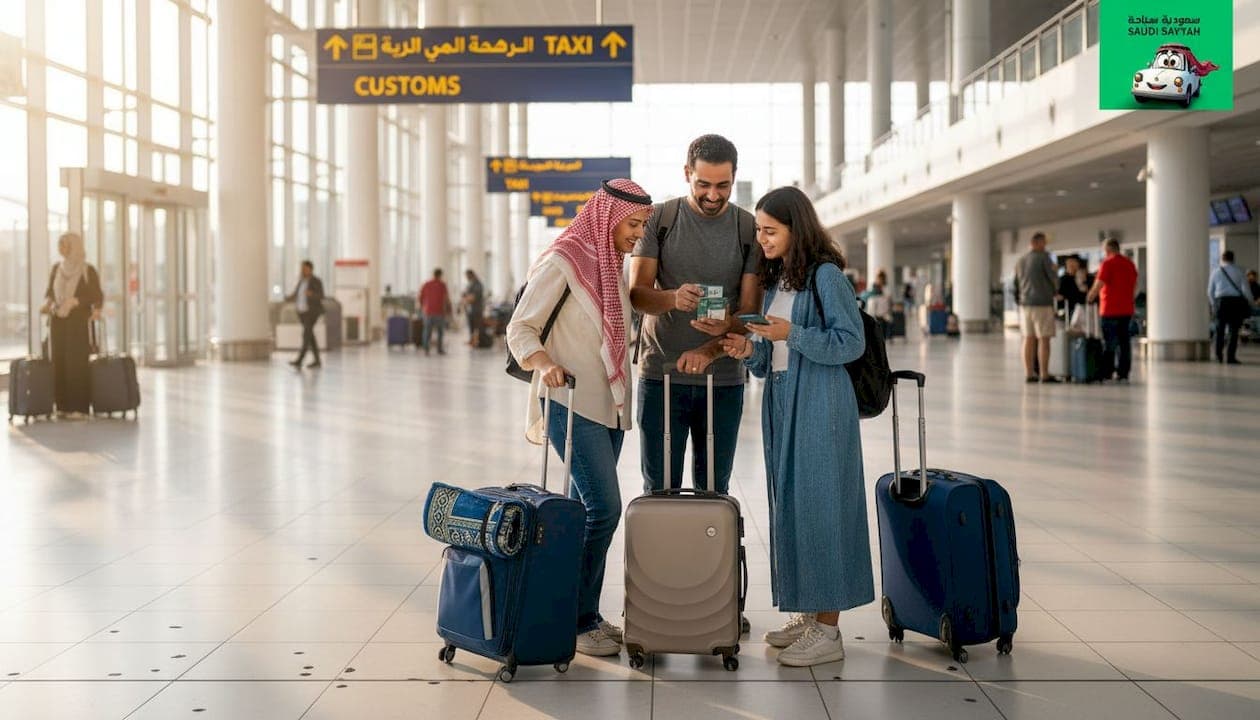
TL;DR:
- Saudi Arabia aims to host 150 million visitors and increase tourism's GDP contribution to over 10% by 2030.
- Digital platforms like Nusuk streamline visa, permit, and logistics processes for pilgrims.
- Women aged 18-65 can now travel independently for Umrah without a mahram.
Saudi Arabia is not just opening its doors to the world. It is rebuilding them entirely. Grounded in Vision 2030, the country's national tourism strategy targets 150 million visitors and over 10% GDP contribution from tourism by 2030. For first-time Umrah travelers, this shift is not abstract policy. It means faster visas, better infrastructure, digital booking tools, and a pilgrimage experience that is more organized than ever before. Understanding the strategy behind these changes helps you navigate them with confidence.
Table of Contents
- Saudi tourism strategy explained: Vision 2030 and beyond
- Hajj and Umrah: Pillars of Saudi tourism and current programs
- From e-visas to mega-projects: Innovations shaping the Saudi visitor experience
- What first-time Umrah travelers need to know for 2026
- Our take: The real story behind Saudi tourism's transformation
- How Saudi Sayyah supports your Umrah journey
- Frequently asked questions
Key Takeaways
| Point | Details |
|---|---|
| Vision 2030 goals | Saudi Arabia’s tourism overhaul aims for 150 million visitors and a seamless Umrah experience by 2030. |
| Digital platforms and e-visas | Traveling for Umrah now requires using the Nusuk platform for all bookings and permits starting 2026. |
| Major innovations | Upgrades like the Haramain railway, new hospitality projects, and e-services make pilgrimages smoother and safer. |
| First-timer guidance | Plan early, register on Nusuk, and arrange transport and health requirements to avoid common pitfalls. |
| Saudi Sayyah support | Professional services ease planning and transfers for a stress-free journey aligned with new tourism strategies. |
Saudi tourism strategy explained: Vision 2030 and beyond
Vision 2030 is Saudi Arabia's plan to reduce its dependence on oil by diversifying the economy. Tourism is one of the central pillars. The government set an ambitious target: 150 million annual visitors by 2030, with tourism accounting for more than 10% of GDP. Remarkably, the 100 million visitor milestone was reached ahead of schedule.
Three main bodies drive this forward. The Saudi Tourism Authority (STA) handles global marketing and brand positioning. The Tourism Development Fund (TDF) channels investment into hospitality infrastructure. And a series of mega-projects across the country are redefining what Saudi Arabia looks like as a destination.
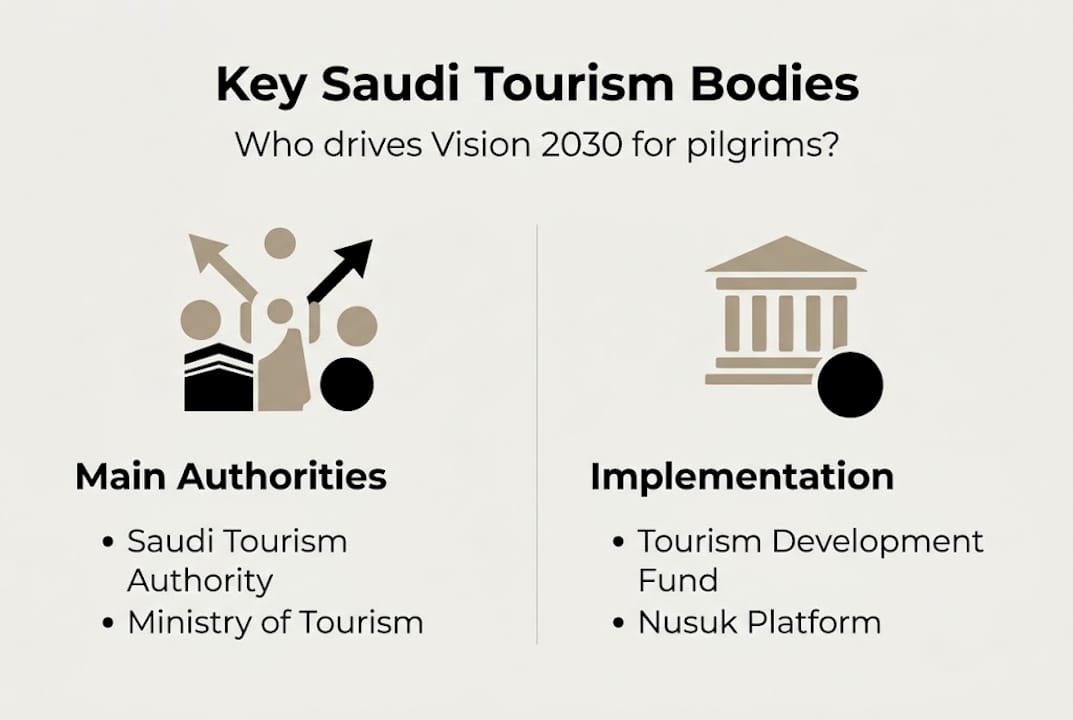
Key Vision 2030 tourism targets at a glance:
| Metric | Current status | 2030 target |
|---|---|---|
| Annual visitors | 100M+ (achieved early) | 150 million |
| Tourism GDP contribution | ~4% | Over 10% |
| Hotel rooms | Expanding rapidly | Significant increase |
| Tourism jobs | Growing | 1 million+ |
| International tourism spending | Rising | Major increase |
The mega-projects deserve special attention. NEOM is a futuristic city being built from scratch in the northwest. The Red Sea Project is developing a luxury coastal destination with minimal environmental impact. AlUla is transforming ancient heritage sites into world-class cultural tourism. Each project adds capacity and global appeal.
For Umrah travelers, this matters because the same investment flows into Makkah and Madinah. Hotel room capacity is growing. Roads are being upgraded. Digital systems are being rolled out. The pilgrimage infrastructure is benefiting directly from the national tourism push.
What this means in practical terms:
- More accommodation options near the Haramain (the two holy mosques)
- Improved road and rail connectivity between cities
- Faster, digital-first visa and permit processing
- Multilingual support services at airports and holy sites
- Better crowd management technology during peak seasons
The scale of this transformation is genuinely significant. Saudi Arabia is not tweaking an existing system. It is building a new one, and Umrah pilgrims are both the beneficiaries and early users of that system.
Hajj and Umrah: Pillars of Saudi tourism and current programs
Religious tourism is not a side note in Saudi Arabia's strategy. It is the foundation. Hajj and Umrah together represent the country's most consistent source of international visitors and its most powerful global brand.
The numbers reflect this priority. In 2024, 16.92 million Umrah pilgrims performed the pilgrimage. The target is 30 million annually by 2030. That is nearly double the current volume, and the government is investing heavily to make it possible.
The Hajj and Umrah Program is one of Vision 2030's official programs. It focuses on improving the quality and capacity of religious tourism through several key initiatives:
- Nusuk platform: A government-run digital platform for Umrah visas, permits, hotel bookings, and transport. It is now the central hub for all pilgrimage logistics.
- Haramain High Speed Railway: Connects Makkah, Madinah, Jeddah, and King Abdullah Economic City. Travel time between Makkah and Madinah drops to about 2 hours.
- Mosque expansions: Ongoing capacity upgrades at Masjid al-Haram and Masjid an-Nabawi.
- Crowd management technology: AI-assisted monitoring, digital flow management, and real-time alerts.
- Multilingual support: Arabic, English, Urdu, Bahasa, and other languages across apps and service centers.
Traditional pilgrimage vs. Nusuk-linked system:
| Feature | Traditional approach | Nusuk-linked system |
|---|---|---|
| Visa process | Agent-dependent, paper-based | Digital, self-service |
| Hotel booking | Manual, often bundled | Flexible, direct booking |
| Transport permits | Limited options | Integrated with Nusuk |
| Real-time guidance | Minimal | App-based, multilingual |
| Crowd updates | Word of mouth | Digital alerts |
For elderly pilgrims and those with special needs, transport for elderly pilgrims is increasingly available through registered providers. Accessible Umrah transport options are expanding as the program matures. Reviewing Umrah safe travel tips before departure is also strongly recommended.
The religious tourism developments underway are among the most significant in the program's history. The goal is not just more pilgrims. It is a better experience for every pilgrim.
From e-visas to mega-projects: Innovations shaping the Saudi visitor experience
The practical improvements coming out of Vision 2030 are visible and fast-moving. For Umrah travelers, several of these changes are directly relevant to how you plan and experience your trip.
E-visa access is now available for citizens of more than 60 countries. The process is digital, fast, and covers Umrah purposes. E-visas for 60+ countries have removed the need for agent-dependent visa processing in most cases. You apply online, receive approval digitally, and travel with far less paperwork.
Nusuk is the most important platform for 2026 Umrah travelers. It handles everything: visa applications, Umrah permits, hotel bookings, and transport reservations. It is not optional. All foreign pilgrims must use it.
Key innovations benefiting Umrah travelers:
- Nusuk app: single platform for all logistics
- Haramain railway: fast, affordable intercity travel
- Digital crowd alerts: real-time updates at holy sites
- Multilingual signage and support at airports
- Expanded hospitality zones near Masjid al-Haram
Umrah visitor numbers surged by 156% in 2023, a sign of how rapidly demand is growing. The infrastructure is scaling to match, but early planning remains essential.
Beyond the pilgrimage itself, Saudi Arabia now actively encourages leisure travel before or after Umrah. AlUla's ancient Nabataean ruins, Jeddah's historic Al-Balad district, and the Red Sea coastline are all accessible. Cultural events and festivals run year-round.
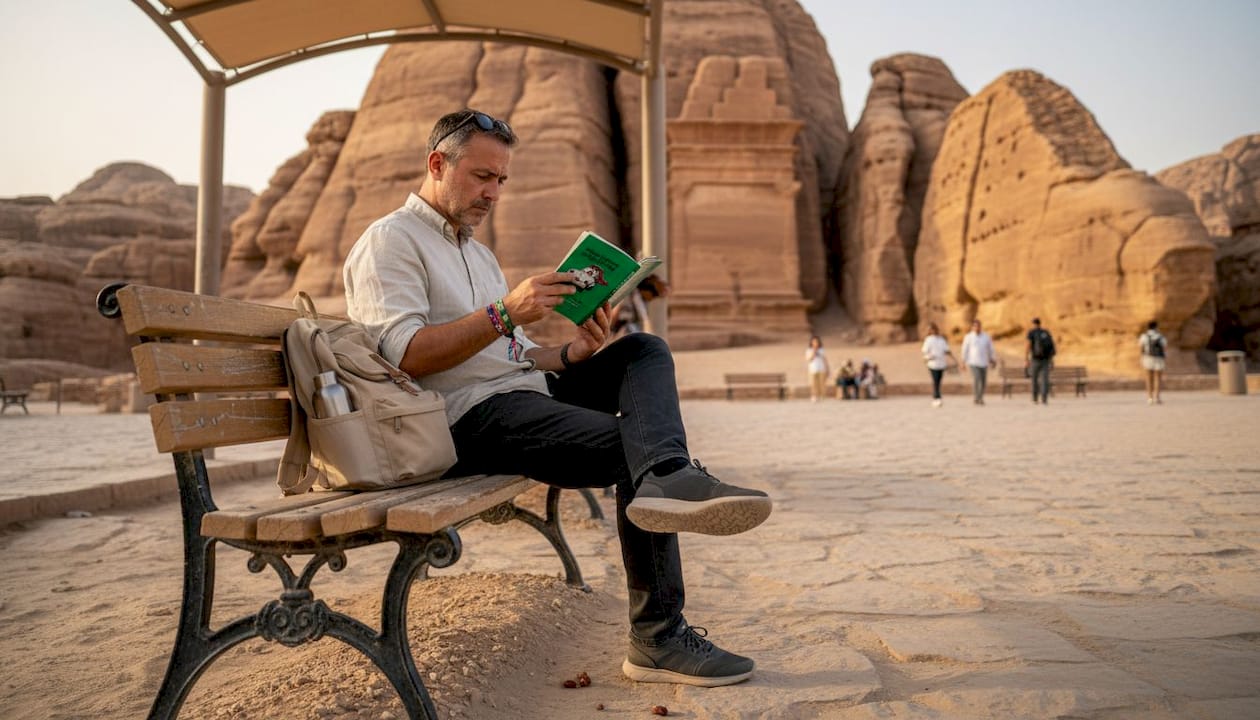
For getting between cities and sites, reliable Umrah transport is a key consideration. Group travel transport options are available for families and organized groups. Those seeking comfort can explore luxury transport options as well.
Pro Tip: Register on Nusuk as early as possible, especially if traveling during Ramadan or the weeks before Hajj. Permits and hotel slots fill up fast, and the platform can experience high traffic during peak periods.
What first-time Umrah travelers need to know for 2026
Knowing the strategy is one thing. Executing your trip is another. Here is what first-time travelers need to do for a smooth Umrah experience in 2026.
Before you arrive:
- Create a Nusuk account and complete your profile with all required documents.
- Apply for your Umrah visa through Nusuk. Nusuk is mandatory for visas, accommodation, and transport bookings in 2026.
- Book your hotel through Nusuk. Options near the Haramain fill quickly during Ramadan.
- Confirm required vaccinations. Meningitis vaccination is mandatory. Check current health requirements with your local Saudi embassy.
- Download Tawakkalna and other official Saudi health and service apps.
- Book your airport transfer in advance. Review the airport transfers for Umrah guide for what to expect on arrival.
Women traveling independently: Women ages 18 to 65 no longer need a mahram (male guardian) to obtain an Umrah visa or travel. This is a significant policy change that now applies broadly.
During your trip:
- Use mobile maps for Umrah to navigate the holy sites and surrounding areas.
- Follow digital crowd alerts on Nusuk and official apps to avoid congestion at peak prayer times.
- Keep your Nusuk permit accessible at all checkpoints.
Peak season realities: Ramadan is the most popular time for Umrah. Crowds are large, hotels are expensive, and transport demand spikes. Book everything at least 3 to 4 months in advance. If flexibility allows, traveling outside Ramadan offers a quieter, more manageable experience.
Pro Tip: Monitor the official Nusuk and Saudi Ministry of Hajj websites regularly in the months before your trip. Rules, permit quotas, and health requirements can change. Allow extra time for any digital procedures that require document verification.
For a full overview of planning your visit, the first-time Umrah planning guide covers the essentials from start to finish.
Our take: The real story behind Saudi tourism's transformation
The marketing around Saudi tourism is bold. The reality is more nuanced. Services are improving at a genuinely impressive pace, but rapid visitor growth is sometimes outpacing hotels and trained hospitality talent, creating pockets of strain, particularly during peak seasons.
Conventional wisdom says the system is ready. Our honest view: it is getting there, but first-time Umrah travelers are arriving during a transitional period. Digital systems like Nusuk are powerful but can be slow or confusing under high traffic. Saudization policies mean that some service staff are newer to their roles. Crowd management at the Haramain is improving but still tests its limits during Ramadan.
None of this should discourage you. The trajectory is clearly positive. But preparation matters more than ever. Register early. Have local support contacts ready. Do not rely on last-minute bookings. Knowing why to choose reliable Umrah transport is not just practical advice. It is essential risk management for a first-time traveler in a system still finding its full stride.
First-timers are, in a real sense, both the beneficiaries and the testers of Saudi Arabia's service vision. Come prepared, and the experience will be rewarding.
How Saudi Sayyah supports your Umrah journey
Ready to apply what you have learned? Saudi Sayyah's services are built for exactly this moment in Saudi tourism's evolution.
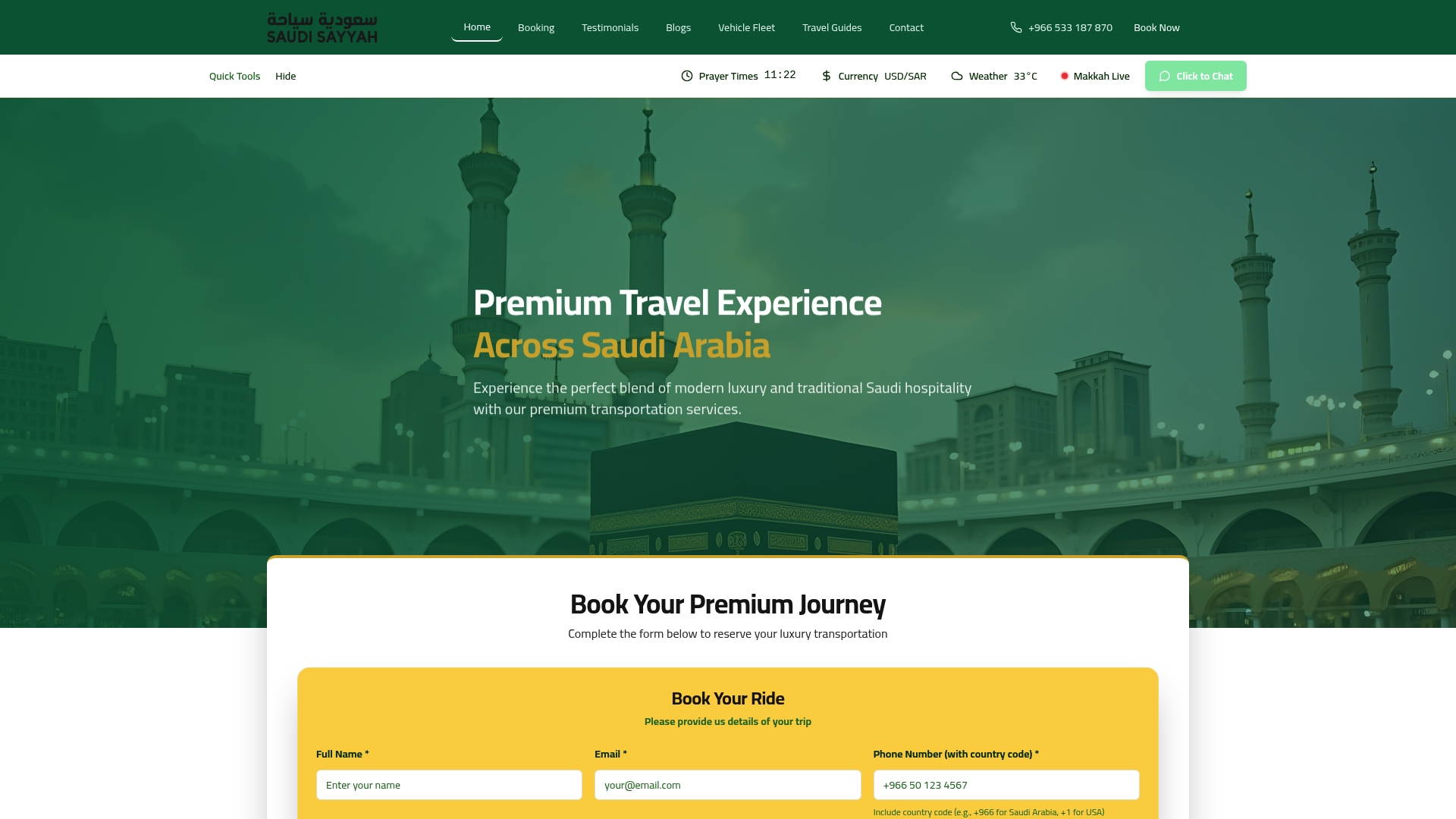
Saudi Sayyah offers reliable Umrah transport services that fit directly into the 2026 Umrah framework. From airport pickups to intercity transfers, the fully automated booking system handles logistics so you do not have to. The premium Umrah vehicle fleet includes the latest model year vehicles with real-time tracking, driver details sent before every trip, and multilingual support for international pilgrims. For up-to-date local conditions, live Makkah transport info keeps you informed on the ground. Whether traveling solo, as a family, or with special needs, Saudi Sayyah provides the ground support that makes a first Umrah trip manageable and comfortable.
Frequently asked questions
What is Vision 2030 and why does it matter for Umrah travelers?
Vision 2030 is Saudi Arabia's plan to diversify its economy by growing tourism. For Umrah travelers, it means better digital tools, expanded infrastructure, and a more organized pilgrimage experience overall.
Is using the Nusuk platform mandatory for Umrah in 2026?
Yes. All foreign pilgrims must use Nusuk for Umrah logistics in 2026, including visas, permits, hotel bookings, and transport reservations.
Can women travel to Umrah alone in Saudi Arabia now?
Women ages 18 to 65 can obtain an Umrah visa without a mahram and travel independently under current Saudi regulations.
How many Umrah pilgrims does Saudi Arabia aim to host by 2030?
Saudi Arabia targets 30 million Umrah pilgrims annually by 2030, up from 16.92 million recorded in 2024.
What are the biggest challenges for Umrah tourists in 2026?
The main challenges include navigating digital requirements and peak booking windows, adapting to rapid service changes, and managing crowds during Ramadan and high season.