
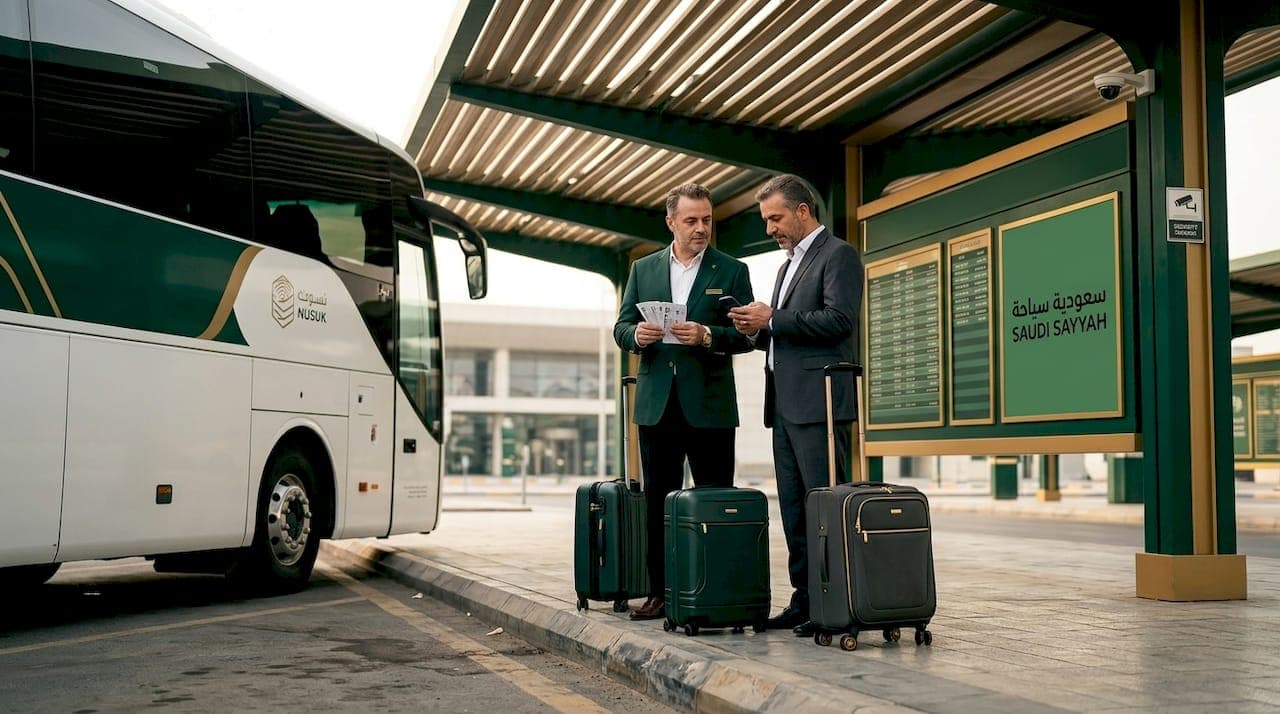
TL;DR:
- Transport compliance requires using licensed, verified vehicles on approved routes to avoid severe penalties.
- Key regulations include Nusuk licensing, visa-linked booking, gender-segregation, and timely exit before Hajj season.
- Planning ahead and verifying providers ensures a smooth, stress-free pilgrimage experience.
Transport compliance is not the first thing most pilgrims think about when planning Umrah. Paperwork, health requirements, and travel costs usually dominate the conversation. Yet over 40% of early 2026 Umrah visa rejections are transport-related, a number that shocks most first-time pilgrims. This guide breaks down exactly what compliant transport means, which rules apply in 2026, how to spot licensed providers, and what practical steps secure a smooth, penalty-free journey to the holy lands.
Table of Contents
- Why transport compliance is critical for Umrah pilgrims
- Key transport regulations every pilgrim must know
- Compliant vs. non-compliant transport: What to watch for
- How to choose and book compliant transport for Umrah
- Beyond rules: The real impact of transport compliance on your Umrah experience
- Find compliant, trustworthy transport for your Umrah journey
- Frequently asked questions
Key Takeaways
| Point | Details |
|---|---|
| Compliance prevents visa issues | Using licensed transport ensures your Umrah visa is not at risk of rejection or penalties. |
| Know the core regulations | Familiarize yourself with Saudi transport rules, key dates, and required documentation before traveling. |
| Book with trusted providers | Always choose Nusuk-licensed or government-approved services to guarantee a smooth and lawful journey. |
| Documentation is essential | Carry all booking confirmations and keep digital backups to avoid disruptions during your Umrah. |
| Avoid risky shortcuts | Unlicensed taxis or informal ride-shares can lead to severe fines, deportation, or even permanent travel bans. |
Why transport compliance is critical for Umrah pilgrims
Transport compliance means using only Saudi government-authorized or Nusuk-licensed vehicles and operators when traveling as an Umrah pilgrim. Nusuk is the official digital platform managed by Saudi Arabia's Ministry of Hajj and Umrah. Operators registered through this system have passed background checks, vehicle inspections, and route authorizations. Vehicles not on that approved list are considered unauthorized, regardless of how professional or affordable they appear.
Many first-time pilgrims assume that any clean car or friendly driver is acceptable. That assumption is one of the most common and costly mistakes made before or during Umrah. Non-compliance takes several specific forms:
- Using unregistered taxis or private cars hired through informal channels
- Sharing transport with other pilgrim groups without proper documentation
- Traveling in vehicles that do not meet gender-segregation rules where required
- Carrying incorrect or incomplete booking paperwork during transit
The consequences are severe. Saudi authorities impose fines up to SAR 10,000 on pilgrims and can deport travelers or issue entry bans for repeat or serious violations. For transport providers operating without authorization, penalties escalate sharply: fines reaching SAR 100,000 or full vehicle confiscation are documented outcomes. Providers banned from the Nusuk system lose access to the entire pilgrim transport market, which is an existential consequence for operators in cities like Makkah, Madinah, and Jeddah.
"Pilgrims caught in non-compliant transport situations have faced immediate removal from Saudi territory, even when mid-journey. Some were denied re-entry for the remainder of that calendar year."
Real cases from the 2025 and early 2026 seasons show that enforcement is active, not theoretical. Checkpoints between Jeddah airport and Makkah and around the Grand Mosque perimeter are staffed and systematic. Getting into an unlicensed vehicle is not a gray area; it is a documentable violation with documented outcomes.
Understanding why compliance matters is one thing. Knowing the reliable transport for Umrah options available and what makes them trustworthy is the practical next step.
Key transport regulations every pilgrim must know
Saudi Arabia updates Umrah transport regulations each season. For 2026, several specific rules are non-negotiable and affect nearly every pilgrim traveling independently or in groups.
Here are the core requirements in order of importance:
- Visa-linked transport booking. Your transport booking must align with your Umrah visa dates. Authorities cross-reference booking records with entry and exit data.
- Nusuk-licensed operators only. Only book with operators who appear on the Nusuk-approved list, verifiable through the official Nusuk app or website.
- Gender-segregation compliance. Certain routes and operators require gender-separated seating, particularly in shuttle environments and shared transport scenarios.
- Shuttle and rail use during peak times. During the final days before Hajj and at peak prayer times, private vehicles may be restricted near the Grand Mosque. Approved shuttles and rail services take priority.
- Mandatory exit before Hajj season. Umrah pilgrims holding standard visas must exit Saudi Arabia by April 18, 2026. The last allowed entry date is April 3, 2026, and visas are valid for only 30 days from the date of issuance, not from arrival.
| Regulation | Detail | Who it affects |
|---|---|---|
| Visa validity | 30 days from issuance date | All Umrah pilgrims |
| Last entry date | April 3, 2026 | All Umrah pilgrims |
| Mandatory exit | April 18, 2026 | All Umrah pilgrims |
| Nusuk licensing | Required for all operators | Operators and pilgrims |
| Gender-segregated seating | Required on select routes | Women, mixed groups |
| Peak shuttle use | Mandatory near Grand Mosque | All vehicle types |
Regulations also differ based on traveler profile. Elderly pilgrims and those with mobility needs may qualify for specialized accessible vehicles, but those vehicles must still carry Nusuk authorization. Group travel requires a group transport manifest submitted in advance. Women traveling without a mahram (male guardian) must use gender-compliant routes and providers specifically approved for solo female pilgrims.
Common mistakes in this area include misreading the visa validity window. Many pilgrims confuse "valid for 30 days" with "30 days from arrival." If your visa was issued on March 1 and you arrive March 20, the visa does not extend 30 days from March 20. It was already counting from March 1. That misreading pushes travelers past exit deadlines.
Accessible transport for pilgrims with mobility challenges is a specific category. For those situations, transport for elderly pilgrims is covered separately with guidance on how to arrange appropriate vehicles.
Pro Tip: Always carry a printed copy of your transport confirmation. Digital versions work in most situations, but at checkpoints or when crossing between Makkah and Madinah, a physical document speeds up verification considerably. Know the official route to your hotel before you land.
If you are arranging transport for women in your group, review guidance on booking gender-segregated transport before finalizing any reservation.
Compliant vs. non-compliant transport: What to watch for
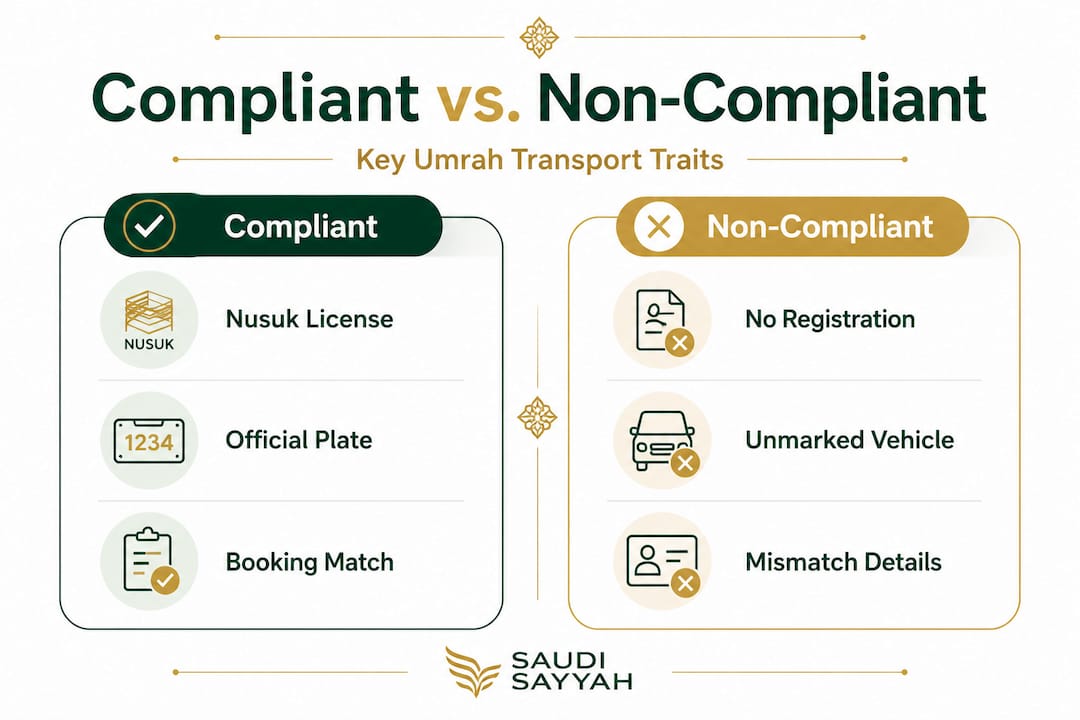
Telling a licensed vehicle from an unlicensed one is easier than most pilgrims expect, once you know what to look for. Here is a direct comparison.
| Feature | Compliant transport | Non-compliant transport |
|---|---|---|
| Nusuk licensing | Verified and documented | Absent or unverifiable |
| Booking confirmation | Official receipt with trip ID | Informal agreement or no receipt |
| Driver identification | Photo ID on file with platform | Unknown or unverified driver |
| Vehicle condition | Inspected, current-year or recent model | Uninspected, variable age |
| Payment record | Traceable digital or official receipt | Cash only, no paper trail |
| Route authorization | Approved pilgrim routes | Unofficial or improvised routes |
| Gender compliance | Seating meets regulation | Mixed, unverified seating |
First-time pilgrims should prioritize Nusuk-licensed transport above all other considerations, including price. An inexpensive ride that cannot produce verified documentation is a liability that can follow you beyond the trip itself.
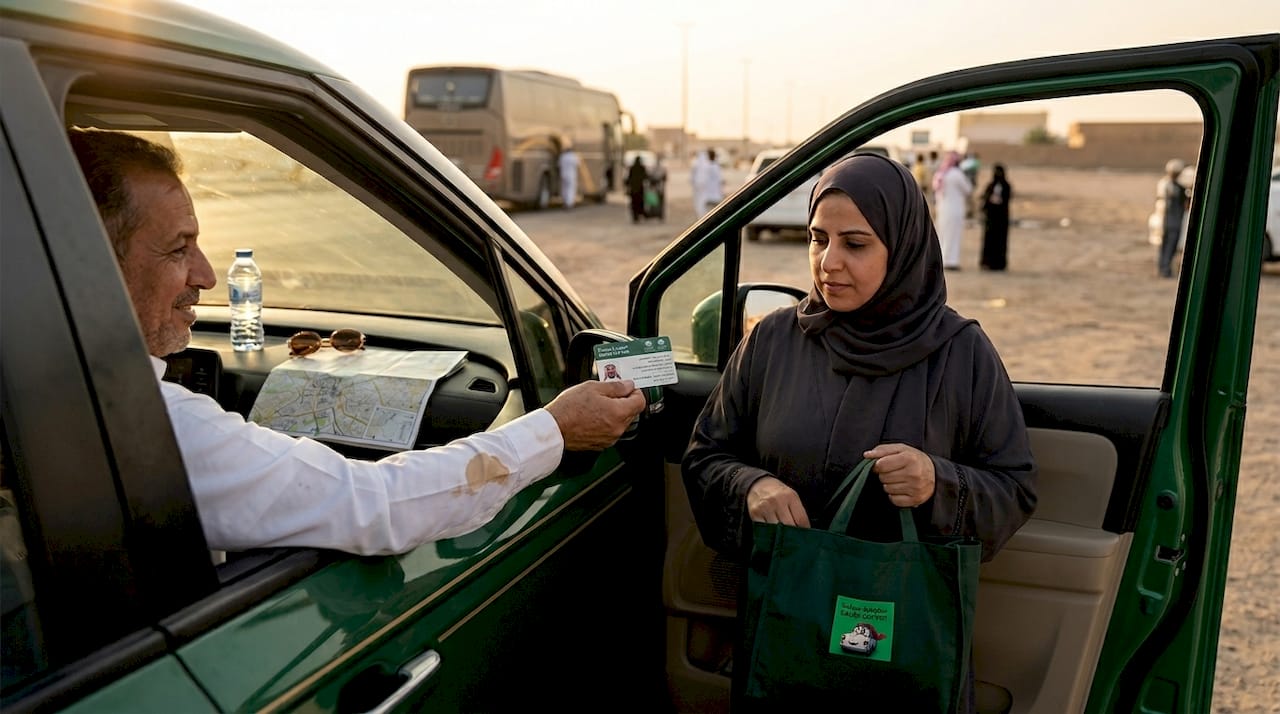
The most common trap for first-time pilgrims involves ride-sharing apps not authorized for Umrah transport and informal "community drivers" in pilgrim networks. These situations appear trustworthy because the driver may even be Muslim and highly familiar with Makkah. But familiarity does not equal authorization. Without Nusuk registration, that driver cannot legally carry Umrah pilgrims.
Checklist for compliant transport verification:
- Booking confirmation with a reference number
- Provider name matching Nusuk-registered records
- Driver's photo and ID accessible through the booking platform
- Vehicle plate and model details confirmed before boarding
- Payment receipt showing your name, trip details, and date
Rail and shuttle options during peak seasons offer a reliable alternative when private vehicles are restricted near the Haram. The Haramain High-Speed Railway between Makkah, Madinah, and Jeddah is a regulated, fully authorized service for pilgrims. It is one of the safest and most compliant ways to travel between cities during the Umrah season.
Pro Tip: Before boarding any vehicle, check that the license plate and driver details match what your booking platform sent you. Reputable platforms send this information automatically. If the details do not match, do not board.
For pilgrims with physical limitations, reviewing accessible transport features helps identify vehicles equipped for those needs. Those who prefer a higher comfort level should also explore premium licensed services available through verified providers.
How to choose and book compliant transport for Umrah
Booking compliant transport is a structured process, not a last-minute task. Follow these steps before your departure date.
- Research licensed operators. Use the official Nusuk app or website to search for registered transport providers. Filter by city, route, and vehicle type.
- Verify the license status. Every legitimate operator has a Nusuk registration number. Request it before confirming any booking.
- Confirm the route and stops. Make sure the operator serves your specific hotel or accommodation address, not just the general area of Makkah or Madinah.
- Ask about gender compliance. If you are traveling as a woman or with a mixed group, confirm the seating arrangement and that the vehicle meets the relevant regulations.
- Complete payment through official channels. Pay by card through the platform or via official invoice. Avoid cash-only arrangements.
- Download and save all confirmations. Store a digital copy in your email and a cloud backup. Print a copy as well.
- Check driver and vehicle details before the trip. Reliable platforms push this information to you automatically ahead of pickup.
First-time pilgrims who carry confirmations and follow approved routes avoid the most common compliance failures. The two key mistakes are skipping the license verification step and neglecting to confirm the exact pickup address.
When managing group bookings, assign one person to coordinate all transport reservations. Groups traveling together need a consolidated transport manifest, which your licensed operator will help prepare. For accessible needs within a group, arrange specialized vehicles separately and earlier, as supply is limited during peak Umrah periods.
Official apps like Nusuk, Absher, and the Ministry of Hajj and Umrah portal are the most reliable starting points. Third-party booking agents can be used but must themselves be registered and carry verifiable Nusuk partnerships.
Pro Tip: Save every confirmation email, receipt, and communication related to your transport in one dedicated folder. At any checkpoint or administrative query, having organized records saves significant time and stress.
For broader travel safety guidance, the Umrah travel safety tips resource covers additional scenarios pilgrims encounter during their journey.
Beyond rules: The real impact of transport compliance on your Umrah experience
Most coverage of transport compliance treats it as a checklist. Pass the inspection, carry the document, avoid the fine. That framing is incomplete and, for first-time pilgrims, actually counterproductive.
Compliance is not just risk avoidance. It is the structural foundation that makes the rest of your Umrah possible. When your transport is licensed, documented, and operating on approved routes, you are not spending mental energy on uncertainty. You know the driver. You know the vehicle. You know it is authorized. That clarity is worth more than most pilgrims realize until they have experienced its absence.
The contrast is stark. Pilgrims who used informal transport during the 2025 season reported significantly higher stress levels, more delays, and in documented cases, missed prayer windows at the Haram because their driver took unofficial routes that crossed into restricted zones. Compliant transport follows cleared paths. It does not improvise.
For elderly pilgrims, women traveling with or without family, and anyone with accessibility needs, compliance is even more directly tied to dignity. A registered vehicle with verified seating and a vetted driver is not a luxury; it is the minimum standard that every pilgrim deserves. Informal arrangements rarely meet that standard consistently.
The counterintuitive truth is this: pilgrims who treated compliance as optional spent more time dealing with transport problems than those who prioritized it from the start. A noncompliant ride that saves SAR 50 can create complications that cost far more in fines, rebooking fees, or disrupted itineraries.
A perspective worth holding: transport compliance is one of the few preparation steps that directly protects the spiritual purpose of the trip. Arriving at the Haram with no delays, no uncertainty, and no unresolved administrative issues means more attention on what you came to do.
For a broader view on the role transport quality plays in pilgrimage experience, the luxury transport perspective offers a thoughtful look at how service standards affect the overall journey.
Find compliant, trustworthy transport for your Umrah journey
Knowing the rules is only part of the solution. Acting on that knowledge with a verified, licensed provider is what actually keeps your Umrah on track.
Saudi Sayyah operates a fully compliant, Nusuk-licensed fleet built specifically for Umrah pilgrims. Every booking goes through an automated internationally-compliant management system. Before each trip, you receive your driver's photo, vehicle details, and real-time tracking, so there are no surprises at pickup. Drivers are experienced, vehicles are current-model-year, and every route is pre-authorized. Whether you need standard transport, gender-compliant options, or accessible vehicles, the right solution is available. Browse car hire for Umrah or see compliant vehicle fleet options to book your transport with full confidence.
Frequently asked questions
What happens if I use non-compliant transport for Umrah?
You risk visa rejection, fines, deportation, or an entry ban; penalties apply to both the pilgrim and the transport provider.
How do I verify if a transport provider is compliant for Umrah?
Check the provider's Nusuk registration number through the official Nusuk app, and carry your booking confirmation at all times during transit.
What are the key Umrah transport rules for 2026?
Your visa is valid 30 days from issuance, last entry is April 3, 2026, mandatory exit is April 18, and only Nusuk-authorized vehicles are permitted.
Can I use ride-sharing or informal taxis for Umrah?
No; unlicensed transport is a direct violation, and providers face SAR 100,000 fines or vehicle confiscation while pilgrims risk fines and deportation.
What documents should I carry for compliant Umrah transport?
Always have a printed or digital booking confirmation, your visa documentation, and a passport copy accessible throughout every transport journey in Saudi Arabia.