
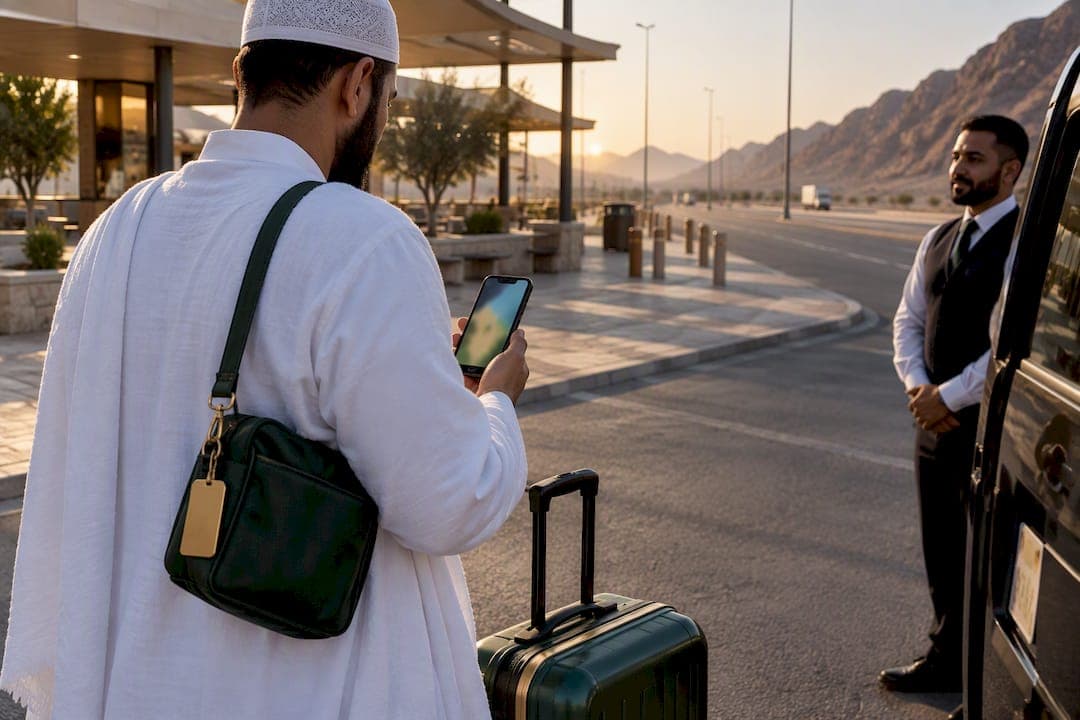
Traveling between Mecca and Medina is safe when you book with an authorized, registered transport provider that uses a modern, inspected vehicle and a driver whose identity you can verify before departure. The two checks that matter most: confirm the provider's Ministry of Hajj and Umrah registration and unified contract, and get the driver's photo, vehicle plate, and live tracking link before you leave. Saudi regulations back this up directly, with fines and license suspension for operators who skip the unified contract.
TL;DR:
- Only book transport providers that are registered with the Ministry of Hajj and Umrah, have a unified contract, and appear on the Nusuk Masar platform to ensure legitimacy.
- Verify driver identity, vehicle condition, and safety features like seatbelts and air conditioning before departure, and screenshot all provided trip details for backup.
- Expect providers to build rest stops into routes and use real-time traffic data to prevent rushing, with proactive communication about ETA and route changes.
- Report any safety issues immediately to the provider and authorities, collecting evidence like photos and timestamps to support complaints or claims.
- A technology-driven provider offers pre-trip driver and vehicle details, live tracking links, and continuous communication to reduce uncertainty and enhance safety during the journey.
Table of Contents
- What to Verify Before Booking for Safety on the Mecca–Medina Road
- Vehicle and Driver Safety Checklist Before You Get in the Car
- What Normal Looks Like During the Trip
- If Something Goes Wrong: Steps to Take Right Away
- How Regulation Actually Protects You on This Route
- Road and Weather Conditions That Change the Risk Picture
- Traffic Rules and Common Violations Pilgrims Should Know About
- Cultural and Religious Habits That Affect Safety on the Road
- Accident Trends and What Actually Reduces Risk on This Highway
- How a Technology-First Operator Changes the Safety Equation
- Book a Verified, Tracked Transfer With Saudi Sayyah
- Primary Sources for Verifying Provider Safety
- Sources
- FAQ
What to Verify Before Booking for Safety on the Mecca–Medina Road
Safety on the Mecca–Medina road starts before you ever get in a car. It starts with paperwork, and paperwork sounds boring until it's the thing that protects you at 2 a.m. on a highway you've never seen before.
Every legitimate domestic pilgrim transport provider must issue a unified contract that lists driver data, the route and travel dates, vehicle details, and the agreed price. This isn't a formality. The Ministry treats it as an enforcement tool, and providers who skip it face fines and can lose their license to operate. Ask for this contract before you pay anything.
Providers also register through the Nusuk Masar national platform, where the Ministry reviews submitted data and attachments before approving a transportation service provider. A provider that shows up on this platform has already been vetted on paper, which makes it far easier to confirm legitimacy than trying to check out an informal driver you met outside a hotel.
Save these before you travel:
- The signed contract (PDF or photo)
- Your booking reference number
- The driver's photo and full name
- The vehicle's plate number and model
- Your pickup time and expected arrival window
Pricing and timing benchmarks help you spot a bad deal fast. A typical Mecca to Medina transfer runs a few hours depending on traffic and rest stops, and pilgrim transport cost guides can give you a realistic range before you commit. If a quote seems unusually low, ask why. Cheap, unregistered rides are where most preventable problems on this route start.
Vehicle and Driver Safety Checklist Before You Get in the Car
Once you have driver and vehicle details in hand, the actual verification takes about two minutes. Do it anyway.
Vehicle checks:
- Recent model year, with visible seatbelts in every seat
- Working headlights, taillights, and tires with no visible wear
- Functional air conditioning, since desert heat turns a broken AC into a real health risk
- Clean interior, with a visible first-aid kit and fire extinguisher
Driver checks:
- A visible ID badge or photo that matches the name on your booking
- A driving license status shown or confirmed in the platform
- Calm, professional conduct, especially with elderly or first-time travelers
- A track record or experience level noted in the booking details
Providers using a geolocation-enabled platform will send you the driver's photo, vehicle description, and plate number ahead of pickup, along with a live tracking link for the trip itself. If a provider can't give you this before you leave the hotel, that's a signal to ask more questions or choose a different operator.
Pro Tip: Screenshot the driver's photo, plate number, and tracking link the moment you receive them. If your phone dies or signal drops mid-trip, you still have a saved record on your device.
What Normal Looks Like During the Trip
A safe trip has a rhythm to it, and knowing that rhythm helps you spot when something is off. Seatbelts stay on for the entire drive, luggage gets stowed securely rather than piled loose in the back seat, and the number of passengers matches what was booked. No last-minute squeezing in extra riders.
Drivers on long intercity runs should take rest breaks, and providers that plan routes around Ministry of Transport traffic-flow data tend to build these stops into realistic pickup and arrival windows rather than promising an unrealistically fast trip. Good operators communicate proactively. Expect updates on ETA changes, route adjustments for construction or closures, and a tracking link that actually reflects the vehicle's real position, not a static estimate.
If the driver pulls over for a mechanical check, that's normal and often a good sign of caution rather than a problem. What matters is what happens next: a professional operator either resolves the issue quickly or arranges a replacement vehicle and keeps you informed the entire time, rather than leaving you stranded without explanation.
If Something Goes Wrong: Steps to Take Right Away
Problems are rare with a registered provider, but knowing the order of operations matters if one comes up.
- Get to safety first. If there's a mechanical failure or accident, move away from traffic and call 999 for emergency assistance.
- Contact the transport provider immediately using the number in your booking confirmation, and reference your booking ID.
- If the provider is unresponsive or the issue involves a licensing or safety violation, escalate to the Ministry of Hajj and Umrah, citing your saved contract and driver details.
- Document everything: photos of the vehicle or scene, timestamps, and your saved tracking link.
That documentation isn't just for peace of mind. It's what turns a complaint into an actionable claim, since the unified contract gives you a paper trail regulators can act on.
How Regulation Actually Protects You on This Route
The unified contract requirement isn't paperwork for its own sake. It's the mechanism that lets the Ministry fine or suspend operators who cut corners, and it gives you, the passenger, a documented basis for a complaint if something goes wrong.
Registration through Nusuk Masar adds another layer. Because the platform centralizes provider data for Ministry review, a listed operator has already passed a check that an informal, unlisted driver never faced. That's a meaningful difference when you're choosing between two similarly priced options.
Disclosure requirements tie it together. When a provider is required to share driver identity, vehicle details, route, and price upfront, you're not relying on trust alone. You're relying on a system that penalizes providers for withholding or falsifying that information, which is exactly the point of regulation built for pilgrim protection.
Road and Weather Conditions That Change the Risk Picture
The Mecca–Medina corridor runs through desert terrain, and that terrain has its own seasonal personality. Summer heat regularly pushes past 45°C, which stresses vehicles, tires, and drivers alike. A car without working air conditioning isn't just uncomfortable in these months. It's a real safety concern for dehydration and heat exhaustion, especially for older pilgrims or those with health conditions.
Sandstorms are the other major seasonal hazard, particularly in spring. Visibility can drop suddenly, and experienced drivers slow down or pause travel until conditions clear rather than pushing through. This is one of the reasons rest stops and flexible scheduling matter more on this route than on a typical city commute.
Nighttime travel carries its own considerations. Long stretches of highway between the two cities have limited lighting in places, and fatigue becomes a bigger factor after dark. A driver who takes a short break rather than pushing straight through is doing exactly what a professional operator should do.
None of this means the road is unusually dangerous. It means conditions vary by season, and a good provider adjusts for them instead of treating every trip the same way regardless of weather. If your provider mentions a delay due to heat, wind, or visibility, that's typically a sign of caution, not incompetence.
Traffic Rules and Common Violations Pilgrims Should Know About
Saudi traffic law enforces speed limits, lane discipline, and seatbelt use strictly on major highways, and the Mecca–Medina corridor sees heavy enforcement during peak Umrah and Hajj seasons when traffic density spikes. Speed cameras are common along this route, and fines for violations apply to drivers, not passengers, but a driver who takes unnecessary risks to save time is a red flag worth reporting.
Common violations on intercity routes include tailgating, unsafe lane changes around slower trucks, and phone use while driving. Licensed providers train drivers to avoid these patterns because a citation or license suspension threatens their ability to keep working under the unified contract system. That's part of why sticking with a registered operator matters. Their incentive structure is aligned with driving carefully, not just quickly.
Passengers play a role too. If your driver is speeding, tailgating, or using a phone while driving, say something. You have every right to ask a driver to slow down or pull over, and a professional operator will take that request seriously rather than brushing it off.

Cultural and Religious Habits That Affect Safety on the Road
Pilgrim travel has rhythms that differ from ordinary road trips, and those rhythms affect safety in small but real ways. Many travelers want to stop for prayer at set times, and a good driver builds this into the schedule rather than rushing through it or skipping it entirely. Trip planning that ignores prayer breaks tends to produce rushed, stressed driving later to make up time.
Group travel is common, especially among families or first-time pilgrims traveling together, and larger groups sometimes push drivers to overload a vehicle beyond its rated capacity. Resist that pressure. An overloaded vehicle handles worse, brakes less effectively, and puts everyone at higher risk.
Fatigue after long worship sessions or overnight prayers is another factor passengers underestimate. If you're traveling shortly after an exhausting night at the mosque, you're less likely to notice unsafe driving or speak up about it. Build a short rest into your own schedule before a long transfer if you can, and don't hesitate to ask your driver for a stop if you need one.
Accident Trends and What Actually Reduces Risk on This Highway
Long, straight intercity highways like the Mecca–Medina corridor tend to see accidents concentrated around a few predictable causes: driver fatigue on long stretches, speeding to make up time, and sudden weather events like sandstorms cutting visibility. None of these are mysterious, and none of them require a specialized driving skill to avoid. They require discipline.
The preventive measures that actually move the needle are unglamorous. Scheduled rest breaks reduce fatigue-related errors. Realistic trip-time estimates, the kind built around Ministry of Transport traffic and road data, remove the pressure to speed. Vehicle maintenance checks catch mechanical failures before they become roadside emergencies. None of this is exotic. It's the difference between an operator who treats safety as routine and one who treats it as optional.

This is also the strongest argument for choosing a registered provider over an informal one. A licensed operator has a business reason to avoid the patterns that cause accidents: fines, suspension, and reputational damage under the unified contract system. An unregistered driver has none of those pressures, which is exactly why the paperwork checks earlier in this guide aren't bureaucratic busywork. They're the filter that separates operators built around safety from ones that just got lucky so far.
How a Technology-First Operator Changes the Safety Equation
Most of what makes a pilgrim transfer safe isn't dramatic. It's consistent: a driver you can identify before you meet them, a vehicle you can inspect through photos before you commit, and a tracking link that tells you exactly where the car is at 3 a.m. That's the gap technology closes, and it's the gap that matters most to someone making this trip for the first time. A modern fleet and a verified driver roster reduce guesswork. Continuous communication removes the anxiety of not knowing where things stand. For deeper reading on how these pieces fit together, the secure Umrah transport guide is worth a look.
— Fa
Book a Verified, Tracked Transfer With Saudi Sayyah
An automated booking platform can provide a verified driver profile, real vehicle details, and a live tracking link, sent to your phone before pickup. That's a different starting point than piecing together trust from a phone call or a roadside handshake.
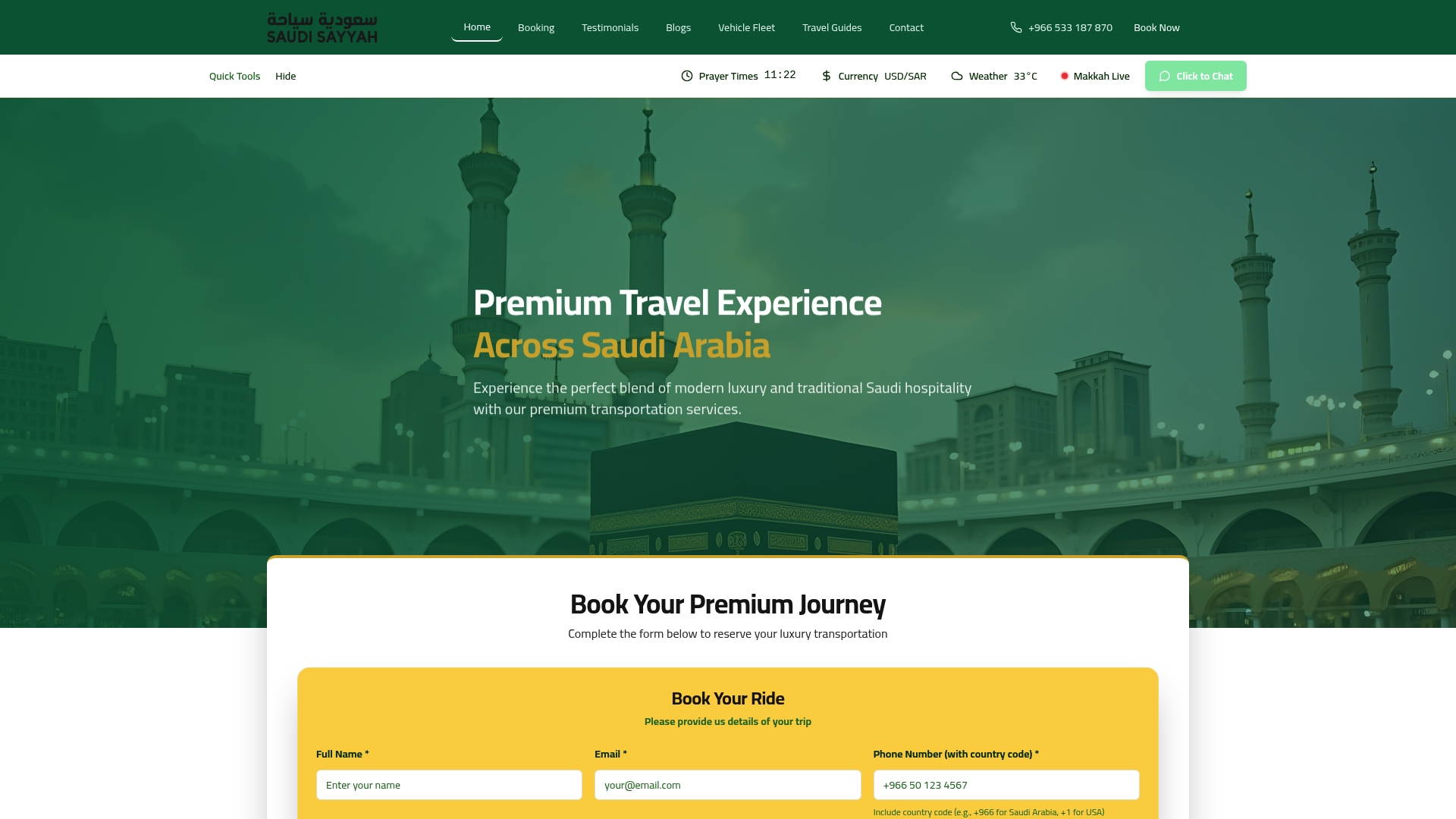
Whether you need a straightforward point-to-point transfer, an hourly hire for a Ziarah tour, or an airport or intercity transfer, the same modern fleet and driver transparency apply across the board. You can also review the vehicles in the fleet before booking, so there are no surprises about what shows up at pickup. Book your Mecca to Medina transfer through the services page and get your driver photo and tracking link well before departure day.
Primary Sources for Verifying Provider Safety
Confirm any provider's standing directly through official channels rather than taking claims at face value. The Ministry of Hajj and Umrah legal guide explains unified contract rules and penalties. The Nusuk Masar registration service shows how providers get approved. The Ministry of Transport publishes road and traffic regulations relevant to intercity travel.
Sources
- Transportation Service Provider registration requests | National Platform
- SPA guidance on service contracts and reporting
- Regulations, rules and guides | Ministry of Transport
FAQ
Is the Mecca–Medina road safe for pilgrim transfers?
Yes, when you book with a registered provider that holds a unified contract and shares driver and vehicle details before departure. The main risks come from unregistered operators, not the route itself.
What should I check before booking transport between Mecca and Medina?
Confirm the provider's unified contract lists driver data, vehicle details, route, and price, and check that they're registered on the Nusuk Masar platform. Save your contract, booking reference, and driver details before travel day.
How much does a Mecca to Medina transfer typically cost?
Pricing varies by vehicle type, timing, and provider, and detailed cost breakdowns can help you set realistic expectations. Saudi Sayyah's current rates for point-to-point and intercity transfers are available on its services page.
What should I do if I feel unsafe during the trip?
Ask the driver to slow down or pull over if needed, and contact the provider immediately using your booking reference. For emergencies, call 999, and report serious safety concerns to the Ministry of Hajj and Umrah afterward.
Does Saudi Sayyah provide driver and vehicle details before the trip?
Yes, Saudi Sayyah's geolocation-enabled platform sends a driver photo, vehicle description, and real-time tracking link before every trip. This is part of its automated booking system built specifically around pilgrim reassurance.