
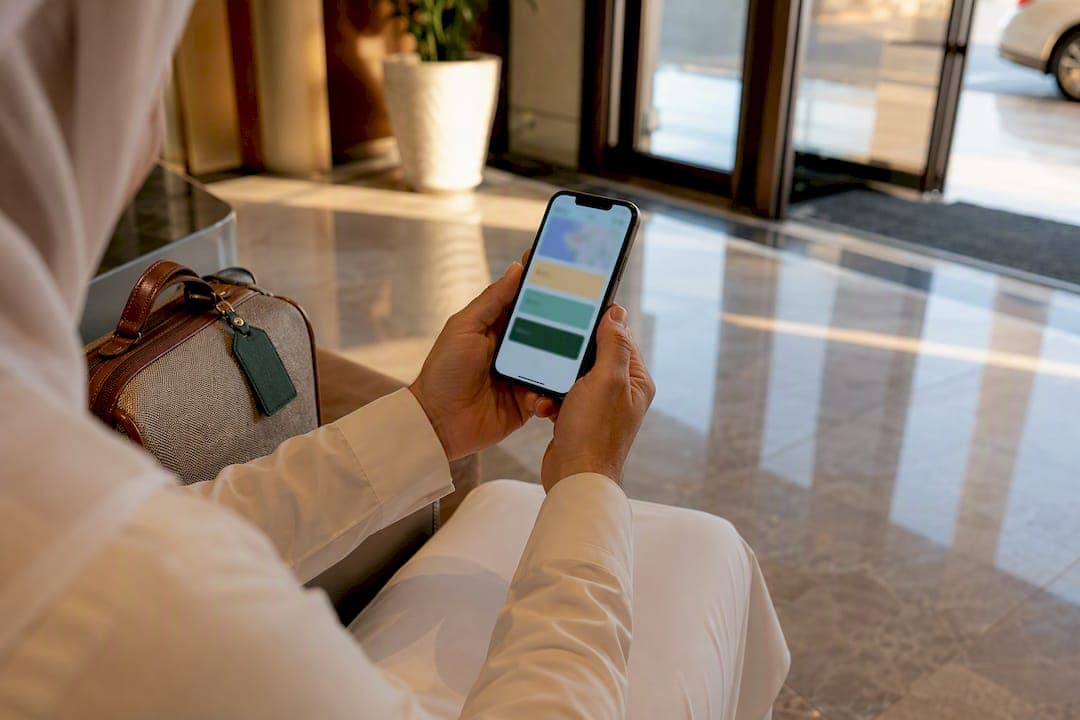
Airport transfers from Prince Mohammed bin Abdulaziz International Airport (MED) to central Madinah typically cost between the low and higher range for a 4-seat private vehicle, while fares for a private vehicle between Madinah and Makkah vary depending on vehicle size and other factors. Prices increase during Ramadan and Hajj season. The recommended move is simple: prebook a fixed-rate, tracked transfer before you land, rather than negotiating on arrival.
TL;DR:
- Booking a fixed-rate, pre-arranged transfer ensures you pay a clear, all-in price and avoid unpredictable roadside surcharges or negotiations.
- Vehicle costs depend on size, luggage, and wait times, with larger groups or heavy luggage benefiting from bigger vehicles, which cost more.
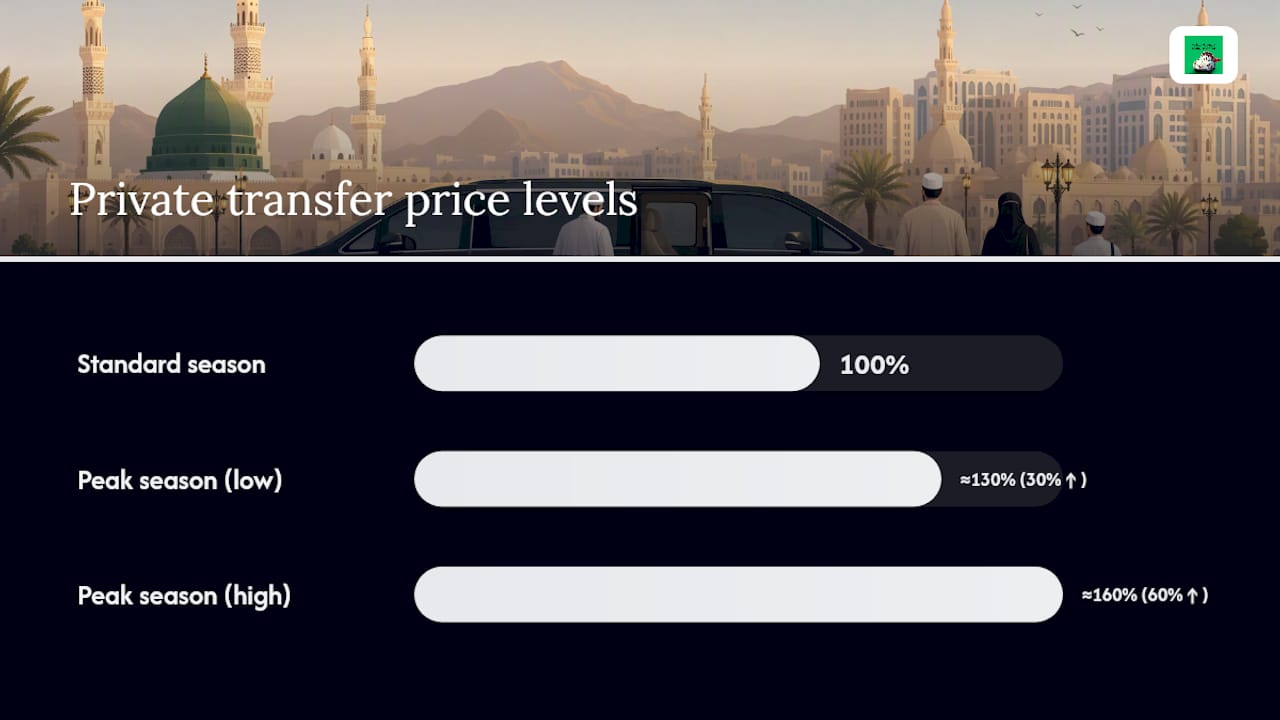
- Demand during Ramadan and Hajj season raises prices by 30 to 60 percent, so booking 2 to 4 weeks in advance is crucial for peak periods.
- Confirm the vehicle's capacity, driver details, and tracking link before payment to prevent issues upon arrival and ensure smooth pickup.
- Rail options like Haramain are efficient for solo travelers with light luggage but may require additional taxi costs for larger groups or heavy bags.
Table of Contents
- Understanding Aāsāar Al-Taxi Fī Al-Madinah: How Transfer Pricing Works
- What Do Airport and Intercity Transfers Actually Cost?
- When Should You Book to Avoid Peak-Season Price Spikes?
- What Should You Check Before You Pay for a Transfer?
- Can You Save Money Without Sacrificing Comfort?
- What Pilgrims Get Wrong About Booking Transfers
- Book a Fixed-Rate Transfer With Saudi Sayyah
- Sources
Understanding Aāsāar Al-Taxi Fī Al-Madinah: How Transfer Pricing Works
Fixed-rate private transfers price the whole vehicle, not each seat. A 4-seat sedan and a 7-seat MPV carry two different flat fares, and the number of passengers inside doesn't change the total. Shared or per-person pricing works the opposite way: the provider sells individual seats, and the vehicle may pick up or drop off other travelers along the route.
A written quote for pre-booked pilgrim transport should account for a handful of variables beyond the base fare:
- Vehicle size — a sedan, an MPV, or a minibus carries a different flat rate, tied to seating and luggage capacity.
- Luggage volume — large bags or multiple pieces per traveler can bump you into a bigger vehicle class.
- Wait time — flight delays or extra stops at a hotel add to the fare unless the quote already covers a grace period.
- Peak dates — Ramadan and Hajj season carry a seasonal uplift on top of standard rates.
Hourly hires for Ziarah tours around Madinah's historic and religious sites follow their own pricing shape, usually a flat rate per hour or per half-day rather than per stop. Luxury vehicles, larger SUVs, and multi-day intercity hires sit at the top of the range, and a legitimate quote should spell out the vehicle class before you commit. A transport guide for the holy cities is worth reading before you compare offers, since it lays out the routes most pilgrims book first.
What Do Airport and Intercity Transfers Actually Cost?
Route pricing is where most pilgrims get surprised, usually because they compare a per-person rail fare to a per-vehicle taxi fare without adjusting for group size. Here's how the main routes actually break down.
- Airport (MED) to hotel or central mosque area. Travel time runs 20 to 35 minutes depending on traffic and your hotel's distance from Al‑Masjid an‑Nabawi. A 4-seat private vehicle typically runs 60–100 SAR in normal season.
- Short trips within central Madinah. Hotel-to-mosque hops and similar short rides are usually priced as part of an hourly block rather than a single metered fare, which matters if you're moving between prayer times and need a car waiting.
- Madinah to Makkah, private vehicle. A 4-seat sedan runs roughly 350–700 SAR; a 7-seat MPV or minibus for a larger group runs closer to 500–1,000 SAR. The road trip takes about 4 to 5 hours depending on the route and checkpoint traffic. Full travel time comparisons between the two holy cities show why families with luggage often skip the alternatives entirely.
A private vehicle costs more on paper than a rail ticket, but it's door-to-door. No hauling suitcases through a station, no arranging a second taxi at the other end. For a solo traveler with one bag, that trade-off may not matter. For a family of five with checked luggage and an elderly relative, it usually does.
When Should You Book to Avoid Peak-Season Price Spikes?
Ramadan and Hajj season push private transfer rates up 30–60% above standard pricing, according to fare data compiled from local transport guides. Demand simply outpaces the fleet available, and drivers know it.
Statistic to know: Madinah's seasonal city shuttle program during Ramadan 1447H was built to ease congestion around Al‑Masjid an‑Nabawi. It helps with short local movement but also pulls attention toward the mosque core and away from managing overall vehicle supply, which is part of why private transfer demand still spikes at the same time.
Booking windows that actually work:
- Airport transfers, normal season: book 3 to 14 days ahead.
- Airport transfers, peak season: book 2 to 4 weeks ahead, sometimes more.
- Intercity vehicles and group tours: book earlier than you think you need to, especially for 7-seat or minibus classes, since those sell out first.
- Haramain high-speed rail: carries 417 seats per train and moved over 1.33 million Ramadan passengers on frequent scheduled runs, which makes it a reasonable fallback for solo travelers if you book rail tickets early too.
What Should You Check Before You Pay for a Transfer?
A rushed booking is how pilgrims end up paying more at the curb than they agreed to online. Run through this before you confirm and pay:
- Confirm the quote is an all-in fixed price, not a base fare with tolls, parking, or waiting time added later.
- Verify the vehicle's seating and luggage capacity matches your group size and bag count exactly, not approximately.
- Ask for the driver's name and photo, the vehicle's plate number and photo, and a working live-tracking link before pickup day.
- Confirm the meeting point procedure, how long the driver waits if your flight is delayed, and an emergency contact number.
- Read the cancellation and refund terms before you pay, including any deposit requirement and the cutoff window for a full refund.
Pro Tip: Screenshot your confirmation, including the driver photo and plate number, before you leave the airport lounge. Cell signal near arrivals can be unreliable, and you want that information saved locally, not just sitting in an app that needs a connection to load.
Shifting toward website and messaging-based booking has made pricing and pickup details more transparent, largely because both sides can point back to a written record instead of a verbal promise. Details on the full booking workflow for pilgrimage taxis walk through each of these steps in order.
Can You Save Money Without Sacrificing Comfort?
Shared, per-person transfers cost less than a private vehicle but come with extra stops and unpredictable wait times, since the driver is filling seats on someone else's schedule too. Haramain rail is fast for a solo traveler with light bags, but it usually requires a taxi leg on each end, which adds cost and a luggage transfer you didn't plan for.
- Group minivan splits bring the per-person cost of a private vehicle close to shared-transfer pricing once you divide it across five or six travelers.
- Small-bus hires make sense for tour groups moving between multiple Ziarah sites in one day.
- Traveling outside peak windows, even by a day or two around major dates, avoids a chunk of the seasonal surcharge.
For families weighing private transport against scheduled alternatives, the math usually favors the vehicle once luggage and group size enter the equation.
What Pilgrims Get Wrong About Booking Transfers
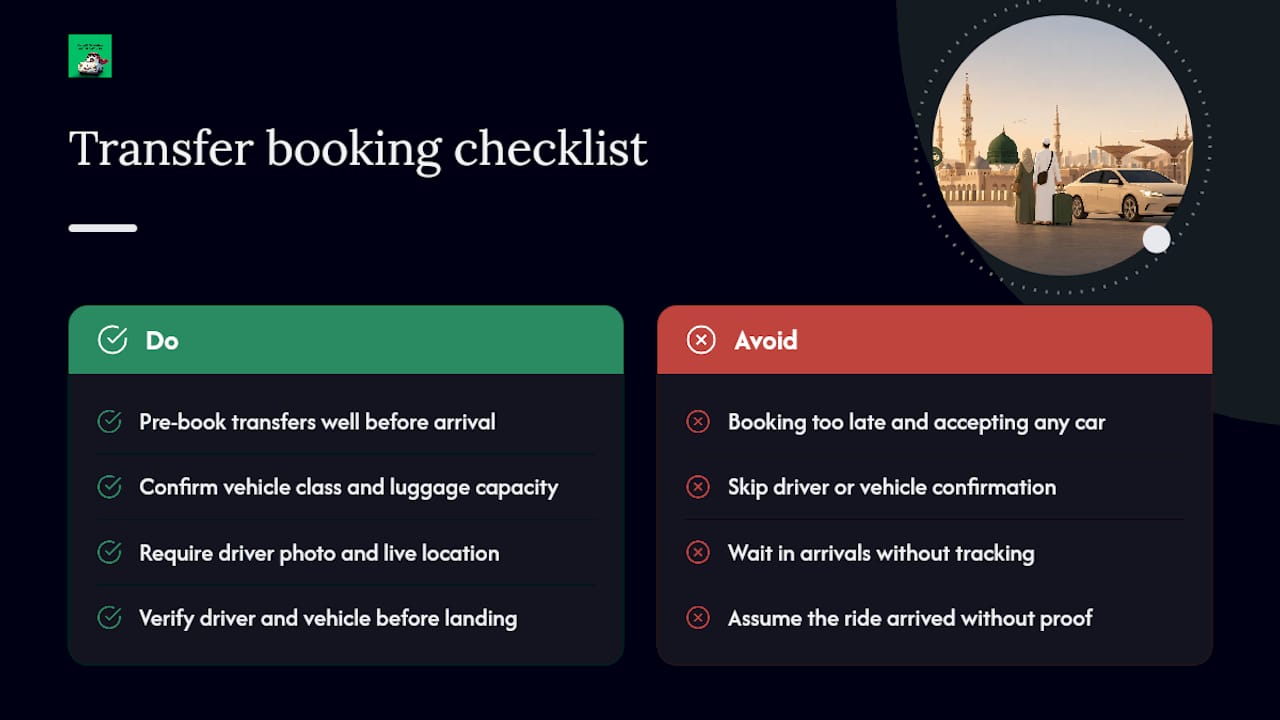
The most common mistake isn't overpaying. It's booking too late and accepting whatever vehicle class is left, which often means a car too small for the group's luggage. The second mistake is skipping driver and vehicle confirmation, then standing in an arrivals hall with no idea who's supposed to be picking them up.
Tracking and driver vetting matter more than most first-time visitors expect. A confirmed photo and a live location aren't conveniences. They're the difference between calmly waiting at a marked pickup point and wandering an unfamiliar airport wondering if the ride even showed up. Pre-booked, verified transport tends to be the single biggest factor in how smooth a pilgrim's first few hours in Saudi Arabia feel, particularly for families and anyone traveling with an older relative.
— Fa
Book a Fixed-Rate Transfer With Saudi Sayyah
The company runs airport pickups, hourly Ziarah tours, intercity hires between Madinah and Makkah, and luxury vehicle options, all built around the checklist above rather than around it as an afterthought.
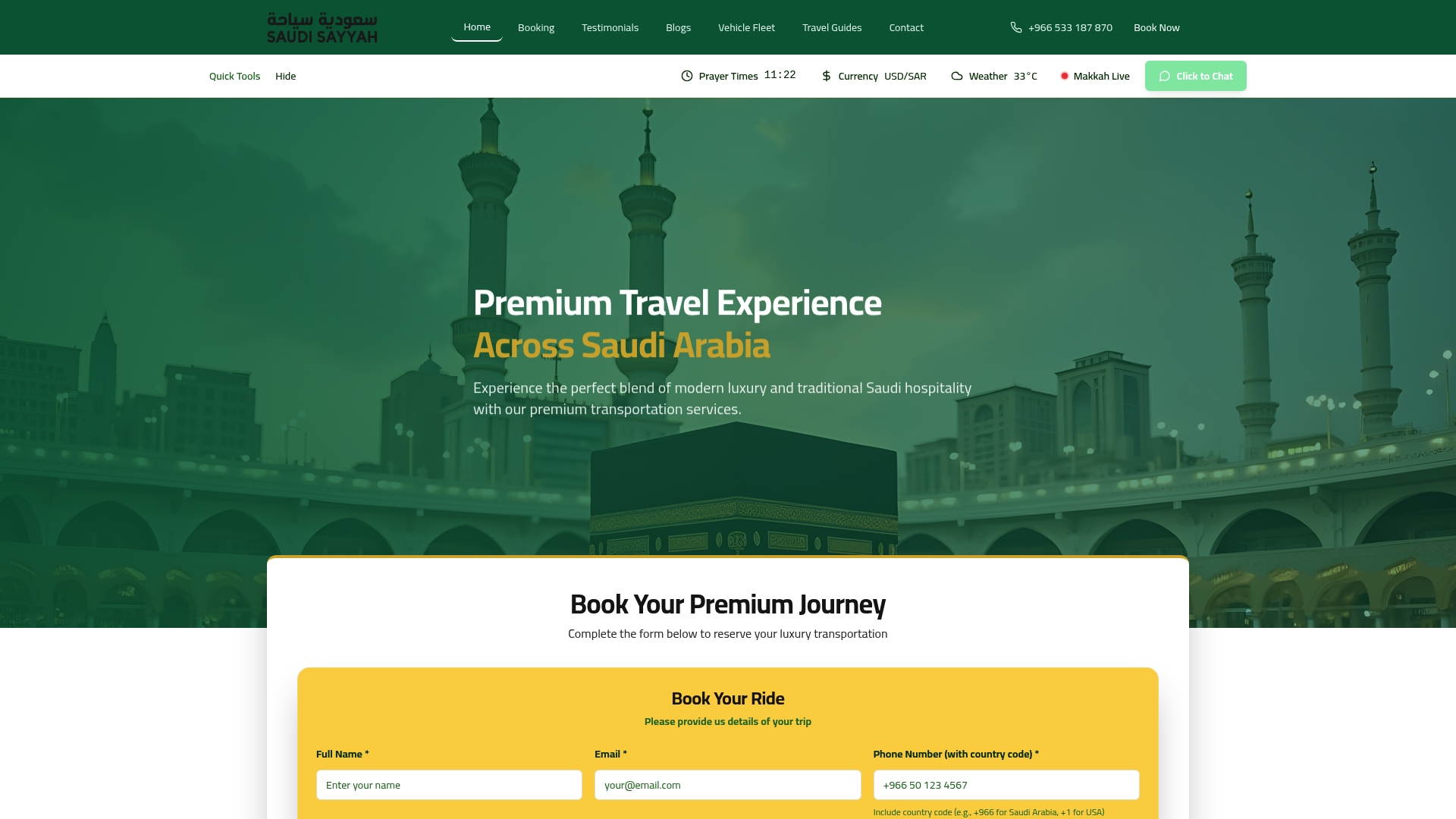
Every booking locks in a fixed all-in price before you travel, so there's no negotiating at the curb and no surprise toll or waiting fee tacked on afterward. You receive the driver's name and photo, the vehicle's details, and a real-time tracking link ahead of pickup, along with clear cancellation terms stated upfront instead of buried in fine print. Browse available transfer and tour services to see current routes, or check the fleet lineup if your group needs a specific vehicle class, like a 7-seat MPV or a minibus for a larger party. Reserve your route now and travel with a confirmed vehicle waiting at arrivals, not a guess.
Sources
Pricing benchmarks in this article draw from the Madinah transport fare guide, which lists route-by-route vehicle costs. Rail capacity figures come from official Haramain rail coverage. Seasonal shuttle context comes from reporting on Madinah's Ramadan transport program. For a broader look at how public transport pairs with private pickups, see this hospitality transport primer.
- Pep
- Madinah transport guide (HalalBooking)
- Madinah shuttle service and seasonal transport (KSA Gate)