

For a single, known transfer, book point-to-point. For a multi-stop day, a Ziarah tour, or any schedule that could shift, book hourly hire. Use the checklist below to run the numbers before deciding, because guessing between "بالساعة ام نقطة نقطة" (by the hour or point to point) on a busy pilgrimage day usually costs more than a few minutes of math would have saved.
TL;DR:
- Point-to-point pricing is ideal for fixed routes like airport transfers or single-site visits with predictable schedules, often offering flat rates.
- Hourly hire provides better value for multi-stop tours or events where timing is uncertain, especially when waiting or standby time is needed.
- Before booking, calculate total costs by adding fixed fares for each leg versus minimum hourly rates plus expected overtime, including potential surcharges.
- Confirm key details upfront, such as minimum hour blocks, waiting policies, parking fees, and real-time tracking, to prevent unexpected charges.
- Book early during peak seasons like Hajj or Ramadan to secure vehicle availability and avoid last-minute price increases.
Table of Contents
- بالساعة ام نقطة نقطة: How the Two Pricing Models Work
- When Point-to-Point Is the Better Choice
- When Hourly Hire Makes Sense
- How to Choose: A Simple Cost Checklist
- Booking Details That Prevent Surprises
- What Operators Actually Need From Your Booking
- Book Either Way With Saudi Sayyah
- Sources
- FAQ
بالساعة ام نقطة نقطة: How the Two Pricing Models Work
Point-to-point pricing is a fixed rate for a fixed route. You pay one price for pickup A to drop-off B, regardless of traffic, and the fixed pricing model rewards a known distance and a known schedule. Airport-to-hotel runs and single-site visits are the classic use case.
Hourly hire, sometimes called "time-based" or "duty window" billing, charges for a block of the driver's time rather than a route. Most operators set a minimum hour count, then bill overtime in set increments, often in fractions of an hour. That structure gives you standby time built in, which matters when you don't know exactly when you'll walk out of the Haram or finish a family visit.
Either model can carry add-ons that change your real total:
- Airport pickup or terminal fees
- Parking and toll pass-throughs
- Waiting charges beyond a free grace period
- Overtime once you exceed the booked hours or the trip's stated duration
- Peak-season surcharges during high-demand pilgrimage windows
Pro Tip: Ask whether hourly billing starts when the driver arrives at your pickup point or when the driver leaves the base. That single clarification, confirmed in writing before you book, can shift your real cost by 20 to 30 minutes of billed time.
When Point-to-Point Is the Better Choice
Point-to-point wins when your schedule has one clear shape: a start point, an end point, and a time you can predict within a reasonable margin.
Three scenarios where it makes sense:
- Airport-to-hotel or hotel-to-airport transfers. Flight times are fixed, the route is fixed, and a flat-rate airport transfer removes the guesswork entirely.
- Single-site visits with a known return time. A hotel-to-Haram trip and back, timed around a specific prayer or event, doesn't need standby hours you won't use.
- Small groups with one short transfer. If you're not stacking stops, paying for a duty window just pays for idle time you never touch.
A fixed-price Mecca run from a set point, similar to the flat pickup fares common for city transfers, tends to beat an hourly rate when there's genuinely nothing else on the itinerary that day.
When Hourly Hire Makes Sense
Hourly hire earns its cost back the moment your day has more than one moving part. Full-day Ziarah tours, multi-site guided visits, and event days where plans shift by the hour are where this model shows its value.
- Full-day Ziarah tours covering several historical and religious sites benefit from a driver who waits at each stop instead of leaving and re-billing you for a new pickup.
- Multi-stop guided trips with uncertain timing at any one location avoid the risk of a driver unavailable for the next leg.
- Event days, like a family arrival plus a same-day site visit, where coordination itself becomes a hidden cost if you're juggling separate bookings.
Rebooking multiple point-to-point trips can quietly rack up waiting fees and coordination costs that erase whatever savings the per-trip rate looked like on paper. The coordination effort of managing several separate rides is itself a real expense many travelers never count.
Pro Tip: Before booking hourly, ask for the minimum hour block and the overtime rate, then multiply that minimum by the rate. If it's close to what three or four separate point-to-point fares would cost, hourly is almost always the safer bet on a day with any uncertainty.

How to Choose: A Simple Cost Checklist
Run these steps before you commit to either booking type.
- List every stop and estimate time at each one. Add a buffer of 20 to 30 minutes per stop for prayer, lines, or delays. Pilgrimage-season crowds make this buffer non-optional, not a nice-to-have.
- Estimate point-to-point costs. Get sample quotes for each leg, or check published fixed fares, and add them up as if they were separate bookings.
- Compare that total to hourly hire. Take the hourly minimum, add expected overtime for your buffer time, and weigh the result against the point-to-point total plus the coordination effort of managing multiple bookings.
When requesting a quote from any provider, ask these directly:
- What's the minimum hour block, and what's the overtime increment?
- Is waiting time included, and for how long before charges start?
- Are parking and tolls included or billed separately?
- What are the cancellation or change rules if plans shift?
- Will you get driver and vehicle details with real-time tracking before the trip?
Umrah transport guidance consistently recommends booking key transfers ahead of time, since lead time affects both price and vehicle availability during peak seasons.
Booking Details That Prevent Surprises
Get these details right at booking and most on-trip friction disappears.
- Flight numbers and a realistic pickup window, not just a guessed arrival time
- Exact pickup and drop-off addresses, including landmark names if the address is hard to locate
- Passenger count, luggage count, and any mobility needs
- Confirmation of free waiting minutes, overtime rate, and whether parking or tolls are passed through to you
Ask for a driver photo, vehicle details, and a live tracking link before the pickup time, not after you're already standing at the curb. Providing accurate flight numbers and pickup windows is one of the simplest ways to avoid mis-coordination at arrival.
Pro Tip: Save the driver's phone number and the operator's support line in your phone before you land. If a flight is delayed, a two-minute message beats standing in an unfamiliar terminal wondering if your ride is still coming.
What Operators Actually Need From Your Booking
A clear itinerary lets an operator assign the right vehicle and driver the first time, which cuts the odds of a no-show or a late pickup. Vague bookings force last-minute reassignments, and that's where delays start.
Real-time tracking, experienced drivers, and a modern fleet aren't just comfort features. They're what makes a multi-stop pilgrimage day predictable instead of stressful. Book earlier during Hajj or Ramadan windows, since demand during those periods affects which vehicle class you can still secure.
— Fa
Book Either Way With Saudi Sayyah
Whether your trip needs one fixed transfer or a full day of standby flexibility, some providers support both booking types through automated booking systems. You choose hourly or point-to-point at the time you request a quote, and the platform matches you with a vehicle class suited to your group size and luggage.
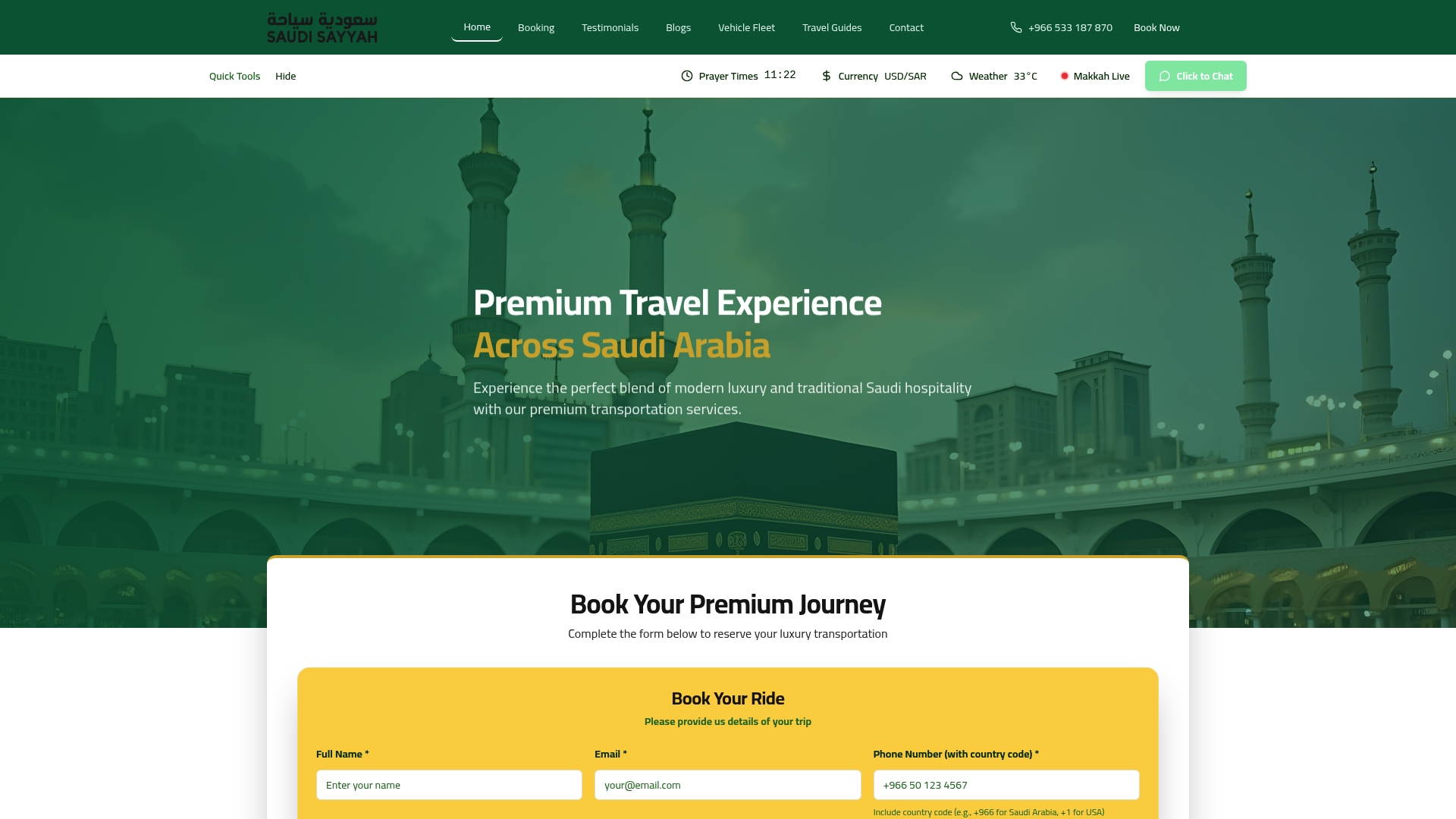
Many bookings include details such as driver photos, vehicle information, and real-time tracking sent before the trip starts, supported by experienced drivers and a modern fleet. If you're weighing a Ziarah tour against a simple airport run, check the services page for both options side by side, or browse the fleet to see which vehicle class fits your group. Request a quote now and specify hourly or point-to-point when you book, and Saudisayyah's team will confirm the details before your pickup window.
Sources
This guide draws on operator pricing explainers, an hourly vs point-to-point cost comparison, and a practical Umrah transport primer covering airport-to-Haram logistics.
- Hourly vs Point-to-Point Chauffeur Service Dubai 2026
- Hourly vs Point-to-Point Car Service in Dallas: Which One Actually Saves You Money?
- Umrah Transportation Guide: Airport to Haram & Intercity Transfers
FAQ
Is Hourly Hire More Expensive Than Point-to-Point?
Not always. Hourly hire often costs more per trip on paper, but point-to-point can end up pricier once you add waiting fees and rebooking costs across a multi-stop day.
What's a Typical Minimum for Hourly Bookings?
Most operators set a minimum of two to four hours, with overtime billed in set increments often in fractions of an hour; always confirm this before booking.
Can I Switch From Point-to-Point to Hourly Mid-Trip?
Some providers allow it if you contact them before the original trip ends, but it depends on driver and vehicle availability, so ask about change policies at booking.
Does Saudisayyah Offer Both Booking Types?
Some booking systems support both hourly hire and point-to-point transfers, allowing selection of the option that fits your itinerary when requesting a quote.
How Far Ahead Should I Book During Peak Umrah Season?
Book as early as possible once your travel dates are set, since demand during Hajj and Ramadan periods affects vehicle availability and pricing.