

TL;DR:
- Data drives smarter travel decisions, with a focus on the 56-day planning window before departure.
- Using transparent AI tools and multiple data sources enhances decision accuracy and traveler confidence.
Data is defined as the foundation of every smart travel decision, from choosing a destination to booking the right transport at the right price. The role of data in travel planning has grown from a background tool into the primary driver of how travelers research, compare, and commit to their plans. Research tracking over 40,000 travelers across 183 countries shows that trip planning is non-linear, with a clear 56-day peak before departure where most decisions get locked in. Understanding this pattern, and the data behind it, gives you a real edge when planning any trip.
What types of data influence travel planning?
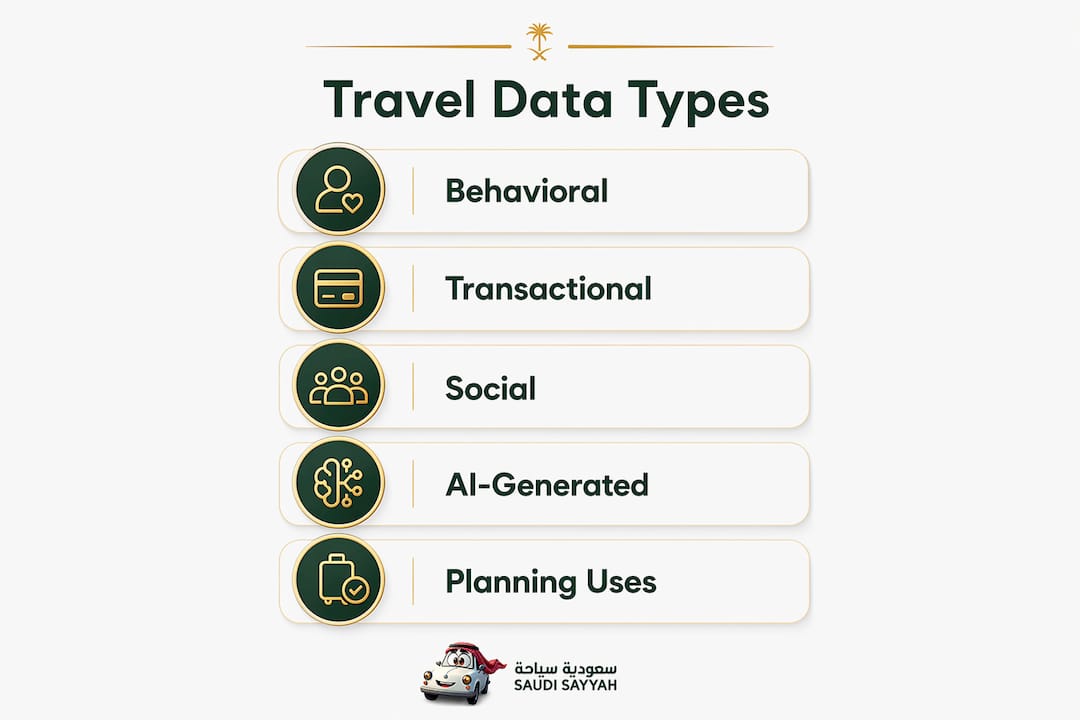
Travel planning analytics draws on several distinct categories of information, each revealing a different layer of traveler behavior.

Behavioral data captures what travelers click, search, and book. Booking history, session duration, and search queries all feed into predictive models that forecast what a traveler is likely to want next. This type of data is the engine behind personalized recommendations on most digital platforms.
Transactional data covers pricing, availability, and purchase records. A global survey of nearly 7,000 travelers confirms that price remains the primary driver for platform choice. That finding explains why transparent, real-time pricing signals convert browsers into bookers faster than any other feature.
Social media and sentiment data track what travelers post, share, and rate after their trips. Platforms analyze this content to identify destination trends, flag service problems, and surface authentic traveler opinions. Sentiment analysis turns thousands of unstructured reviews into a usable signal for both travelers and providers.
AI-generated data is the newest category. Generative AI tools produce recommendations, itineraries, and summaries based on patterns in all the above data types. The quality of these outputs depends directly on the quality of the underlying data fed into the model.
| Data type | Primary source | Planning use |
|---|---|---|
| Behavioral | Search and click history | Personalized recommendations |
| Transactional | Booking and pricing records | Cost comparison and timing |
| Social and sentiment | Reviews and social posts | Destination and service quality |
| AI-generated | Aggregated model outputs | Itinerary drafts and suggestions |
| Location and real-time | GPS and live feeds | Transport and logistics planning |
Pro Tip: Cross-reference AI-generated itinerary suggestions with recent traveler reviews on the same destination. AI models train on historical data, so very recent sentiment shifts may not yet be reflected in their outputs.
How does data change traveler behavior and itinerary design?
Data analysis reveals that travelers do not plan in a straight line. Research from over 40,000 travelers shows the planning process is highly complex, with travelers revisiting decisions multiple times before committing. That non-linear pattern matters because it means a single well-timed data touchpoint can reshape an entire trip plan.
Three behavioral patterns stand out from large-scale traveler datasets.
-
The 56-day planning peak. The 56-day window before travel is the highest-activity period for research and booking. Travelers who use data tools during this window, rather than earlier or later, make more confident and better-matched decisions.
-
Pillar activity anchoring. Travelers tend to anchor itineraries around a few key activities, then fill the schedule around those anchors. Data tools that identify the most popular or highest-rated activities for a destination help travelers set those anchors faster and with more confidence.
-
Lunch-forward meal planning. Behavioral data shows travelers plan lunch first, then work outward to breakfast and dinner. This pattern simplifies daily scheduling and reduces decision fatigue. Knowing this, data-powered planning tools can sequence meal suggestions to match how travelers actually think.
These patterns have a direct impact on how you should use planning tools. Entering your destination and dates into a data-driven platform during the 56-day window, rather than months out, produces recommendations that reflect current availability, pricing, and traveler sentiment.
Pro Tip: When using an AI planning tool, start by locking in your one or two pillar activities first. The tool will generate better supporting suggestions once it has a clear anchor to build around.
How do AI and analytics tools use data to improve planning?
Predictive analytics models achieve 80% accuracy in predicting travel package choices using Random Forest algorithms trained on historical booking records. That level of accuracy means a well-built model can anticipate what a traveler wants before the traveler has fully articulated it. The practical result is faster, more relevant recommendations with less manual searching.
AI transparency is the factor that separates useful tools from frustrating ones. Research shows that AI reasoning transparency significantly enhances trust and the perceived quality of travel information. When a tool shows you why it recommends a specific hotel or route, not just what it recommends, you can evaluate the suggestion critically and make a better final call.
Travelers who can see the reasoning behind an AI recommendation are more likely to accept it, refine it, and ultimately trust the platform that delivered it. Transparency is not a feature. It is the mechanism by which AI earns continued use.
Information quality sits beneath all of this. Travelers' satisfaction with AI tools depends on the accuracy of the underlying data and the traveler's ability to evaluate outputs critically. A model trained on outdated or biased data will produce confident-sounding but unreliable suggestions. The best platforms update their data continuously and flag the recency of their sources.
Real-time data integration is where flight tracking and live logistics data add measurable value. Knowing a flight is delayed before you leave for the airport changes your entire ground transport plan. Platforms that pull live data into their recommendations reduce the gap between planning and reality.
Pro Tip: Before committing to an AI-generated itinerary, ask the tool to explain its top three recommendations. If it cannot provide a reason, treat those suggestions as starting points rather than conclusions.
What practical steps can travelers take to use data tools effectively?
Using data for trip planning produces better results when you approach it with a clear method rather than browsing randomly.
- Time your research to the 56-day window. Data shows this is when pricing, availability, and traveler sentiment signals are most actionable. Starting too early means conditions will shift before you book. Starting too late limits your options.
- Prioritize platforms with transparent pricing. Travel brands that focus on winning key booking moments through credible, visible pricing convert better and deliver fewer post-booking surprises. If a platform hides fees until checkout, its data is not working for you.
- Build your AI literacy. High AI literacy enables travelers to critically appraise and iteratively refine AI outputs. This means asking follow-up questions, adjusting inputs, and comparing AI suggestions against recent human reviews rather than accepting the first output.
- Use multiple data types together. Combine predictive tool recommendations with current social sentiment and verified reviews. No single data source captures the full picture. The role of technology in travel is most powerful when multiple streams work in parallel.
- Avoid overreliance on automation. Future travel planning tools are designed to support human decision-making rather than replace it. Data tools work best as a filter and a prompt, not as a final authority.
The travelers who get the most from data-driven planning are not the most tech-savvy. They are the ones who stay curious, question outputs, and treat data as one input among several rather than the only answer.
Key Takeaways
Data-driven travel planning works best when travelers combine AI tools, real-time data, and critical evaluation during the 56-day peak planning window before departure.
| Point | Details |
|---|---|
| The 56-day planning peak | Focus your research and booking activity in the 56-day window before travel for the best data signals. |
| Pillar activity anchoring | Lock in one or two key activities first; data tools build better itineraries around a clear anchor. |
| AI transparency builds trust | Choose platforms that show reasoning behind recommendations, not just the recommendations themselves. |
| Predictive accuracy is real | Random Forest models reach 80% accuracy in package prediction, making AI suggestions worth evaluating seriously. |
| AI literacy determines outcomes | Travelers who question and refine AI outputs get better results than those who accept the first suggestion. |
What I've learned from watching travelers interact with data
Most travelers treat data tools like a search engine: type a question, accept the first result, move on. That approach wastes most of what these tools actually offer. The real value is in the iteration. A traveler who asks an AI tool for a three-day Riyadh itinerary, then pushes back on the lunch suggestions, then adjusts the transport timing based on live traffic data, ends up with something genuinely useful. The traveler who accepts the first draft ends up with a generic schedule.
What surprises me most is how few travelers use the 56-day window deliberately. Most people know roughly when they want to travel months in advance, but they wait until two or three weeks out to start serious research. By then, the best pricing signals have already moved. The data is clear on this: the window exists, it is predictable, and most travelers miss it.
The other shift I expect to see accelerate is the move from automation toward what researchers call decision engineering. The goal is not to remove the traveler from the process. It is to give the traveler better information at the right moment so their own judgment improves. That framing changes how you should think about every data tool you use. It is not there to decide for you. It is there to make your decision better.
The travelers who will benefit most from data in the next few years are not the ones who trust AI the most. They are the ones who trust it the right amount.
— Fa
How Saudisayyah uses data for reliable transport in Saudi Arabia
Saudisayyah applies the same data principles this article covers to ground transport for travelers and pilgrims in Saudi Arabia. Every booking runs through a fully automated system that surfaces transparent pricing, verified driver profiles, and real-time vehicle tracking before each trip begins.
Travelers visiting Makkah or Madinah for the first time get driver photos, vehicle details, and live location updates sent directly to their devices. That is data working in practice, not just in theory. For travelers who want car hire services built around verified information and clear communication, Saudisayyah removes the guesswork from ground transport. You can also review the full vehicle fleet options before booking to match your group size and comfort needs.
FAQ
What is the role of data in travel planning?
Data defines travel planning by powering personalized recommendations, price comparisons, and behavioral insights that help travelers make faster and better decisions. Predictive analytics models can reach 80% accuracy in forecasting travel package preferences based on historical booking data.
When is the best time to use data tools for trip planning?
The 56-day window before departure is the peak planning period, when pricing, availability, and traveler sentiment data are most current and actionable. Using data tools during this window produces more relevant and reliable results than planning months in advance.
How does AI transparency affect travel planning?
AI tools that show the reasoning behind their recommendations build significantly more trust and are more likely to be used effectively. Travelers who understand why a suggestion was made can refine it, which leads to better final decisions than accepting unexamined outputs.
What is AI literacy in travel planning?
AI literacy is the ability to critically evaluate, question, and refine the outputs of AI planning tools rather than accepting them at face value. Research shows that travelers with higher AI literacy get more accurate and useful results from generative AI travel tools.
How do travelers use data to build itineraries?
Travelers anchor itineraries around one or two pillar activities, then use data tools to fill in transport, meals, and secondary experiences around those anchors. Behavioral data also shows a lunch-forward meal planning pattern, where lunch is scheduled first and other meals are organized around it.