

TL;DR:
- Over 84% of online bookings now originate from mobile devices, reflecting a shift in travel planning. Mobile booking allows travelers to reserve services quickly on the move through optimized apps or websites, often with instant confirmation and real-time updates. Native apps offer higher completion rates and offline access, making them preferable for complex or last-minute pilgrimages, while web options suit quick, simple reservations.
Mobile booking is defined as the process of reserving travel services, accommodations, and transportation directly from a smartphone or tablet through a dedicated app or mobile-optimized website. The industry term for this practice is mobile commerce booking, though "mobile booking" is the phrase travelers use daily. Over 84% of all online bookings now originate from mobile devices. That figure alone tells you where travel planning has moved. For tourists and pilgrims heading to Saudi Arabia, understanding what mobile booking is and how to use it well can save time, money, and stress before you ever leave home.
What is mobile booking and how does it work?
Mobile booking is the act of selecting, confirming, and paying for a travel service entirely on a mobile device. The process typically takes three steps: search, select, and confirm. A traveler opens an app or mobile website, enters travel dates and destination, picks a service, and completes payment. Instant confirmation arrives by email or push notification, often within seconds.
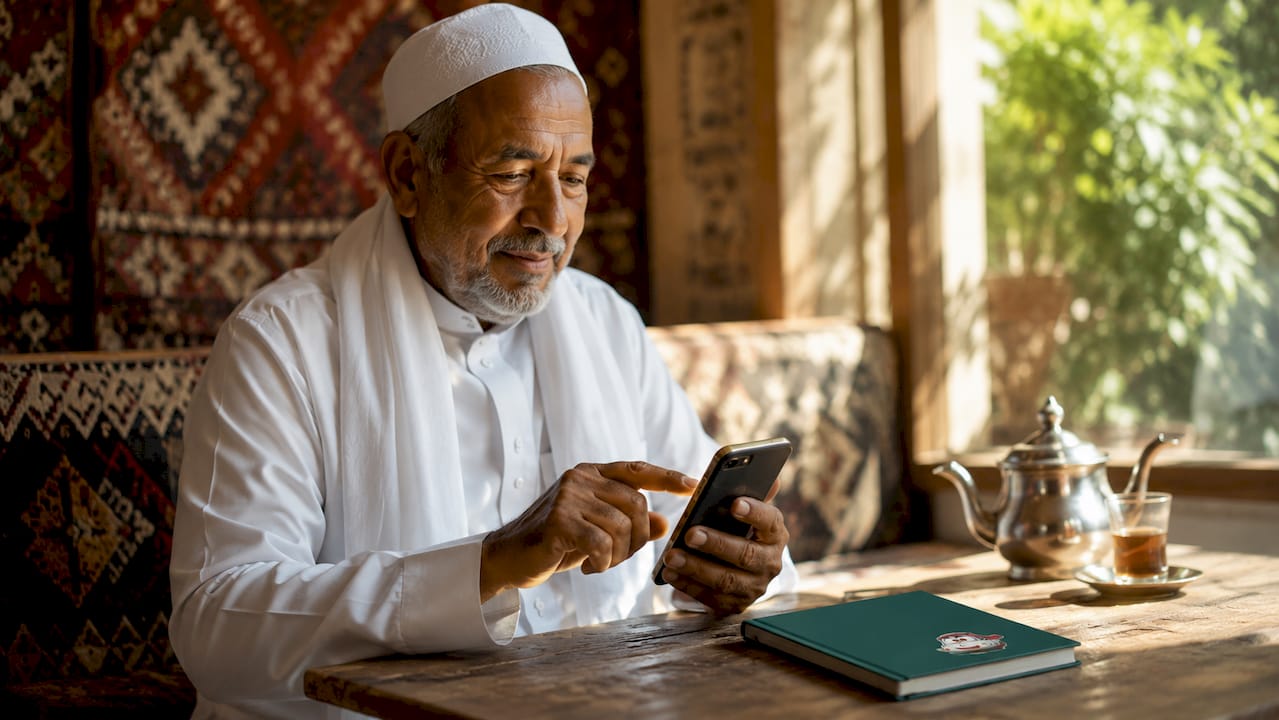
The key difference from desktop booking is the context. Mobile booking happens on the move, in queues, at airports, and during layovers. Platforms like Booking.com, Airbnb, and Google Travel have built their mobile experiences around that reality. Saudisayyah applies the same logic to pilgrimage transport, letting pilgrims confirm a car hire from Jeddah to Makkah before they land.
What features make mobile booking efficient and user-friendly?
A well-built mobile booking platform is not simply a desktop website shrunk to fit a phone screen. Mobile-first design is built from scratch for thumb use, fast loading, and minimal typing. A mobile-friendly site, by contrast, is a desktop site adapted for smaller screens, and the usability gap between the two is significant.
The features that separate a good mobile booking experience from a frustrating one include:
- Minimal form fields. Fewer fields mean faster checkout. The best platforms ask only for what is necessary.
- Thumb-friendly buttons. Touch targets of 44x44 pixels are the standard for comfortable tapping without errors.
- Integrated payments. Apple Pay, Google Pay, and saved card options remove the need to type long card numbers on a small keyboard.
- Real-time status updates. Instant confirmation screens and digital receipts replace the uncertainty of waiting for an email.
- Push notifications. Alerts for booking changes, driver arrivals, or flight updates keep travelers informed without opening the app.
Every 1-second delay in mobile page load drops conversions by 7%. Speed is not a bonus feature. It is the foundation of the entire experience.
Pro Tip: Before you book, check whether the site loads in under 3 seconds on your mobile connection. If it takes longer, look for the provider's native app instead.
Mobile booking apps vs. mobile web: which is better for travelers?
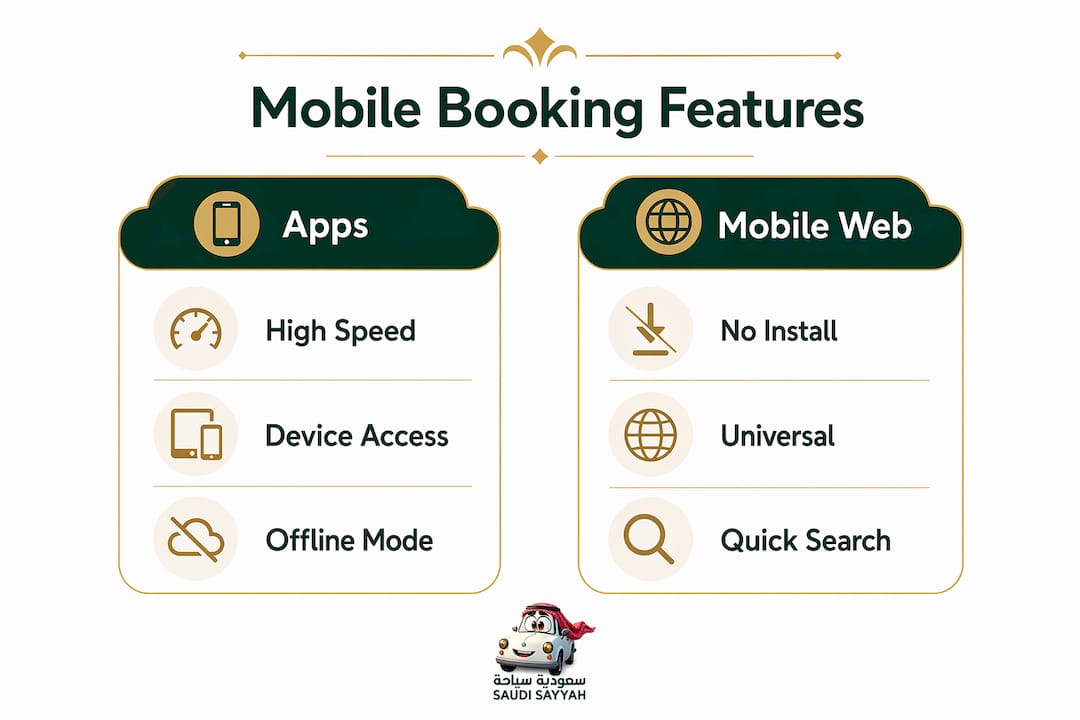
The choice between a native app and a mobile website affects how smoothly your booking goes, especially when connectivity is poor.
| Feature | Native app | Mobile web |
|---|---|---|
| Booking completion rate | 87% completion rate | 64% completion rate |
| Offline access | Yes, saved itineraries viewable offline | No, requires active connection |
| Biometric login | Face ID and fingerprint supported | Rarely available |
| Installation required | Yes | No |
| SEO discoverability | No | Yes, findable via search |
| Personalization | High, remembers preferences | Limited |
Native apps deliver a 35% higher booking completion rate than mobile web. That gap exists because apps use device features like biometric authentication, offline caching, and rich notifications that websites cannot fully replicate. For a pilgrim traveling through areas with inconsistent internet, an app that stores your booking details offline is a practical necessity, not a luxury.
Mobile web has its own strengths. No installation is required, which matters when you are using a borrowed device or a short-term SIM. Web-based booking is also easier to share via a link in a WhatsApp message or email. Hybrid solutions that combine app depth with web accessibility give travelers the best of both approaches.
Pro Tip: Download the app for any service you plan to use repeatedly, such as your airline or car hire provider. Use mobile web for one-off bookings where you do not want another app on your phone.
What are the benefits of booking on mobile for tourists and pilgrims?
The advantages of mobile booking go beyond convenience. For pilgrims managing a complex trip with fixed religious dates and limited flexibility, the right mobile tools reduce planning errors and open access to deals that desktop users miss.
- Mobile-only discounts. Many platforms offer exclusive flash sales accessible only through their app. These deals are time-sensitive and often appear during off-peak hours.
- Faster decisions. Mobile booking reduces research paralysis by surfacing top options quickly. A pilgrim arriving at King Abdulaziz International Airport can confirm a transfer to Makkah in under two minutes.
- Last-minute flexibility. Hotels and transport providers release unsold inventory at reduced rates close to the date. Mobile users catch these deals first because push notifications deliver them instantly.
- Booking while in motion. Waiting in a visa line or sitting in a departure lounge becomes productive time. You can confirm accommodation in Madinah while still in transit.
- Centralized itinerary. Apps like Google Travel pull together flights, hotels, and transfers into one view, reducing the risk of missing a connection.
- Real-time tracking. Services like Saudisayyah send driver photos, vehicle details, and live GPS tracking directly to your phone before each trip. That level of visibility is only possible through a mobile platform.
The benefits of booking on mobile are most pronounced for simple, single-service bookings: one hotel night, one airport transfer, one car hire. Complex multi-leg itineraries with detailed fare rules are still easier to review on a desktop screen first.
How to use mobile booking platforms effectively
Getting the most from mobile booking requires a few deliberate habits. Follow these steps to avoid the most common pitfalls.
-
Choose apps with integrated payment options. Platforms that support Apple Pay, Google Pay, or stored payment methods cut checkout time significantly. Avoid any booking flow that redirects you to an external payment page. Slow redirects are a leading cause of abandoned bookings.
-
Skip forced account creation when possible. Mobile users abandon bookings when required to create an account before seeing prices. Look for guest checkout options, especially for one-time services.
-
Use messaging app booking links. Mobile booking increasingly happens through WhatsApp, Telegram, and Instagram links shared by service providers. These links open directly in a mobile browser or app, removing extra navigation steps.
-
Match the tool to the trip complexity. Use mobile booking for straightforward reservations: airport transfers, single-night hotels, and car hires. For complex Hajj or Umrah packages with multiple components, review full terms on desktop first, then confirm on mobile. This approach is described in detail in pilgrimage taxi booking guides built specifically for the Saudi Arabia context.
-
Check security before entering payment details. Confirm the URL begins with HTTPS and that the site or app belongs to a recognized provider. Avoid booking through unsaved links sent by unknown contacts.
-
Enable push notifications for your bookings. Notifications from your airline, hotel, or transport provider deliver real-time changes faster than email. For pilgrims on tight schedules, a 10-minute heads-up about a driver delay can prevent a missed connection.
-
Keep digital receipts accessible offline. Screenshot or download your confirmation before you travel. In areas with poor connectivity around the holy sites, offline access to your booking reference is the backup that matters.
Key takeaways
Mobile booking is the fastest and most cost-effective way for tourists and pilgrims to reserve travel services, provided the platform is built for mobile use from the ground up.
| Point | Details |
|---|---|
| Mobile booking definition | Reserving travel services via smartphone apps or mobile websites, with instant confirmation. |
| App vs. web performance | Native apps complete bookings at 87% vs. 64% for mobile web, a meaningful gap for travelers. |
| Design standards matter | Thumb-friendly buttons, minimal form fields, and integrated payments determine whether a booking gets completed. |
| Best use case | Mobile booking works best for simple, single-service reservations; complex itineraries benefit from desktop review first. |
| Security basics | Always confirm HTTPS, use recognized providers, and store booking confirmations offline before traveling. |
Why mobile booking changed how I think about pilgrimage planning
The conventional wisdom says mobile booking is just a convenience upgrade. I disagree. It is a structural shift in who gets access to the best prices and the most reliable services.
Pilgrims planning Umrah or Hajj used to depend on travel agents for every booking. That model worked, but it added cost, delay, and a layer of uncertainty. Mobile booking removes that layer. A pilgrim in Indonesia can confirm a Makkah car hire with real-time driver tracking before the flight departs, paying a transparent price with no intermediary markup.
What I find underappreciated is the role of automation in travel logistics. AI-powered booking agents embedded in messaging apps will handle the next wave of mobile reservations. A pilgrim will send a WhatsApp message describing their needs, and an AI agent will return a confirmed booking in seconds. That is not a distant prediction. It is already in early deployment across several transport platforms.
The practical implication for pilgrims is this: the providers who build genuinely mobile-first systems now will be the ones worth trusting when you arrive in the holy lands. Providers who treat mobile as an afterthought will show it in every step of the experience.
— Fa
How Saudisayyah makes mobile booking work for pilgrims
Saudisayyah builds its entire transport service around mobile-first booking for pilgrims and tourists traveling in Saudi Arabia.
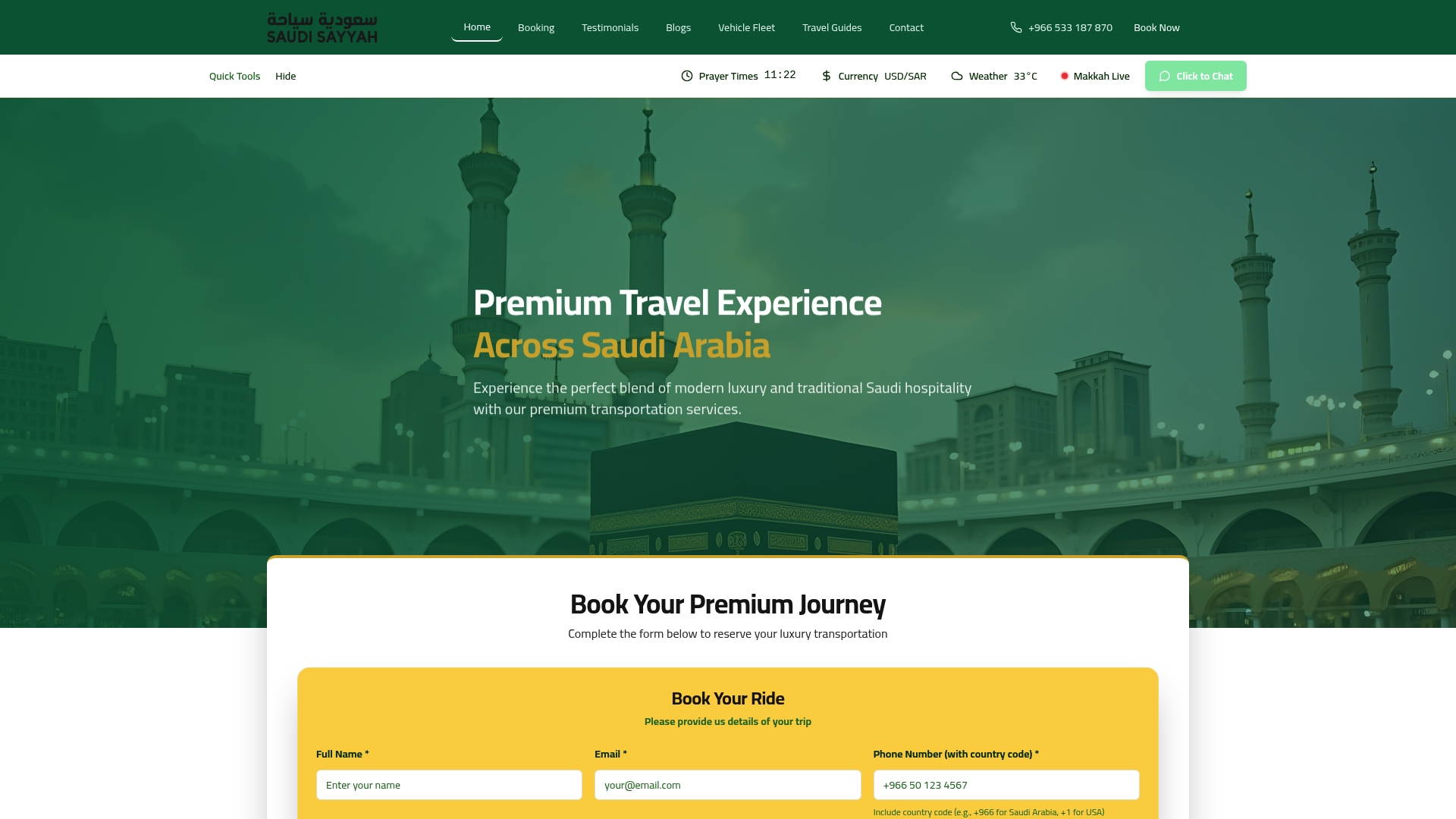
From the moment you confirm a booking through Saudisayyah's car hire services, the platform sends your driver's photo, vehicle details, and a live GPS tracking link directly to your phone. No waiting, no uncertainty. The premium fleet covers Umrah and Hajj routes between Jeddah, Makkah, and Madinah, with latest-model vehicles and experienced drivers. For pilgrims making this trip for the first time, that level of mobile-delivered information removes the anxiety of arriving in an unfamiliar country. Booking takes minutes. Confirmation is instant.
FAQ
What is the mobile booking definition in simple terms?
Mobile booking is the process of reserving a travel service, such as a hotel, flight, or car hire, using a smartphone or tablet through an app or mobile website. Confirmation is typically instant.
Are mobile booking apps safer than mobile websites?
Native apps from recognized providers are generally safer because they use biometric authentication and encrypted storage. Always verify the provider is legitimate before entering payment details on any platform.
Do mobile bookings offer better prices than desktop bookings?
Many platforms offer mobile-only discounts and flash sales accessible only through their app. Desktop users do not see these deals.
What should pilgrims book on mobile vs. desktop?
Mobile booking works best for simple reservations like airport transfers and single-night hotels. Complex multi-component packages with detailed cancellation policies are easier to review on desktop first.
How do I avoid a bad mobile booking experience?
Choose platforms with integrated payments, guest checkout, and fast load times. Mobile users abandon bookings when pages load slowly or force account creation before showing prices.