

TL;DR:
- Remote reservation allows travelers to book transportation services via online platforms without visiting in person. It offers real-time availability, instant confirmation, and remote management, which are especially valuable for pilgrimage travel planning. Proper preparation, review of platform reviews, and careful verification enhance the success of remote bookings.
What is remote reservation?
Remote reservation is the process of booking travel or transportation services through online platforms or digital channels without visiting the provider in person. Travelers use websites, mobile apps, or email to select services, enter personal details, process payment, and receive confirmation. Systems like Opera PMS, Amadeus, and Sabre connect in real time to verify availability and finalize bookings accurately.
For pilgrims planning holy land journeys, this means securing transportation from home, weeks before departure, with no need to coordinate on arrival.
- Book via website, mobile app, or email
- Real-time availability and payment processing
- Automated confirmation delivered instantly
- Manage changes or cancellations remotely
How the remote booking process works for pilgrimage travel
The typical remote reservation workflow moves through six clear stages: access the platform, select a service and date, enter personal and travel details, process payment, receive automated confirmation, and manage the booking if plans change.
For group pilgrimages, platforms may add an approval step when bookings exceed a set threshold. A trip lead or operations contact reviews the request before confirmation goes out. Remote reservation agents handle modifications, cancellations, and customer communication across all stages, reducing errors and missed updates.
- Open the booking platform and select your service type
- Choose travel dates and pickup or drop-off locations
- Enter passenger details and any special requirements
- Complete secure payment
- Receive confirmation with booking reference and driver details
- Manage changes through the platform before travel
What to prepare before you book remotely
Travelers should gather documents and details before starting the remote booking process. Experts recommend booking 2–6 weeks ahead for standard trips and 6–8 weeks out for complex group pilgrimages.
- Passport and visa: Valid travel documents ready to enter details accurately
- Government-issued ID: Required for identity verification on most platforms
- Payment method: Credit or debit card accepted by the platform
- Travel timeline: Confirm dates, pickup points, and any layover details
- Group coordination: Collect all passenger names and requirements before starting
- Connectivity: Stable internet access to complete the booking without interruption
- Flexible options: Filter for services with free cancellation or date-change policies
Benefits of remote reservation systems for pilgrims
Remote reservation offers 24/7 access, faster confirmations, and the ability to manage bookings from any location. Pilgrims traveling to Makkah or Madinah for the first time gain particular value from platforms that send driver photos and real-time tracking before each trip.
Key benefit: Geolocation-enabled platforms provide vehicle details and live tracking, giving travelers verified information before the driver arrives.
- Around-the-clock booking access, no office hours required
- Faster confirmation than on-site coordination
- Modify or cancel without calling or visiting in person
- Driver identity and vehicle details shared before pickup
- Integrated payment records for expense tracking
- Reduced risk of miscommunication through documented confirmations
Best practices for successful remote reservations
Verify recent reviews focused on punctuality and service quality, not just star ratings. A platform with a 4.2-star average and recent comments about on-time arrivals tells more than a 5-star rating with no recent activity.
Pro Tip: Choose platforms that offer instant confirmation and a dedicated operations contact. For complex holy land itineraries, human-in-the-loop support for visa compliance, accessibility needs, and group coordination goes beyond what automated systems alone can handle.
Add buffer time before and after each transport segment. Unfamiliar environments, prayer schedules, and crowd conditions at holy sites create delays that a tight itinerary cannot absorb. For group pilgrimage transport, assign one person to own logistics and serve as the single point of contact with the platform.
Common challenges and how to overcome them
Connectivity gaps are the most frequent obstacle. Travelers in transit or at remote locations may lose access mid-booking. Download confirmation documents and driver details before leaving reliable internet access.
Language barriers and unfamiliar platform interfaces slow down first-time users. Platforms with multilingual support and clear step-by-step flows reduce this friction. If a booking requires special instructions, type them in the notes field rather than relying on verbal communication at pickup.
Last-minute changes are harder to manage without a responsive support channel. Book through platforms that offer live chat or a direct operations line, not just email. A VIP shuttle booking guide outlines how professional transportation services handle change requests in real time.
Security and privacy when making remote reservations
Use only platforms with HTTPS encryption and clear privacy policies before entering payment or passport details. Avoid booking over public Wi-Fi without a VPN.
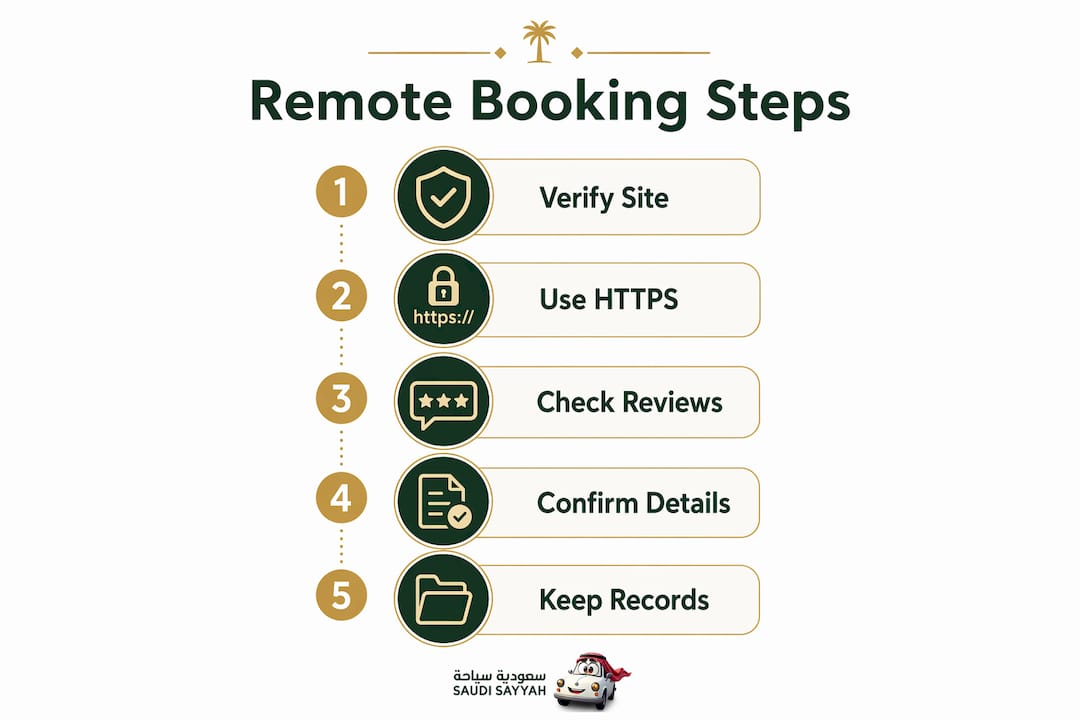
Check that the platform stores payment data through a certified processor rather than holding card numbers directly. Reputable systems use tokenized payment handling. After booking, save the confirmation email and reference number in a secure location separate from your primary inbox. If a platform requests more personal data than the booking requires, treat that as a warning sign.
Using remote reservation for holy land travel
Holy land travel involves specific requirements that standard booking platforms do not address. Visa compliance, gender-segregated transport options, accessibility for elderly pilgrims, and coordination across multiple sites all require platforms built for this context.
Saudisayyah's pilgrimage booking services are built around these needs, with an internationally compliant booking system, experienced drivers, and geolocation tracking active before every trip. For first-time pilgrims, the platform maintains communication throughout the journey. The 2026 Umrah booking guide covers platform-specific steps for securing transportation across Makkah and Madinah.
How to verify and confirm bookings remotely
After completing a booking, cross-check the confirmation email against the details entered: dates, pickup location, passenger count, and service type. Discrepancies are easier to correct before travel than on the day.
Contact the platform directly if the confirmation does not arrive within the stated window. Save the booking reference number and the platform's support contact separately. For group bookings, share the confirmation with all travelers and assign one person to track any updates. Alliance Virtual Offices notes that instant confirmation platforms with concierge support resolve disputes faster than those relying solely on automated systems.
Remote reservation gives pilgrims full control over transportation planning before they leave home, with documented confirmations and real-time tracking replacing uncertainty on arrival.
| Point | Details |
|---|---|
| Book 2–8 weeks ahead | Experts recommend booking 2–6 weeks ahead for standard trips and 6–8 weeks for complex group pilgrimages. |
| Prepare documents first | Have passport, visa, and payment method ready before starting the booking flow. |
| Use geolocation platforms | Driver photos and live tracking reduce uncertainty at pickup for first-time pilgrims. |
| Add buffer time | Build extra time around each transport segment to absorb delays at holy sites. |
| Verify confirmation details | Cross-check dates, locations, and passenger count immediately after booking. |
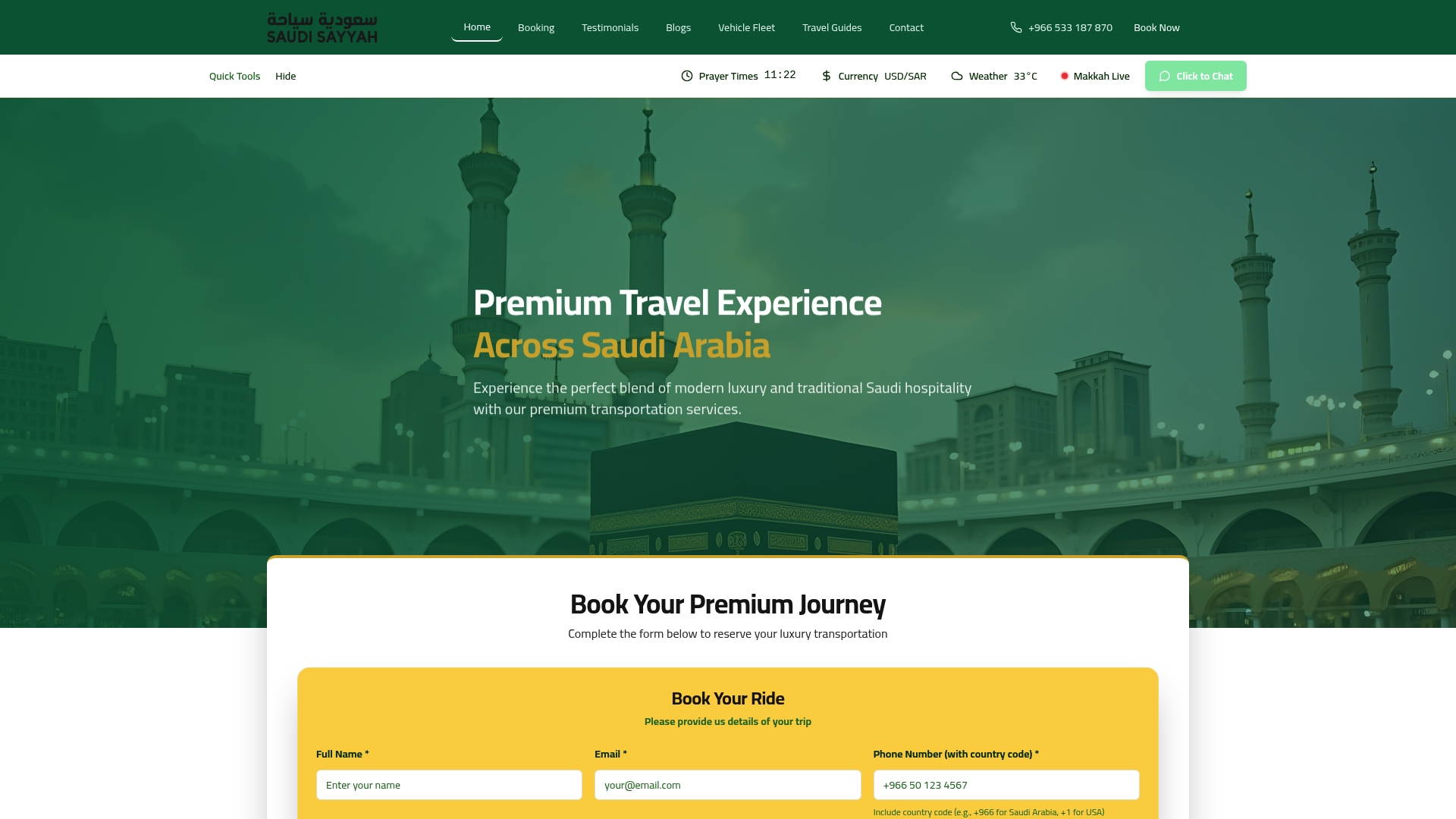
Saudisayyah combines a fully automated, internationally compliant booking system with professional drivers and real-time geolocation tracking. View available transportation services or explore the premium fleet built for Umrah and Hajj travel.