
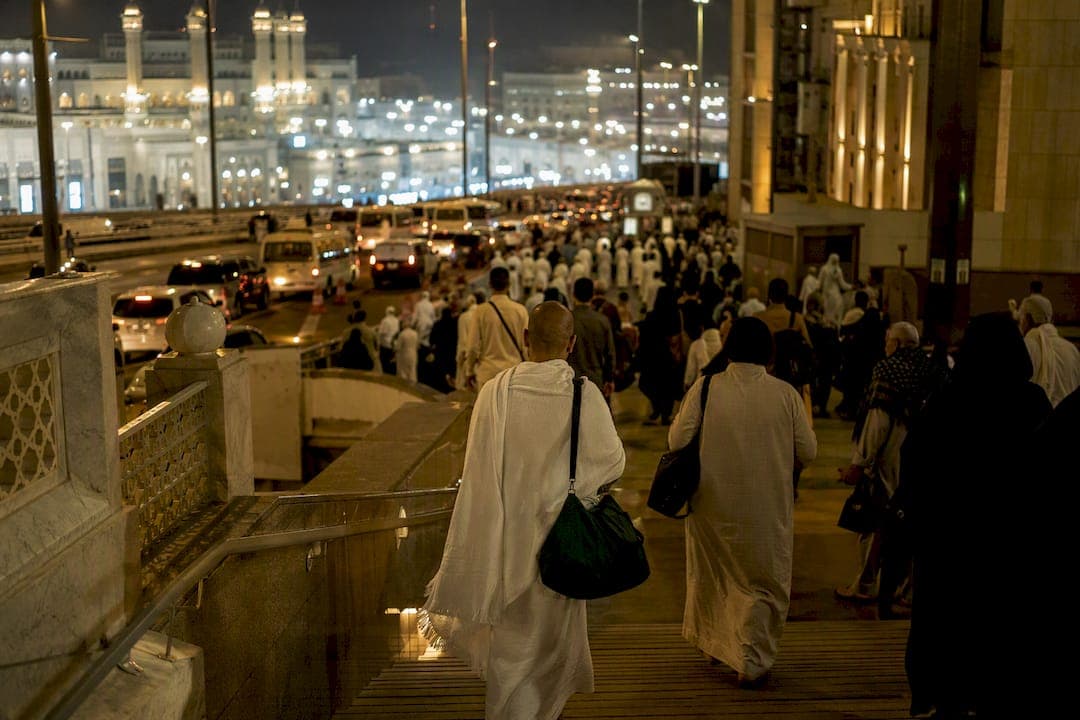
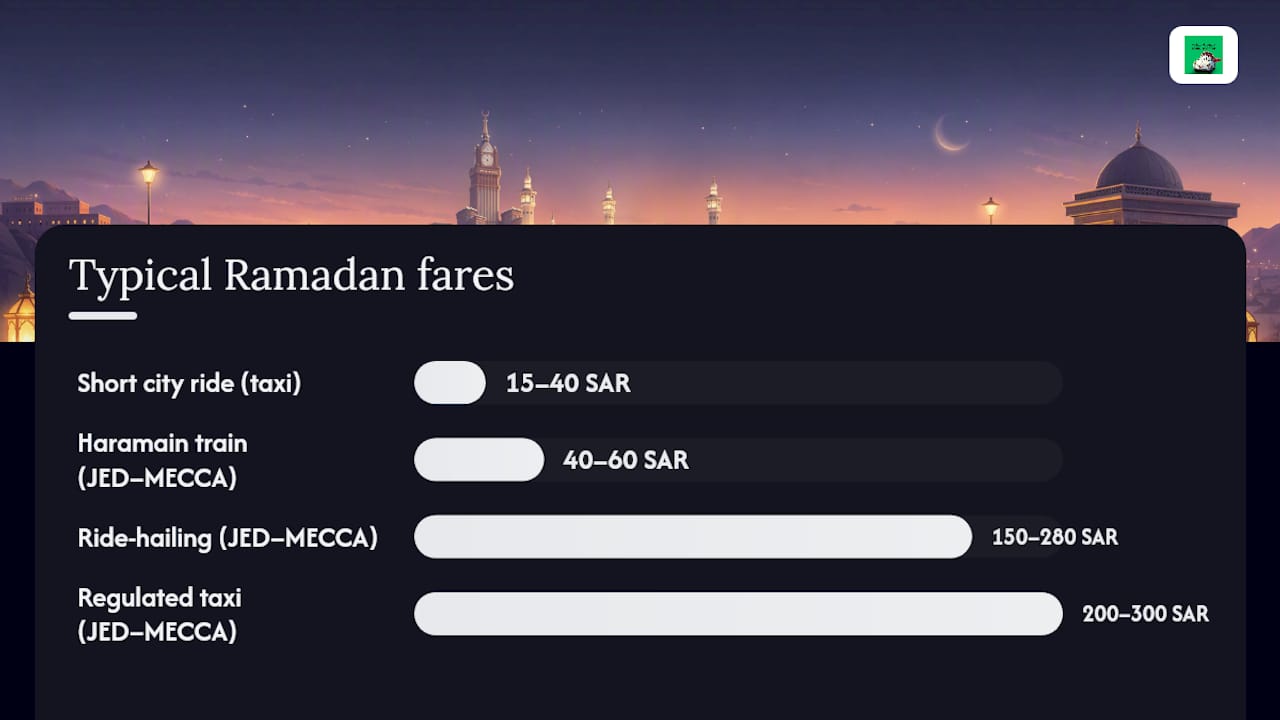
Expect Haramain train fares around 40 to 60 SAR per person for Jeddah to Mecca, taxis running 200 to 300 SAR for the same route, and short city trips in the 15 to 40 SAR range. Ride-hailing apps often land between 150 and 280 SAR depending on demand. The one action that matters most: book trains and private transfers now, because fares and seat availability tighten fast once the last ten nights of Ramadan begin.
TL;DR:
- Book train and private transfer options early to secure availability before Ramadan's last ten nights, when prices and seat shortages spike sharply.
- Expect transport prices to increase significantly during peak Ramadan dates, especially around iftar and taraweeh, with fares often surpassing 150 SAR for ride-hailing and private transfers.
- Use official sources to monitor real-time updates on schedules, capacities, and fare adjustments, and verify driver details before traveling to avoid last-minute surprises.
- Group bookings and shared transfers usually provide better per-person rates than individual taxis or trains, especially for airport to hotel routes.
- Avoid booking rides right before iftar or during peak demand hours, and consider pre-paid, fixed-rate services with driver photos and tracking to ensure safety and price certainty.
Table of Contents
- How Ramadan Changes Transport Prices in Mecca
- Transport Options and What They Cost During Ramadan
- Booking Smart: How to Avoid Ramadan Price Surprises
- What Years of Pilgrim Transfers Have Taught Us
- Book Your Ramadan Transfers Before the Last Ten Nights Fill Up
- Where to Verify Prices and Schedules Before You Travel
- Sources
- FAQ
How Ramadan Changes Transport Prices in Mecca
Ramadan does not just shift prayer schedules. It rewrites the entire transport market in Mecca for four weeks straight. Demand spikes sharply as pilgrims and residents converge on the Haram for taraweeh and Laylat al-Qadr, and the surge intensifies dramatically during the last ten nights, when hotels near the Grand Mosque fill up and every taxi, shuttle, and train seat becomes contested.
This is exactly why transport pricing during Ramadan doesn't follow the same rules as the rest of the year. Package operators have already reported Umrah costs climbing sharply heading into Ramadan 2026, with warnings to lock in bookings early rather than wait. Umrah packages have reportedly risen to comparatively high levels during Ramadan in some cases, and transport is one piece of that rising total, not the whole story. Accommodation near the Haram usually drives the bigger jump, but taxis and private transfers ride the same wave of demand.
Authorities also adjust operations for the holy month. Regional precedent shows this pattern clearly: toll operators in the UAE shifted fee structures and operating windows around iftar timing during Ramadan 2026, a reminder that transport tariffs and schedules can move when religious observance changes daily traffic patterns. Saudi Arabia's own transport network makes similar seasonal calls, though the specifics vary year to year.
Before you travel, check these sources for real-time updates:
- The Ministry of Transport posts official notices on service changes and capacity adjustments.
- Saudi Press Agency releases cover daily operational figures during peak Ramadan windows, including passenger volumes that signal how crowded routes will be.
- Haramain rail notices and local news outlets often report schedule tweaks before they hit the official portal.
Checking these sources before you finalize a booking saves more money than any single negotiating trick.
Transport Options and What They Cost During Ramadan
Mecca gives you five real ways to move: the Haramain train, public buses, taxis, ride-hailing apps, and private transfers. Each one behaves differently once Ramadan crowds show up.
The Haramain High Speed Rail connects Mecca, Jeddah, and Medina, and it remains the most predictable option on paper. Fares vary by class, with economy seats and first-class seats priced differently across the route, and reported fare bands shift for Ramadan as the rail authority manages heavier passenger loads. The catch is availability. Seats disappear fastest during the last ten nights, so a fare that looks reasonable in early Ramadan can be gone entirely by the time you check two weeks later.
Public buses and shuttle services cover a lot of ground inside Mecca, and some routes run free during specific windows tied to prayer times, while others charge a standard fare. Mecca's public transport network includes dedicated fleets for pilgrimage seasons, and Ramadan typically brings expanded shuttle service around the Haram to handle overflow crowds heading to and from taraweeh prayers. Check posted schedules at your hotel, since free windows shift depending on prayer times each day.
Taxis operate on a flagfall plus distance model, though real-world Ramadan pricing often involves negotiation rather than a strict meter. A detailed breakdown of Mecca taxi flagfall rates shows a starting charge around 6.4 SAR, with short trips inside the city commonly running 15 to 40 SAR. Evening surges around iftar and just before taraweeh push prices up, sometimes by a wide margin, especially near the Haram where competition for cars gets fierce.
Ride-hailing apps show you the price before you commit, which helps you dodge the guesswork of street negotiation. Expect surge pricing in the same windows as taxis: right before iftar, right after taraweeh, and during the last ten nights overall. On the Jeddah to Mecca route, app estimates commonly land between 150 and 280 SAR, often undercutting a negotiated taxi fare if you book outside peak hours.
Private transfers and shared minibuses make the most sense once your group grows past two or three people, or when you're hauling heavy luggage straight from the airport. Splitting a private transfer across eight to twelve people frequently beats paying for multiple taxis or train tickets separately. A step-by-step 2026 transport cost breakdown puts group transfer costs well below the per-person price of stacking individual rides, particularly for the Jeddah airport run.
Quick budgeting examples for common Ramadan trips:
- Jeddah airport to Mecca, solo traveler: Haramain train around 40 to 60 SAR, regulated taxi 200 to 300 SAR, ride-hailing 150 to 280 SAR.
- Short city ride, 5 to 10 kilometers: 15 to 40 SAR by taxi, often less by app during off-peak hours.
- Group of eight to twelve, airport to hotel: a shared minibus typically brings the per-person cost below what a solo taxi or train ticket would run.
Booking Smart: How to Avoid Ramadan Price Surprises
Price surges during Ramadan are predictable, which means they're avoidable with the right timing.
- Book trains and private transfers early. Haramain seats and reliable transfer slots vanish well before the last ten nights arrive, and vendors handling group bookings for buses or minibuses usually need earlier lead times and larger deposits to lock in a reservation.
- Check cancellation and refund terms before you pay. Ramadan schedules shift, and you want the option to rebook without losing your deposit.
- Avoid traveling in the hour or two before iftar. This window produces the worst combination of traffic and fare surges across taxis, ride-hailing, and shuttle routes.
- Run the math for groups. Compare a private transfer split across your group against multiplying individual train or taxi fares. The group option usually wins once you pass three or four travelers.
- Get an itemized, confirmed receipt for every ride, and verify driver and vehicle details before you get in, especially with unmarked taxis working the crowds near the Haram.
Pro Tip: Ask your hotel about arranged pickup services before booking your own transport. Many properties near the Haram negotiate fixed rates with local drivers during Ramadan, which can be more reliable than flagging a taxi on a crowded street.
What Years of Pilgrim Transfers Have Taught Us
Most transport problems during Ramadan aren't about price. They're about uncertainty. A pilgrim standing outside the airport at midnight, unsure if the driver they booked is real, is a worse experience than paying a slightly higher fare with confidence.
Saudi Sayyah's approach grew out of watching this exact pattern repeat every Ramadan: last-minute bookings, unclear pricing, and drivers who don't show. Pre-trip driver photos, vehicle details, and real-time tracking exist because pilgrims deserve to know exactly who is picking them up and when.
Treat your transport booking as part of your pilgrimage schedule, not an afterthought you'll sort out on arrival. The last ten nights punish procrastination harder than any other stretch of the year.
— Fa
Book Your Ramadan Transfers Before the Last Ten Nights Fill Up
A fixed, pre-paid alternative to negotiating with taxis or gambling on ride-hailing surge pricing during Ramadan's busiest nights is booking through an automated system sending driver photos, vehicle details, and real-time tracking before the trip starts to ensure clarity about the ride.
Certain transport services during Ramadan include airport pickups, point-to-point transfers, hourly vehicle hire for flexible schedules, and group transfers for families or larger parties splitting a minibus. Vehicles typically come from a modern fleet, and drivers generally have experience navigating Mecca's Ramadan traffic patterns.
Check available vehicle classes and capacities to match your group size, then head to the booking page to reserve your transfer before the last ten nights push prices and availability in the wrong direction.
Where to Verify Prices and Schedules Before You Travel
Cross-check any fare or schedule against an official source before you commit:
- The Ministry of Transport publishes service notices and capacity updates.
- Saudi Press Agency releases report Ramadan operational figures as they happen.
- Local news coverage often flags Ramadan pricing shifts before they appear in official channels.
Sources
- Mot
- Khaleej Times — Umrah packages reach Dh8,000 (Ramadan 2026)
- UmrahOnTheGo — Taxi or Train from Jeddah Airport to Mecca? 2026 Comparison
- Reported: Haramain train price and schedule adjustments for Ramadan
FAQ
What is the price of transport between Mecca and Medina?
Haramain train fares between Mecca and Medina vary by class, with reported fare examples shifting for Ramadan demand. Book early, since seats on this route sell out fast during the last ten nights.
How much do 50-seat buses cost?
Large bus and minibus pricing depends on the operator and trip length, and vendors typically require earlier booking windows and bigger deposits for group vehicles during Ramadan. Request a written quote before committing, since per-seat costs on a full bus usually undercut splitting the same trip across several taxis.
What are Mecca bus ticket prices?
Standard public bus fares in Mecca are low compared to taxis, while some shuttle routes run free during specific prayer-time windows. Paid routes and free windows can shift during Ramadan, so check posted schedules at your hotel or a local transport kiosk.
When do Mecca's free shuttle buses run?
Free shuttle services typically operate around prayer times, especially near the Haram, with expanded windows during Ramadan to handle taraweeh crowds. Exact timing changes daily depending on prayer schedules, so confirm with your hotel or local signage rather than relying on a fixed timetable.
Is it cheaper to take a taxi or book a private transfer during Ramadan?
For solo travelers, a regulated taxi or the Haramain train usually costs less than a private transfer. For groups of three or more, splitting a private transfer often comes out cheaper per person, and services like Saudi Sayyah lock in that rate before Ramadan surge pricing kicks in.