
TL;DR:
- Getting your transport setup before arriving in Makkah is essential for a calm and focused Umrah experience.
- The Makkah Route Initiative allows eligible pilgrims to bypass immigration queues by completing procedures at their home airport and having baggage delivered to their hotel.
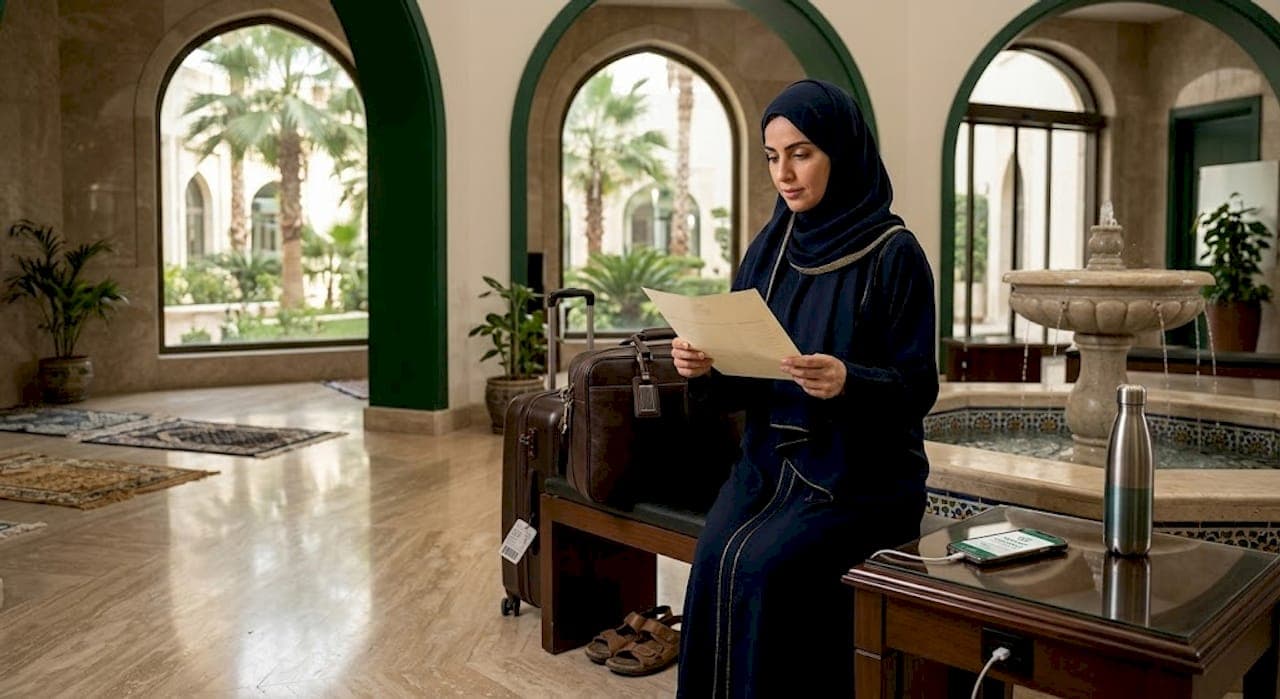
Getting your arrival to Makkah transport workflow right is the difference between starting your Umrah focused and calm, or stressed before you've even cleared the airport. Thousands of pilgrims land at King Abdulaziz International Airport every day during peak seasons, and many arrive without a clear plan for what happens next. Long queues, unfamiliar signs, and aggressive taxi offers outside the terminal make an already long journey harder. This guide walks you through every step, from what to arrange before you fly to how you move around Makkah once you arrive.
Table of Contents
- Key takeaways
- Arrival to Makkah transport workflow: what to arrange before you fly
- Step-by-step arrival workflow from landing to accommodation
- Getting around Makkah after you arrive
- Common challenges and how to handle them
- Comparing transport options for Makkah
- My honest take on transport planning for Umrah 2026
- How Saudisayyah supports your Makkah transport workflow
- FAQ
Key takeaways
| Point | Details |
|---|---|
| Pre-book transport before departure | Confirm your licensed transfer in advance to avoid delays, inflated pricing, and unlicensed drivers at the airport. |
| Makkah Route Initiative skips queues | Eligible pilgrims complete immigration and baggage processing at their home airport, boarding buses directly to accommodation on arrival. |
| Haramain Railway is the fastest option | The high-speed train connects Jeddah Airport to Makkah in 30 minutes, making it the most time-efficient choice for most pilgrims. |
| Nusuk Card controls access | Your Nusuk Card is required for official buses, site access, and transport allocation inside Makkah. Keep it accessible at all times. |
| Peak season adds travel time | Normal road travel from Jeddah Airport to Makkah takes 70 to 90 minutes, but Hajj peak days can push that past 2 hours. |
Arrival to Makkah transport workflow: what to arrange before you fly
The entire Makkah arrival transport process gets much easier when you handle three things before you leave home: your visa documentation, your transport booking, and your apps.
Documents to have confirmed:
- Valid Umrah or Hajj visa with accommodation address clearly listed
- Nusuk Card (physical or digital) linked to your pilgrim profile
- Transport booking confirmation from a licensed provider
- Emergency contact numbers for your group leader or tour operator
Apps to download and activate:
- Nusuk: manages your pilgrim profile, transport allocations, and holy site access
- Tawakkalna: Saudi Arabia's official health and identity verification app
- Your transport provider's app (if applicable) for tracking and communication
The Makkah Route Initiative is the biggest workflow advantage available to eligible pilgrims in 2026. It covers 18 airports across 10 countries, allowing you to complete Saudi immigration, visa verification, health checks, and baggage processing before you even board your flight. When you land in Jeddah, you skip the immigration hall entirely and board a dedicated government bus to your accommodation.
The baggage system behind this initiative uses RFID tagging linked to your pilgrim profile. Your bags are sorted and delivered directly to your hotel, so you never handle them at the Saudi airport at all. That single feature removes one of the most stressful parts of arrival for most pilgrims.
Pro Tip: Check eligibility for the Makkah Route Initiative through your tour operator or the Nusuk app at least 8 weeks before travel. Seats and participation slots fill up quickly, and enrollment requires processing time.
If you are traveling independently or your country is not covered by the Makkah Route, pre-booking a licensed private transfer remains the most reliable fallback. Review your transport costs guide before committing to a provider so you know what fair pricing looks like.
Step-by-step arrival workflow from landing to accommodation
The exact steps you follow on arrival depend on whether you are traveling under the Makkah Route Initiative or arriving through the standard process.
If you are a Makkah Route pilgrim:
- Land at King Abdulaziz International Airport (KAIA) Terminal 1.
- Follow dedicated Makkah Route signage directly to the bus staging area. No immigration hall, no baggage carousel.
- Present your Nusuk Card and booking confirmation to the assigned transport official.
- Board your allocated government bus. Buses depart on scheduled intervals.
- Arrive at your accommodation in Makkah. Your luggage arrives at your hotel within a few hours via the smart baggage system.
If you are using the standard arrival process:
- Complete passport control and immigration at KAIA.
- Collect your luggage from the baggage carousel.
- Exit to the arrivals hall and locate your pre-booked transfer driver or proceed to the transport options zone.
- Board your chosen transport: private transfer, official bus, or the Haramain High-Speed Railway.
- Travel to your accommodation in Makkah.
| Transport Mode | Travel Time to Makkah | Approximate Cost (SAR) | Best For |
|---|---|---|---|
| Haramain High-Speed Railway | 30 minutes | 50 to 100 | Solo travelers, couples, small groups |
| Pre-booked private transfer | 70 to 90 minutes (normal) | 300 to 500+ | Families, elderly pilgrims, large luggage |
| Official Hajj/Umrah bus | 90 to 120 minutes | Subsidized/included | Group travelers on packages |
| Uber/Careem ride-hail | 70 to 90 minutes | SAR 200 to 350 | Flexible independent travelers |
| Standard taxi | 70 to 90 minutes | SAR 200 to 300 | Last-minute option |
The Haramain High-Speed Railway connects Jeddah Terminal 1 directly to Makkah in 30 minutes. This is the fastest ground option by a significant margin. That said, the train station is inside Terminal 1, which means if you arrive at Terminal 2, you will need a shuttle bus to the station first.
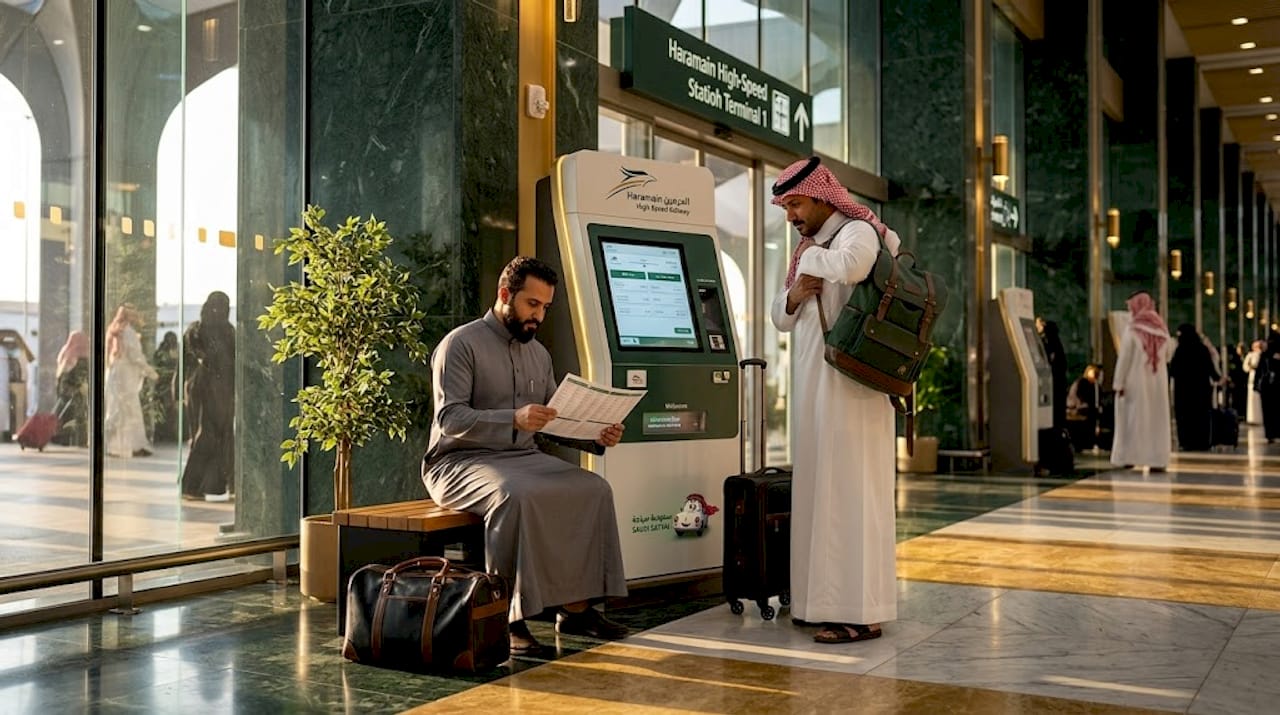
Pro Tip: For late-night arrivals, the Haramain Railway operates a reduced schedule. Confirm the last departure time for your arrival date before landing. A pre-booked private transfer is the most reliable fallback after 11 PM.
Road travel time from Jeddah Airport to Makkah normally runs 70 to 90 minutes. During peak Hajj days, that can extend well past 2 hours. Plan accordingly and avoid scheduling tightly timed appointments on arrival day during the Hajj season.
Getting around Makkah after you arrive
Arriving at your hotel is step one. Moving around Makkah for prayers, rituals, and daily needs is a separate workflow that requires its own preparation.
The area surrounding the Grand Mosque operates under strict access controls. Private vehicles are restricted near the Grand Mosque during peak periods to manage congestion. This is not optional, and driving your own vehicle or booking unscheduled rides close to the Haram is not a practical option during high-demand days.
Key points for getting around inside Makkah:
- The official shuttle system carries pilgrims between accommodation zones and the Grand Mosque on fixed routes and schedules
- Your Nusuk Card is required to board official buses. Digital permits and timed allocations control group movement to prevent bottlenecks at peak times
- Pedestrian pathways are clearly marked and prioritized for foot traffic near the Haram. Walking is often faster than waiting for transport when your hotel is within 1 kilometer of the mosque
- Taxis and ride-hail apps operate in Makkah but cannot pick up from restricted Haram zones. Set your pickup point one or two streets away
- For elderly pilgrims or those with mobility needs, accessible transport options require advance arrangements through the Nusuk platform or your tour operator
Saudi Arabia's integrated transport model for Hajj 2026 reflects significant investment in technology-backed logistics. Over 33,000 buses and 5,000 taxis are GPS-tracked and allocated through the Nusuk system, representing one of the largest coordinated transport operations in the world.
Following the official schedule, even when it feels slower than arranging your own ride, results in a consistently smoother experience. Pilgrims who deviate from assigned transport slots frequently encounter longer waits and access denials at checkpoints.
Common challenges and how to handle them
The most common transport problems during Umrah and Hajj arrivals are predictable, which means most of them are avoidable.
Watch out for these situations:
- No pre-booked transport: Arriving without confirmed transport leaves you dependent on whatever is available at the airport, which during peak times means long waits and inflated fares. Pre-booking is the single most effective thing you can do to reduce arrival stress.
- Unlicensed drivers: Unofficial taxi offers appear in arrival halls and car parks. These drivers are unregulated, often overcharge, and may not know Makkah's restricted zones. Only use licensed services, apps like Uber or Careem, or your pre-booked transfer.
- Luggage separation: If your bags are heavy or numerous, confirm luggage handling with your transport provider before arrival. For Makkah Route pilgrims, bags are delivered automatically. For all others, confirm the drop-off address matches your hotel exactly.
- Flight delays and missed transport connections: Flight tracking and pre-booking minimize disruption. Choose a provider that monitors your flight and adjusts pickup time automatically, rather than one that cancels if you arrive 30 minutes late.
- Group separation: Agree on a physical meeting point inside the terminal before your group disperses at baggage claim. Share your group leader's local Saudi number with every member before landing.
The Nusuk Card's GPS and permit system also helps authorities locate and redirect transport resources when delays occur. Staying within the official system means you benefit from that real-time coordination rather than working against it.
Comparing transport options for Makkah
Not every transport mode works for every pilgrim. Here is a clear comparison to help you choose.
| Mode | Speed | Cost | Best situation | Accessibility |
|---|---|---|---|---|
| Haramain High-Speed Railway | Fastest (30 min) | Low to mid | Fit travelers with light luggage | Limited wheelchair access at peak times |
| Pre-booked private transfer | Moderate (70 to 90 min) | Higher | Families, elderly, large groups | Fully adaptable with advance booking |
| Official group bus | Moderate to slow | Lowest/subsidized | Package tour travelers | Good if arranged in advance |
| Uber/Careem | Moderate | Mid | Flexible independent travelers | Standard vehicles only |
| Standard taxi | Moderate | Mid | Last-minute arrivals | Standard vehicles only |
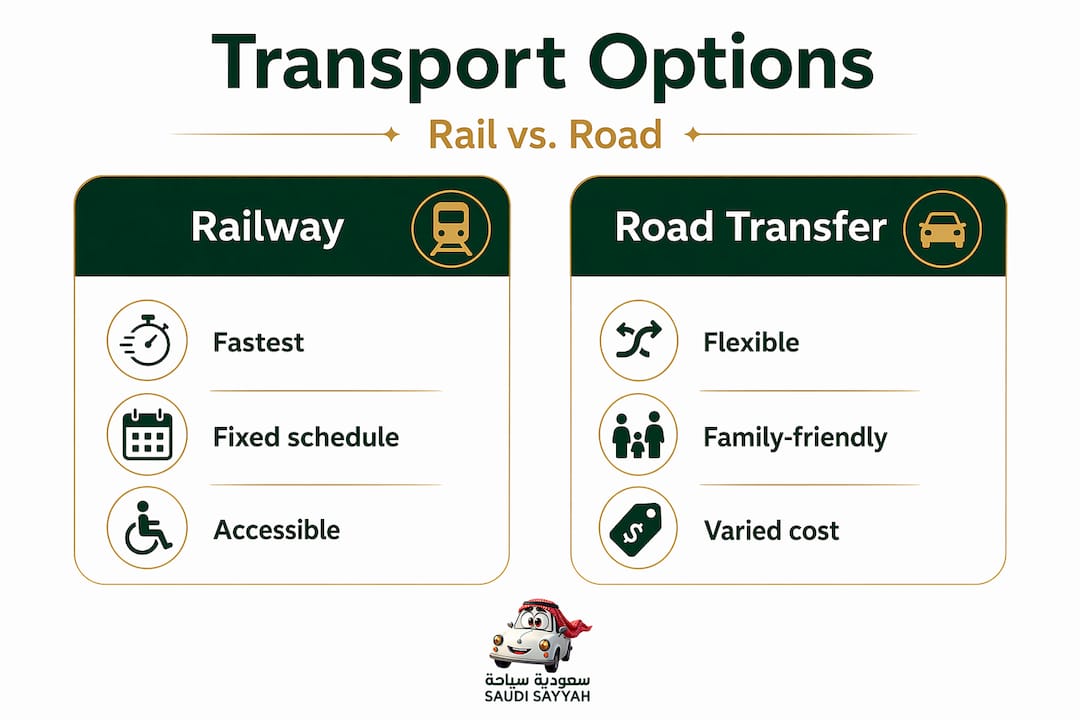
For families traveling with children or elderly pilgrims, a pre-booked private transfer is worth the higher cost. You control the timing, the vehicle fits your group, and you avoid the physical strain of navigating crowded bus queues with luggage and young children. For solo travelers or couples with minimal bags, the Haramain Railway is the obvious choice. It is fast, affordable, and runs frequently.
Avoid booking transport on arrival through informal channels, especially during Hajj season when prices surge significantly. Ride-hail apps with fares typically between SAR 200 and 350 are a reasonable and regulated option if you have no pre-booking. Check the top transport options from Jeddah for a full breakdown with timing data before you decide.
My honest take on transport planning for Umrah 2026
I've watched pilgrims who spent months preparing spiritually for Umrah arrive at Jeddah Airport and unravel within the first hour because they had no transport plan. Not because they were unprepared people. Because they assumed transport would "sort itself out."
It doesn't sort itself out. Not at 2 AM during peak season when there are 40,000 other arrivals that day.
What I've learned from following these workflows closely is that the biggest shift isn't logistical, it's mental. Pilgrims who treat transport planning as part of their spiritual preparation, not a separate administrative task, approach arrival with more patience and flexibility. When your transfer is confirmed, your driver's details are on your phone, and you understand the steps, a delay becomes a minor inconvenience rather than a crisis.
The Makkah Route Initiative is genuinely transformative for those who qualify. I've seen pilgrims walk off a flight and reach their hotel in under 90 minutes without touching their luggage. That kind of arrival leaves you with energy for what matters.
My practical advice: book early, download every required app before you travel, and give yourself more time than you think you need on arrival day. Flexibility within an organized framework is what actually works.
— Fa
How Saudisayyah supports your Makkah transport workflow
Saudisayyah is built specifically for pilgrims who want reliability without guesswork. Before every trip, Saudisayyah sends you your driver's photo, vehicle details, and live tracking through its geolocation platform. You know exactly who is picking you up and when, before you reach the arrivals hall.
The fleet covers everything from standard sedans for solo travelers to larger vehicles for families and groups. All drivers carry extensive experience with Makkah's restricted zones, peak-period routing, and airport pickup logistics. Bookings run through a fully automated management system, so your confirmation is immediate and your details are locked in.
For pilgrims who want the most reliable Makkah transport services with zero uncertainty on arrival day, Saudisayyah is the option worth booking early. Availability fills quickly during Umrah and Hajj seasons.
FAQ
What is the fastest way to get from Jeddah Airport to Makkah?
The Haramain High-Speed Railway connects Jeddah Terminal 1 directly to Makkah in 30 minutes, making it the fastest available ground transport option for most pilgrims.
How does the Makkah Route Initiative work on arrival?
Eligible pilgrims complete Saudi immigration, health checks, and baggage processing at their home airport before departure. On arrival in Jeddah, they skip the immigration hall and board dedicated buses directly to their Makkah accommodation, with luggage delivered separately to their hotel.
Do I need a Nusuk Card for transport in Makkah?
Yes. The Nusuk Card controls access to official buses, holy site entry, and transport allocations inside Makkah. Pilgrims without it cannot board assigned government transport during Hajj and Umrah periods.
How long does the drive from Jeddah Airport to Makkah take?
Under normal conditions, road travel takes 70 to 90 minutes. During peak Hajj days, traffic can extend that to over 2 hours, so plan arrival day schedules with buffer time.
Is it safe to take a taxi from Jeddah Airport to Makkah?
Licensed taxis and ride-hail apps like Uber and Careem are regulated and safe. Avoid unmarked or unofficial drivers who approach you in the arrivals hall, as these are unlicensed and unregulated.