
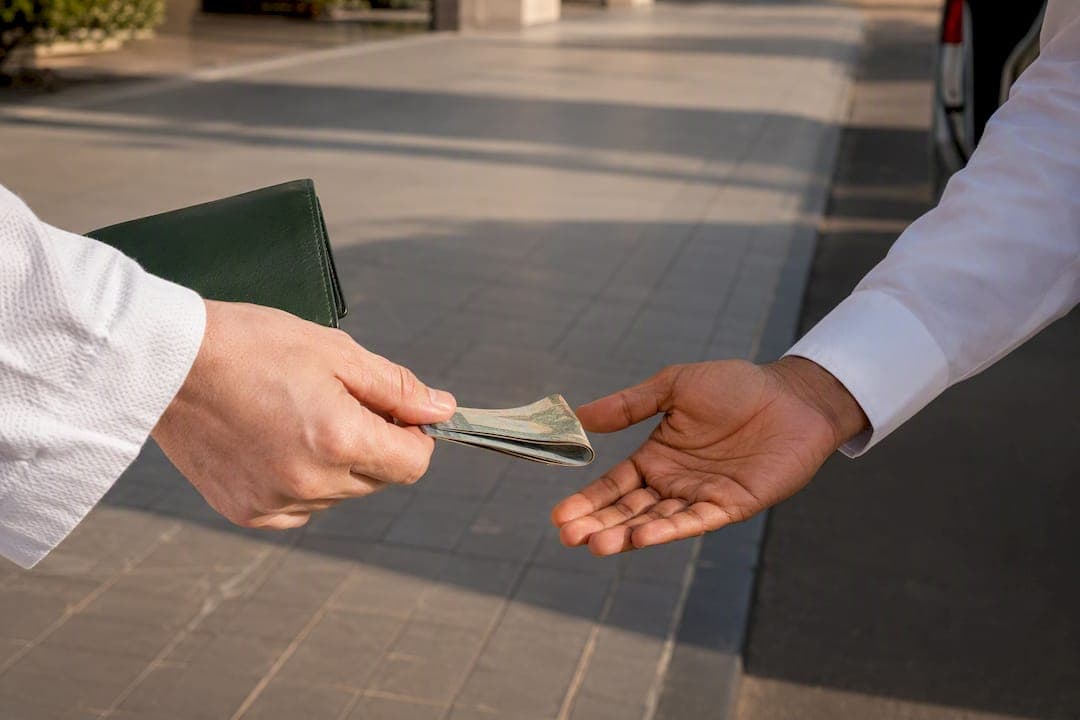
Tipping in Saudi Arabia is voluntary. No law forces you to pay a percentage you never agreed to, and you can decline an added charge you did not authorize. Separate "service charges" on bills are a different issue and follow their own rules. The sections below cover both, plus practical amounts and how to avoid getting overcharged.
TL;DR:
- Tipping in Saudi Arabia is voluntary and cannot be legally enforced, especially if a restaurant adds a fixed percentage without prior consent.
- Service charges are disclosures of business decisions and are different from tips, which are always at the customer's discretion.
- Common tipping amounts include 5 to 10 SAR for meals, 5 to 15 SAR per bag for porters, and rounding up taxi fares, but none are official minimums.
- Overcharging through inflated fares, unlicensed operators, or pressured QR tips is common, so booking fixed-rate, traceable transfers reduces disputes.
- Declining tips politely or giving small tokens of gratitude aligns with local customs, but always stay within reasonable ranges and avoid pressuring or overgiving.
Table of Contents
- البقشيش في السعودية: ما يقوله القانون وحقوق المستهلك
- Where tipping actually happens in Saudi Arabia
- Service charge, QR tipping, or VAT: how to read your bill
- How much to tip: quick, unofficial ranges
- Taxi scams and how to avoid getting overcharged
- Offering or declining a tip without the awkward moment
- Fixed fares remove the guesswork around tipping
- Book transparent transfers instead of guessing at fares
- Sources
البقشيش في السعودية: ما يقوله القانون وحقوق المستهلك
Legal reporting on البقشيش في السعودية is direct: nobody can force a customer to pay a fixed tip percentage that was added without prior agreement. A legal review published by Al Yaum concluded that mandatory tipping in restaurants is legally void, since it conflicts with basic consumer-protection principles. That same reporting notes a fixed percentage tacked onto a bill without your consent raises consumer-protection concerns and can be disputed.
A tip and a service charge are not the same thing. A tip is something you choose to give. A service charge is a business decision the establishment has to disclose, usually printed on the menu or the bill itself before you order.
If a charge shows up that you never approved, here's how to handle it:
- Ask the server or cashier for an itemized breakdown of the bill.
- Point out the specific line and ask why it was added.
- Speak with the manager if the answer is not satisfactory.
- Keep the printed receipt as proof of what you paid.
- Escalate to a consumer-protection body if the business refuses to remove or explain the charge.
Staying calm and asking for paperwork resolves most disputes before they become an argument.
Where tipping actually happens in Saudi Arabia
Tipping culture in Saudi Arabia varies a lot by setting, and knowing the norms ahead of time saves you from guessing at the register.
- Restaurants and cafes. Tipping is voluntary almost everywhere, though tourist-heavy spots increasingly show digital QR prompts or an added "service" line on the electronic bill, a trend Makkah Newspaper has tracked closely as digital payment grows.
- Hotels. Porters and housekeeping staff commonly receive small cash tips. Saudi press has cited hotel-observed guidance suggesting amounts around 7.5 SAR as a reported ceiling for hotel tipping; however, that figure comes from reporting on hotel practice, not a government-set limit.
- Taxis and ride-hailing. Rounding up the fare or handing over a few extra riyals is common practice. Booking through a licensed app or a prearranged transfer avoids the fare disputes that walk-up taxis are known for; our comparison of ride-hailing apps in Saudi Arabia covers how in-app payments handle gratuities.
- Delivery and small services. A small cash tip or rounding up the total is standard, especially for drivers navigating traffic or difficult addresses.
- Pilgrimage-related assistance. Guides and helpers assisting Umrah pilgrims sometimes receive small tokens of gratitude as a cultural courtesy rather than an expected fee. Our guide for first-time visitors to the holy cities walks through what to expect from local helpers and drivers.
Service charge, QR tipping, or VAT: how to read your bill
Not every line item on a Saudi receipt means the same thing. A service charge is a fee the business sets and should disclose beforehand. VAT is a government tax applied automatically and is not optional. A QR tipping prompt is a digital nudge, not a bill line, and you can skip it.
- Service charge disclosed in advance: pay it, it's part of the agreed price.
- VAT: always mandatory, never a tip.
- QR or on-screen tipping prompt: optional, tap "skip" or "no tip" without explanation.
- Service charge added with no prior notice: question it before paying.
Pro Tip: If a QR code pushes you toward a tip percentage before you've even seen the food, you're allowed to select "custom" and enter zero. Nobody at the register will stop you.
How much to tip: quick, unofficial ranges
None of these numbers are official. They're common local practice, and they shift depending on the city, the service, and how generous you're feeling that day.
- Coffee or a quick snack: round up to the nearest 1 to 3 SAR.
- Casual restaurant meal: 5 to 10 SAR if service felt genuinely good.
- Fine dining: 10 to 20 SAR, sometimes more in Riyadh or Jeddah's upscale venues.
- Hotel porter: 5 to 15 SAR per bag, in line with the 7.5 SAR figure reported around hotel tipping guidance.
- Taxi or ride-hailing: rounding to the nearest 5 SAR is common.
- Delivery drivers: 5 to 10 SAR, more in bad weather or heavy traffic.
Travel etiquette guides describe similar ranges for tipping while traveling, and they all agree on one point: local variation is real, and none of these numbers are enforceable minimums.
Taxi scams and how to avoid getting overcharged
Overcharging is the single most common complaint tied to tipping and fares in Saudi Arabia, and it usually targets tourists who don't know the going rate.
- Inflated taxi fares that spike once the driver realizes you're not local.
- Pressured QR tipping screens that make skipping the tip look awkward.
- Fake "service fees" scribbled onto a paper bill with no receipt to back it up.
- Unlicensed pilgrimage package sellers offering transport deals that vanish after payment.
Travel-safety guidance recommends booking through licensed, traceable transfer services rather than flagging down unmarked cars, confirming the fare before the trip starts, and always asking for a printed receipt. If something goes wrong, report it to tourism authorities or local police and bring the receipt with you.
Offering or declining a tip without the awkward moment
A tip handed over quietly, without fanfare, is the norm. Extending it with both hands or a light nod communicates respect without making a scene of it.
- Say something simple like "this is for you, thank you" while handing over the cash.
- If declining a tipping prompt, a polite "no, thank you" or tapping "skip" is enough.
- Leaving a small note of thanks costs nothing and is always appreciated when cash feels excessive.
Cultural commentary in Saudi media frames willingly given tips as a form of solidarity or charity, sometimes described as sadaqah, rather than a transaction. A feature from Al Ain captured both sides of that debate, including hospitality workers who say voluntary tips genuinely help their income, while stressing the tip has to stay optional to keep that meaning intact. Partner resources like Badal Umrah's guidance for pilgrims cover similar etiquette questions for those unfamiliar with local customs.
Pro Tip: If you're unsure whether a tip will be seen as generous or excessive, err toward the lower end of the range. A small tip given warmly reads better than a large one handed over stiffly.
Fixed fares remove the guesswork around tipping
Running transfers for pilgrims day in and day out, one pattern shows up constantly: tipping confusion almost always traces back to price uncertainty, not the tip itself. When a rider doesn't know the fare going in, every extra riyal at the end feels like a negotiation instead of a choice.
Sharing driver photos, vehicle details, and live tracking before a trip starts removes that uncertainty entirely. Riders who know exactly who is picking them up and what the fare already covers rarely feel pressured to tip out of anxiety. Choosing licensed, trackable operators over street-hailed cars is one of the simplest ways to keep a pilgrimage focused on the journey, not the fare meter.
— Fa
Book transparent transfers instead of guessing at fares
Saudisayyah is the alternative to street-hailed taxis and unlicensed transfer deals for pilgrims and visitors moving between airports, hotels, and holy sites in Saudi Arabia. You get a fixed rate agreed before the trip starts, so there's no fare creep and no pressure to tip your way out of a dispute.
Every booking includes driver and vehicle details and real-time tracking sent to your phone before pickup, the same transparency that keeps tipping simple: optional, small, and never a substitute for an honest price. Our fleet runs late-model vehicles maintained to a consistent standard, so what you book is what shows up. If you'd rather agree on a price up front than negotiate one at the curb, check available transfers and packages on our services page and lock in your fare before you land.
Sources
- قانوني لـ "اليوم": فرض البقشيش الإلزامي في المطاعم باطل قانونيًا
- البقشيش يثير الخلاف بين السعوديين.. تكافل أم فساد؟
- بقشيش بالأمس .. واليوم QR!
- احتيالات السفر في السعودية 2026: ما يجب الحذر منه