

TL;DR:
- Demand-responsive transport (DRT) is a shared, flexible transit model that adapts routes based on real passenger requests, differing from taxis and fixed-route buses. It relies heavily on software, multiple booking channels, and careful planning, often taking 18 to 24 months to implement successfully. DRT effectively improves accessibility and efficiency in low-demand areas, but requires active rider cooperation and precise system integration.
Most people assume flexible transit is just a taxi with extra steps. That assumption gets in the way of understanding one of the most genuinely useful developments in public transportation. Demand-responsive travel, formally known as demand-responsive transport (DRT), is a shared transit model that operates without fixed timetables, adapts routes based on real passenger requests, and fills the coverage gaps that fixed-route buses simply cannot address. It is not a cab. It is not a standard bus. It sits in a category of its own, and understanding it matters if you plan, manage, or use transit at any scale.
Key Takeaways
| Point | Details |
|---|---|
| DRT is not a taxi service | It operates as shared transport at per-passenger fares with dynamic routing, not per-hire private rides. |
| Technology powers the whole system | Scheduling software, booking apps, and call centers all work together to match supply with real-time demand. |
| Best suited for low-density areas | DRT fills coverage gaps where fixed-route buses run infrequently or not at all. |
| Procurement takes longer than expected | Setting up a DRT scheme realistically takes 18 to 24 months from internal sign-off to service launch. |
| Accessibility requires multiple booking channels | Apps alone are not enough. Call centers remain critical for older passengers and those without smartphones. |
What is demand-responsive travel, defined clearly
Demand-responsive transport is a flexible, shared transport service without fixed timetables. It typically uses smaller vehicles than standard buses and responds directly to user requests that specify pick-up and drop-off locations along with preferred travel times. The service charges fares per passenger, not per vehicle, which is the clearest distinction from a taxi or private hire arrangement.
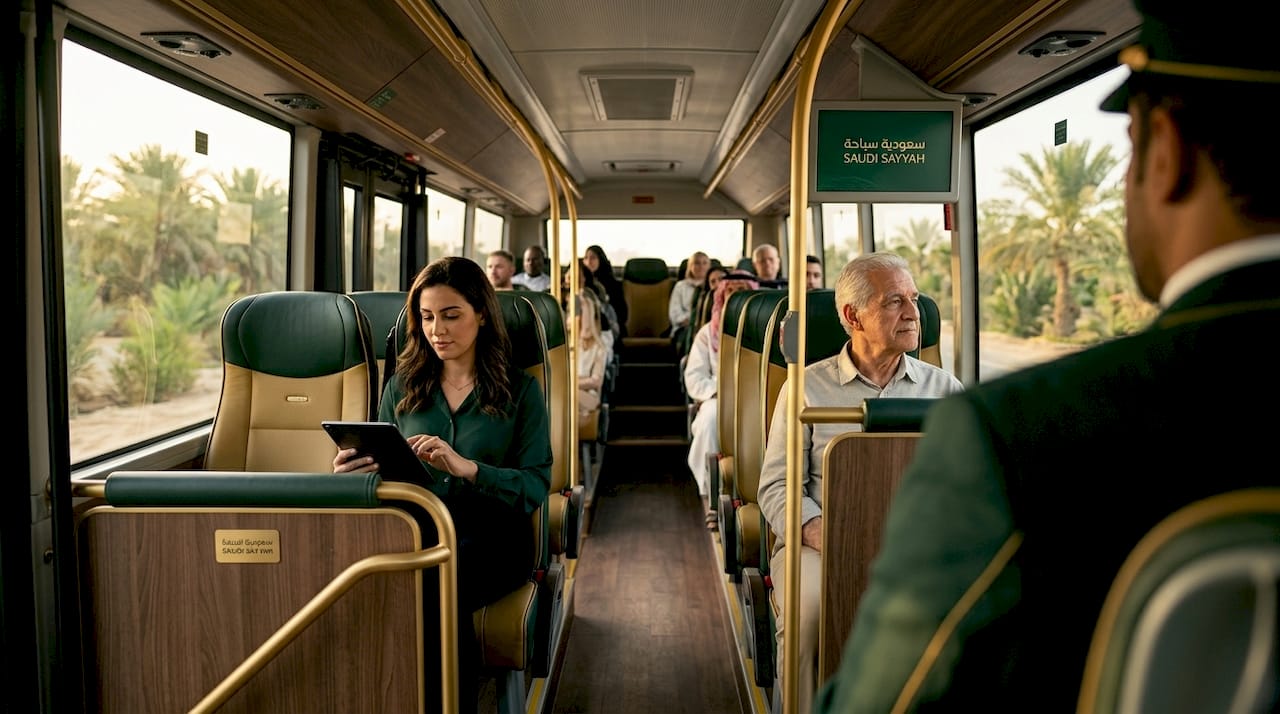
Where a conventional bus runs the same route at the same times regardless of whether two people or twenty people board, DRT adjusts its routing and scheduling based on who actually requests a trip. This is demand-responsive transportation in its truest sense. The vehicle goes where passengers need it to go, when they need to go there.
The contrast with fixed-route transit is sharper than most people realize:
- Fixed-route buses follow a predetermined path on a predetermined schedule. They are cost-effective when demand is predictable and consistent.
- DRT services alter routes trip by trip. They are most effective when demand is scattered, irregular, or concentrated in times and places that fixed routes cannot efficiently serve.
- Taxis and private hire vehicles serve one party per booking at a price reflecting that exclusivity. DRT is shared, meaning multiple passengers with different origins and destinations may travel together.
The passenger's role in DRT is active, not passive. Passenger-supplied inputs including exact pick-up and drop-off points and desired departure or arrival times are central to how the system operates. Without that information, the routing algorithm has nothing to optimize. This makes DRT a collaborative model between the operator and the traveler, which is fundamentally different from boarding a bus at a stop and hoping it goes where you need.
Pro Tip: If you are evaluating DRT for a logistics or transit planning project, the first question to ask is not "what vehicle do we use?" but "what data inputs do passengers need to provide, and how easily can they provide them?"
How demand-responsive travel works in practice
The operational backbone of any DRT scheme is software. Scheduling, routing, and booking management all run through purpose-built platforms that process incoming ride requests in real time, calculate the most efficient vehicle assignments, and update routes continuously as new requests arrive. This is not a simple dispatch system. The optimization problem is genuinely complex, balancing detour times, pooling efficiency, and individual passenger wait windows simultaneously.
Booking channels typically include two primary options:
- Mobile apps, which allow passengers to request trips, track vehicles, and receive confirmations instantly
- Call centers, which serve passengers who cannot or prefer not to use digital interfaces, including older adults and people with limited tech access
The call center channel is not a legacy workaround. Multi-channel booking support is a deliberate accessibility decision, and cutting it to save costs routinely limits ridership among exactly the groups DRT is meant to serve. Poor booking accessibility can suppress demand even when the routing is perfectly optimized.
Setting up a working DRT scheme takes far longer than most planners anticipate. A realistic implementation timeline from a local authority example runs roughly like this: 12 months for internal approvals and business case sign-off, 8 months of overlapping procurement activity covering vehicles, operators, software platforms, and payment systems, and then 6 months of pre-launch activities including driver training, system testing, and public communications. That puts you at 18 to 24 months before a single passenger boards.
The procurement stage deserves special attention. Vehicles, licenses, technology, and operator contracts need to be packaged into procurement lots carefully to avoid gaps in the supply chain that stall the launch. This is where many DRT projects run into trouble. The temptation is to treat vehicle procurement and software procurement as separate workstreams, but they are interdependent. A scheduling platform that cannot communicate with the vehicles it is supposed to dispatch is useless.
Pro Tip: When planning a DRT rollout, assign a single integration owner whose job is specifically to connect the vehicle fleet, booking system, payment platform, and driver communication tools. Treat it as one system, not four.
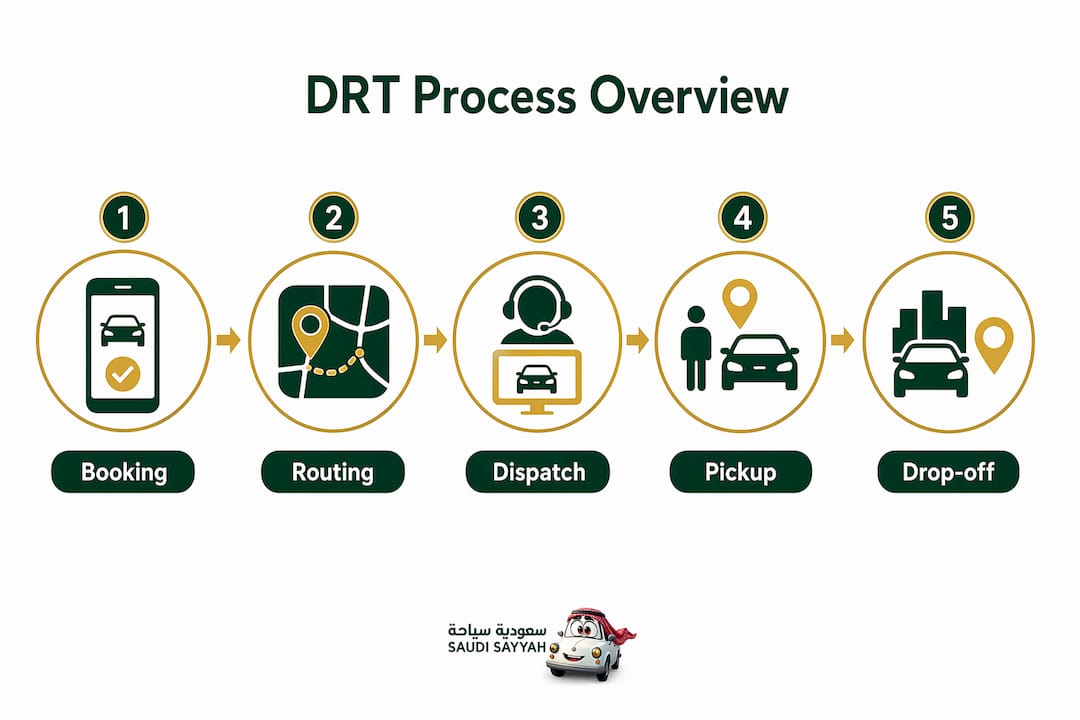
DRT can also be modeled with different levels of route constraint, ranging from fully free point-to-point routing to services with fixed anchor stops and flexible segments between them. The more constrained the routing, the easier it is to schedule and communicate, but the less responsive it becomes. The less constrained, the more useful it is for passengers, but the harder the system is to optimize.
Benefits and challenges worth knowing
DRT solves a real problem. Fixed-route public transit is economically justified by consistent passenger volume. In rural areas, outer suburbs, or during off-peak hours, that volume simply does not exist. Running a full-size bus on a fixed route through a low-density area three times a day wastes resources and rarely meets actual travel needs. DRT improves mobility in exactly these contexts, serving as a complement to the wider transit network rather than a replacement for it.
The benefits stack up across several categories:
- Accessibility gains. Passengers who cannot reach a fixed bus stop, whether due to distance, mobility limitations, or irregular schedules, gain genuine access to public transit for the first time.
- Ridership growth. Evidence from rural Korean DRT adoption showed roughly a 30% increase in public transit usage among residents after the service launched.
- Sustainability potential. Consolidating trips into shared vehicles reduces total vehicle miles compared to individual car trips covering the same origin-destination pairs.
- Network integration. When designed as a gap-filler aligned with existing transit networks, DRT can feed passengers into mainline routes, increasing the reach and utility of the whole system.
The challenges are equally real. Older travelers value booking flexibility and route responsiveness but tend to use DRT infrequently, which creates a tension between designing for their needs and achieving the ridership numbers that justify operating costs. More broadly, the trade-off between responsiveness and pooling efficiency is a constant operational pressure. The more flexible the booking window, the harder it is to group passengers efficiently. The more tightly grouped the pickups, the less the service actually responds to individual demand.
Pro Tip: For logistics planners comparing DRT to other on-demand travel services, model your worst-case scenario: what happens to vehicle utilization and cost per passenger when demand drops 40% below projections? DRT unit costs are very sensitive to occupancy rates.
Equity considerations also matter. Digital-first booking systems inadvertently exclude passengers without smartphones or reliable data connections. This is not a minor edge case. It is often the core demographic that DRT is funded to serve. Maintaining accessible transport options for all passenger types requires deliberate design choices, not afterthought accommodations.
Real-world examples that show DRT in action
The most instructive DRT case studies are not the ones that worked perfectly from day one. They are the ones that required adjustment, because that is where you see how the system actually behaves under real conditions.
| Context | What was implemented | Measured outcome |
|---|---|---|
| Rural Korea | DRT replacing infrequent fixed-route buses | 30% increase in transit use among local residents |
| UK suburban fringe | App-plus-call-center DRT feeding into rail hubs | Improved access for older adults, with call center handling 40%+ of bookings |
| Low-density outer suburbs | Zone-based DRT with fixed anchor stops | Reduced operating cost versus full fixed-route coverage; moderate ridership |
The Korean example is worth unpacking. The 30% ridership gain did not come from adding a fancy app. It came from replacing a service that did not match travel patterns with one that did. The DRT system responded to when and where people actually needed to travel, which the prior fixed schedule could not do.
The UK pattern around older adult usage is equally instructive. Service design tailored to specific traveler groups, including simplified booking flows and call center support, directly influences whether those groups use the service at all. A DRT scheme optimized purely for tech-comfortable passengers will consistently underperform its ridership targets.
For planners curious about how accessible transport design applies to specific traveler populations, the principles translate directly to contexts like transport for elderly pilgrims where responsiveness, clarity, and multi-channel support are equally critical. For a broader look at how automation is reshaping flexible transit operations, the role of automation in travel offers relevant context.
My perspective on what DRT actually demands from planners
I have reviewed enough DRT proposals to know that most of them underestimate one thing: the cooperation required from passengers.
DRT is not a passive service. It asks riders to provide specific information, book in advance (or at least ahead of the walk-up moment), and accept that their vehicle may take a slightly less direct route to accommodate other passengers. In a culture accustomed to hailing a cab and going directly from A to B, that is a behavioral shift. And behavioral shifts do not happen just because the software is good.
What I have found is that DRT schemes that succeed do two things well. They integrate tightly with the transit network around them, so passengers see DRT as a natural extension of a journey rather than a standalone experiment. And they invest in explaining the service before it launches. The communication budget is almost always underfunded relative to the technology budget, and that imbalance shows up in early ridership numbers.
The balance between dynamic responsiveness and route constraints is real. You cannot have a service that is maximally flexible for every individual passenger and also maximally efficient for the operator. Every DRT design is a set of deliberate compromises. The planners who get this right are the ones who make those compromises explicitly, test them against real data, and adjust. The ones who struggle are the ones who treat the routing algorithm as a black box that will sort everything out.
DRT is a promising model. Not a universal solution. The future of demand-responsive travel depends on planners who understand that distinction.
— Fa
Transport solutions for flexible travel needs
Flexible, on-demand transport is not only a public transit concept. For travelers visiting Saudi Arabia, particularly those making their first pilgrimage, the same principles apply: transport should respond to your needs, your schedule, and your physical requirements, not the other way around. Saudisayyah offers flexible car hire services built specifically for this context, with real-time tracking, driver identification before every trip, and a booking system that works for all types of travelers. Whether you need accessible vehicles or premium fleet options for group travel, Saudisayyah provides transport that adapts to you, not a fixed schedule that may or may not match your plans.
FAQ
What is demand-responsive transport?
Demand-responsive transport (DRT) is a shared, flexible transit service that operates without fixed timetables, routing vehicles based on real-time passenger requests for specific pick-up and drop-off points.
How does demand-responsive travel differ from a taxi?
Unlike a taxi, DRT charges fares per passenger and shares vehicles among multiple riders traveling different routes, making it a form of public transit rather than private hire.
What technology does DRT rely on?
DRT depends on scheduling and routing software that processes live booking requests and assigns vehicles dynamically, supported by both mobile apps and call centers to cover all passenger types.
Where does DRT work best?
DRT is most effective in low-density or low-demand areas where fixed-route buses are inefficient, and during off-peak hours when traditional schedules leave significant coverage gaps.
How long does it take to set up a DRT scheme?
A realistic timeline from internal approval to service launch is 18 to 24 months, covering procurement of vehicles, operators, software, and payment systems alongside driver training and pre-launch communications.