
TL;DR:
- Advanced driver assistance systems (ADAS) enhance safety during Umrah travel by supporting collision avoidance and lane assistance, especially in crowded environments. However, these features require driver attentiveness, as their effectiveness diminishes in adverse weather and complex conditions. Choosing modern vehicles and trained drivers maximizes safety, making ADAS a valuable but complementary safety layer.
Planning your first Umrah journey involves dozens of decisions, and ground transportation is often the one that gets the least attention. That is a mistake. The role of advanced features in vehicles goes far beyond convenience — these systems actively reduce crash risk in exactly the kind of dense, high-traffic, pedestrian-heavy environments you will encounter around the Masjid al-Haram and Masjid an-Nabawi. Most travelers assume modern car features either do everything for you or add nothing meaningful. Neither is true. This article breaks down what these systems actually do, where they fall short, and how to use them wisely throughout your pilgrimage.
Table of Contents
- Understanding advanced driver assistance systems (ADAS))
- How advanced features enhance safety for Umrah travelers
- Realistic expectations and limitations of advanced vehicle features
- Convenience and comfort features that improve Umrah travel experience
- Navigating vehicle feature availability and regulations when traveling abroad
- Practical tips for pilgrims to maximize safety using advanced vehicle features
- Rethinking the role of advanced features in pilgrimage travel safety
- Enhance your Umrah journey with Saudi Sayyah's premium vehicle services
- Frequently asked questions about advanced vehicle features for Umrah travel
Key Takeaways
| Point | Details |
|---|---|
| ADAS supports but doesn’t replace | Advanced vehicle features assist drivers but require active attention and control during Umrah travel. |
| Safety benefits backed by research | Features like automatic emergency braking significantly reduce crash risks in real-world driving scenarios. |
| Know feature limits | Weather, sensor obstructions, and rental vehicle settings can limit advanced features’ effectiveness. |
| Convenience eases travel | Smartphone integration, heated seats, and wireless charging reduce distractions and enhance comfort. |
| Choose latest models | Newer vehicles have better advanced features and comply with upcoming safety regulations improving travel safety. |
Understanding advanced driver assistance systems (ADAS)
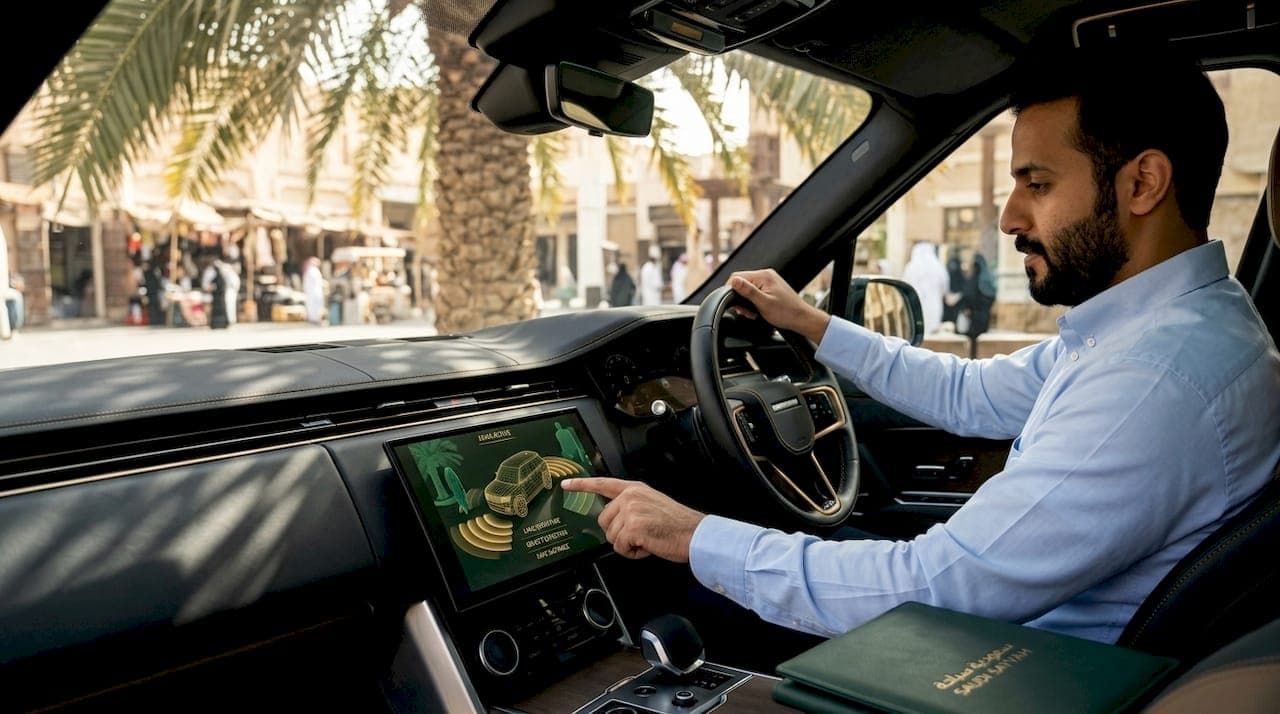
ADAS assist drivers with safety-critical tasks like collision avoidance and lane assistance using cameras, radar, and sensors. These are not autonomous driving systems. They are tools that support an attentive driver, not replace one.
Here is what most ADAS-equipped vehicles include at SAE Levels 1 and 2:
- Automatic emergency braking (AEB): Detects obstacles ahead and applies brakes when the driver does not react in time
- Lane keeping assist: Gently steers or alerts when the vehicle drifts out of its lane
- Blind-spot monitoring: Warns when another vehicle is alongside in your blind zone
- Rear cross-traffic alert: Detects approaching traffic when reversing out of parking
- Adaptive cruise control: Maintains a set following distance from the vehicle ahead
- Pedestrian detection: Identifies people in or near the vehicle's path
The sensors behind all of this include forward-facing cameras, radar units at the front and rear, and ultrasonic sensors around the bumpers. Each does a specific job. Cameras read lane markings and detect pedestrians. Radar tracks distance and speed. Ultrasonics handle close-range parking detection.
What ADAS does not do is monitor everything perfectly in all conditions. Fog, heavy rain, direct sunlight, and dirty sensors can all degrade performance. The driver is still responsible for every decision. Understanding vehicle details before your trip is one of the most practical steps you can take.
How advanced features enhance safety for Umrah travelers
The practical impact of these features during pilgrimage travel is significant. Mecca and Medina see millions of visitors in concentrated periods. Roads near sacred sites are packed with pedestrians, buses, and private vehicles moving in tight quarters. That is precisely where ADAS earns its value.
AEB alone reduces rear-end injury crashes by more than 50%, and backing crashes drop by 86% with ADAS systems active. These are not small margins.
Key benefits relevant to Umrah travel conditions:
- Pedestrian detection reduces the risk of hitting a pilgrim stepping off a curb unexpectedly
- Blind-spot monitoring protects against lane-change collisions on multilane roads near the Grand Mosque
- Rear cross-traffic alert helps when pulling out of congested parking areas around hotels
- Lane keeping assist reduces driver fatigue on longer routes between Mecca, Medina, and Jeddah
- Forward collision warning gives early alerts in stop-and-go traffic near sacred sites
For a first-time pilgrim already managing unfamiliar roads, navigation in Arabic, and the stress of crowds, these features reduce the mental load considerably. Fewer decisions to split attention means a lower risk of error. Top vehicle safety features for Umrah travel cover these systems in further detail if you want a deeper look.
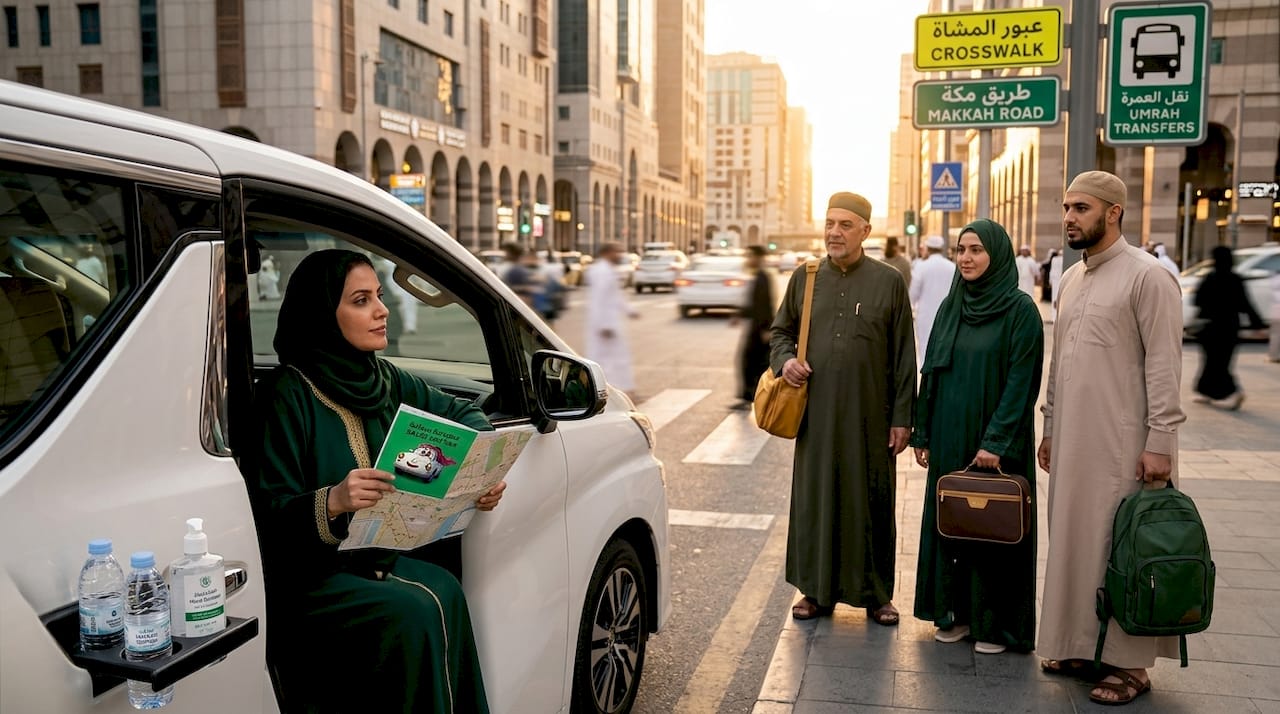
The pedestrian detection point deserves extra emphasis. Hajj and Umrah periods bring road conditions unlike almost anywhere else on earth. Crosswalks fill with groups moving unpredictably. AEB with pedestrian detection gives the driver a backup in moments of high distraction.
Realistic expectations and limitations of advanced vehicle features
This is where most travelers get into trouble. Knowing what advanced features cannot do is just as important as knowing what they can.
Active safety systems help mitigate crashes but cannot prevent all accidents, and drivers must remain alert at all times. That is the core fact. These features are designed for a driver who is paying attention and needs a safety net, not for a driver who is distracted and expecting the car to manage things.
Common limitations to know before you travel:
- Weather degradation: Heavy rain, sandstorms (common in Saudi Arabia), and glare reduce camera and radar effectiveness
- Sensor blockage: Dirty lenses, mud, or even a parking sticker can disable features without warning
- Speed thresholds: Many AEB systems only operate below certain speeds, sometimes as low as 37 mph, limiting urban usefulness at higher speeds
- Feature disablement in rentals: Some rental fleets turn off or limit certain ADAS functions, particularly lane assist and auto braking sensitivity settings
- Adaptive cruise control: Requires constant driver supervision; it does not handle intersections, merges, or sudden stops from stationary objects on some systems
Pilgrims renting vehicles should specifically ask which features are active and test each one before leaving the rental lot. Do not assume a newer vehicle has everything enabled by default.
Pro Tip: Before driving in any unfamiliar environment, sit in the parked vehicle for five minutes and locate every warning light, alert sound, and feature control. Knowing what a warning means before you hear it is far safer than guessing at 60 miles per hour.
Learning the feature settings of your vehicle beforehand connects directly to how experienced drivers use smart tech to keep passengers safe during Umrah travel.
Convenience and comfort features that improve Umrah travel experience
Safety features matter most, but comfort features directly affect how focused and rested a driver stays throughout a long pilgrimage trip. A fatigued, uncomfortable, or distracted driver is a risk factor, even with ADAS active.
Features like smartphone integration, heated seats, remote start, and wireless charging help manage distractions and improve comfort, indirectly supporting safer travel. Here is how to use them responsibly:
- Set your navigation before moving. Connect your phone via Apple CarPlay or Android Auto while parked, enter your destination, and confirm audio settings so you are not touching the screen once driving begins.
- Enable voice commands. Use "Hey Siri" or "OK Google" through the car's system for any adjustments mid-route. No hand contact needed.
- Place your phone on the wireless charger. This removes the urge to check the screen for battery anxiety, a surprisingly common distraction.
- Adjust seat temperature settings before departure. Saudi Arabia's climate ranges from intense heat to cooler nights in winter months. Ventilated seats reduce physical discomfort that erodes focus.
- Check rear-seat reminder alerts. Some vehicles include a notification to check the rear seat after parking, useful if traveling with children or elderly pilgrims.
Pro Tip: Use voice control through your vehicle's smartphone integration for every function that would otherwise require a hand. Calls, navigation changes, and music selection can all be handled without looking away from the road.
Checking vehicle comfort details before booking transport makes a real difference, especially for travelers with physical limitations or health conditions.
Navigating vehicle feature availability and regulations when traveling abroad
Not all vehicles carry the same features, and not all rental fleets meet the same standard. This matters more than most pilgrims realize when arranging transport.
In the United States, FMVSS 127 requires automatic emergency braking on all new vehicles by 2029, increasing availability in rental fleets, but exact performance depends on vehicle sensors and configurations. Saudi Arabia operates under its own vehicle standards framework, with newer imports carrying more complete ADAS packages.
Here is a practical comparison of what to expect:
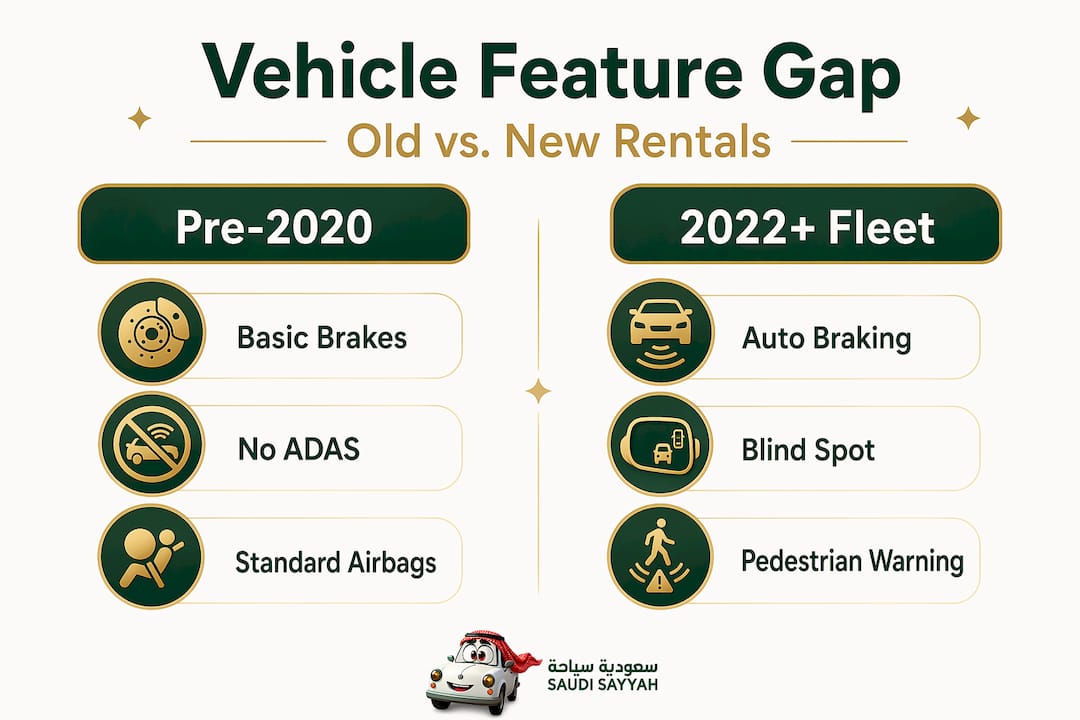
| Feature | Older rental models (pre-2020) | Newer rental models (2022 and later) | Saudi Sayyah fleet standard |
|---|---|---|---|
| Automatic emergency braking | Rare or absent | Standard on most | Included |
| Lane keeping assist | Absent | Common | Included |
| Blind-spot monitoring | Absent | Common | Included |
| Rear cross-traffic alert | Limited | Standard | Included |
| Apple CarPlay / Android Auto | Absent | Standard | Included |
| Wireless charging | Rare | Increasingly common | Included |
| Pedestrian detection | Absent | Standard | Included |
The gap between older and newer vehicles is not minor. A pre-2020 rental may give you none of the safety features listed above. Choosing latest-model vehicles for your Umrah journey is a concrete, practical safety decision, not just a comfort preference.
Always request a written or digital feature list from any rental or transport provider. Ask specifically whether AEB and blind-spot monitoring are active and operational on the exact vehicle assigned to you.
Practical tips for pilgrims to maximize safety using advanced vehicle features
Knowing the features exists. Using them well is different. Here are the steps to follow before and during every trip:
- Walk around the vehicle before departure and visually inspect all cameras and sensors. Clean any that have dust, sand, or smudges.
- Review the owner's manual or quick-start guide for your specific vehicle model. Most are available digitally through the automaker's app.
- Test AEB and parking sensors in a stationary environment if possible. Listen for the expected alerts before relying on them in traffic.
- Set alert sensitivity levels to your preference. Many systems allow you to choose how early a warning triggers.
- Ask your driver or rental agent to walk you through each feature if you are unfamiliar with the specific vehicle model.
Best practices while driving with advanced features active:
- Stay alert even when adaptive cruise control or lane assist is engaged
- Keep both hands on the wheel at all times during ADAS-supported driving
- Treat every alert as actionable, not just informational
- Do not assume silence from the system means the road is clear
- Know the manual override for every feature in case you need to take immediate control
Drivers should actively monitor road conditions and understand all vehicle warnings; driver engagement remains the most critical safety factor despite advanced features. Technology supports a prepared driver. It does not create one. Pre-arranged Umrah transport services take some of this burden off you entirely by providing trained drivers who already know the vehicle's systems.
Rethinking the role of advanced features in pilgrimage travel safety
There is a counterintuitive problem that safety researchers call the "automation paradox." When partial automation takes over low-effort tasks like maintaining lane position or following distance, some drivers mentally check out. They look at their phones, stop scanning intersections, and lose the situational awareness that matters most when something unexpected happens. ADAS was designed to catch the errors of an attentive driver, not to substitute for one.
Pilgrimage travel is one of the most demanding driving environments in the world during peak season. The crowds around the Grand Mosque, the volume of buses and private vehicles, the unfamiliar road layouts, the fatigue from long worship hours — all of it compounds. Technology helps in those conditions, but only when the driver is still engaged.
Despite advances in ADAS, the driver remains the primary safety system; technology is a support, not a substitute for attentive driving. That framing matters. Think of ADAS the way you think of seatbelts. You wear one because accidents happen unexpectedly, not because you plan to drive recklessly.
The most practical decision a pilgrim can make is choosing a transport service staffed by professional drivers trained in advanced vehicle technology. A driver who understands the limits of the system, stays alert through long shifts, and knows the local road conditions is the most valuable safety feature in the vehicle.
Pro Tip: Treat vehicle technology as one layer in a broader safety approach. Defensive driving, adequate rest, route familiarity, and a reliable transport provider each contribute more than any single feature on the vehicle spec sheet.
Enhance your Umrah journey with Saudi Sayyah's premium vehicle services
For pilgrims who want the benefits of advanced vehicle technology without the uncertainty of renting an unknown fleet, Saudi Sayyah provides a clear answer.
Saudi Sayyah's fleet includes modern, fully equipped vehicles carrying the complete list of advanced features described in this article — AEB, blind-spot monitoring, lane assist, pedestrian detection, Apple CarPlay, wireless charging, and more. Every driver is experienced, familiar with Mecca and Medina road conditions, and trained to support passengers throughout each feature's proper use. Before every trip, you receive the driver's photo, vehicle details, and real-time tracking through Saudi Sayyah's platform. No surprises. Explore the full range of car hire services for Umrah and travel with the confidence that your vehicle and your driver are both prepared for every condition you will encounter.
Frequently asked questions about advanced vehicle features for Umrah travel
Are advanced driver assistance systems like automatic emergency braking fully autonomous?
No, these systems assist the driver but require you to stay alert and in control at all times to ensure safety. ADAS operate at SAE Level 1 and 2, meaning the driver must remain in control rather than relying on the vehicle as self-driving.
How do advanced features improve safety during busy Umrah travel?
Features like collision warnings, blind-spot monitors, and pedestrian detection reduce crash risks in crowded environments but do not replace careful driving. ADAS features reduce rear-end crashes by around 50% and pedestrian crashes by 35%, helping mitigate risks in busy settings.
Can I rely on these advanced features if the rental car is older?
Older vehicles may lack some advanced features or have less effective systems, so checking the vehicle's tech before use is important for safety. Feature availability varies with vehicle age; newer models have better and more reliable ADAS.
What should I do to safely use advanced vehicle features during my pilgrimage?
Spend time learning how each feature works, stay attentive while driving, and do not over-rely on automation. Driver engagement is crucial even with ADAS; constant supervision and understanding system alerts improve safety.
Are there convenience features that can make my Umrah drive less stressful?
Yes, smartphone integration, wireless charging, and heated or ventilated seats help reduce distractions and enhance comfort during travel. Non-safety features like Apple CarPlay and wireless charging indirectly improve the travel experience by managing distraction and physical discomfort.