
TL;DR:
- Saudi Arabia's high road fatality rates make licensed transport essential for safety during Umrah.
- Official regulations mandate licensed taxis, Uber, or Jeeny, with strict enforcement and legal requirements.
- Professional drivers offer better communication, fixed pricing, and support, ensuring a safer, smoother pilgrimage.
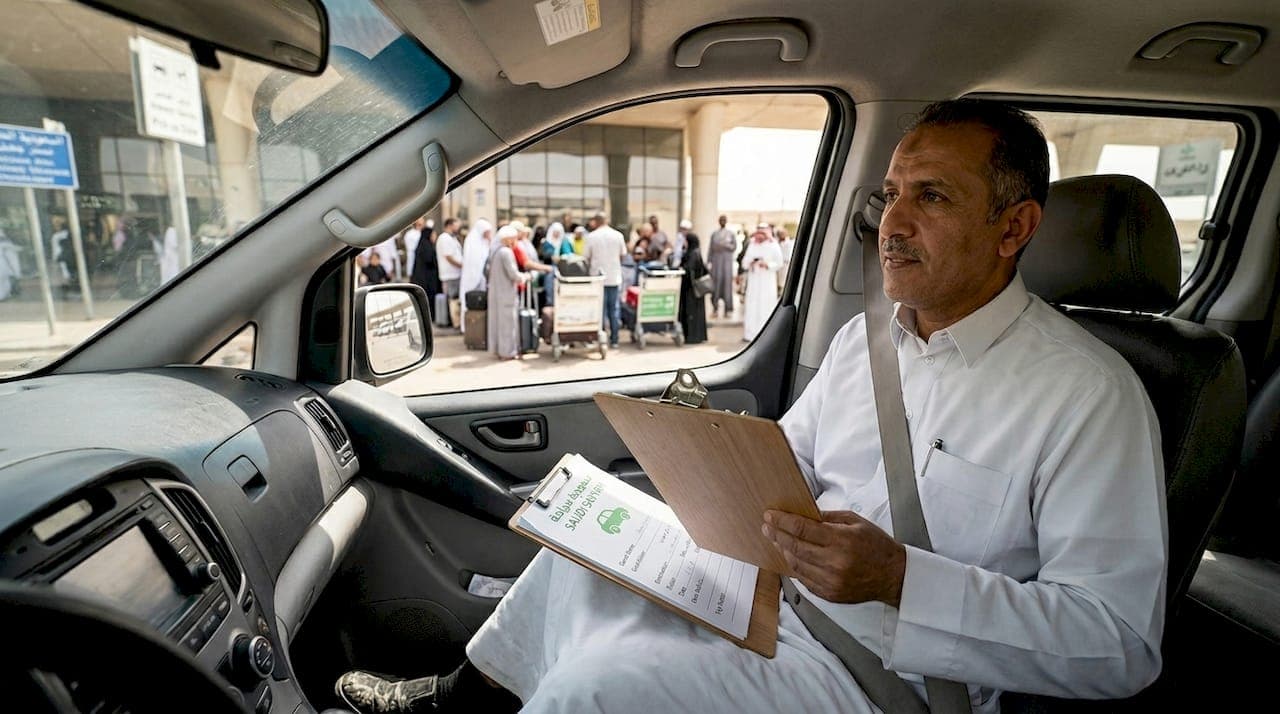
Saudi Arabia recorded 4,423 road deaths in a single year, and pilgrim routes rank among the most dangerous stretches in the country. Yet many Western visitors arriving for Umrah assume any taxi or ride will do. That assumption carries real legal and physical risk. Saudi authorities require licensed transport for all pilgrims, and violations carry steep fines. This guide covers what the rules actually say, what unlicensed transport really costs you, and why professional drivers are not a luxury but a practical necessity for a safe, smooth pilgrimage.
Table of Contents
- Understanding safety risks for Umrah pilgrims
- Saudi regulations and the mandate for licensed transport
- What professional drivers offer beyond ordinary taxis
- Comparing transport choices: budget options vs. professional services
- Our take: what most Western pilgrims miss about Saudi transport
- Ready for your Umrah? Experience professional transport with Saudi Sayyah
- Frequently asked questions
Key Takeaways
| Point | Details |
|---|---|
| Licensed transport is mandatory | Only licensed professional drivers are permitted for Umrah pilgrims to ensure safety and compliance. |
| Professional drivers reduce risk | Using professional services protects against common hazards like accidents and overcharging. |
| Service goes beyond ordinary taxis | Professional drivers provide English support, fixed pricing, prayer stops, and help with complex journeys. |
| Budget options have trade-offs | Buses and basic taxis may be cheaper but are crowded, restrictive, and less reliable for Western pilgrims. |
| Plan ahead for peace of mind | Pre-booking professional transport streamlines your Umrah pilgrimage and minimizes hassles. |
Understanding safety risks for Umrah pilgrims
Saudi Arabia's roads are statistically dangerous. Road fatality rates are among the highest globally, and the risk concentrates on the very routes pilgrims travel most: the corridors between Jeddah, Makkah, and Madinah. Heavy traffic, aggressive lane changes, and drivers unfamiliar with local norms all contribute. For a first-time Western pilgrim, navigating this environment without professional support is a serious gamble.
"Saudi Arabia has high road fatality rates and strict transport rules for pilgrims. Use only licensed taxis, Uber, or Jeeny." — Smartraveller.gov.au
Language barriers make things worse. Road signs, driver instructions, and emergency communications are primarily in Arabic. If something goes wrong, a pilgrim who cannot communicate clearly is at a significant disadvantage. Unfamiliar routes add another layer of stress, especially when arriving exhausted after a long international flight.
Unlicensed taxis present a specific set of problems. Lack of background checks and poor vehicle maintenance mean passengers have no reliable way to assess driver qualifications or vehicle safety before getting in. There is no insurance safety net if an accident occurs. No accountability. No recourse.
Here are the key risks Western pilgrims face with informal transport:
- No driver screening or criminal background checks
- Vehicles with expired registrations or poor maintenance records
- No insurance coverage in case of accident or injury
- Price gouging and disputes with no formal complaint channel
- Communication breakdowns on routes, timings, and stops
For elderly pilgrims or those with mobility needs, these risks multiply. A detailed look at the specific challenges facing older travelers is covered in the elderly pilgrim transport guide. The Umrah safety guide also outlines practical steps to reduce exposure to these hazards before you arrive.
Key stat: Saudi Arabia sees thousands of road fatalities annually, with pilgrim corridors identified as high-risk zones in published research.
The bottom line is straightforward. Informal transport is not a calculated risk. It is an unnecessary one, especially when licensed, professional alternatives exist at competitive prices.
Saudi regulations and the mandate for licensed transport
Saudi Arabia does not leave transport safety to personal choice. Saudi authorities require licensed transport for all pilgrims, with fines issued for violations. The Ministry of Hajj and Umrah runs active enforcement campaigns, and only licensed taxis, Uber, or Jeeny are officially recognized for pilgrim use.
Visa approval can also be linked to confirmed transport arrangements. Pilgrims who arrive without documented, licensed bookings may face complications at entry points. This is not a bureaucratic formality. It is a legal framework designed to protect visitors.
Here is a direct comparison of what licensed and unlicensed transport actually look like:
| Feature | Licensed transport | Unlicensed transport |
|---|---|---|
| Driver background check | Yes | No |
| Vehicle inspection | Mandatory | None |
| Insurance coverage | Required | Absent |
| Fixed or metered pricing | Standard | Variable |
| Complaint and recourse channel | Available | None |
| Legal compliance | Full | Non-compliant |
The steps to stay compliant are not complicated:
- Book transport through a licensed operator before you travel
- Confirm the booking reference is tied to your Umrah visa application
- Verify the driver and vehicle details before boarding
- Keep booking confirmation accessible during your trip
- Use the operator's support channel if any issue arises
Pro Tip: Screenshot your booking confirmation and driver details before landing. Airport connectivity can be unreliable, and having offline access to your transport info removes one potential point of stress on arrival.
For a full breakdown of what makes a transport provider legally compliant and reliable, the choosing reliable Umrah transport page covers the key criteria. Groups traveling together should also review group travel transport options to understand how regulations apply to shared vehicle bookings.
What professional drivers offer beyond ordinary taxis
Compliance is the floor, not the ceiling. Professional drivers do more than meet the legal minimum. They actively reduce the friction that makes Umrah logistics stressful for Western pilgrims.
English-speaking drivers are one of the most practical advantages. Clear communication about routes, timing, prayer stops, and luggage handling removes a major source of anxiety. When you can confirm your itinerary directly with your driver, the entire trip runs more smoothly.
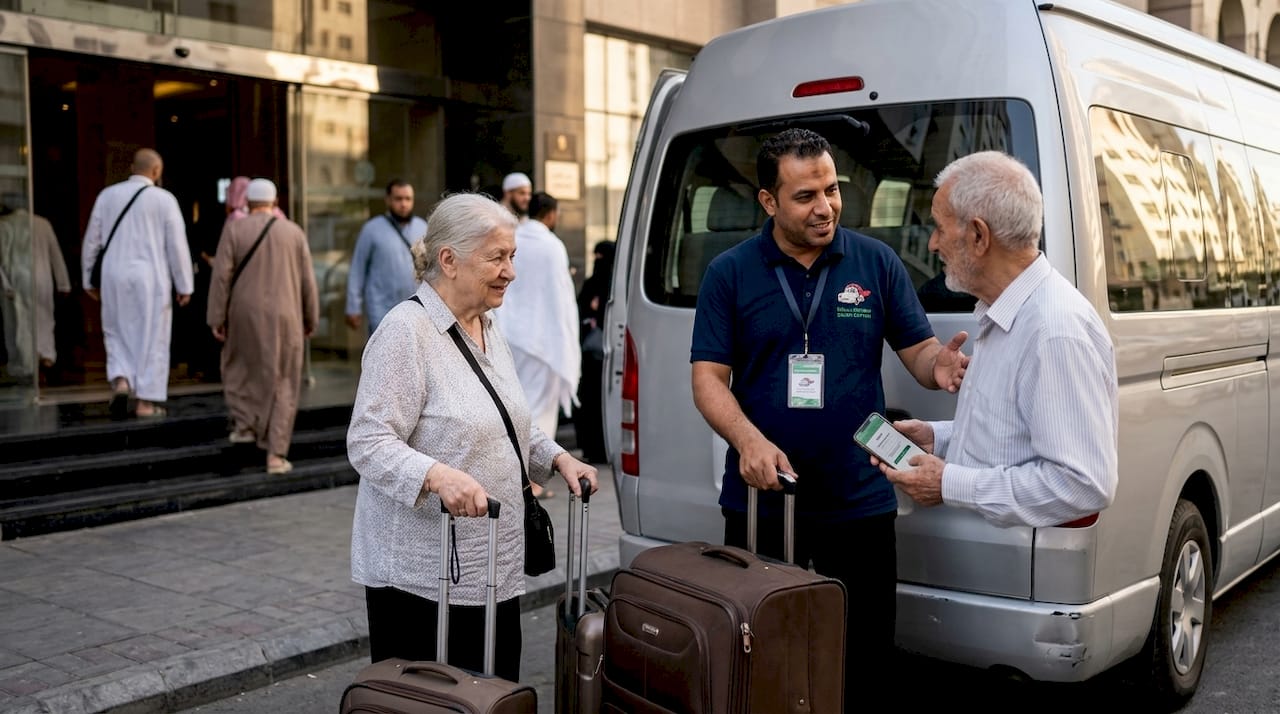
Fixed pricing and 24/7 support are standard features of professional services. No surge pricing during peak prayer times. No last-minute fare disputes at the curb. You know the cost before you get in the car.
Here is a realistic pricing comparison for the Jeddah to Makkah route:
| Transport type | Approximate cost (USD) | Surge pricing risk | Luggage handling |
|---|---|---|---|
| Professional chauffeur | $40 to $60 | None | Included |
| Standard metered taxi | $25 to $50 | High during peak | Limited |
| Shared shuttle | $10 to $20 | None | Minimal |
The cost gap between a professional driver and a metered taxi is often smaller than expected, especially when you factor in the risk of surge pricing or a fare dispute.
Professional drivers also accommodate the specific rhythms of Umrah travel:
- Scheduled prayer stops without pressure or rushing
- Assistance with heavy luggage, including Ihram bags and religious items
- Familiarity with Ziyarat (religious site visits) routes and timing
- Patience with first-time pilgrims who need extra time at stops
Respectful service and prayer stop flexibility are cited as primary reasons pilgrims prefer professional drivers over standard taxis. For group travel, the group travel tips page outlines how to coordinate multi-vehicle bookings efficiently.
Pro Tip: Ask your transport provider in advance whether the driver speaks English and whether prayer stops are included in the booking. Confirming this before departure prevents misunderstandings on the road.
Comparing transport choices: budget options vs. professional services
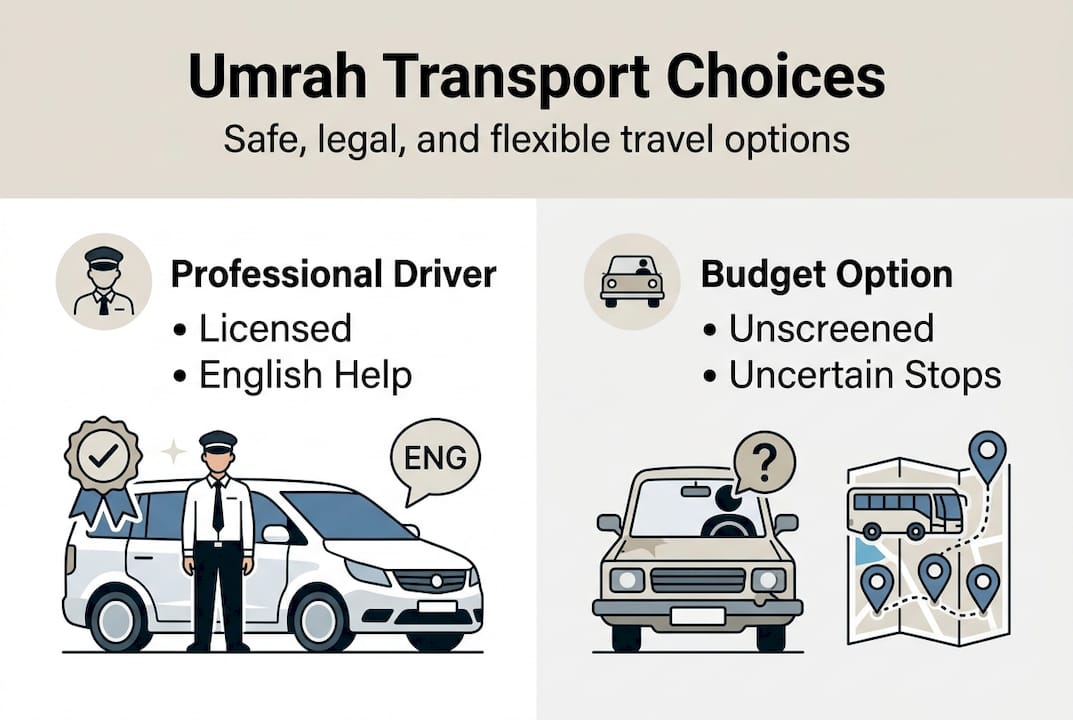
Not every pilgrim has the same needs or budget. Here is an honest breakdown of the main options available.
| Transport option | Cost level | Flexibility | Luggage capacity | Best suited for |
|---|---|---|---|---|
| Professional driver | Medium to high | High | Full | Solo, group, elderly |
| Licensed taxi (metered) | Medium | Medium | Limited | Solo, short trips |
| Shared shuttle bus | Low | Low | Minimal | Budget solo travelers |
| Ride-hailing (Uber/Jeeny) | Medium | Medium | Limited | Short urban trips |
Budget options like buses are slower and crowded. They are not designed for pilgrims carrying multiple bags, traveling with elderly companions, or needing to make Ziyarat stops. The savings are real, but so are the trade-offs.
"I took the budget bus from Jeddah airport. It took three hours, the luggage space was gone, and I missed Asr prayer at the Haram. Lesson learned." — First-time Umrah traveler, shared account
Key considerations when choosing your transport:
- Solo travelers on a tight budget: Shared shuttles work for direct routes with minimal luggage
- Groups of four or more: A private professional vehicle often costs less per person than four individual taxis
- Elderly or mobility-limited pilgrims: Professional drivers with accessible Umrah transport experience are the only practical option
- Multi-stop itineraries: Only professional drivers reliably accommodate Ziyarat scheduling
For Madinah-specific routes, the Medina taxi options guide covers what to expect on the ground. The holy city has its own traffic patterns and restricted zones that require driver familiarity.
The right choice depends on your specific trip. But for most Western pilgrims on their first Umrah, the combination of safety, compliance, and logistical support makes professional transport the practical default.
Our take: what most Western pilgrims miss about Saudi transport
Most articles about Umrah transport focus on cost comparisons. That misses the real issue. Western pilgrims often underestimate language and cultural barriers until they are standing at Jeddah airport at midnight with heavy bags and no driver in sight.
The assumption that "it will work out" is reasonable at home. In Saudi Arabia, on pilgrim routes, during peak Umrah season, it is not. Traffic is dense. Demand for transport spikes. Unlicensed operators fill the gap, and they know a confused foreign pilgrim when they see one.
What professional drivers actually provide is not just a vehicle. It is a system. Confirmed booking. Driver photo. Vehicle details. Real-time tracking. A support line if something changes. That system removes the variables that turn minor inconveniences into genuine problems.
Budget transport feels like savings on a spreadsheet. On the ground, the hidden costs show up as missed prayers, lost luggage, and avoidable stress during what should be a spiritually focused journey. The reliable Umrah transport page outlines exactly what that system looks like in practice.
Ready for your Umrah? Experience professional transport with Saudi Sayyah
Saudi Sayyah provides fully licensed, professionally managed transport for Umrah pilgrims. Every booking includes driver photo, vehicle details, and real-time tracking sent directly to your phone before pickup.
Browse available car hire services to find the right vehicle for your group size and itinerary. Review the premium Umrah fleet to see current model year vehicles and their features. For live availability and same-day bookings in Makkah, use the live Makkah transport tool. Safe, compliant, and stress-free transport is one booking away.
Frequently asked questions
Are professional drivers required for Umrah pilgrims in Saudi Arabia?
Yes, Saudi regulations mandate licensed transport for all Umrah pilgrims, and non-compliance can result in steep fines. Visa approval may also be tied to confirmed, licensed transport bookings.
What are the main safety concerns with using unlicensed taxis for Umrah?
Unlicensed taxis pose risks including poor vehicle maintenance, no insurance, and unscreened drivers, all of which increase accident risk on high-traffic pilgrim routes.
Can professional drivers help with multiple Ziyarat stops and special needs?
Yes, professional services offer flexible itineraries, prayer stop scheduling, and luggage assistance, making them the most practical option for multi-stop pilgrimages.
Is it safe to use budget transport options like shuttle buses during Umrah?
Budget buses are crowded and slow, making them unsuitable for pilgrims with heavy luggage or tight schedules, though they can work for solo travelers on simple, direct routes.