
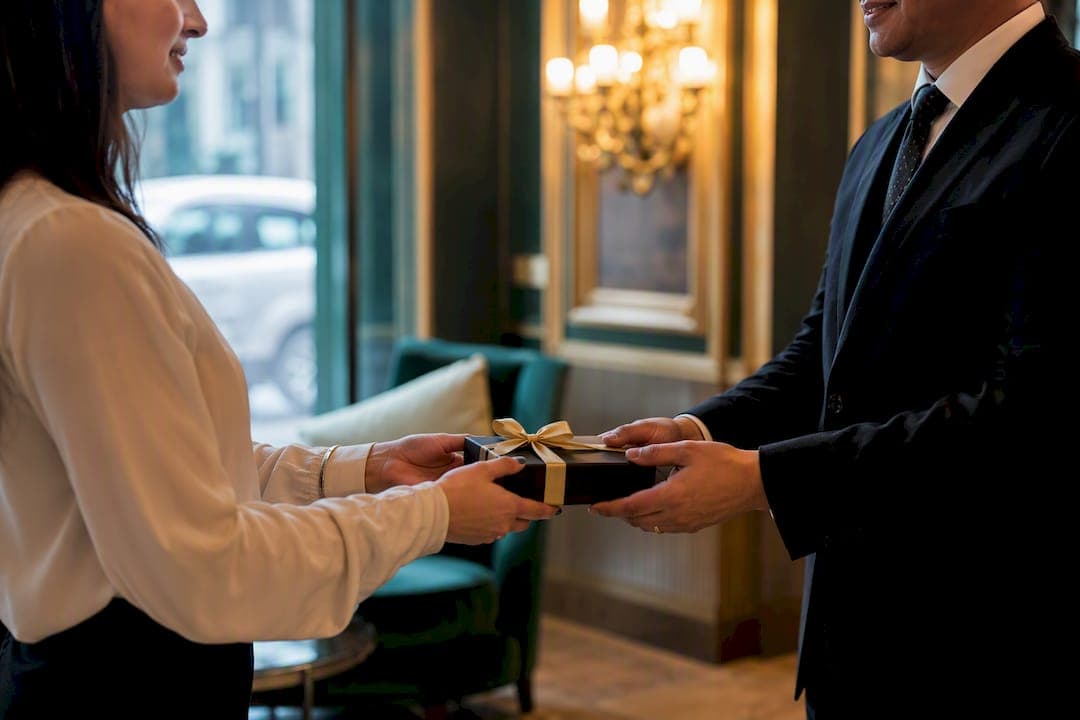
Follow etiquette guidelines because they reduce friction, build trust, and raise personal wellbeing. Brooks](https://media.benedictine.edu/2025-convocation-speaker-to-show-how-to-be-happy). Agreeable, courteous tendencies are roughly 41% heritable, meaning most of your manners come from practice, not genetics. The Emily Post Institute frames etiquette around three principles: consideration, respect, and honesty.
Three things happen when you follow these guidelines:
- Social interactions run smoother, with fewer misread signals
- Colleagues and clients see you as credible and dependable
- Your own stress and irritation drop, because you are not managing constant friction
Key Takeaways
Following etiquette guidelines works because consideration, respect, and honesty reduce conflict, build trust, and measurably improve personal wellbeing.
| Point | Details |
|---|---|
| Politeness regulates mood | Research referenced by Arthur C. Brooks links polite behavior to higher happiness and lower anger. |
| Manners are largely learned | Agreeableness is about 41% heritable, so consistent practice builds the rest. |
| Three principles cover every context | Consideration, respect, and honesty apply equally at work, home, and online. |
| Workplace civility pays off | Forbes ties civility directly to stronger leadership and business outcomes. |
| Netiquette replaces missing cues | Clear tone and prompt replies prevent messages from being misread as rude. |
Table of Contents
- Why Etiquette Matters: Social and Workplace Benefits
- The Three Core Principles Behind Modern Etiquette
- Common Etiquette Guidelines Everyone Should Know
- Key Workplace Etiquette Rules That Protect Professional Relationships
- Netiquette: Simple Rules for Polite Online Communication
- Research-Backed Personal Benefits of Following Etiquette
- How to Practice and Improve Your Etiquette
- Sources
Why Etiquette Matters: Social and Workplace Benefits
Etiquette works because it removes guesswork. When everyone follows the same basic script, greetings, turn-taking, punctuality, people stop wasting energy interpreting each other and start focusing on the actual conversation or task.
Politeness measurably changes mood. Research cited by Brooks found that being polite raises happiness and lowers anger, which makes etiquette less a matter of formality and more a mental-health habit disguised as manners.
Small examples show the mechanism clearly:
- A carefully worded email avoids the flat, cold tone that gets misread as anger
- Showing up on time protects everyone else's schedule, not just your reputation
- A simple "I hear you, let's find a fix" defuses tension before it escalates
The Atlantic's coverage of politeness ties this directly to societal function: when civility erodes, cooperation erodes with it.
The Three Core Principles Behind Modern Etiquette
Modern etiquette is not a rulebook of forks and handshakes. It rests on three durable principles that apply whether you are at a dinner table or in a video call.
Consideration means thinking of others. Respect means treating them with esteem. Honesty means dealing truthfully with others.
That framing comes from the Emily Post Institute, and it holds up because specific customs shift with culture and era while the underlying intent does not. Philosophers make a similar case: etiquette functions as a social lubricant that keeps everyday cooperation from breaking down.
Common Etiquette Guidelines Everyone Should Know
These apply across most cultures and settings, at work, at home, or traveling.
- Greet people properly. A name and eye contact beat a mumbled hello.
- Say please and thank you. It costs nothing and signals respect instantly.
- Listen before responding. Interrupting reads as dismissive, even unintentionally.
- Show up on time. Lateness quietly tells others their time matters less than yours.
- Respect personal space. Physical distance varies by culture, so read the room.
- Dress for the context. Match the occasion, not just your comfort.
- Practice table manners. Wait for the host, chew quietly, keep your phone off the table.
- Manage phone etiquette. Silence it in shared spaces; don't scroll mid-conversation.
- Follow through on commitments. A promise kept builds more trust than any compliment.
- Return borrowed items promptly. In good condition, without being asked twice.
Each one maps back to consideration, respect, or honesty. None require special training, just consistency.
Key Workplace Etiquette Rules That Protect Professional Relationships
Workplace etiquette carries real career weight. Forbes reports that civility is a genuine business advantage, not a soft skill on the side.
- Respect calendars: don't book over someone's lunch or run meetings long
- Bring an agenda and actually listen during meetings, not just wait your turn to speak
- Write emails that are clear and warm, not curt or ambiguous
- Credit colleagues publicly for their contributions
- Adjust for hierarchical and cultural differences rather than assuming one style fits everyone
For virtual meetings: keep your camera on when expected, mute when not speaking, and keep chat comments relevant rather than a running sidebar.
Pro Tip: Leaders set the tone faster than any policy document. If you model punctuality and calm feedback, your team copies it within weeks, not quarters.
Netiquette: Simple Rules for Polite Online Communication
Text and email strip out tone of voice and facial expression, so words carry more weight than they do in person. That is exactly why online civility keeps breaking down faster than it does face to face.
- Assume good intent before reacting to a blunt message
- Use clear subject lines so recipients know the purpose before opening
- Sign off courteously, even in quick exchanges
- Avoid all caps and sarcasm; both read as hostile without vocal tone to soften them
- Reply within a reasonable window instead of leaving requests hanging
- Start a new thread for a new topic rather than burying it in an old one
Compare "Can you send the file? Thanks." to "SEND THE FILE NOW." Same request, completely different relationship.
Research-Backed Personal Benefits of Following Etiquette
The wellbeing case for etiquette is not anecdotal. Brooks' referenced research on politeness found that polite behavior raises happiness and lowers anger, functioning almost like a built-in mood regulator.
Genetics play a role, but not the deciding one. Agreeableness, the trait most linked to politeness, shows roughly 41% heritability. The majority of your manners come from environment, repetition, and choice.
- Practicing courtesy consistently can lower everyday anxiety by giving you a clear script for social situations
- Leaders who practice civility report stronger connections across diverse teams
- Treating etiquette as a daily habit, not a special-occasion performance, compounds these benefits over time
How to Practice and Improve Your Etiquette
Etiquette improves the same way any skill does: small reps, repeated often.
- Notice one gap a day. Did you interrupt, arrive late, or forget a thank you?
- Pick one micro-action to fix it. Draft a two-line polite email template you can reuse.
- Ask for honest feedback. A colleague or friend will spot blind spots you miss.
- Stack the habit onto something existing. Greet three people by name every morning, right after you check your calendar.
- Pause before reacting online. Read a message twice before typing a reply.
- Reflect weekly. Ten minutes reviewing what worked keeps the habit from fading.
Pro Tip: Practicing courtesy with AI assistants and voice tools reinforces the habit of saying "please" and "thank you" automatically, so it carries over into conversations with actual people.
If you travel often, small courtesies matter even more in unfamiliar settings. A practical guide to religious travel etiquette shows how the same principles, consideration, respect, honesty, apply directly to interactions with drivers, hosts, and fellow travelers.
A quick note on why this sticks with me
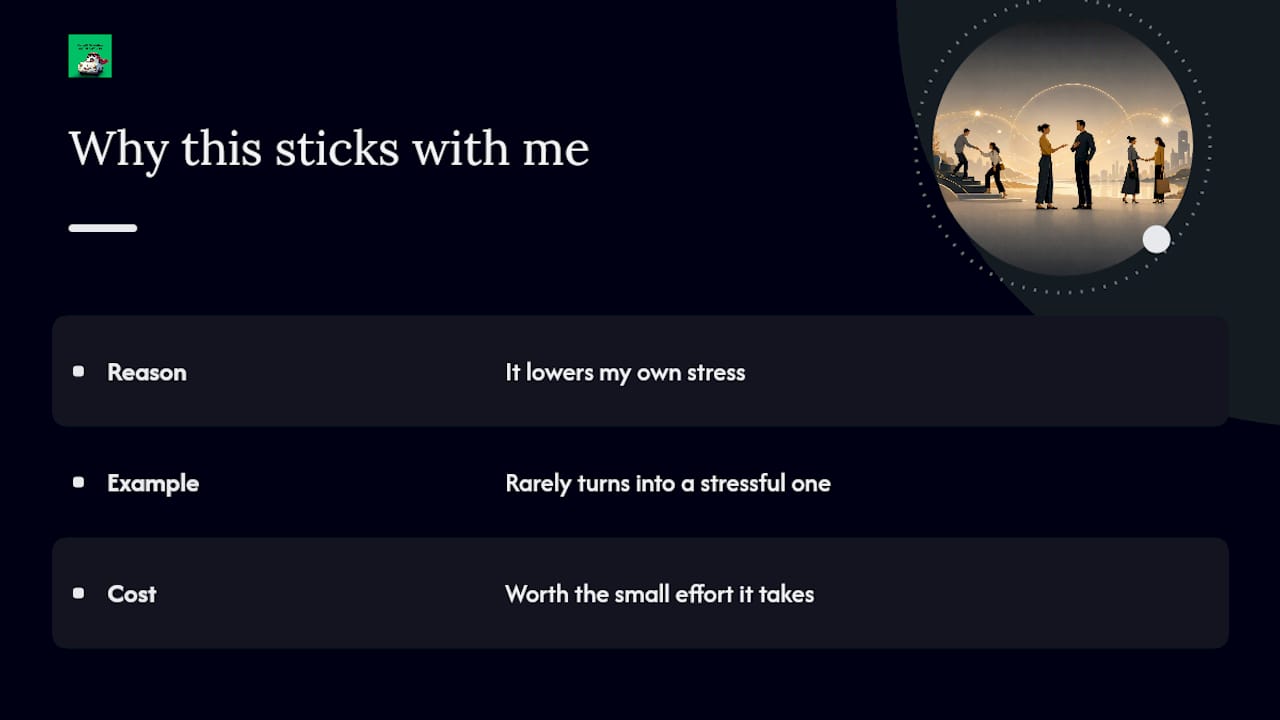
I pay attention to etiquette because it lowers my own stress, not just other people's. A polite exchange with a driver or a colleague rarely turns into a stressful one. That alone is worth the small effort it takes.
Sources
- 2025 convocation speaker: how to be happy (Arthur C. Brooks reference)
- Heritability of agreeableness (PubMed)
- Definition of etiquette (Emily Post Institute)
- The business case for etiquette: how civility drives success (Forbes)
- The power of politeness (The Atlantic)