

TL;DR:
- Excellent customer service involves empowering staff and building trust to exceed customer expectations. Leading companies eliminate service constraints by trusting frontline judgment, using technology to support personalization, and demonstrating leadership involvement. Cultivating a customer-centric culture relies on clear standards, proactive outreach, and managerial visibility, fostering long-term loyalty.
Customer service excellence is defined as consistently exceeding customer expectations through empowered staff, personalized interactions, and proactive problem-solving that builds long-term loyalty. Companies like Ritz-Carlton, Zappos, and Amazon have set the global benchmark for what outstanding customer service looks like in practice. Research from Zendesk confirms that omnichannel support gives companies a measurable competitive edge by delivering consistent, connected experiences across every touchpoint. The examples of customer service excellence covered in this guide span hospitality, retail, logistics, and technology, giving business leaders a practical framework to adapt and apply.
1. Examples of customer service excellence across industries
The most instructive examples of excellent service share three traits: frontline empowerment, frictionless policies, and genuine human care. Each company below has turned one of those traits into a competitive advantage.
Ritz-Carlton: Empowered frontline decisions
Ritz-Carlton gives every frontline employee the authority to spend up to $2,000 per guest, without manager approval, to resolve any service issue. That policy removes the single biggest barrier to great service: waiting for permission. The result is immediate resolution, a guest who feels genuinely valued, and a story worth sharing.

Zappos and Chewy: Friction-free returns
Zappos and Chewy built their reputations on trust-based return policies that remove risk from the purchase decision entirely. Chewy has sent handwritten condolence cards to customers who lost pets, then refunded unopened food without being asked. These gestures cost little but generate loyalty that no advertising budget can replicate.
Morton's Steakhouse: The legendary steak delivery
A customer tweeted at Morton's as a joke, asking them to deliver a steak to Newark Airport. A Morton's team member saw the tweet, prepared a full meal, and had a server waiting at the gate. The story went viral because it demonstrated that high-quality customer service is not about policy. It is about paying attention and choosing to act.
Trader Joe's: Personal staff as a service feature
Trader Joe's trains staff to make genuine conversation, offer product opinions, and open new checkout lanes before lines form. The result is a store experience that feels personal at scale. Staff are not following a script. They are exercising judgment, which is exactly what frontline empowerment looks like in a retail context.
Patagonia: Trust as a brand promise
Patagonia's Worn Wear program repairs gear for free, regardless of age or purchase location. The policy communicates that Patagonia trusts its customers and stands behind its products unconditionally. That trust converts one-time buyers into lifelong advocates.
Pro Tip: When studying these customer service success stories, identify the single constraint each company removed for its customers, whether that was approval delays, return friction, or product uncertainty. Removing one constraint in your own operation often produces outsized loyalty gains.
2. How technology and data-driven personalization enhance service quality
Technology does not replace excellent service. It makes consistent, personalized service possible at scale.
Unified platforms and omnichannel consistency
Unified customer service software allows agents to see a customer's full history regardless of which channel the customer used last. AI reduces case resolution times by 20% and improves customer experience according to 80% of service leaders surveyed by Salesforce. That efficiency matters because customers do not distinguish between channels. They expect the same answer whether they call, chat, or email.
Personalization through data
Spotify Wrapped is one of the most cited examples of data-driven personalization in customer experience. By surfacing each user's listening data as a personalized annual report, Spotify turns routine data collection into a moment customers actively share. The same principle applies in B2B contexts: knowing a client's purchase history, preferred contact method, and past issues before the conversation starts signals that the company is paying attention.
KPIs that drive continuous improvement
Tracking the right metrics separates companies that improve from those that stagnate. The three most actionable metrics for customer service leaders are:
| KPI | What it measures | Why it matters |
|---|---|---|
| CSAT (Customer Satisfaction Score) | Post-interaction satisfaction rating | Immediate signal of service quality |
| FCR (First Contact Resolution) | Issues resolved in a single interaction | Reduces cost and customer effort simultaneously |
| CES (Customer Effort Score) | Ease of resolving an issue | Low effort correlates directly with repeat purchase |
Zendesk recommends targeting a 10% FCR improvement per quarter as a realistic and measurable service quality goal. That kind of incremental target keeps teams focused without creating unrealistic pressure.
3. Leadership and company culture practices that drive excellence
Culture is the infrastructure of customer service. Without it, policies and technology produce inconsistent results.
Empowering employees to act on judgment
The Instacart driver story illustrates what happens when companies trust frontline judgment. A driver stepped five feet into an elderly customer's home, detected a gas leak, and alerted the customer's family. Her actions garnered 17 million views and 3.8 million likes on social media. The story resonated because it showed a frontline worker making a safety-critical decision without waiting for a protocol to authorize it. Trusting employee judgment in high-stakes moments is not a risk. It is a design choice that separates good service from great service.
Leadership visibility in real time
When DBS CEO Tan Su Shan responded to a LinkedIn complaint mid-flight, the act itself became the story. The customer's issue was resolved faster than any escalation process would have allowed. More importantly, the public response signaled that leadership at DBS treats customer feedback as a direct responsibility, not a department problem.
"CEO and C-suite direct engagement in social media escalations can transform brand crises into stories of leadership and accessibility." — Marketing Interactive
That signal matters internally as much as externally. When employees see leadership engage directly with customer issues, the message is clear: customer service is not a cost center. It is a strategic priority.
Building empathy into daily operations
Empathy and friendliness remain the most cited factors in customer loyalty, according to Salesforce research. Companies that build empathy training into onboarding and incident management reviews produce agents who recognize emotional cues and respond to the person, not just the problem. ScottsMiracle-Gro documented a customer who called nearly 500 times over several years. The relationship that developed between that customer and the service team became a case study in deep human connection as a loyalty driver that no competitor could replicate.
4. How to implement customer service best practices in your business
Studying top customer service experiences is useful. Translating them into operational changes is the actual work.
Step 1: Define your service standards with specificity. Vague goals like "be more customer-focused" produce no change. Set measurable targets: a CSAT score above 4.5, an FCR rate above 75%, or a response time under two hours for all social media inquiries.
Step 2: Invest in frontline training and decision-making authority. Give agents a defined budget or authority threshold to resolve issues without escalation. The Ritz-Carlton model works because it removes the approval bottleneck, not because $2,000 is spent on every guest.
Step 3: Deploy unified technology. A CRM that surfaces customer history across channels is the foundation of personalized service. Without it, agents start every conversation from zero, which frustrates customers and wastes time.
Step 4: Build proactive outreach into your workflow. Proactive service means contacting customers before they experience a problem. Shipping delay notifications, appointment reminders, and post-purchase check-ins all reduce inbound complaint volume while building goodwill.
Step 5: Create feedback loops that inform decisions. Customer surveys, social listening tools, and agent-reported patterns should feed directly into weekly or monthly service reviews. Feedback that sits in a report nobody reads changes nothing.
Step 6: Treat customer service as a growth driver. Proactive support models that anticipate customer needs shift the function from reactive cost center to revenue-generating asset. Companies that make this shift report stronger retention and higher lifetime customer value.
Pro Tip: Start with Step 4 before Step 3. Proactive outreach requires no new technology and produces immediate goodwill. It also reveals which customer touchpoints generate the most anxiety, which tells you exactly where to focus your technology investment next.
Key takeaways
The most effective customer service operations combine frontline empowerment, unified technology, and leadership visibility to consistently exceed customer expectations.
| Point | Details |
|---|---|
| Frontline empowerment | Give agents defined authority to resolve issues without approval delays, as Ritz-Carlton demonstrates. |
| Proactive outreach | Contact customers before problems arise to reduce complaints and build loyalty. |
| Unified technology | Use CRM platforms to surface customer history across all channels for consistent, personalized service. |
| Leadership visibility | C-suite engagement in public complaints signals that service is a company-wide priority. |
| Measurable KPIs | Track CSAT, FCR, and CES to identify gaps and set realistic quarterly improvement targets. |
What I've learned about service excellence that most guides skip
Most articles on customer care excellence examples focus on the policies: the $2,000 Ritz-Carlton rule, the no-questions return window, the viral steak delivery. Those policies matter. But the underlying mechanism is almost always the same: someone in leadership decided to trust their people and their customers more than they trusted their process.
The companies that sustain excellent service over years are not the ones with the most sophisticated technology. They are the ones where a frontline employee feels confident enough to step five feet into a customer's home because their judgment is valued. Technology accelerates that culture. It does not create it.
The uncomfortable truth is that most service failures are not technology failures. They are permission failures. An agent knew what the customer needed and was not authorized to provide it. Fixing that requires a cultural decision, not a software purchase.
For business leaders reading this in 2026, the most important investment is not in the next AI tool. It is in the clarity of your service standards and the degree to which your frontline staff trust that acting on those standards will be supported, not second-guessed. Transportation companies like those profiled in executive logistics case studies demonstrate this principle in high-stakes, time-sensitive contexts where there is no room for approval bottlenecks.
— Fa
Saudisayyah: service excellence in practice
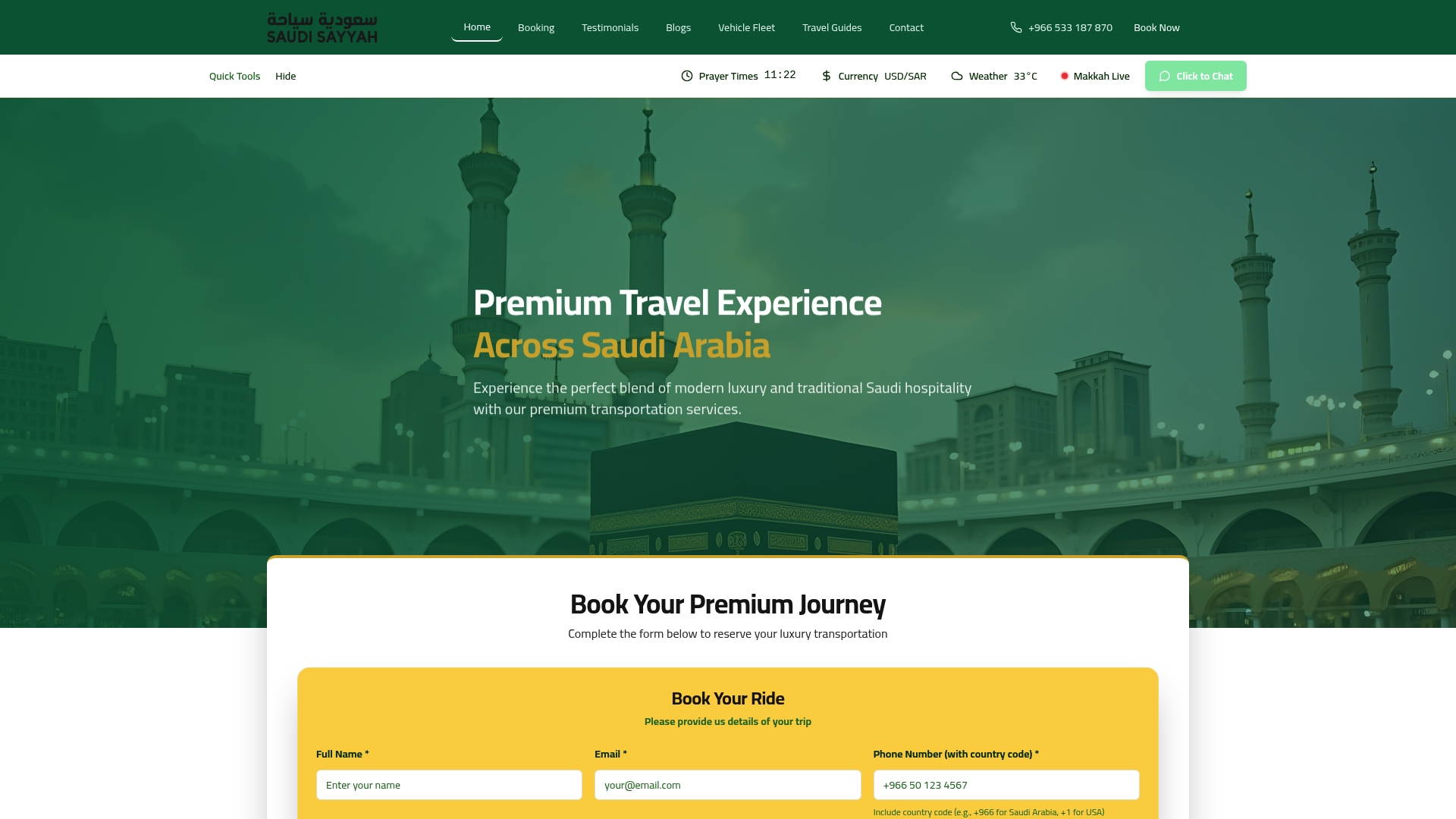
Saudisayyah applies the same principles covered in this guide to every pilgrim transport booking. Driver photos, vehicle details, and real-time geolocation tracking are sent before every trip, removing uncertainty at the moment it matters most. The booking system is fully automated and internationally compliant, which means no manual errors and no surprises. For first-time visitors to the holy lands, that level of transparency is not a feature. It is the service. Explore Saudisayyah's premium transport services or review the full fleet options to see how operational reliability and customer-focused design work together in a single platform.
FAQ
What defines customer service excellence?
Customer service excellence is defined as consistently exceeding customer expectations through empowered staff, personalized interactions, and proactive problem-solving. It goes beyond resolving complaints to anticipating needs before customers voice them.
Which companies are the best examples of excellent service?
Ritz-Carlton, Zappos, Chewy, Patagonia, and Trader Joe's are widely cited as top customer service experiences across hospitality, retail, and e-commerce. Each company has built a distinct policy that removes friction or adds genuine human value for the customer.
How does technology improve customer service quality?
Unified CRM platforms and AI tools reduce case resolution times by 20% and allow agents to personalize every interaction using full customer history. The key is using technology to support human judgment, not replace it.
What KPIs should customer service teams track?
CSAT, First Contact Resolution, and Customer Effort Score are the three most actionable metrics for measuring and improving service quality. Targeting a 10% FCR improvement per quarter is a practical starting benchmark.
How do you build a customer-centric culture?
Customer-centric culture requires leadership visibility, frontline empowerment, and empathy training embedded in daily operations. When leadership engages directly with customer complaints, as the DBS CEO example shows, it sets a standard the entire organization follows.