
TL;DR:
- Modern vehicles in 2026 include active safety systems like Autonomous Emergency Braking and Lane-Keeping Assist, which older cars lack. They also offer advanced connectivity, better fuel efficiency, and enhanced comfort features that improve safety and driving experience. Investing in a new vehicle often saves money over time through insurance discounts, fuel savings, and warranty coverage.
Modern vehicles are defined by active safety systems, connected technology, and powertrain efficiency that older cars simply cannot match. Whether you are buying or renting, the gap between a 2026 model and a decade-old car is not marginal. It covers collision prevention, fuel costs, cabin comfort, and long-term ownership value. The reasons to choose modern vehicles go well beyond a fresh interior or a bigger screen. They reflect fundamental engineering advances that protect you, save you money, and make every trip less stressful.
Why choose modern vehicles over older ones?
The most important shift in modern automotive design is the move from passive to active safety. Older vehicles protect you after a crash. Modern vehicles work to prevent the crash entirely. Active safety systems like Autonomous Emergency Braking and Lane-Keeping Assist are now standard equipment on new cars sold in 2025 and beyond. That means every new vehicle you buy or rent today includes technology that older used cars simply do not have.
Active safety vs. passive protection
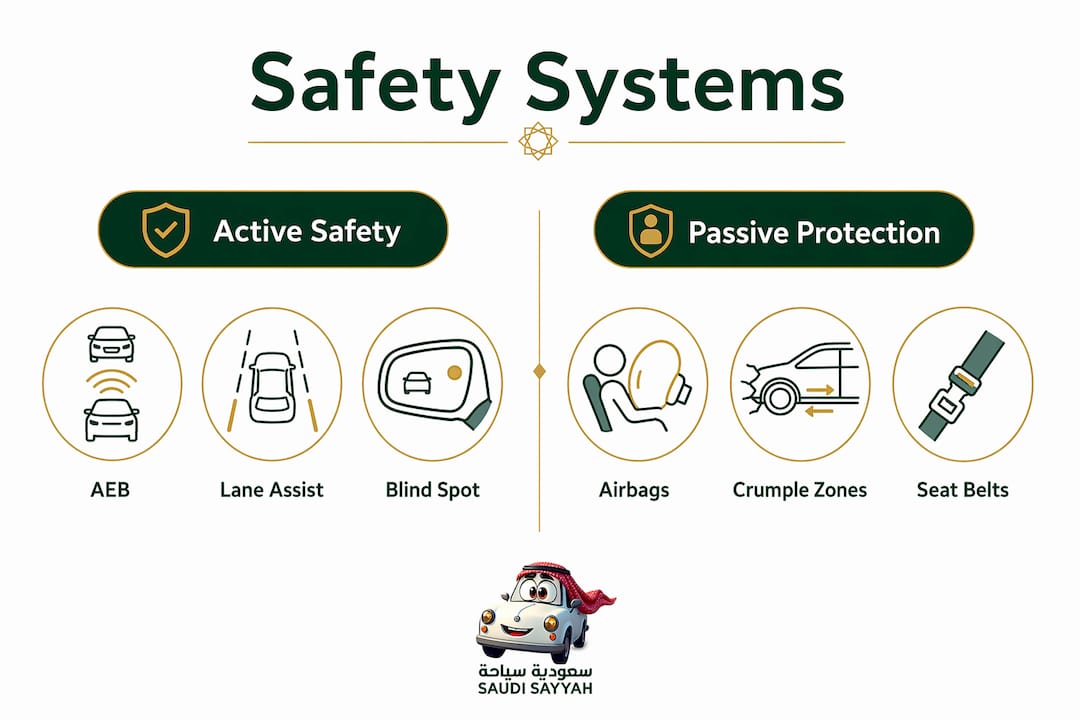
Passive systems include airbags and crumple zones. They reduce injury severity once a collision happens. Active systems like Automatic Emergency Braking, Blind Spot Monitoring, and Rear Cross-Traffic Alert intervene before impact. The distinction matters because active safety tech mandated since 2025 means older used vehicles lack essential collision-prevention systems. No amount of maintenance on an older car adds these features retroactively.
Here is what active safety now covers as standard on most 2026 models:
- Autonomous Emergency Braking (AEB): Detects pedestrians and vehicles and applies brakes automatically
- Lane-Keeping Assist: Corrects steering drift to keep the car in its lane
- Blind Spot Monitoring: Alerts drivers to vehicles in adjacent lanes
- Rear Cross-Traffic Alert: Warns of approaching vehicles when reversing
- Adaptive Headlights: Adjust beam direction based on steering input and speed
Pro Tip: When comparing insurance quotes, ask specifically about discounts for AEB and Lane-Keeping Assist. Insurers frequently apply lower premiums to vehicles with these systems, and the savings compound over a multi-year policy.
Active safety also affects your insurance bill. Lower insurance premiums often apply to vehicles equipped with active safety technology. That discount is a direct financial return on the safety investment built into a modern car.
How does modern automotive technology improve the driving experience?
Modern vehicle technology is not limited to safety. The infotainment, connectivity, and driver assistance features in a 2026 model change how you interact with the car on every trip. Wireless smartphone mirroring and wireless charging are now standard or widely available across most new models. That removes the cable clutter that older infotainment systems required.
Connectivity and driver assistance
The practical benefits of modern connectivity include:
- Apple CarPlay and Android Auto (wireless): Full phone integration without plugging in
- Voice control: Hands-free navigation, calls, and media without touching a screen
- Over-the-air software updates: Manufacturers push feature improvements and bug fixes remotely
- Telematics and maintenance alerts: The car tells you when it needs service before a problem develops
- Digital instrument clusters: Customizable displays that show the data most relevant to your drive
Adaptive Cruise Control and Lane-Keeping Assist reduce cognitive load and driver fatigue, especially in traffic and on long trips. These systems automate the most repetitive driving tasks. The result is a driver who arrives less tired and more alert, which matters most on journeys over 90 minutes.
Reduced cognitive load from advanced driver assistance systems also improves driver wellbeing during heavy traffic. That is not a comfort luxury. It is a measurable safety outcome. For renters traveling through unfamiliar cities or pilgrims navigating high-traffic routes, this technology is a practical advantage that older vehicles cannot provide.
In what ways do modern vehicles improve fuel efficiency?
Fuel economy is one of the clearest financial arguments for newer models. Modern fuel injection systems, lightweight materials, and hybrid powertrains improve fuel economy by 2–3 liters per 100 km compared to petrol-only older SUVs. The Toyota RAV4 Hybrid is a direct example. It delivers real-world efficiency that a comparable 2012 petrol RAV4 cannot approach.

| Vehicle type | Estimated fuel use (L/100 km) | Annual fuel cost (est.) |
|---|---|---|
| 2026 hybrid SUV | 5.5–6.5 | $1,200–$1,500 |
| 2026 petrol SUV | 8.0–9.5 | $1,800–$2,200 |
| 2014 petrol SUV | 10.5–12.5 | $2,400–$2,900 |
The gap between a 2026 hybrid and a 2014 petrol SUV can reach $1,700 per year in fuel costs alone. Over five years, that difference offsets a significant portion of the price premium on a new vehicle.
Pro Tip: If you rent vehicles frequently for business or pilgrimage travel, request hybrid or electric options specifically. The per-kilometer fuel saving on a week-long rental adds up faster than most renters expect.
Electric vehicles and plug-in hybrids extend these gains further. The 2026 market includes models from Toyota, Hyundai, Ford, and Kia that deliver zero tailpipe emissions in urban driving. Environmental regulations in Saudi Arabia and globally are tightening. Choosing a modern, efficient vehicle now aligns with where compliance requirements are heading.
What comfort improvements do modern vehicles offer?
Comfort in modern vehicles comes from engineering, not just added features. Advanced digital suspension and acoustic isolation reduce high-frequency noise and micro-vibrations, lowering passenger fatigue on journeys over 60 minutes. That is a structural difference from older cars, not something you can replicate by adding seat covers or a phone mount.
The comfort features now standard or widely available in 2026 models include:
- Multi-zone climate control: Driver and passengers set independent temperatures
- Ventilated and heated seats: Available across mid-range trims, not just luxury models
- Ambient lighting: Adjustable cabin lighting that reduces eye strain on night drives
- Acoustic glass: Laminated windshields and side windows that cut road and wind noise
- Massage seat functions: Available in premium trims from brands like Mercedes-Benz, Genesis, and BMW
For long-distance travel, the combination of comfort improvements including ventilated seats, multi-zone climate control, and ambient lighting makes a measurable difference in how passengers feel at the end of a trip. Pilgrims traveling between Makkah and Madinah, or families on extended road trips, notice this difference immediately. Older vehicles with fixed suspension tuning and single-zone climate systems simply cannot replicate it.
For more on how these features support family travel specifically, the top features of family-oriented vehicles in 2026 covers adaptive cruise control and lane-keeping benefits in detail.
How do financial factors affect the choice between modern and older vehicles?
The sticker price on a new car is the most visible number, but it is not the most accurate measure of cost. The average transaction price for a new vehicle in the U.S. reached $49,191 in January 2026, compared to $25,533 for used cars. That gap is real. But the total cost of ownership tells a different story.
Manufacturers offer incentives including 0% interest rates and rebates averaging $2,400 in early 2026. Extended factory warranties also reduce maintenance expenses in the first three to five years. When you factor in lower repair costs, insurance discounts from active safety features, and better fuel economy, the gap between new and used narrows considerably.
| Cost factor | Modern vehicle (2026) | Older vehicle (2014) |
|---|---|---|
| Purchase price | $49,191 avg. | $25,533 avg. |
| Manufacturer rebate | Up to $2,400 | None |
| Annual fuel cost | $1,200–$1,500 | $2,400–$2,900 |
| Warranty coverage | 3–5 years factory | Likely expired |
| Insurance premium | Lower (active safety) | Higher |
Considering total cost of ownership rather than just purchase price gives a more accurate view of the value a modern vehicle delivers. Average monthly payments for new vehicles reached $767 as of Q1 2026. That number sounds high until you account for the fuel savings, avoided repair bills, and insurance reductions that older vehicles do not provide.
For renters, the financial calculation is simpler. You pay for the trip, not the depreciation. Renting a modern vehicle gives you full access to active safety, comfort, and efficiency without carrying the ownership cost at all.
Key Takeaways
Modern vehicles deliver measurable advantages in safety, technology, fuel efficiency, and comfort that older models cannot replicate, making them the stronger choice for most buyers and renters in 2026.
| Point | Details |
|---|---|
| Active safety is now standard | AEB and Lane-Keeping Assist ship on all new 2026 models; older cars lack these systems entirely. |
| Fuel savings reduce total cost | Hybrids save up to $1,700 per year in fuel versus 2014-era petrol SUVs. |
| Incentives close the price gap | Rebates averaging $2,400 and 0% financing make new cars more cost-competitive than sticker price suggests. |
| Comfort is engineered, not added | Digital suspension and acoustic isolation reduce fatigue on trips over 60 minutes. |
| Technology reduces driver fatigue | Adaptive Cruise Control and voice control lower cognitive load on long and urban drives. |
What I have learned from watching buyers weigh this decision
Most buyers focus on the wrong number first. They see $49,191 for a new car and $25,533 for a used one and stop reading. The math looks obvious. But I have watched that calculation fall apart repeatedly once fuel, repairs, and insurance enter the picture.
The more interesting question is not whether modern vehicles cost more upfront. They do. The question is whether the safety and comfort gap between a 2026 model and a 2014 model is acceptable to you. For most daily drivers and travelers, it is not. Autonomous Emergency Braking alone changes the risk profile of every trip. You cannot retrofit that onto an older car.
Where older vehicles still make sense is in low-mileage, low-risk scenarios. A second car driven 3,000 miles per year on quiet roads does not need adaptive cruise control. But for anyone covering significant distances, navigating urban traffic, or traveling with passengers who depend on them, the active safety argument is decisive.
Technology confidence also matters more than buyers admit. Drivers who understand and trust their vehicle's assistance systems drive better. They are less tense, less reactive, and more consistent. That is not a marketing claim. It reflects what advanced driver assistance systems actually do to cognitive load during demanding drives.
My recommendation: run the five-year total cost comparison before deciding. Include fuel, insurance, and expected repairs. Most buyers who do this find the gap between new and used is smaller than they assumed, and the safety and comfort difference is larger.
— Fa
Travel with Saudisayyah's modern fleet
Saudisayyah operates a fleet of the latest model year vehicles, selected specifically for safety, comfort, and reliability on Saudi Arabia's most demanding routes.

Every vehicle in the Saudisayyah fleet includes active safety systems, multi-zone climate control, and real-time GPS tracking. Drivers are experienced professionals. The booking platform sends you driver photos, vehicle details, and live tracking before every trip. For pilgrims traveling to Makkah or Madinah for the first time, that level of transparency removes uncertainty from the experience. Explore Saudisayyah's vehicle services to see available models and book your transport. For a full view of available models, the Saudisayyah fleet page lists current vehicles with their features.
FAQ
What safety systems come standard on modern vehicles in 2026?
Most 2026 models include Autonomous Emergency Braking, Lane-Keeping Assist, Blind Spot Monitoring, and Rear Cross-Traffic Alert as standard equipment. These systems were mandated by regulation starting in 2025 and are not present on most used vehicles.
How much can you save on fuel by choosing a modern hybrid over an older petrol SUV?
Modern hybrid SUVs use 2–3 liters per 100 km less fuel than older petrol-only SUVs. That translates to roughly $900–$1,700 in annual fuel savings depending on mileage and fuel prices.
Are new vehicles worth the higher purchase price compared to used cars?
The average new vehicle costs $49,191 versus $25,533 for used in 2026, but manufacturer rebates averaging $2,400, lower insurance premiums, and reduced repair costs under warranty narrow the total cost gap significantly over five years.
What technology features distinguish modern vehicles from older models?
Modern vehicles offer wireless Apple CarPlay and Android Auto, over-the-air software updates, adaptive cruise control, digital instrument clusters, and voice-controlled infotainment. Most of these features are absent or limited in vehicles built before 2018.
Is renting a modern vehicle a better option than renting an older one?
Renting a modern vehicle gives you access to active safety systems, fuel efficiency, and comfort features without ownership costs or depreciation. For travelers covering long distances or unfamiliar routes, the safety and comfort advantages are the same as ownership.