
TL;DR:
- SUV is the most popular luxury vehicle style for Saudi Arabia’s diverse terrain.
- Luxury tiers range from premium models around $29,000 to ultra-luxury exceeding $60,000.
- The right vehicle depends on trip purpose, terrain, group size, and personal comfort preferences.
Choosing the right luxury vehicle for a journey through Saudi Arabia is not as simple as picking the most expensive model on the lot. With dozens of body styles, power configurations, and tier levels available, the decision quickly becomes layered. Whether you are planning a long-distance road trip between Riyadh and Jeddah, a pilgrimage to the holy cities, or a multi-stop tour of the Kingdom's most scenic routes, the vehicle you choose shapes every part of that experience. This guide breaks down the major types, price tiers, and standout features so you can match the right vehicle to your specific needs.
Table of Contents
- How luxury vehicles are classified
- Breakdown of luxury vehicle body styles
- Comparing premium, luxury, and ultra-luxury tiers
- Choosing the right luxury vehicle for Saudi travel
- Why the best luxury vehicle depends on your journey
- Discover and reserve Saudi Arabia's premier luxury vehicles
- Frequently asked questions
Key Takeaways
| Point | Details |
|---|---|
| Classification frameworks | Luxury vehicles are grouped by body style, price tier, and features, helping you narrow down your choices. |
| SUV dominance | SUVs are the top choice in Saudi Arabia for luxury travelers due to versatility and comfort. |
| Tiered experiences | Premium, luxury, and ultra-luxury tiers offer distinct experiences, amenities, and investment value. |
| Context matters | The best luxury car for your Saudi journey depends on your travel needs, group size, and itinerary. |
How luxury vehicles are classified
Let's start by clarifying the underlying frameworks that drive the luxury vehicle market. Classification is not arbitrary. It follows a structured logic built around body style, price point, and feature depth.
Luxury vehicles are classified by body styles including sedans, SUVs, coupes, convertibles, supercars, and hybrids. Each body style serves a different purpose, from the formal presence of a sedan to the raw capability of a full-size SUV. Understanding which style fits your travel pattern is the first filter.
Beyond body style, the market is tiered by luxury level: Premium, Luxury, and Ultra-Luxury. Each tier signals a different level of material quality, technology integration, and exclusivity. A Premium vehicle like a BMW 3 Series offers genuine refinement at a lower cost of entry. A true Luxury vehicle like a Mercedes S-Class raises the bar significantly. Ultra-Luxury models like Rolls-Royce and Bentley exist in a category where price is rarely the primary concern.
Key features that separate each tier include:
- Engine output and drivetrain sophistication
- Cabin materials (leather grade, wood trim, metal finishes)
- Driver assistance and infotainment technology
- Customization options available at the factory level
- Noise insulation and ride quality engineering
The line between premium and true luxury has blurred in recent years. Many mainstream brands now offer premium trim levels that rival entry-level luxury models on paper. But the feel, the brand heritage, and the ownership experience still separate them meaningfully.
"Different buyers need different criteria. A business traveler values cabin silence and legroom. An adventure traveler values ground clearance and torque. Luxury classification only makes sense when it's filtered through the lens of actual use."
For Saudi travelers, one classification stands out above the rest: the SUV. Explore the fleet options available for the region to see how SUV dominance plays out in practice. Saudi terrain, from desert highways to mountainous switchbacks near Abha, rewards vehicles with height, power, and AWD capability.
Breakdown of luxury vehicle body styles
Now that you know how vehicles are classified, let's look at what truly sets each body style apart.
SUVs hold 40%+ market share, sedans 25%, coupes 15%, and supercars just 1-2%. Those numbers reflect real-world priorities. Here is how each style stacks up:
| Body style | Best for | Key strength | Limitation |
|---|---|---|---|
| Sedan | City travel, business | Comfort, prestige | Limited cargo space |
| SUV | Long trips, terrain | Space, AWD, height | Higher fuel use |
| Coupe | Style-focused driving | Aesthetics, handling | Rear seat limits |
| Convertible | Scenic routes | Open-air experience | Less practical |
| Supercar | Performance driving | Speed, exclusivity | Not group-friendly |
| Hybrid | Efficiency, silence | Fuel savings, quiet | Range anxiety |
Sedans like the Mercedes S-Class and BMW 7 Series offer a refined, quiet ride that works well for city transfers and airport runs. They signal formal prestige without the bulk of an SUV.
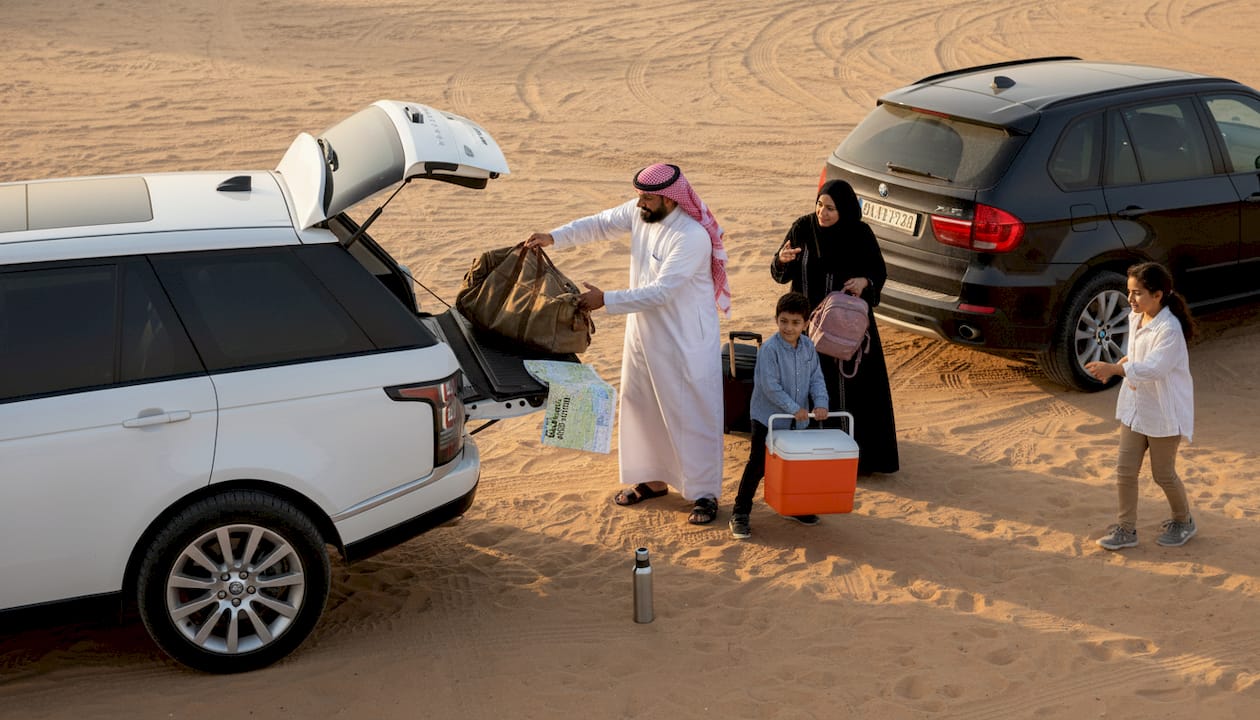
SUVs are the dominant choice in Saudi Arabia. Models like Range Rover, BMW X5, and Mercedes GLS top Saudi rankings for good reason. AWD systems, high ground clearance, and large cabins make them versatile across all Saudi road types. Check the latest luxury SUVs available for 2026 journeys.
Coupes prioritize form. The Mercedes CLE and BMW 8 Series look exceptional but sacrifice rear passenger space. Best suited for solo or couple travel on scenic coastal roads.
Convertibles add an open-air dimension. Practical only in mild weather, which limits their appeal during Saudi summer months.
Supercars like the Lamborghini Urus or Ferrari Purosangue attract attention everywhere. But they are not designed for group travel or rough terrain.
Pro Tip: Do not overlook hybrids. Models like the Lexus LS 500h deliver near-silent cabin performance, strong fuel efficiency, and genuine luxury. For long-distance Saudi travel, the reduced fuel stops alone justify the consideration.
Comparing premium, luxury, and ultra-luxury tiers
Understanding body styles is only half the story. Where your vehicle sits on the luxury ladder can make all the difference.
Entry-level luxury spans $29,000 to $38,000 (BMW 3 Series range); mid-luxury runs $36,000 to $60,000; ultra-luxury begins at $60,000 and climbs steeply from there with brands like Rolls-Royce and Bentley. Here is how those tiers translate into real differences:
| Tier | Price range | Example models | Key features |
|---|---|---|---|
| Premium | $29k to $38k | BMW 3 Series, Mercedes C-Class | Refined materials, driver tech |
| Luxury | $36k to $60k | Mercedes S-Class, Audi A8 | Superior insulation, advanced assist |
| Ultra-Luxury | $60k+ | Rolls-Royce, Bentley | Bespoke customization, hand-built |
Performance differences between tiers are significant. A mid-luxury sedan typically delivers 300 to 450 horsepower with adaptive suspension. An ultra-luxury model may offer similar output but with a focus on effortless delivery rather than raw speed. The ride in a Rolls-Royce Ghost feels categorically different from even a well-specced BMW.
Statistic worth noting: Luxury cars have 25% fewer accidents and retain around 50% of their resale value, making them a practical investment beyond the prestige factor.
How to decide which tier fits your journey:
- Define your group size. Ultra-luxury sedans seat four comfortably; SUVs in any tier handle more.
- Set your comfort baseline. Premium is excellent. Luxury is noticeably better. Ultra-luxury is in a different category entirely.
- Consider your route. City-only travel favors sedans. Mixed terrain favors SUVs regardless of tier.
- Factor in support. Higher-tier vehicles often come with dedicated roadside and concierge support.
- Review luxury customization features available through your provider before finalizing.
Choosing the right luxury vehicle for Saudi travel
By now, you have a sense of what's possible. Here's how to turn that knowledge into the perfect choice for your adventure.
For Saudi affluent travelers, SUVs like the Range Rover and Genesis GV80 are ideal due to AWD capability and high ground clearance. Saudi roads vary dramatically. Riyadh's urban grid is smooth and fast. The roads near Taif and the Asir region involve elevation changes and narrower paths. Desert routes near NEOM or AlUla introduce sand and gravel surfaces.
Recommended vehicles by travel scenario:
- City transfers and business meetings: Mercedes S-Class or BMW 7 Series. Formal, quiet, and commanding.
- Long-distance highway travel: Range Rover or Mercedes GLS. Space, comfort, and fuel range.
- Group pilgrimages: Toyota Land Cruiser or Cadillac Escalade. Maximum seating and luggage capacity.
- Scenic mountain routes: BMW X5 or Porsche Cayenne. Balanced handling and ground clearance.
- Solo performance driving: Porsche Panamera or Maserati Ghibli. Engaging without sacrificing comfort.
Key checklist before booking:
- Group size and luggage volume
- Route terrain type (city, highway, desert, mountain)
- Desired comfort tier (premium vs. ultra-luxury)
- AWD requirement based on planned roads
- Availability of maintenance support along your route
Pro Tip: For remote Saudi routes, confirm that your vehicle provider offers roadside support or route-aware assistance. Breakdowns in isolated areas require fast, organized response. Review group transport options and group travel tips before finalizing any multi-passenger booking.
Why the best luxury vehicle depends on your journey
Finally, let's rethink what 'luxury' should mean on your next journey.
The most common mistake travelers make is equating price with suitability. A Bentley Bentayga is an extraordinary vehicle. It is also not the right choice for a seven-passenger Umrah group with four large suitcases. A mid-tier SUV with a spacious cargo area and reliable AWD will serve that group better in every practical sense.
Conventional wisdom says bigger and pricier always means better. Saudi travel experience challenges that directly. The terrain, the group dynamics, and the purpose of the trip matter far more than badge prestige. Travelers who have made this journey before often shift their priorities from status to function after the first trip.
Flexibility is the real luxury. Choosing a vehicle that fits the road, the group, and the itinerary delivers a richer experience than choosing one that simply looks impressive. For reliable Umrah transport, the right vehicle is the one that gets everyone there comfortably and on time, not the one with the highest sticker price.
Discover and reserve Saudi Arabia's premier luxury vehicles
Ready to put your new knowledge into action? Here's how to access the best vehicles for your journey.
Saudi Sayyah maintains a curated selection of late-model luxury vehicles matched to Saudi Arabia's specific travel demands. From premium sedans for city transfers to full-size SUVs for long-distance pilgrimages, the luxury car services cover every scenario covered in this guide. Browse the full fleet lineup to compare body styles, seating capacity, and available features. Booking is fully automated, internationally compliant, and backed by real-time driver tracking and communication tools that remove uncertainty from every trip.
Frequently asked questions
What defines a luxury vehicle compared to standard cars?
Luxury vehicles are distinguished by higher-quality materials, advanced technology, superior comfort, and exclusive features not typically found in standard cars.
Which luxury vehicle type is most popular in Saudi Arabia?
Luxury SUVs dominate with 40%+ market share in Saudi Arabia because they offer versatile performance across varied terrain and accommodate larger groups.
Are supercars practical for travel in Saudi Arabia?
Supercars prioritize performance over practicality, making them less suited for group travel or routes with mixed road conditions compared to SUVs.
What price range should I expect for luxury vehicles?
Entry-level models start near $29,000; mid-luxury spans $36,000 to $60,000; ultra-luxury begins at $60,000 and rises significantly depending on brand and customization.