
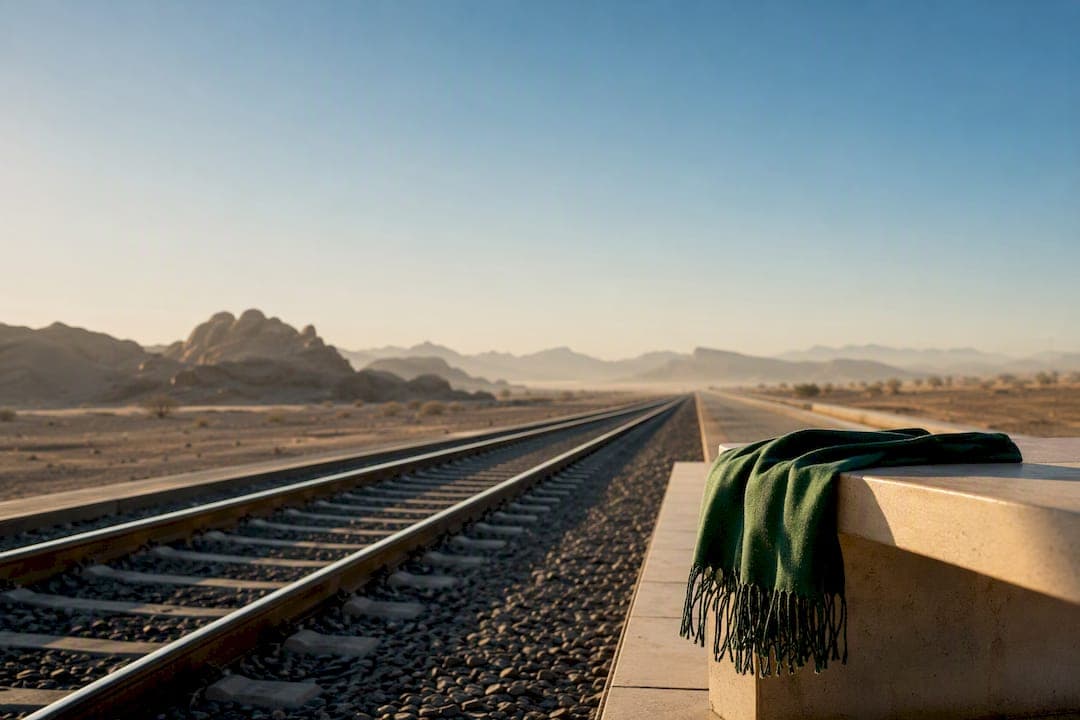
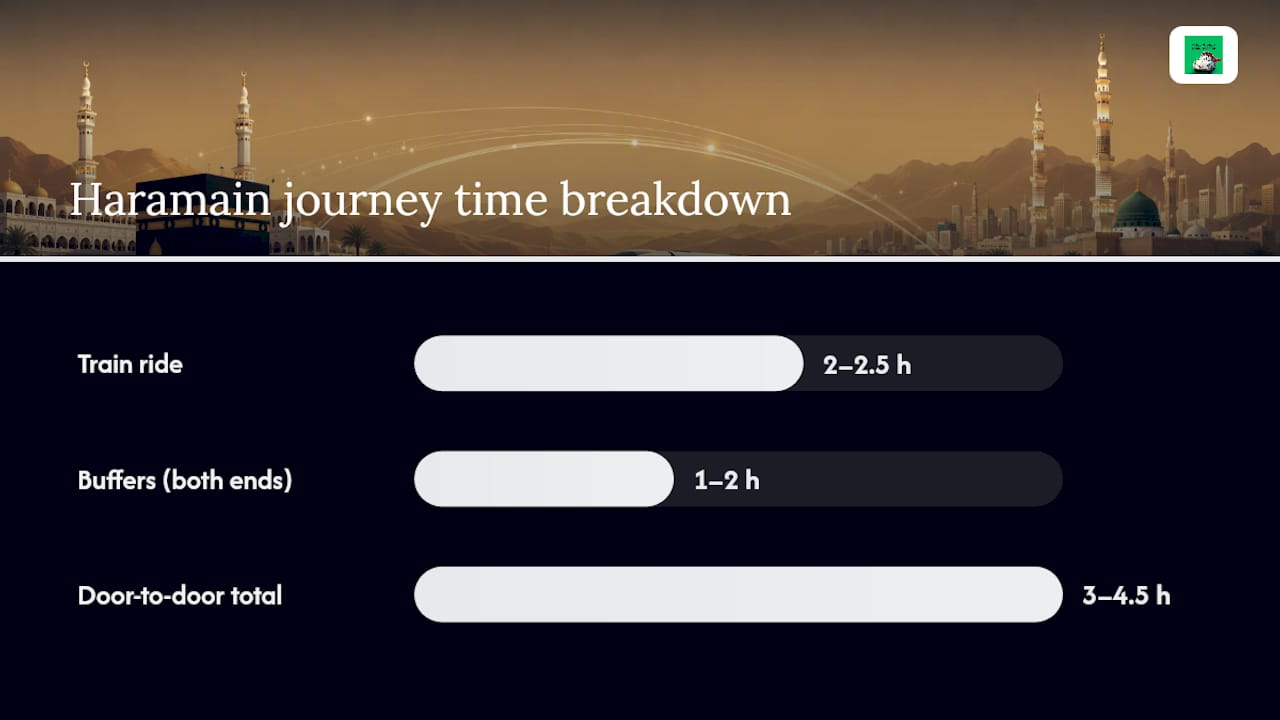
The straight-line distance between Mecca and Medina is about 340 kilometers, but the road route runs longer because Highway 15 curves through desert terrain rather than cutting a direct line. Driving takes roughly 4 to 6 hours depending on traffic. For most travelers, the Haramain high-speed train is the fastest practical option, covering the route in about 2 to 2.5 hours.
TL;DR:
- The Haramain high-speed train is the fastest option, completing the route in about 2 to 2.5 hours with multiple daily departures that minimize wait times.
- During peak pilgrimage seasons, road and train travel times can more than double, with traffic congestion significantly increasing journey durations.
- Private transfers with booked providers like Saudi Sayyah reduce stress, offering guaranteed pickup, real-time tracking, and vehicle details before travel.
- Direct flights between Jeddah and Medina take about an hour in the air, but total travel time usually ranges from 3 to 4 hours once airport procedures are included.
- Budget travelers often prefer coach buses, which take about 5 to 6 hours and are the most economical intercity option, albeit slower than private cars or trains.
Table of Contents
- What is the actual distance between Mecca and Medina?
- How fast is the Haramain high-speed railway?
- What about driving or taking a bus between the two cities?
- Can you fly directly between Mecca and Medina?
- How much do Hajj and Umrah seasons change travel times?
- What should you plan before traveling between the two cities?
- A traveler's choice: speed or flexibility?
- Book your Mecca to Medina transfer with confidence
- Sources
What is the actual distance between Mecca and Medina?
Two numbers matter here, and travel sites often blur them together. The air distance is roughly 339 to 340 kilometers, the figure you would measure if you drew a straight line on a map. Nobody travels that line, though. The actual road distance runs 430 to 450 kilometers because Highway 15 bends around terrain rather than slicing through it, a gap partly explained by how routing data from open mapping projects calculates real paths instead of theoretical ones.
| Travel mode | Distance/duration | Typical door-to-door time |
|---|---|---|
| Air (straight line) | ~340 km | Not a travel option itself |
| Road (driving) | ~430–450 km | 4–6+ hours |
| Haramain train | ~450 km route | 2–2.5 hours |
| Coach/bus | ~450 km route | 5–6 hours |
| Flight (JED to MED) | ~1 hour in air | 3–4 hours including airport time |
Speed favors the train. Flexibility favors a private car. Budget travel favors the coach. Which one wins depends entirely on what you are optimizing for on this particular trip.
How fast is the Haramain high-speed railway?
The Haramain train is the single best argument against driving. Journey time runs about 2 to 2.5 hours, and multiple daily departures mean you rarely wait long between trains, especially outside peak pilgrimage windows.
A few things worth knowing before you book:
- Stations sit outside both city centers, so you still need a local transfer to reach the Haram or your hotel.
- Trains also serve Jeddah and King Abdulaziz International Airport, letting some travelers skip a Mecca stopover entirely.
- Boarding, security screening, and luggage handling typically add 30 to 60 minutes on each end, so budget accordingly.
- Standard and business class seating is available, with business offering more legroom for longer waits.
Pro Tip: Book Haramain tickets online in advance during Ramadan or Hajj season. Same-day tickets often sell out by mid-morning, and station lines can stretch for an hour.
For families with small children or older travelers, the train usually beats driving on comfort alone. No traffic, no rest-stop negotiations, no cramped back seat for four hours straight.
What about driving or taking a bus between the two cities?
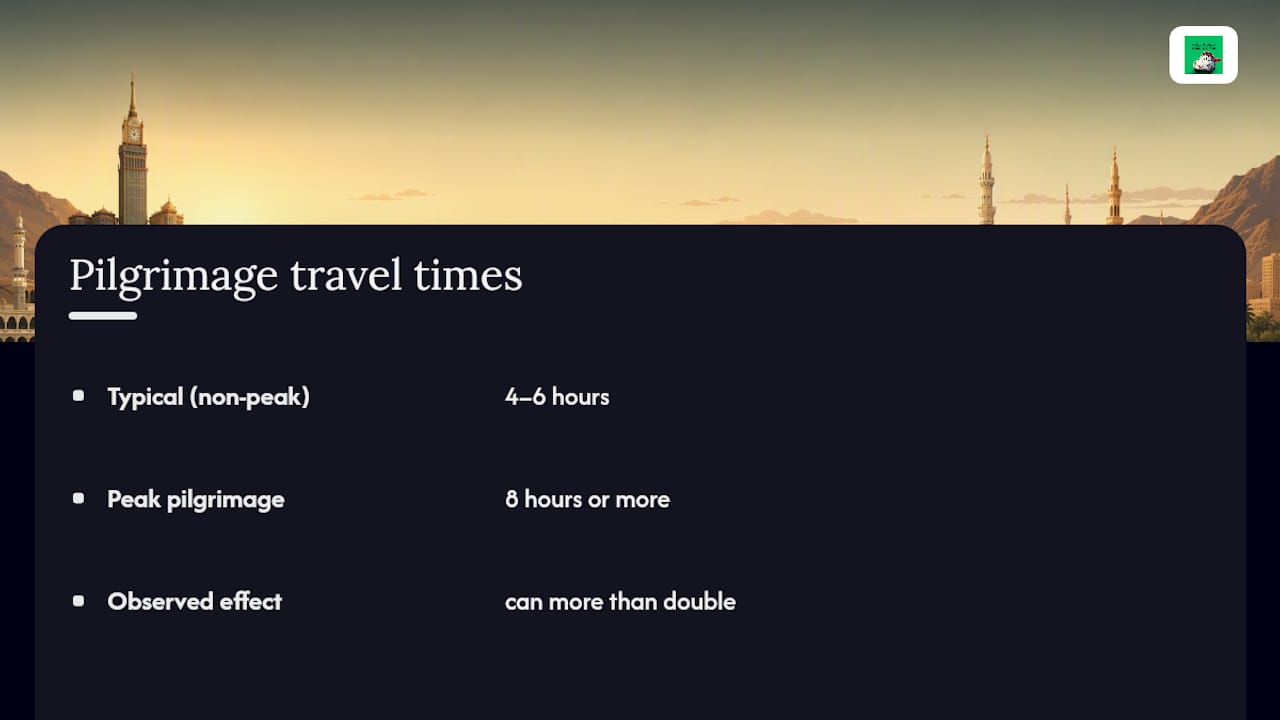
Highway 15 is the road nearly everyone uses between Mecca and Medina, a well-maintained four-lane route through mostly flat, open desert. The 430 to 450 kilometer distance sounds long, but under normal conditions it translates to 4 to 6 hours behind the wheel.
That range shifts fast, though. Traffic during Umrah season or road maintenance can add hours, and unplanned closures near pilgrimage peaks have been known to more than double the normal driving time.
Coach buses run the same route in roughly 5 to 6 hours, a bit slower than a private car because of scheduled stops and boarding time. Fares vary by operator and season, but buses remain the cheapest intercity option for budget travelers.
A few practical notes for anyone driving themselves or hiring a car:
- Fuel and rest stops appear regularly along Highway 15, so plan a break every 2 hours if you are driving.
- Night driving is common but headlights and wildlife crossings near desert stretches deserve extra caution.
- A private transfer with a professional driver removes the fatigue factor entirely, particularly useful after a long international flight.
- Check current road conditions before departure during any major pilgrimage period.
Can you fly directly between Mecca and Medina?
Not exactly. Mecca has no airport of its own. Anyone flying in lands at King Abdulaziz International Airport (JED) in Jeddah, about 60 to 90 minutes from Mecca by road, or occasionally at Taif's regional airport. Medina has its own gateway, Prince Mohammed bin Abdulaziz International Airport (MED).
The actual flight between JED and MED takes about an hour in the air. Once you add check-in, security, and baggage claim, total door-to-door time usually lands at 3 to 4 hours, close enough to the train that flying rarely saves meaningful time unless you're already at an airport for another leg of your trip.
- Flying makes sense when connecting through Jeddah on an international itinerary.
- The train or a private car usually wins for a standalone Mecca to Medina trip.
- Airport transfers add fixed time regardless of how short the flight itself is.
How much do Hajj and Umrah seasons change travel times?
Pilgrimage season rewrites every number in this article. Roads that normally take 4 hours can stretch well past 6 as buses, private vehicles, and pilgrim convoys converge on Highway 15 simultaneously. Train demand spikes too, and seats on the Haramain line during peak Umrah weeks can sell out days in advance.
By the numbers: road travel times during major pilgrimage movements can more than double, and travel data consistently shows driving durations climbing from a normal 4 to 6 hour range toward 8 hours or more when congestion peaks near Mecca and Medina.
Build in a cushion. Book train or private transfer seats at least a week ahead during Ramadan, Hajj, or major Umrah waves. Before departure, check live conditions through official channels like the Saudi Press Agency, which posts logistics advisories during peak religious travel periods.
What should you plan before traveling between the two cities?
A smooth Mecca to Medina trip comes down to sequencing, not luck. Here's the order that avoids most delays:
- Confirm your arrival airport, JED or MED, and book that first transfer before you land, not after.
- Decide your intercity mode based on priority: train for speed, private car for flexibility, coach for budget.
- Reserve train tickets or a private transfer at least several days ahead during peak season.
- Budget realistically: private transfers often run higher than a shared coach seat but save hours and hassle; train fares sit in the middle.
- Confirm accessibility needs, luggage limits, and pickup points with your provider before departure.
Pro Tip: If you're traveling with elderly family members or young children, confirm wheelchair access and stroller space with your transfer provider in advance rather than assuming it on arrival.
For a deeper walkthrough of arrival logistics, Saudi Sayyah's guide for first-time visitors covers the sequence in more detail, including what to confirm before you ever land in Jeddah.
A traveler's choice: speed or flexibility?
Picture two families landing at Jeddah the same week. One has an elderly grandmother and three young kids, luggage stacked to the ceiling, and zero interest in a train transfer followed by a taxi hunt. They book a private car straight through to Medina, no station changes, no waiting on platforms. The other is a pair of friends on a tight schedule, phones in hand, tickets booked for the next Haramain departure two hours after landing.
Neither choice is wrong. The train wins on raw speed once you're already positioned near a station. The car wins when door-to-door simplicity matters more than shaving off an hour. What both trips have in common is that they were booked ahead, with a verified provider who confirmed pickup times and vehicle details before anyone left the airport. That single habit, booking early and confirming details in writing, prevents most of the stress that turns a holy journey into a logistics headache.
— Fa
Book your Mecca to Medina transfer with confidence
Saudi Sayyah is the alternative to hunting for a taxi at the curb or gambling on a shared coach seat. You know your driver's name, see their photo and vehicle details before pickup, and track your ride in real time from the moment it's confirmed.
A typical booking flow looks like this: land at Jeddah, get picked up for the transfer into Mecca, complete your rites, then book the intercity leg to Medina days or hours in advance through the same platform. No re-explaining your trip to a new driver each time. The fleet runs recent-model vehicles suited to families, solo travelers, and small groups alike, and every driver is vetted before they're assigned to your trip.
If you're still deciding between the train, a private car, or a coach for your Mecca to Medina leg, check available intercity transfer options and lock in your dates before peak season pushes prices and availability the wrong way.
Sources
- المسافة من مكة إلى المدينة | بالقطار والسيارة والطائرة والحاج | The Pilgrim
- مطار الملك عبد العزيز الدولي — Wikipedia (Arabic)
- المسافة بين مكة والمدينة - مقال (Maqall)
- Umrah flights (Alternative Airlines)