

When a language barrier appears, use five steps: slow down, simplify, confirm understanding, show rather than tell, and escalate to a professional interpreter when the stakes are high. These steps work across personal, workplace, and healthcare settings.
Quick checklist:
- Slow down. Speak at a measured pace. Example: pause after each sentence.
- Simplify. Use short sentences and plain verbs. Say "Take this pill once a day," not "Administer the medication as prescribed."
- Confirm. Ask the listener to repeat the key point back. Example: "Can you tell me what you will do next?"
- Show. Use a picture, gesture, or written number when words are unclear.
- Escalate. Call a professional interpreter or use a video remote interpreting service when consent, dosing, legal terms, or safety are involved.
Research-backed teach-back (asking someone to explain in their own words) is more reliable than "Do you understand?" Professional interpreters and tools like Google Translate and Microsoft Translator are widely available in the United States for different levels of need.
Key Takeaways
Deliberate communication (slow, plain, confirmed, and visually supported) is the most reliable method for overcoming language barriers across personal, workplace, and healthcare settings.
| Point | Details |
|---|---|
| Use the five-step checklist | Slow down, simplify, confirm, show, and escalate when stakes are high. |
| Match the tool to the risk | Consumer apps suit simple exchanges; professional interpreters are required for consent, dosing, and legal topics. |
| Teach-back beats "Do you understand?" | Ask the listener to explain the key point back in their own words to catch real gaps. |
| Document interpreter use | Record name, type, and duration of interpretation in clinical and logistic workflows. |
| Prepare before the interaction | Write critical numbers and addresses on a card; download offline language packs before travel. |
Table of Contents
- What types of language barriers will you actually face?
- How do you communicate across language barriers in any setting?
- How to use visuals, gestures, and demonstrations without causing confusion
- Which technology tools actually help, and when should you use them?
- How to work with a professional interpreter, especially in healthcare
- Why patience, pacing, and teach-back improve accuracy
- How organizations and teams reduce language friction
- Ready-to-use scripts for travel, workplace, and healthcare settings
- When should you stop using apps and call a professional interpreter?
- Why deliberate communication is the most reliable tool across languages
- Sources
What types of language barriers will you actually face?
Knowing which barrier you are dealing with shapes every tactic you choose. There are five common types.
Verbal barriers occur when two people speak different languages or different dialects of the same language. A speaker of Caribbean Spanish and a speaker of Mexican Spanish may understand each other, but a speaker of Mandarin and a speaker of Cantonese may not, even though both are "Chinese."
Nonverbal barriers are easy to overlook. Eye contact, personal space, head nods, and hand gestures carry different meanings across cultures. A nod in some South Asian cultures signals "I am listening," not "I agree."
Written barriers arise from different scripts, date formats, and number conventions. A date written as 04/05/26 means April 5 in the United States and May 4 in much of Europe.
Jargon and dialect barriers show up inside a shared language. Medical staff who say "NPO after midnight" or engineers who say "spin up a container" lose listeners who speak the same base language but not the specialized vocabulary.
Cultural and contextual barriers are the subtlest. High-context cultures (Japan, Saudi Arabia, many Arab countries) rely on shared background and indirect cues. Low-context cultures (Germany, the United States) expect explicit, literal statements. The same sentence can mean something very different depending on which frame the listener brings.
Three quick diagnostic questions to identify which barrier dominates:
- Can both parties say and understand basic words in a shared language? If no, the barrier is primarily verbal.
- Are misunderstandings about tone, intent, or implied meaning rather than vocabulary? If yes, the barrier is likely cultural or contextual.
- Is the confusion about a written document, number, or format? If yes, the barrier is written.
How do you communicate across language barriers in any setting?
These tactics apply whether you are ordering food abroad, running a team meeting, or explaining a diagnosis. Practical strategies like plain language, visuals, and interpreter access work across travel, workplace, and personal contexts.
Plain language. Replace idioms and compound phrases with direct alternatives. "Let's touch base" becomes "Let's talk." "Under the weather" becomes "sick." "Circle back" becomes "talk again later." The goal is one idea per sentence, with a subject and a verb.
Pacing and pausing. Cross-language processing takes more cognitive effort for both speakers. Pausing after each key point gives the listener time to decode, translate internally, and form a response. Speaking slowly and checking for understanding are among the most consistently recommended tactics in international communication research.

Active listening. Face the speaker, reduce background noise, and resist the urge to finish sentences. Active listening and nonverbal awareness reduce misunderstandings in both interpersonal and workplace settings.
Teach-back. Ask the listener to explain the key point back in their own words. "Can you show me how you would do that?" is more reliable than "Did you get it?" Teach-back is backed by clinical practice guidance and is covered in detail in the section on cognitive load below.
Visuals and demonstration. For any procedural or numeric information, show rather than say. A written number, a diagram, or a physical demonstration reduces reliance on spoken words entirely.
One-line decision rules:
- Use plain language first, always.
- Add a visual when the information is a number, a step, or a location.
- Use teach-back when accuracy matters (instructions, dosing, directions).
- Call an interpreter when the topic involves consent, safety, or legal terms.
Pro Tip: Write down critical numbers (doses, addresses, phone numbers) before any interaction where speech may fail. Showing a written number removes ambiguity that pronunciation cannot.
How to use visuals, gestures, and demonstrations without causing confusion
Visuals work best when they are specific to the task. A photo of a pill bottle with a circled number "1" communicates once-daily dosing faster than a spoken sentence. Annotated photos, flowcharts, and icons are particularly useful for procedural steps, maps, and safety instructions.
Types of visuals and when to use each:
- Photos and annotated images: Best for identifying objects, locations, or body parts.
- Icons and symbols: Useful for universal concepts (restrooms, emergency exits, food types) but unreliable for abstract ideas.
- Flowcharts: Effective for multi-step processes where sequence matters.
- Written numbers: Use for any quantity, dose, time, or address. Never rely on spoken numbers alone for critical data.
Demonstration technique. Break the action into single steps. Say "Watch this" before each step, then pause. Screen-sharing on a phone or tablet works well for app-based instructions. Arrange shared visuals so both parties can see the same screen or page at the same time.
Nonverbal norms to watch. Sustained eye contact signals honesty in the United States but can feel aggressive or disrespectful in parts of East Asia and the Middle East. Beckoning with a single finger is offensive in several Asian and Latin American cultures. When in doubt, use open palms and neutral gestures, and mirror the other person's physical distance rather than closing it.
Short phrases to pair with a demonstration:
- "Watch this." (before a step)
- "Your turn." (after showing)
- "One step at a time."
- "Point to what you mean."
Which technology tools actually help, and when should you use them?
Translation apps, real-time devices, and video interpreting services each fit a different level of need.
Google Translate handles quick, low-stakes interactions well: reading a menu, translating a street sign, or exchanging a greeting. Its camera mode translates printed text in real time. Microsoft Translator supports multi-person conversation mode, where several phones display the same conversation in different languages simultaneously. Both tools are effective for simple, non-nuanced interactions but can miss cultural nuance, sarcasm, and technical detail.
Duolingo and Babbel are learning tools, not real-time translators. They build vocabulary and basic phrase fluency over weeks, which is useful preparation before travel but not a solution during a live conversation.
Tandem connects users with native speakers for practice conversations. It is a preparation tool, not an emergency communication tool.
Video remote interpreting (VRI) and telephone language line services (such as Language Line Solutions, available across the United States) connect users with professional interpreters within minutes. These are the right choice for healthcare appointments, legal consultations, and any conversation where accuracy and confidentiality matter.
| Feature | Consumer apps | Video/phone interpreters | In-person interpreters |
|---|---|---|---|
| Accuracy for nuance | Low | High | High |
| Cost | Free or low | Moderate per minute | Higher, scheduled |
| Availability | Immediate | Minutes | Hours to days |
| Privacy risk | Higher (data sent to servers) | Lower (professional standards) | Lowest |
Privacy note. Consumer apps send text and audio to third-party servers. Do not use them for protected health information (PHI) without confirming the vendor's HIPAA compliance. For clinical or legal content, use a certified interpreter service.
Before travel: Download offline language packs in Google Translate for your destination. Write critical numbers (hotel address, emergency contact, medication name) on a card. Offline packs work without a data connection.
How to work with a professional interpreter, especially in healthcare
Professional interpreters do more than translate words. They act as cultural brokers, clarifying context and intent that a word-for-word translation would miss. Using interpreters at admission, during patient teaching, and at discharge reduces medical errors and readmissions.
Three moments in healthcare when an interpreter is most critical:
- Admission. Gathering accurate history, allergy information, and consent requires precision. An error here affects every subsequent decision.
- Patient teaching. Explaining a diagnosis, a medication regimen, or a procedure. Misunderstanding here leads directly to non-adherence or harm.
- Discharge. Follow-up instructions, warning signs, and return criteria. Patients who leave without understanding these are at higher risk of readmission.
Step-by-step checklist for an interpreted session:
- Introduce the interpreter to the patient and explain their role.
- Speak directly to the patient, not to the interpreter. Say "How are you feeling?" not "Ask him how he feels."
- Use short sentences. Pause after each one.
- Avoid eye contact with the interpreter during the patient's response.
- After the session, ask the interpreter privately if any cultural context affected the exchange.
Pitfalls to avoid. Language barriers increase diagnostic and treatment errors, and untrained family interpreters often produce incorrect interpretations. Family members may omit embarrassing details, soften bad news, or lack the vocabulary for clinical terms. Ad hoc bilingual staff without a formal language assessment carry the same risks. Confidentiality is also compromised when a family member interprets sensitive health information.
Documentation. Record the interpreter's name, the type of interpretation (in-person, phone, video), and the duration. This creates an audit trail and supports continuity of care.
Statistic callout: Telephone and video interpreting remain underutilized in U.S. clinical settings despite evidence that professional interpretation reduces errors compared to ad hoc family or bilingual-staff interpretation.
Why patience, pacing, and teach-back improve accuracy
Cross-language communication places a measurable cognitive load on both parties. The listener must decode sounds, map them to vocabulary, translate internally, and formulate a response, all at once. Pausing after each sentence gives that process time to complete. Rushing produces nodding without comprehension.
Teach-back is the most reliable check for real understanding. Asking "Can you tell me in your own words what you will do when you get home?" reveals gaps that a simple "yes" would hide. Clinical guidance supports teach-back as a standard practice in patient education, particularly when a language barrier is present.
Evidence summary: Studies in clinical settings consistently show that structured teach-back, combined with professional interpreter use, improves patient comprehension and reduces the likelihood of medication errors and unplanned readmissions compared to unstructured verbal explanation alone.
How to apply teach-back in practice:
- After explaining a key point, say: "I want to make sure I explained that clearly. Can you walk me through what you will do?"
- If the answer is incomplete, re-explain the specific gap and ask again. Do not repeat the entire explanation.
- Signal your intent to pause: "I will stop here and wait. Take your time."
Pro Tip: Before a high-stakes conversation, tell the other party: "I will speak slowly and stop often. Please stop me if anything is unclear." This sets expectations and reduces the pressure to fake comprehension.
How organizations and teams reduce language friction
Team-level language barriers are a policy problem as much as a communication problem. Individual tactics help, but organizations that build systems around language access see fewer errors and faster onboarding.
Policy checklist for managers and team leads:
- Define when professional interpreter use is required (consent forms, disciplinary meetings, safety briefings, client-facing calls).
- Test bilingual staff with a structured language assessment before assigning them to interpret. Fluency in conversation does not equal fluency in technical vocabulary.
- Translate key operational documents (safety procedures, onboarding guides, HR policies) into the languages your workforce actually uses.
- Compensate evaluated bilingual staff for language duties as a formal role, not an informal expectation.
Workplace resources recommend plain language, visual aids, and translation services for distributed teams to reduce friction from jargon and dialect differences.
Training and onboarding. Run a brief language and jargon orientation for new hires. Provide a glossary of role-specific terms in multiple languages. Schedule quarterly refreshers when teams change or expand internationally. Customer service training frameworks offer practical templates for communication norms that transfer well to multilingual team settings.
Operational choices. Translated documents work for stable, repeatable content (safety rules, schedules). Live interpretation is better for dynamic conversations (negotiations, incident debriefs). Bilingual staff are most valuable when they have been formally assessed and compensated for the role.
Practical measurement. Track error reports linked to miscommunication, time-to-comprehension on new procedures, and customer or patient satisfaction scores segmented by language. These three metrics reveal where language friction is costing the organization most.
Ready-to-use scripts for travel, workplace, and healthcare settings
Copy these phrases directly into a notes app, a printed card, or a message before your next interaction.
Greeting and setting expectations
| Phrase to say | When to use |
|---|---|
| "I will speak slowly. Please stop me if anything is unclear." | Opening any cross-language conversation |
| "We can use a translation app if that helps." | When a shared language is limited |
Asking for clarification
| Phrase to say | When to use |
|---|---|
| "Can you say that again, more slowly?" | When you did not understand |
| "Can you write that down or show me?" | For numbers, addresses, or names |
Teach-back prompts
| Phrase to say | When to use |
|---|---|
| "Can you tell me in your own words what you will do?" | After giving instructions |
| "Can you show me the first step?" | For procedural tasks |
Confirming numbers and addresses
| Phrase to say | When to use |
|---|---|
| "I will write the number here. Please check it." | Doses, phone numbers, prices |
| "Point to the address on this map." | Directions or pickup locations |
Escalating to an interpreter
| Phrase to say | When to use |
|---|---|
| "I want to get an interpreter so we communicate clearly." | Healthcare, legal, or safety topics |
| "Let me find someone who can help us both." | When both parties are stuck |
For travel, combine these phrases with prewritten address and medical cards and offline language packs. For healthcare appointments, review the driver meeting guide format as a model for pre-trip communication preparation.
When should you stop using apps and call a professional interpreter?
Quick tactics and consumer apps cover most everyday interactions. Several situations require a professional interpreter, and using anything less creates real risk.
Red flags that require escalation:
- Clinical consent or informed refusal
- Medication dosing instructions
- Legal documents, contracts, or rights advisories
- Financial transactions with binding terms
- Precise addresses or critical numbers where an error has consequences
- Distressed, emotional, or crisis situations where tone and nuance matter
Decision checklist:
- Is the topic reversible if misunderstood? If no, escalate.
- Does the interaction involve a signature, a dose, or a legal right? If yes, escalate.
- Is the other party visibly distressed or confused? If yes, pause and escalate.
- Is a family member currently interpreting for a clinical or legal topic? Replace them with a professional.
- Is the consumer app producing results that seem inconsistent or incomplete? Stop and escalate.
Use professional interpreter services (in-person, telephone, or video remote) for protected health information or any consent process. This aligns with U.S. federal requirements under Title VI of the Civil Rights Act, which requires meaningful language access for recipients of federal funding, including hospitals and clinics.
Why deliberate communication is the most reliable tool across languages
The most common mistake in cross-language communication is assuming that more words solve the problem. They rarely do. Slowing down, removing unnecessary vocabulary, and confirming understanding at each step consistently outperforms longer, faster explanations.
Simple, deliberate methods scale because they do not depend on the other party's language level. A plain sentence, a written number, and a teach-back prompt work whether the listener speaks basic English or none at all. That is why these tactics appear in both clinical research and practical travel guides.
Saudisayyah applies this principle directly. Drivers send pre-trip details, vehicle photos, and real-time tracking before every pickup, reducing the need for spoken coordination in multilingual environments. For pilgrims visiting Saudi Arabia for the first time, that kind of structured, visual communication removes uncertainty before it becomes a barrier. Multilingual pilgrim logistics benefit from the same deliberate approach: fewer assumptions, more written confirmation, and a clear escalation path when something is unclear.
Prepare before the interaction. Write down critical information. Use teach-back. Call a professional interpreter when the stakes are high. These four habits cover the vast majority of language barrier situations.
Sources
- Strategies for overcoming language barriers in healthcare - PMC
- Language Barrier - StatPearls - NCBI Bookshelf
- Microsoft Translator
- How to Overcome Language Barriers: 6 Effective Strategies
- 10 Strategies for Overcoming Language Barriers
- Effective Communication: Improving Your Interpersonal Skills
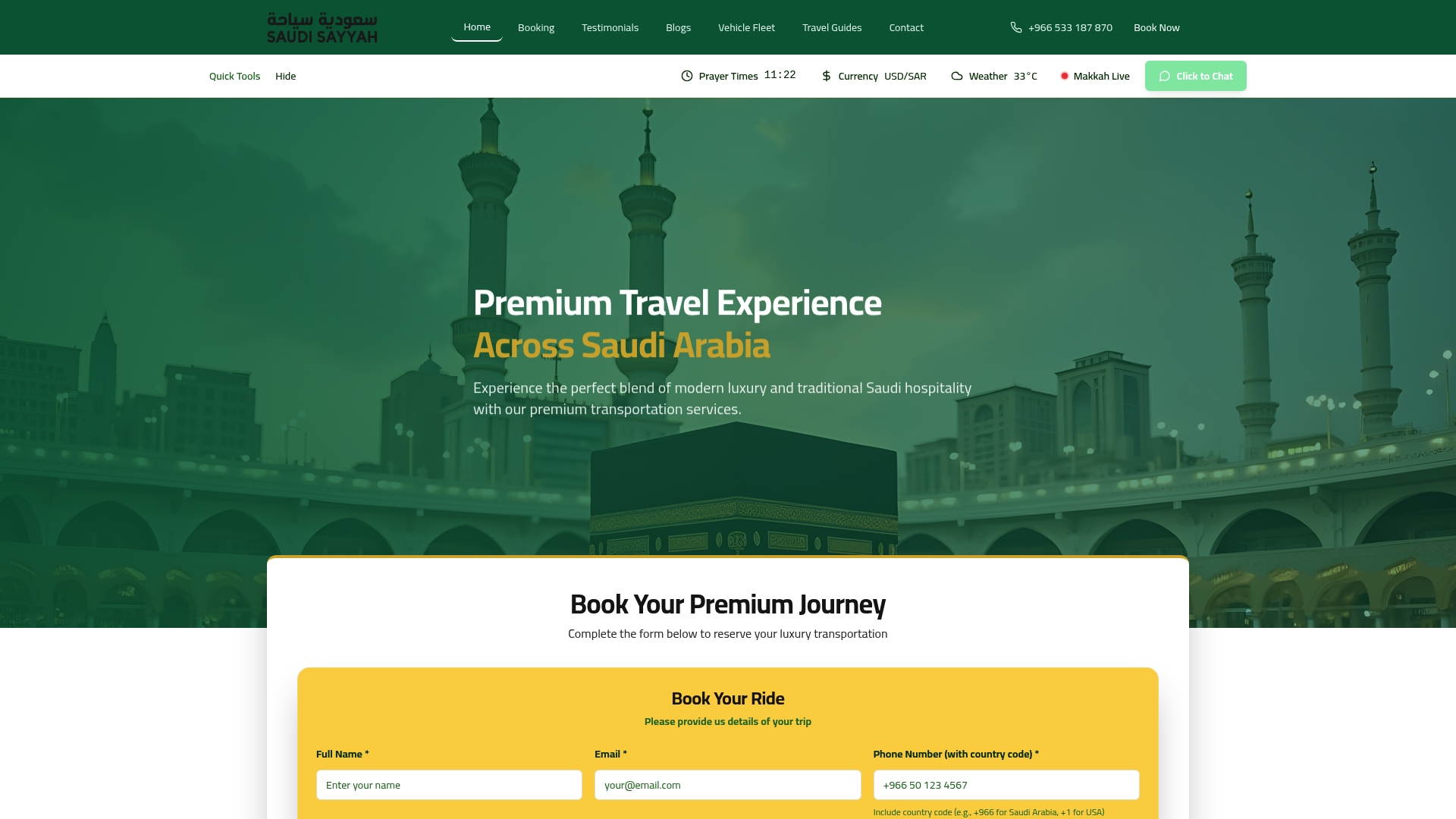
Traveling to Saudi Arabia for Umrah or religious tourism? Saudisayyah provides premium transportation with pre-trip driver details, real-time tracking, and constant communication, so language differences never become a logistical problem. Book a transfer or tour and travel with a service built for international pilgrims from the first message to the final drop-off.
This article is general information, not a substitute for advice from a qualified doctor. Consult a qualified healthcare professional about your own circumstances before acting on anything here.