
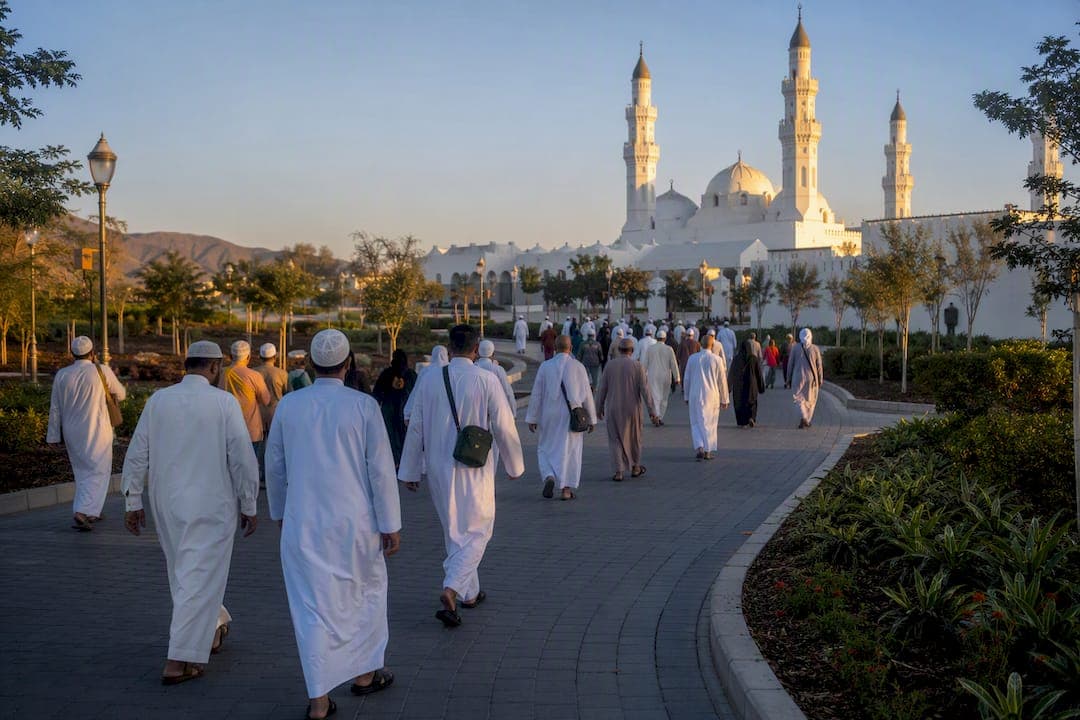
Most pilgrims get the most out of a half-day private hire, since the major ziyarat sites sit within 3 to 5 km of Al-Masjid an-Nabawi and door-to-door transport cuts wasted walking between them. Travelers who want flexible, self-paced stops instead should get the 24-hour hop-on hop-off bus ticket. Either way, the sample itineraries below can help plan your schedule.
TL;DR:
- Most pilgrims find a half-day private hire most effective, especially since key sites are clustered within 3 to 5 km of the mosque, minimizing travel time.
- The 24-hour hop-on hop-off bus covers 13 stops with multilingual audio, ideal for budget travelers willing to wait between rides, while private hire offers door-to-door convenience.
- For efficient sightseeing, a half-day route typically includes Quba Mosque, Mount Uhud, and the Seven Mosques, with each stop kept within a short distance for quick visits.
- Visiting early in the morning or late afternoon helps avoid crowds and heat, especially at Mount Uhud and the cemetery, with moderate durations generally sufficient for major sites.
- Booking private transport with real-time tracking and driver details reduces logistical uncertainties, making it easier to adapt to prayer times and peak season congestion.
Table of Contents
- What Are the Main Ways to Tour Madinah's Landmarks?
- Sample Half-Day and Full-Day Ziyarat Itineraries
- What Are the Must-See Landmarks on a Madinah Ziyarat Tour?
- How Do You Get Between the Sites?
- Visiting Etiquette, Timing, and Accessibility Tips
- Where to Eat and Drink Near Madinah's Main Sites
- How Do Seasons and Local Events Affect the Tour Experience?
- Safety Tips for Visiting Madinah's Landmarks
- A Publisher's View on Managed Ziyarat Logistics
- Book a Private Ziyarat Tour or Hourly Hire
- Sources
What Are the Main Ways to Tour Madinah's Landmarks?
Four practical approaches cover almost every pilgrim's situation. Picking the right one depends less on budget than on your group's mobility, schedule, and how much you want someone else handling logistics.
- Hop-on hop-off bus: the official Al-Madinah sightseeing bus runs on a 24-hour ticket covering 13 stops across two routes, with an onboard audio guide in 16 languages. It suits solo travelers and budget-conscious visitors who don't mind waiting between stops.
- Organized guided group tours: a driver or guide walks you through each site's history and etiquette, often bundled into a package with transfers included. Families and first-time visitors tend to prefer this because someone else is managing timing and directions.
- Private hire or hourly vehicle: a dedicated car and driver for a set block of hours. This works best for elderly travelers, larger families, or anyone visiting Mount Uhud and the Seven Mosques area in one sitting without long walks between stops.
- Self-guided combination: walking to nearby sites like Al-Baqi' and hailing taxis for further ones. This fits travelers with time to spare and no mobility restrictions.
Ticket holders on the sightseeing bus also get discounts at select station stops near museums, cafés, and shops, which adds a little value beyond the ride itself.
Sample Half-Day and Full-Day Ziyarat Itineraries
A tight schedule beats an ambitious one. Here's how the two most common approaches break down in practice.
Half-day loop (4 to 5 hours, private hire or small group):
- Start at your hotel or the mosque area and drive south to Masjid Quba, allowing some time for visit.
- Head north to Mount Uhud and the martyrs' graves, spending around an hour for reflection and walking the site.
- Continue to Masjid al-Qiblatayn for a brief stop.
- Finish at the Seven Mosques area, a short stop before returning to the hotel belt.
This sequence, commonly used by visitors, keeps driving time short since every stop sits within a few kilometers of the last.
Full-day flexible plan (24-hour bus ticket or extended private hire):
- Morning: visit Al-Baqi' on foot right after Fajr prayer, when the cemetery is quieter and temperatures are lower.
- Midday: ride the sightseeing bus or private vehicle to As Safiyyah Museum and the Seven Mosques area.
- Afternoon: cover Quba Mosque and Masjid al-Qiblatayn, adjusting timing so you're near a mosque before the next prayer call.
- Late afternoon: end at Mount Uhud, when the heat has eased and lighting is better for the walk to the martyrs' graves.
Build in slack around each prayer time. Rushing between sites to beat the azan defeats the purpose of a ziyarat tour.
What Are the Must-See Landmarks on a Madinah Ziyarat Tour?
Every guide and official tourism resource converges on the same core list of attractions, and for good reason: these sites carry the historical weight that makes a Madinah visit meaningful.
- Al-Masjid an-Nabawi (Prophet's Mosque): the anchor point for any tour. Visiting windows outside the five daily prayers tend to be less crowded, and nearly every other site on this list sits a short drive away.
- Masjid Quba: widely considered the first mosque built in Islam. Most visitors spend 30 to 45 minutes here, and it's often scheduled first since it sits south of the city center.
- Mount Uhud and the martyrs' graves: the site of the Battle of Uhud, tied to some of the most significant events in early Islamic history. Plan 45 to 60 minutes, and keep voices low and photography minimal near the graves out of respect.
- Al-Baqi' cemetery: the resting place of many companions of the Prophet. A short, quiet visit is appropriate here, ideally without lingering photography.
- Masjid al-Qiblatayn: known as the Mosque of the Two Qiblas, marking where the direction of prayer changed from Jerusalem to Mecca. A 20 to 30 minute stop covers it well.
- The Seven Mosques area: a cluster of small historic mosques tied to the Battle of the Trench. Twenty minutes is usually enough unless you're stopping at each one individually.
- As Safiyyah Museum: a smaller cultural stop covering local history and artifacts, worth 20 to 30 minutes if your schedule allows it.
Most of these sites lie within a 3 to 5 km radius of the central mosque, which is exactly why a half-day private hire or grouped tour is the most time-efficient way to see them without backtracking across the city.
How Do You Get Between the Sites?
Transport choice determines whether your day feels smooth or stretched thin. The official sightseeing bus and private hire solve different problems.
- The Al-Madinah hop-on hop-off bus runs on a 24-hour ticket with 13 stops across two routes and multilingual audio narration, which works well if you're comfortable waiting for the next pickup.
- Private hire or a taxi gives you door-to-door control, which matters most for elderly travelers, families with children, or anyone visiting Mount Uhud where extra walking is involved.
- Tours and pickups commonly start from the hotel belt surrounding the mosque, since nearly all accommodations cluster within walking distance of Al-Masjid an-Nabawi.
Pro Tip: Book your private hire pickup time about 15 minutes before you actually want to leave. Hotel lobbies near the mosque get busy right after prayer times, and that buffer keeps your itinerary from sliding.
Visiting Etiquette, Timing, and Accessibility Tips
Small adjustments make a big difference in comfort and respect at these sites.
- Visit early morning after Fajr or in the late afternoon, when both crowds and heat are lower, especially before Mount Uhud or museum stops that involve walking.
- Dress modestly at every site, and keep voices lowered near Al-Baqi' and the martyrs' graves.
- Avoid photographing individual graves or worshippers up close. A wide, respectful shot of the site itself is generally fine.
- Request an accessible vehicle in advance if you're traveling with limited mobility, and build extra time into the schedule rather than rushing between stops.
- Carry water and sun protection, since several sites involve outdoor walking. Cash and cards are both accepted at most shops selling dates and souvenirs near the mosque area, though smaller stalls sometimes prefer cash.
Where to Eat and Drink Near Madinah's Main Sites
Food near the ziyarat route tends to cluster around the mosque area rather than out by Mount Uhud or Quba, so plan meals around your return leg rather than mid loop. The streets ringing Al-Masjid an-Nabawi hold the highest concentration of restaurants, cafes, and date shops in the city, ranging from quick shawarma counters to sit-down Saudi and international restaurants.
Dates are the obvious local purchase, and shops near the mosque sell everything from basic Ajwa to premium gift boxes. Prices vary widely by quality and packaging, so it's worth comparing a couple of stalls before buying in bulk.
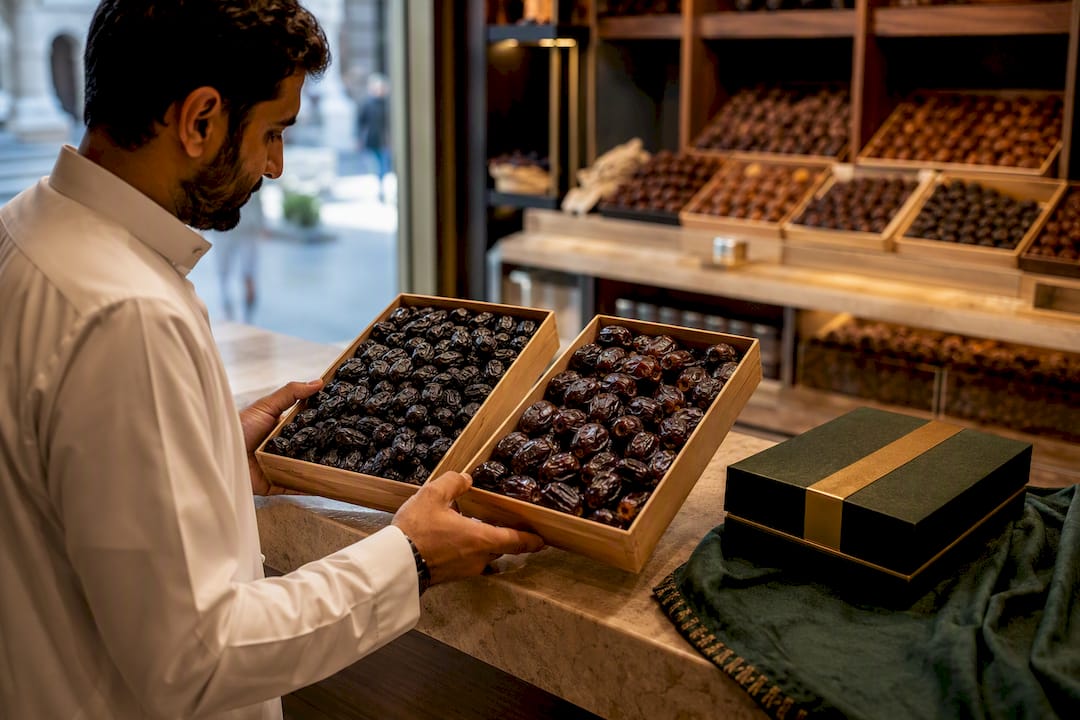
Between Quba Mosque and the Seven Mosques area, options thin out to smaller cafes and bakeries rather than full restaurants, so a light snack before heading out is usually smarter than counting on food along that stretch. Mount Uhud has minimal food infrastructure directly at the site, which makes it sensible to eat before or after that stop rather than during it.
If your half-day loop runs through midday, plan your lunch stop back near the mosque area rather than mid-route, since that's where seating, restrooms, and variety are easiest to find. Coffee shops near the hotel belt also tend to open early, which works well if you're heading out right after Fajr and want something quick before the first stop.
How Do Seasons and Local Events Affect the Tour Experience?
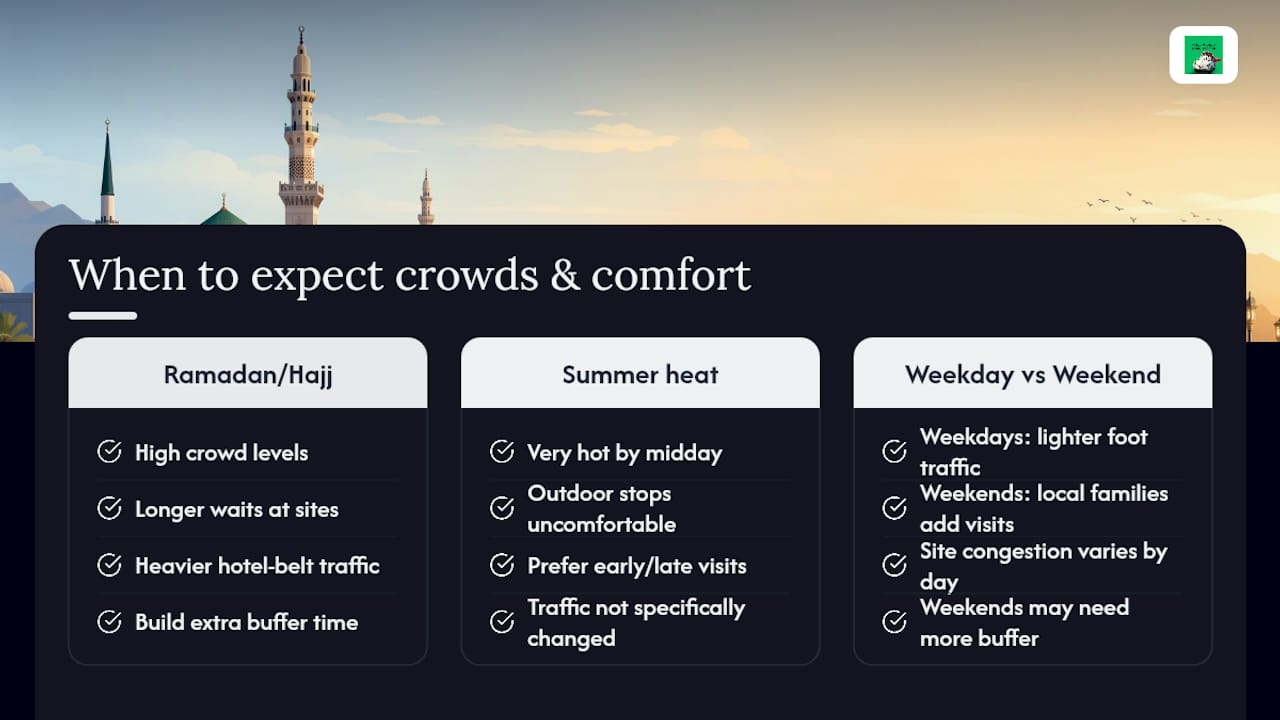
Timing your visit around the calendar changes crowd levels more than almost any other factor. Ramadan and the months surrounding Hajj bring dramatically higher visitor numbers to Madinah overall, which means longer waits at popular stops and busier hotel-belt traffic during pickup windows.
Summer heat, which regularly pushes into the 40s Celsius by midday, makes early morning or late afternoon visits close to necessary rather than optional, especially for outdoor stops like Mount Uhud and the Seven Mosques area. Winter months bring milder temperatures and tend to be a more comfortable stretch for longer walking segments of a tour.
Outside of Ramadan and Hajj season, weekday visits generally see lighter foot traffic around the major sites than weekends, when local families often add ziyarat stops to their own schedules. If your travel dates land during a peak period, building extra buffer time into each itinerary stop is worth doing, since even a well-planned half-day loop can run long when every site is busier than usual.
Safety Tips for Visiting Madinah's Landmarks
Crowd density is the biggest practical safety factor at Madinah's major sites, particularly around prayer times and during peak seasons. Stick close to your group near entrances and exits at Al-Masjid an-Nabawi, since foot traffic moves fastest right before and after each prayer call.
Keep a photo of your hotel address and a phone number for your driver or tour operator, especially if you're navigating between stops independently. Losing a group member in a crowd is far easier to resolve quickly with a shared meeting point agreed on in advance.
Heat exposure deserves the same attention as crowd safety. Carry water at every stop, and recognize early signs of heat strain, especially for elderly travelers or children on outdoor segments like Mount Uhud. If you're driving between sites yourself rather than using a hired vehicle, note that traffic near the mosque area gets congested fast around prayer times, so building in extra transit time avoids rushing on the road.
A Publisher's View on Managed Ziyarat Logistics
The gap between a good ziyarat itinerary and a smooth one usually comes down to logistics nobody plans for: a driver who doesn't show, unclear pickup points, or a vehicle that isn't suited to an elderly traveler. A booking system that sends driver photos, vehicle details, and real-time tracking before each trip can remove the guesswork that trips up first-time visitors most. For pilgrims juggling prayer times, language barriers, and unfamiliar streets, that kind of predictable communication matters more than any single landmark on the route.
— Fa
Book a Private Ziyarat Tour or Hourly Hire
If the itineraries above sound right for your trip, some services cover the logistics they require, including private ziyarat transport, hourly vehicle hire, and airport transfers, without you having to negotiate pickup times or chase down a driver. Such services may provide a driver photo, vehicle details, and real-time tracking sent to you before every trip, so you know exactly who's arriving and when.
That matters most on a half-day loop covering Quba, Mount Uhud, and the Seven Mosques area, where timing between stops affects whether you make it back for the next prayer comfortably. Check available vehicles and hourly hire options for your Madinah dates, or review the fleet lineup if you want to confirm seating and accessibility features before booking. For readers still mapping out their full Umrah trip, this first-time visitor planning guide covers how to sequence transport decisions before you arrive.
Sources
For current bus routes and ticket details, check the official Al-Madinah sightseeing bus page. For a broader look at Madinah's heritage sites, visit VisitMadinah's heritage and experiences page. Travelers researching related pilgrimage services can also check Badal Umrah's resources on performing Umrah on behalf of others.